


In his first game this year, Arshdeep Singh bowled 32 deliveries. You might be thinking that it’s generally accepted to bowl 24. How did Arshdeep then end up bowling so many more?
The answer is that the ball went soft and so they started to bowl slow, short, and wide bouncers. And when you bowl those, you’re a chance of bowling it too wide and getting it wide, or you’re a chance of bowling it too short and getting it wide.
Arshdeep was doing both of those things in Punjab Kings’ match vs Gujarat Titans. It was kind of a two-paced pitch at New Chandigarh, so that makes sense. He’d actually gone for runs early on, bowling more normally. When he came back on and tried this method, he thought it was going to work. And now was his chance to finish the innings with his final six deliveries - or in his case, 11.
The score was 150/6 coming into that last over. Rahul Tewatia was batting, but he hadn’t faced that many deliveries. The other batter was Rashid Khan, and he hadn’t faced any at that point.
What follows is really a modern piece of T20 art. It’s not going be to everyone’s taste, but let me take you through it.
The pitch was two-paced, as we’ve said. And so what the Punjab bowlers had thought throughout pretty much all of Gujarat’s innings was that if they could hit the pitch quite hard, they’d be able to slow it down so much that it would be impossible to hit through the ball. On top of this, the actual ball itself just went very soft. So even when it hit near the middle of the bat, it just kind of looked like it was being struck by wet cabbage.
But when you are going for short, slow, wide bouncers, chances are you’re going to bowl wides. And that’s exactly how he started his last over.
What would have happened in older cricket is you would’ve thought to yourself, ‘Ooh, he’s bowled a wide there. Might need to change up this next one.’
But that’s not how modern cricket works.
Arshdeep had a plan and he was sticking with it. Luckily for him, the second one managed to be just inside and wasn’t actually given a wide.
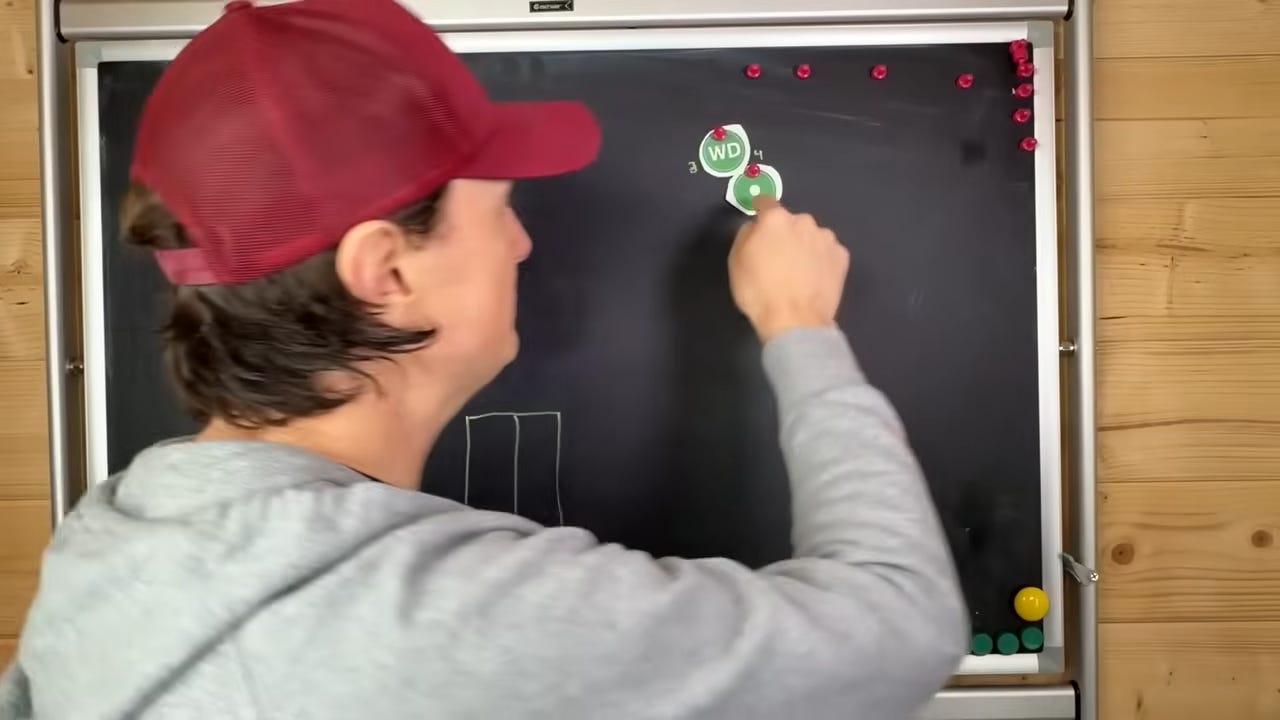
But you can see there’s a bit of a theory going on here.
Also, Arshdeep was probably aware that he was a little bit lucky to get away with that second ball. So he changes his plan ever so slightly, and he comes in just a little bit but still bowls one that is short, slow, and wide - but within the guidelines. However, in this case, Tewatia actually realises what’s happening, and moves well across to try and play the ball, but ends up being hit.
So three balls have been delivered, but only two of those are legal. Having said that, this over has only gone for one run. So far, you’d have to say that the plan is working. If that’s the case, as any video-gamer will tell you, you keep spamming.
But of course, as Tewatia has already noticed, all these balls are in the same spot. And he’s already moved over once. In fact, there’s no one in the world who couldn’t have noticed this pattern by this stage.
So for the next ball, Tewatia goes all the way across and he’s standing on the edge of the pitch. It’s absolutely remarkable to see this. And he ends up playing a hook shot to a ball bowled short and wide, well outside offstump. It would’ve been a wide, and it’s probably one of the worst deliveries of all time. And I wonder how many times a ball bowled there has ever been hooked, because the chances of a batter standing so far across to be able to do that, are virtually none.
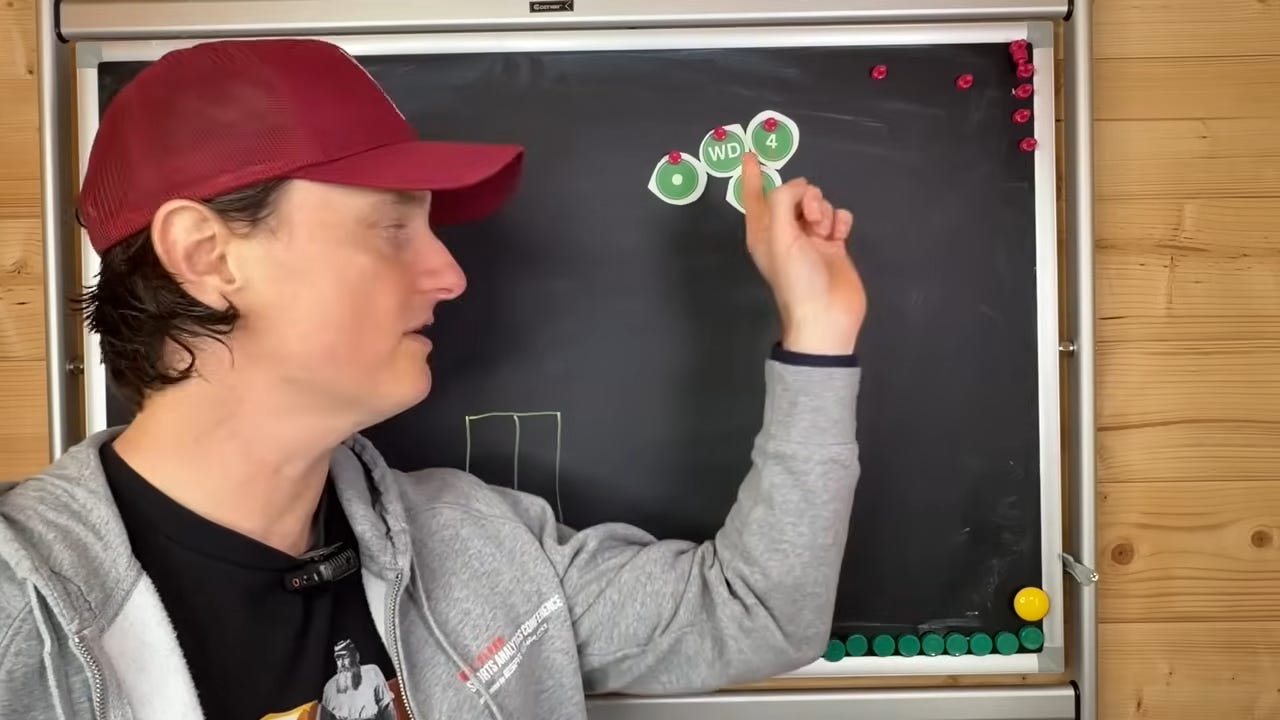
Even for modern cricket where we sometimes see players end up in very, very weird positions, this had to be one of the weirdest. However, it worked. Tewatia hooked it away for four.
The issue for Arshdeep at this point though, is that this theory is no longer really working, is it? He’s now bowled three legal balls and gone for five runs. It’s quite a low-scoring game, so he thinks, ‘I need to change this up a little bit.’
