


This piece contains extracts from The Art of Batting.
Around 70 million years ago, Tyrannosaurus rex was the hunter and Triceratops was its prey. But these two amazing animals were in the final fight of a war that had been raging for hundreds of millions of years. Before them was the Albertosaurus and Pachyrhinosaurus. The generation before was Teratophoneus and Kosmoceratops. Coming up the order was Gorgosaurus and Styracosaurus. Each generation there was basically a big huge Theropod who was trying to bite a tank-like horned Ceratopsid.
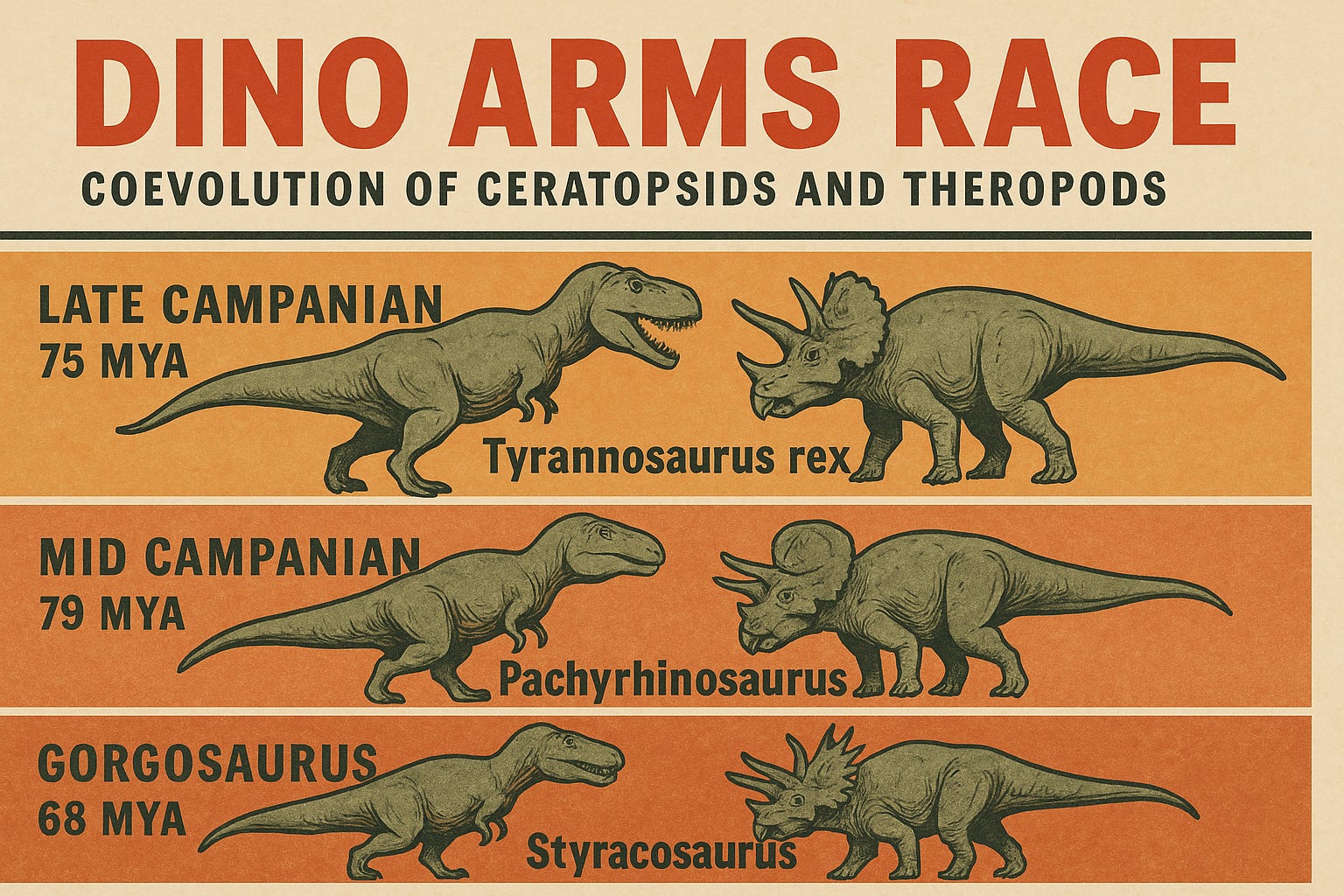
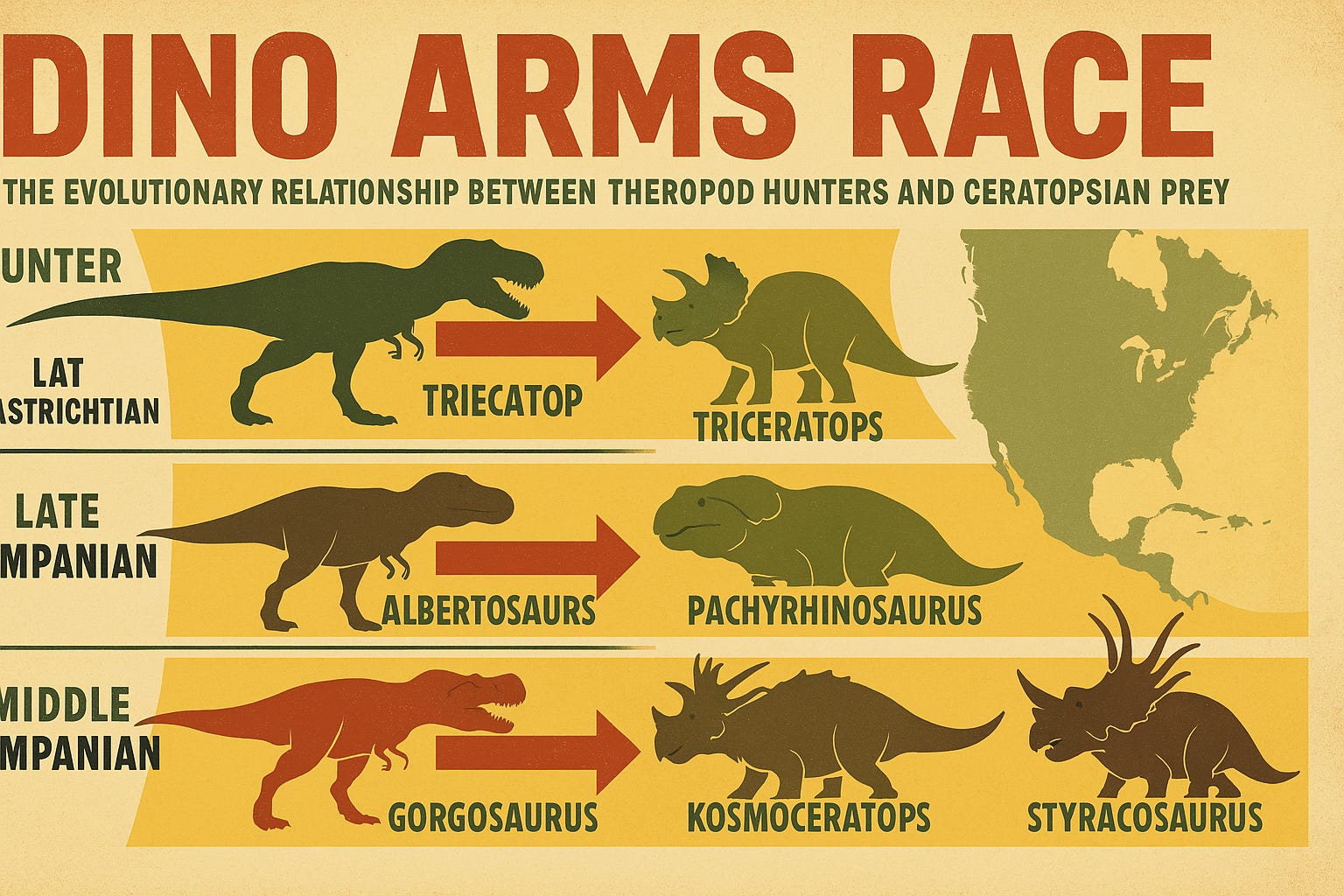
It was like they were made to fight each other.
Ceratopsians started with a pretty grill, which grew until it was almost like a shield to be used for defence. The Psittacosaurus was bipedal, and easy to knock over. The following generations had four legs and were more like tanks. Ceratopsians also got a lot bigger. By the end, they were a substantial dinosaur size with raw power. Then there are the horns, again, they started as not much more than something pretty to look at. But as they evolved their ended up with not just one weapon, but a multitude, and when partnered with their grill and strength, it turned them into a great defensive machine.
But at the same time their large carnivore theropod frenemies changed too. A Gorgosaurus is a big dinosaur, around eight meters long, but it’s late model version the T Rex was twelve meters. Ol Gorgo was what Ravi Shastri would call a big unit at three tonnes, sexy Rexy was up at seven. But the most important difference was their bite; the Gorgosaurus could chop at 3500 pounds of bite force, while the King of Jurassic Park bit down at 7000.
No one really knows whether the two were in this million-year evolutionary arms race, but on paper, it looks like they were.
One got stronger, the other one bit harder, and the dance continued until aliens came back and took their pets home.
Cricket has been in the same evolutionary war for more than 200 years between batters and bowlers.
***
The cricket community was upset at how many runs were being scored. Mostly because of all the boundaries. It was not the first time through its long history. These often ended in conversations about what was, or wasn’t, cricket.
But this time, they decided they needed a change. People were hitting the ball out of the ground, huge scores were boring fans. Something must change, they thought, and then brought in a radical new concept.
A net.
That would be placed around the outfield, instead of a rope or fence. A small three foot net that would collect the balls. Instead of a boundary, you got two runs, then had to leg the rest.
They trialled their new run-saving measure, and it had the opposite effect; people kept scoring fours, but they added fives. And on one ball, a ten was scored.
This was in 1900. The first full decade after cricket had changed, and already, people wanted it as it was before. But you cannot stop evolution and development.
Cricket has always changed, and many times that affects the balance between bat and ball.
***
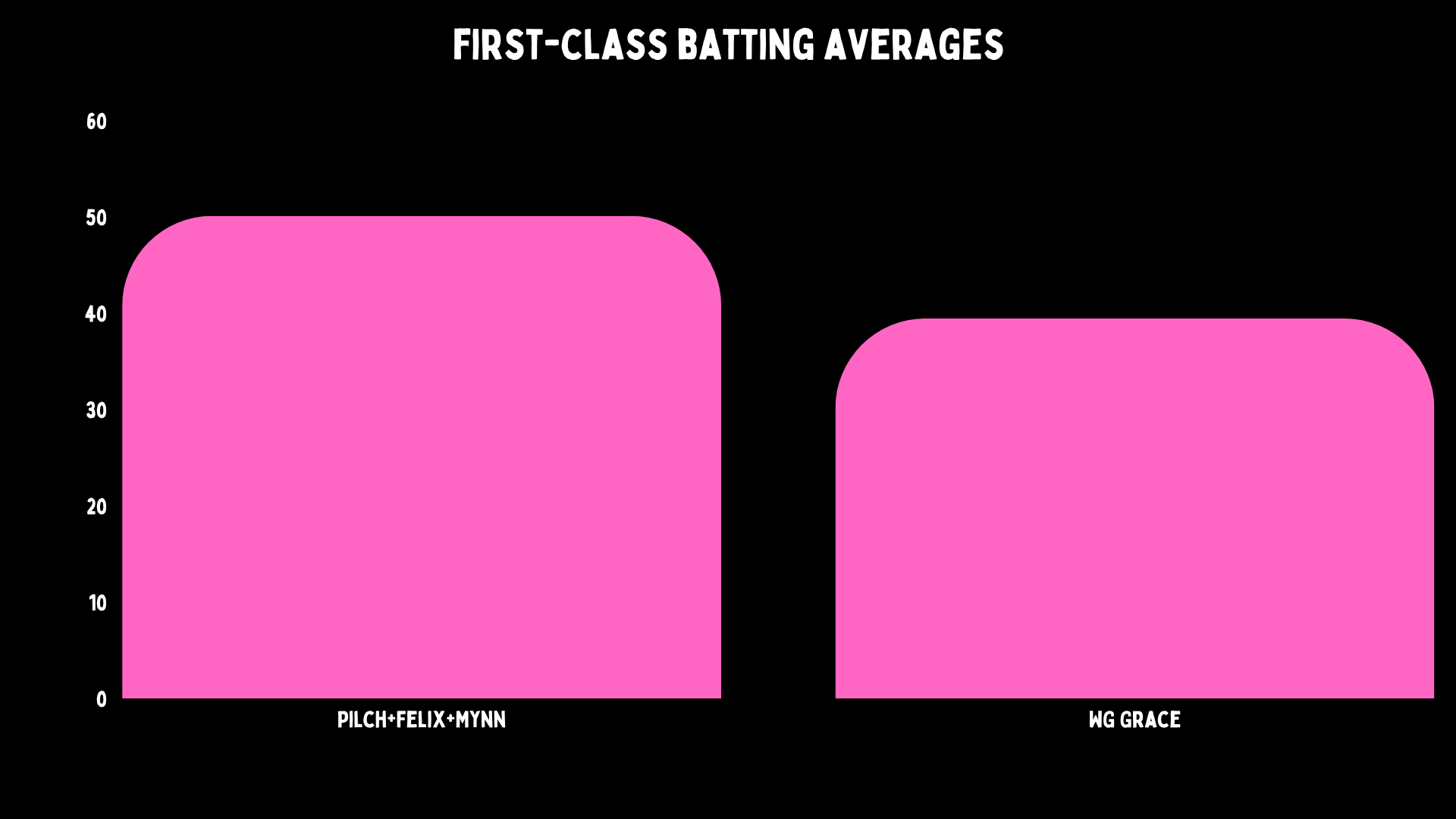
The best batters of the early 1800s couldn’t average 20. Fuller Pilch, Nicholas Felix and Alfred Mynn were the Fab Four (or Terrific Three) of the pre-Oil era of the World. They were great, and yet none of them even averages 20 with the bat. Pilch would end his career with three hundreds in 229 games.
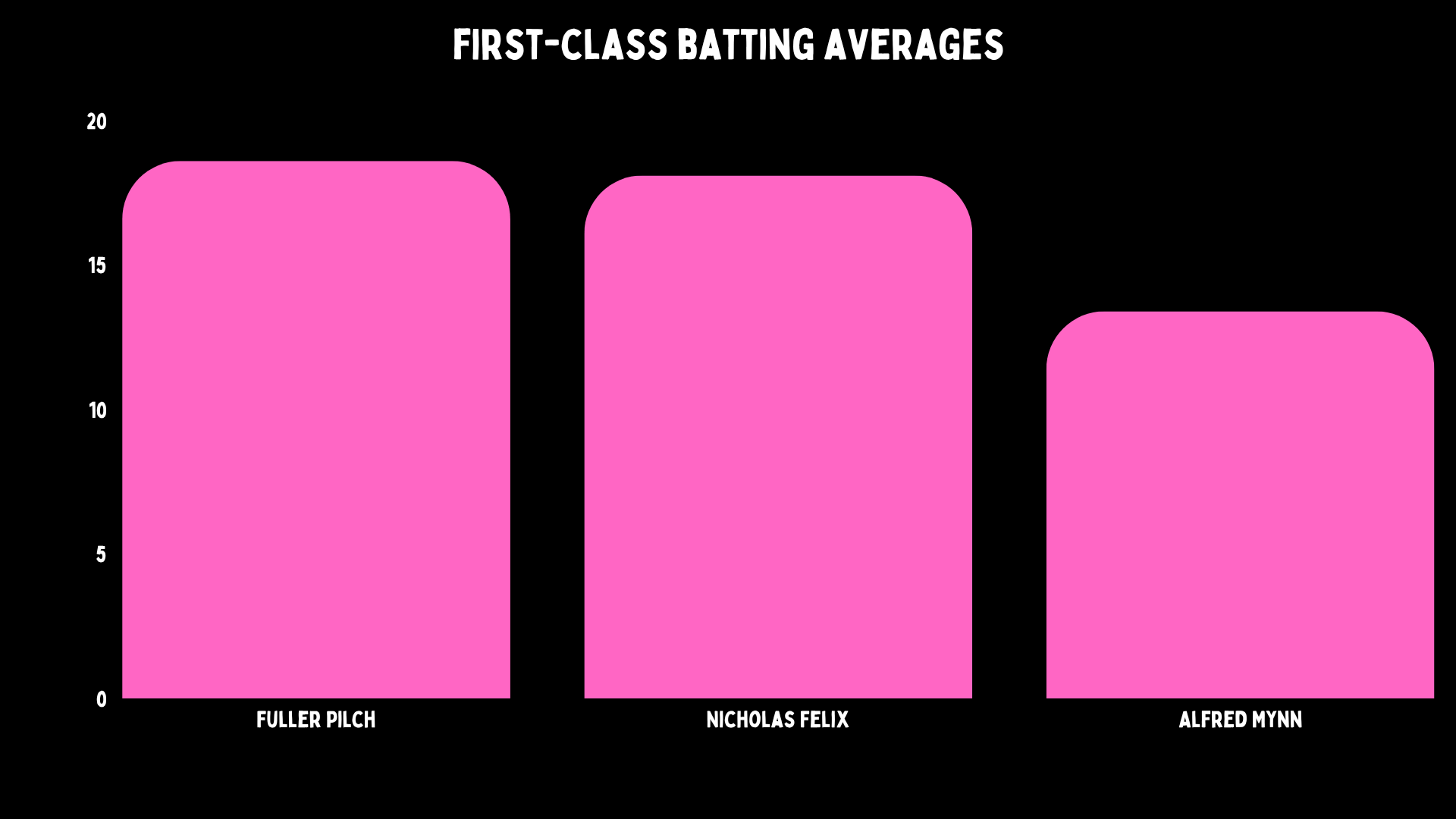
Yet in the next generation, WG Grace comes along and averages nearly forty, despite playing for 43 years. That is how much cricket started to change. Before the pitches were so bad, that a great batter was someone who made what we’d now expect from a decent number eight.
Cricket was always in constant evolution. When the balls were rolled along the ground, we played with something closer to a hockey stick. When they went slightly higher, the current style of bat was started. But they weighed over four pounds (modern bats are closer to 2p, 8oz) because the bowling was underarm. This allowed older, slower and stronger men to bat, but it wasn’t very skilful.
And more importantly, between 1788 and 1864, there was a cricket civil war. It was fought between the traditionalists, who believed that underarm bowling should be the only form, and those who saw how much better round-arm (and then overarm) bowling could become.
Throughout all that, the bowlers, regardless of style, dominated.
But there was one massive technology change that happened then. Before, you would walk out with a bat, and little else. But after a series of terrible broken legs, including to Alfred Mynn, leg guards came in. Almost straight away, people said they were against the spirit of cricket.
This and the overarm bowling combined to completely change our sport.
Before that, batters had two styles, frontfoot or backfoot, that they decided on before the delivery. Pads - at least in theory - allowed protection to make those decisions later.
The person who changed that was WG Grace. Because he lived in the final part of the cross-over period, it seemed to change his style. Meaning when the ball was full, he would come forward, and when short, go back.
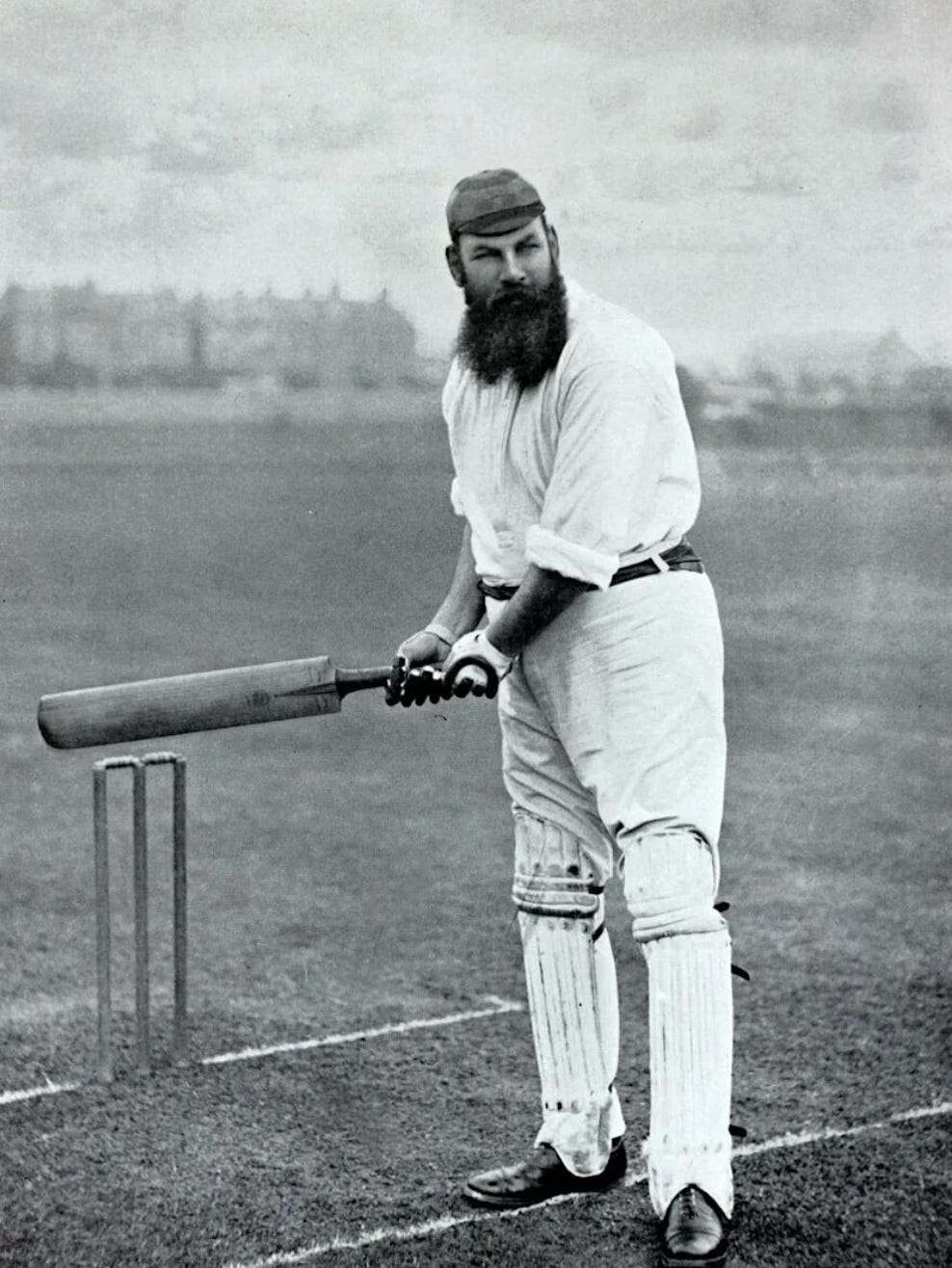
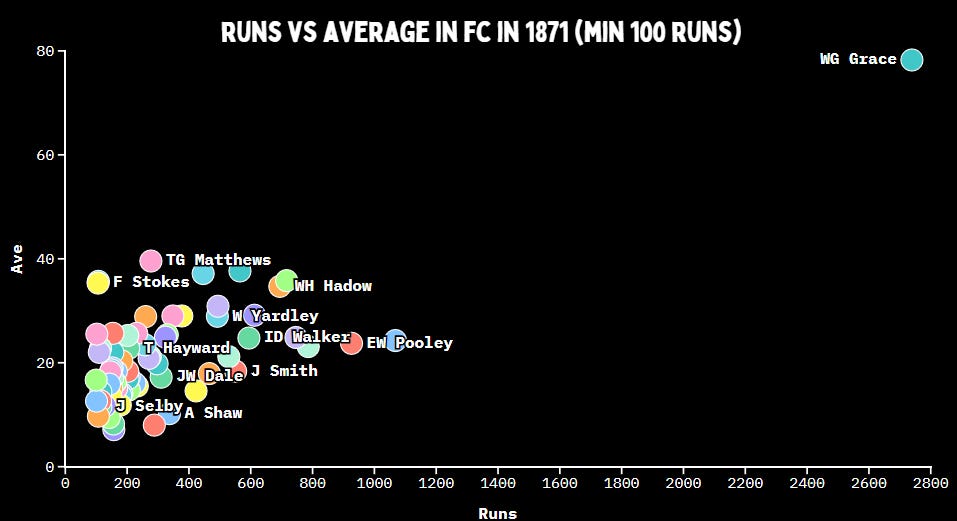
Two years after overarm bowling was legal, 1866, Grace scored over 500 runs in first-class cricket and averaged 52. No one else made that many runs while averaging more than 33. And he was 17 years old.
Five years later, he was making over 2000 runs in a season more than double the next best player. And he averaged nearly 80, and that was also basically double the next best again.
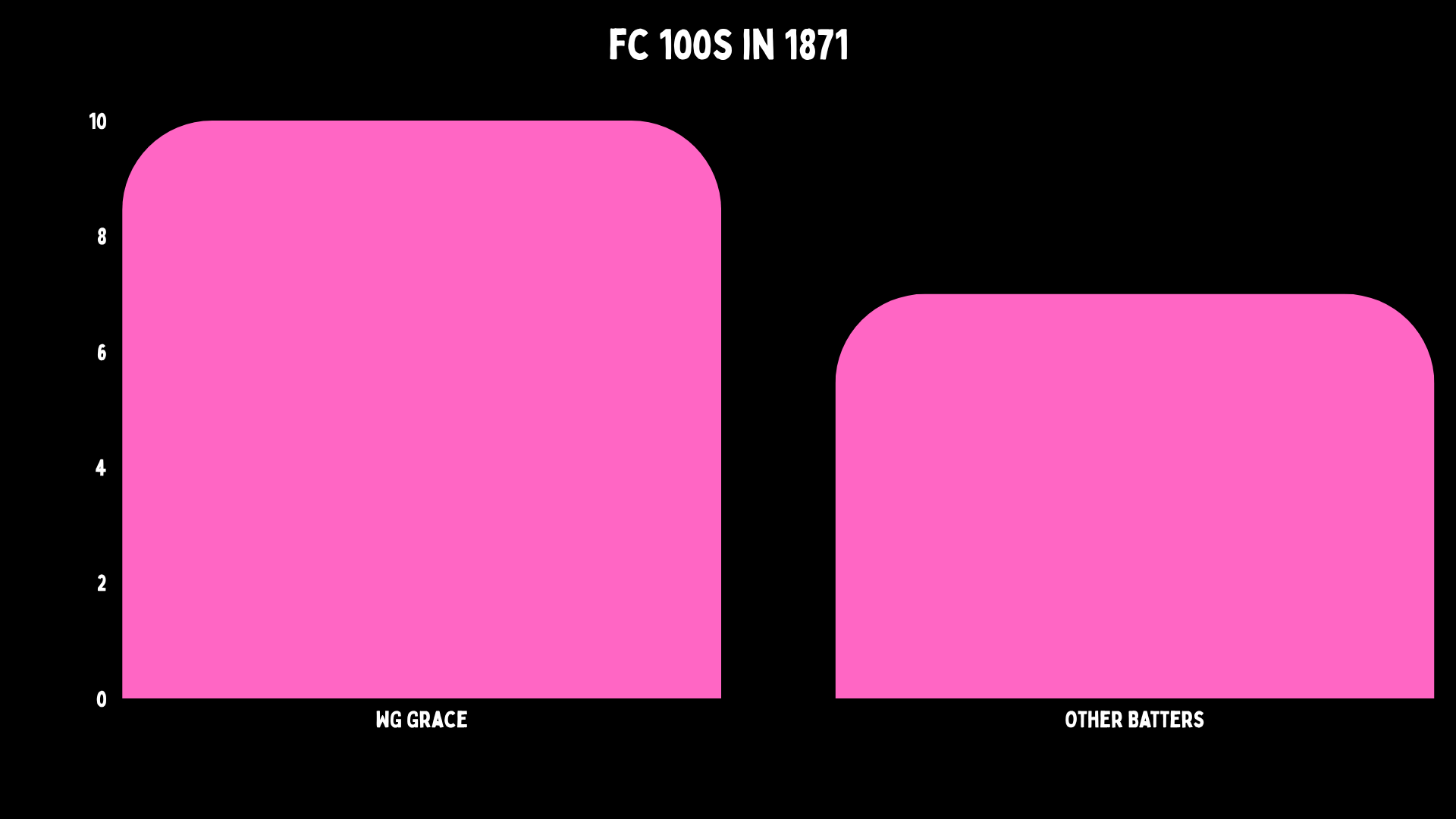
In that year, he made 10 hundreds, the rest of cricket added seven more.
So footwork was really the batters’ first evolution to combat overarm bowling, and turning the game from one completely dominated by bowlers to the game we have now.
But almost instantly, the bowlers worked out they needed a new game plan too, and Grace’s Test nemesis, the Demon Fred Spofforth, came along.
Inventing swing, or swerve, as it was called then.
Spofforth studied baseball, and believed he could swing the ball left, right, up and down. So, with what? He was probably talking more about drift and drop. Either way, until that point, bowlers had never needed the ball to do much in the air. But Grace and the batters who followed him were too good, so Spofforth had to find a new way.
This led to bowlers using the seam more to get the ball to swing or deviate.
So now the bowlers had a whole new weapon, but the next change happened through agriculture. With muckspreaders and the liquidation of manure, suddenly, pitches became flatter from the 1890s. Quite simply, before they were shovelling shit to make the grass grow, making the surface impossible to bat on.
But that is where batters used their big advantage, those pads. Arthur Shrewsbury of England was an incredible player from the late 1800s and a great of early batting. On top of averaging 35.5 in Tests, he was also a master at pad play. What he did then will sound silly now, but he ensured his pads were there if he missed the ball. Bats did not get wider, but to bowlers, it would have felt that way.
Flat pitches and pads moved the game a lot. But the last big change in that era was that cricketers wised up. Until this point, because of the gentlemanly nature of cricket, it was seen as uncouth to try hit the ball to the legside.
That was changed by someone who was called Colonel H. H. Shri Sir Ranjitsinhji Vibhaji, Jam Sahib of Nawanagar, GCSI, GBE, but more famously known as Ranji. They named a first-class competition after him. Born and raised in India, he ended up learning his cricket in England. And this was an incredible player. Due to racism at the time, he only played 15 Test matches, but he averaged 45 in those. His first-class average was 56.4 with 24,692 runs. Against the three biggest counties – Yorkshire, Lancashire and Surrey – he made 6234 runs while averaging over 70 against the latter two and 50 against the first. This was a batter of incredible skill and talent.
But when he started, he wasn’t very good, because he was afraid of the ball. So his coach tied his foot to the ground, and Ranji had to come up with a new shot. That was the leg glance. And it opened up the field and became the first time cricketers were trying to hit to leg.

Victor Trumper took that idea and weaponised it. He didn’t really care where the ball was bowled, just where the fielders weren’t. And for the first time, teams had to bowl wide of the stumps to slow him down. That had never been needed before, as the wickets were so poor and no one was using the pads.
This led to Jack Hobbs, who is probably the first batter who looks like he could play in the modern game. He leads batting into the next few generations using the techniques that took over 100 years to build.
At the same time, the bowlers had to manipulate the ball better. With Spofforth’s first attempts with swing, bowlers worked that even more. And also started hitting the seam as well. The USA bowler Barton King came on the back of Australia left-arm swing bowler JJ Ferris and the man with the golden bowling average, George Lohmann.
However, it was spin that had the biggest impact, when Bernard Bosanquet invented the wrong’un. That ball for 25 years was seen as against the spirt of cricket. Again. But really it was the bowlers finding a way to slow batting down.
But as batters started to pick that, the skilful bowlers made way for faster men. Jack Gregory and Ted McDonald dominated the Ashes of 1921. And from there it seemed like faster bowlers on flatter wickets were the way forward. In county cricket, and the new team called the West Indies, they also tried shorter faster bowling.
It was not until the Ashes of 1932/33 that teams went all in with the bouncer. That series was called Bodyline.
It was not done in a bubble though, great batting was dominating cricket. The West Indies had George Headley, England’s trio was Jack Hobbs, Wally Hammond and Herbert Sutcliffe, New Zealand appeared with Stewie Dempster, and Australia had a bunch, but how about we just mention Don Bradman.
Bodyline was an entire cricket tactic around slowing down one man. But really, it was overdue. Batters had taken over the game, they had to be stopped.
England won the series bowling at their heads with as many fielders as they wanted behind square, it was a great tactic. However, it was seen as - you are not going to believe this - just not cricket.

But weirdly this time, it worked. And people just stopped bowling it. They changed the laws, and you couldn’t have more than two fielders behind square on the legside.
Bodyline was seen as a part of this. But actually, they didn’t change the law for decades.
This is Peter May facing Ken “Slasher” McKay at the MCG in 1958/59; it might seem to a modern fan that he’s accidentally bowling down legside. But he wasn’t. Inswing bowlers, and also offspinners were aiming there on purpose.
They would do that with a field with a few legside catchers in place, and then a fine leg, because there was no rule on how many fielders behind square on the legside. Slasher was a medium pacer and fifth bowler, yet in his career, his economy was 1.78. On this day, as May scored his ton, he bowled nine overs for 16 runs.
This wasn’t just him; it was an entire decade. Left-arm finger spinners often bowled around the wicket as well.
This is Fazal Mahmood’s field in 1954. He was much more than a medium pacer, truly one of the best bowlers ever. And yet, it’s like he has a reverse slip cordon in place.

When Jim Laker takes his 19 wickets in a Test, you can see two fielders catching behind square at all times. What is hard to see is the other men, covering boundaries, or even just in the ring. This was about the bowlers getting wickets, but mostly it just ended runs.
I know this will sound weird, but bowlers couldn’t stop batters from scoring, so they stopped them from scoring.
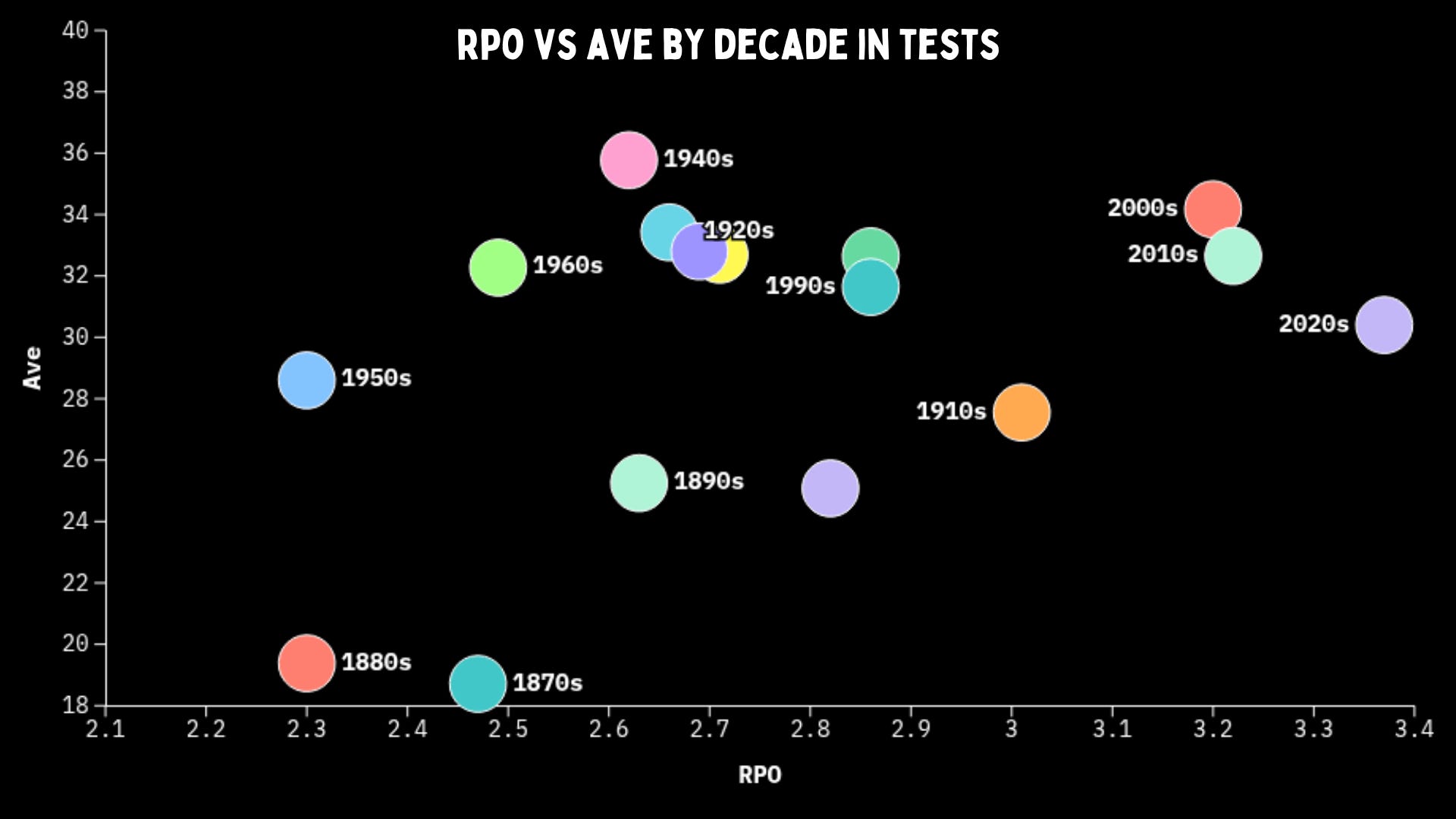
Let me explain. The 1950s end up as such a weird decade in our history.
Every other period is clumped together with another decade. 1870s and 80s are close with the pre-liquid manure era. Then you have 1890s that match the 1900s, and the 1910s, which falls on either side of the war.
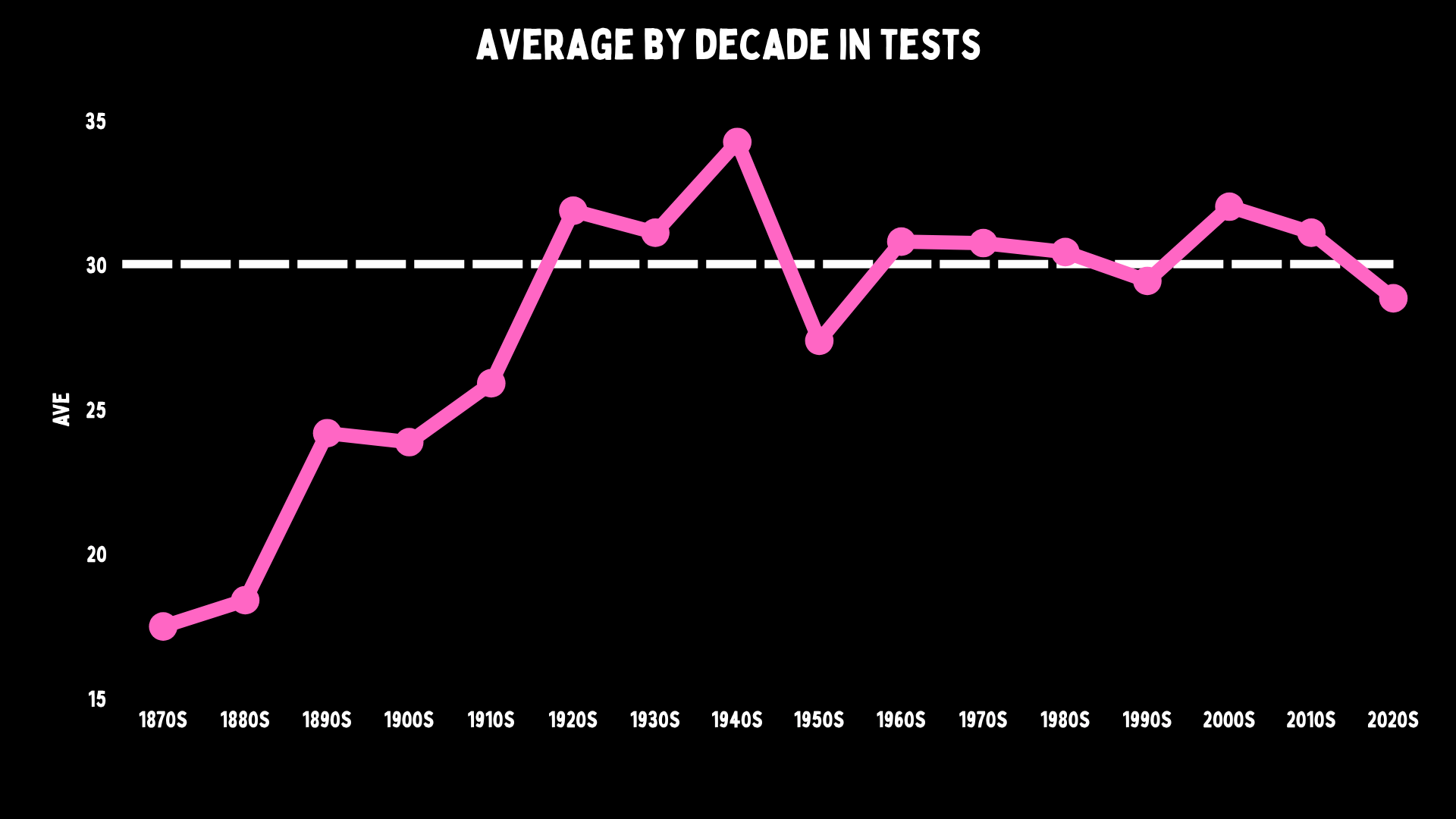
Most of the decades are grouped together then, from the 1920s until the 1990s. They are different at times, but similar enough. Then there is a jump up in the 2000s.
But look at the 1950s, completely on their own. It was as if cricket stood still.
In the early 1900s, baseball had what they call its dead ball era, when no one could hit home runs. In cricket, we took it a step further, no one could score runs, or get anyone out.
If you only look at decades since the end of the First World War, the 1950s stand out. They don’t look like they are part of the rest of cricket.
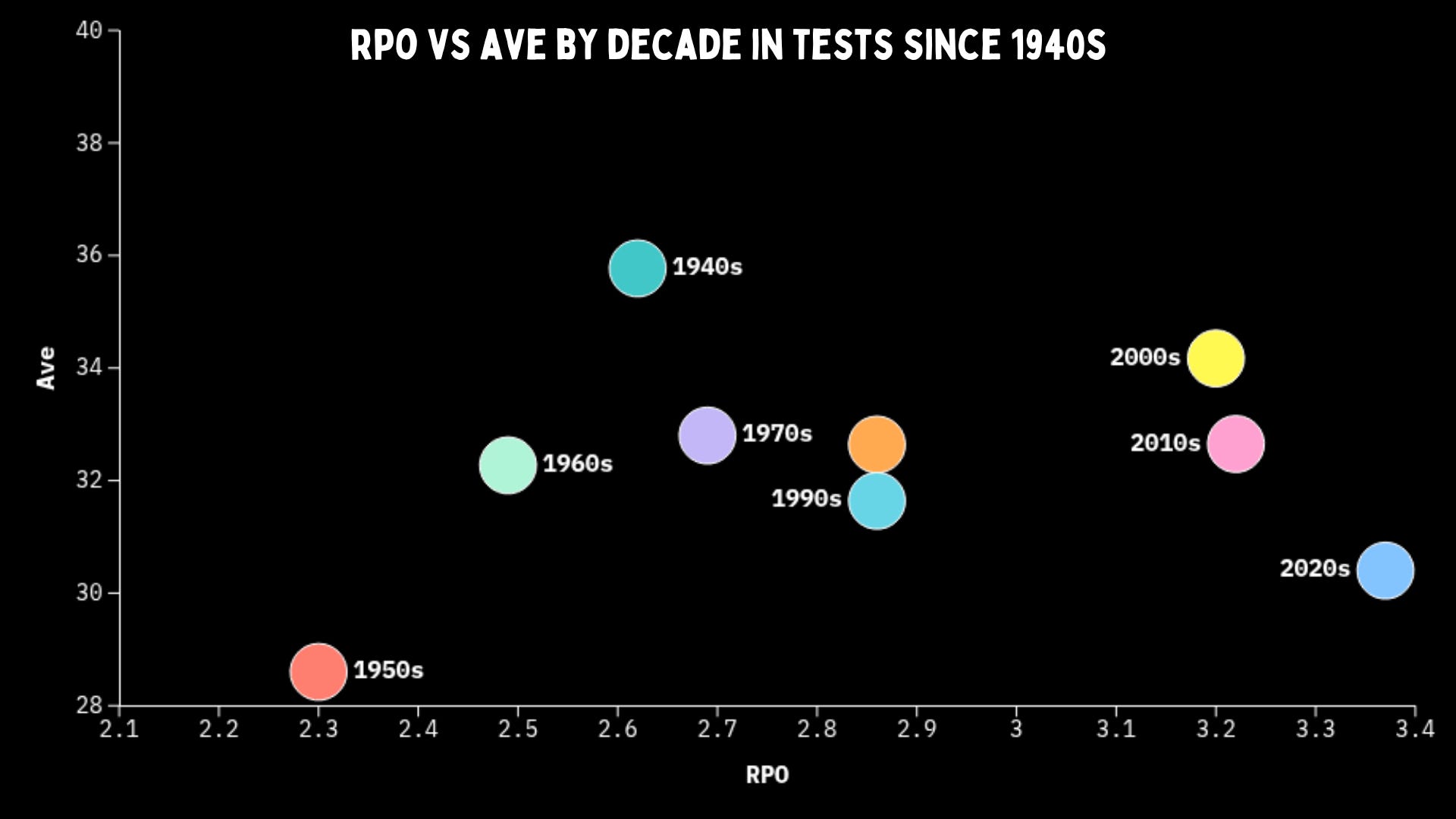
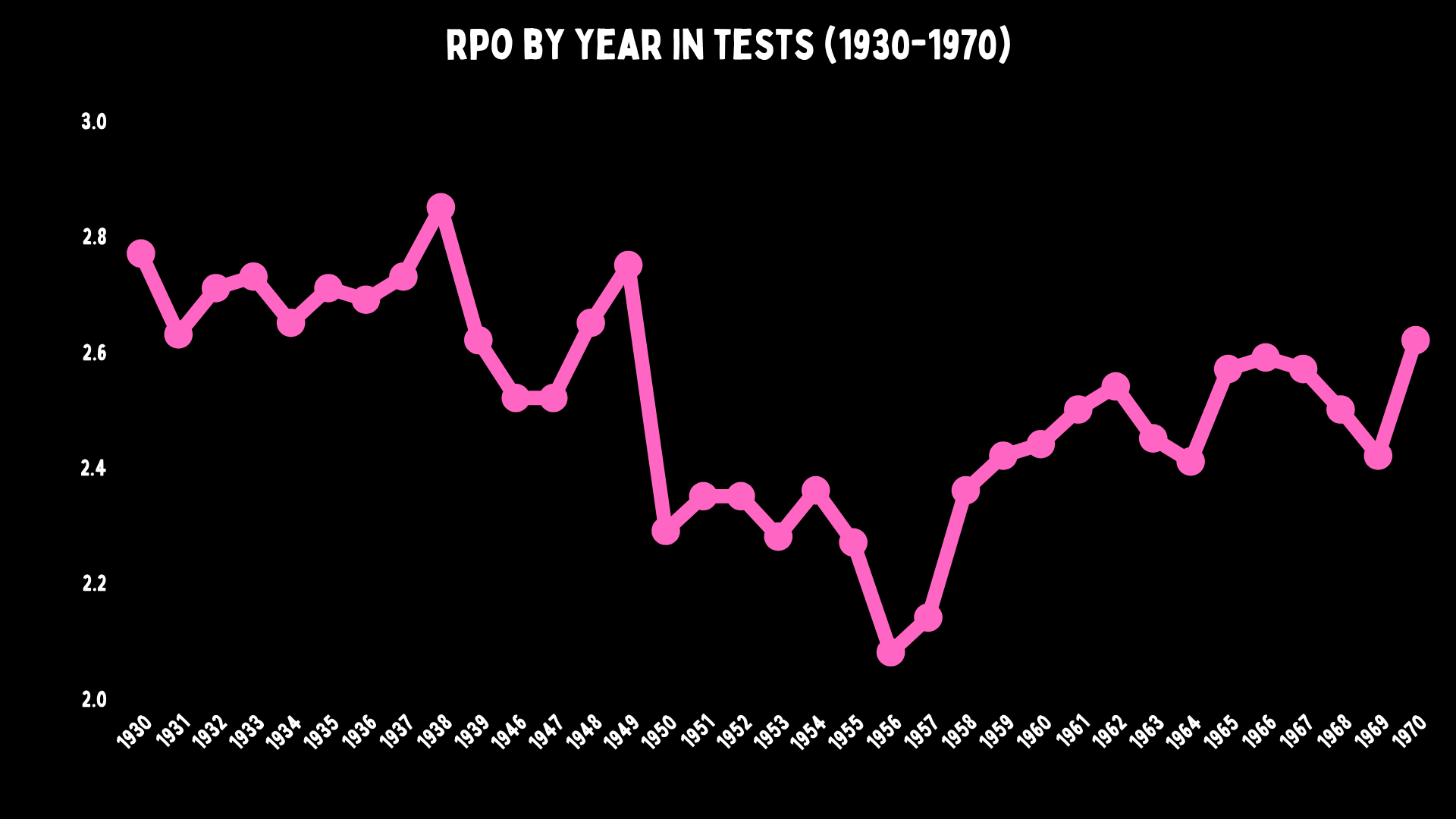
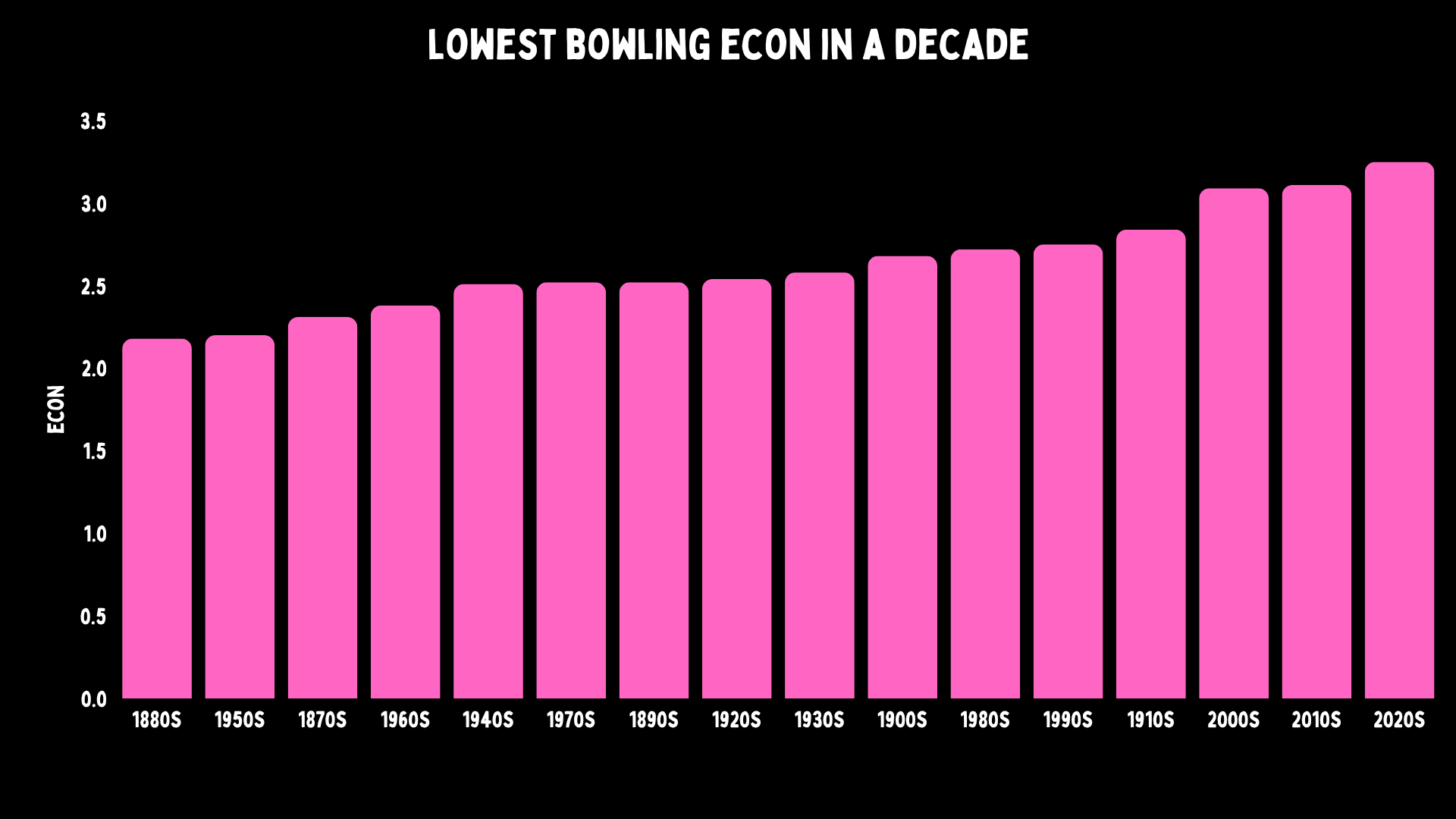
The drop off of runs after 1950 is really clear, and the MCC changed the laws in 1957, and by that stage they had to. The runs per over by that point had dropped to almost under two.
Another change happened around this time. Before World War 2, Australia, South Africa and the West Indies started covering their pitches. The reason was weather. A wet wicket in England, or even New Zealand, would be hard to bat on but rarely dangerous. A damp pitch in Australia would be horrendous.
So even though English cricket was upset, over time, wickets around the world became covered. It meant that conditions played less of a role. It also meant wickets were usually flatter, and crucially harder for longer.
It also created two different styles of cricket. Until this point finger spinners had been good everywhere. But now we had Asian wickets for finger spin, and others that were seam heavy.
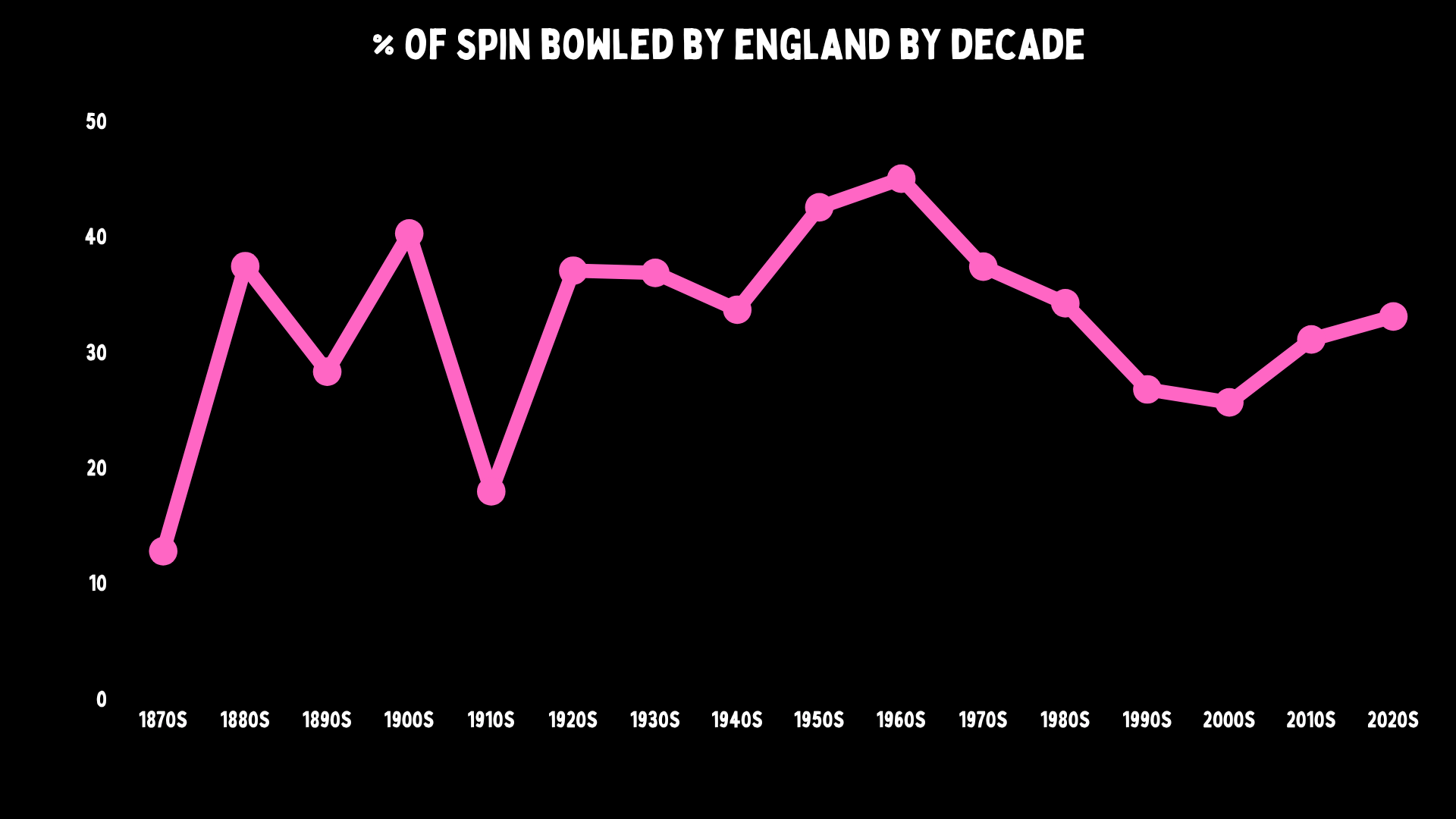
From the 1920s to the 1950s, England used spinners for more than 40% of their overs. From the 1980s until now, it has been around 20% each decade. The 2020s started off with it under 20% for the first time ever. The same thing can be seen in Australia, South Africa, New Zealand and the West Indies.
Until 1963, Tests were dominated by finger spin, medium-paced seam bowlers and swing. The finger spinners and seamers struggled with the pitches as they got covered.
Swing bowling was killed by something else. We originally had a backfoot no ball in cricket, but the bowlers were sliding their feet. The decision was made to go to a frontfoot law.
This had unintended consequences: with the frontfoot no ball, bowlers no longer had low, slingy actions that produced swing. They came over the top of the ball, and they got taller, hitting the pitch harder.
This explosion all came together in the West Indies, where tall, hit-the-deck bowlers took over. It was about seam movement, and their two main deliveries were back of a length and bouncers.
This meant batting was no longer for technicians; there was more athleticism to it. And also, courage was required.
Batters would fight back, but with the help of equestrians. The first helmets didn’t really work, as they couldn’t handle the impact of the ball. The second lot didn’t work because they were motorbike helmets and no one could hear the calls. Finally the horse riding helmet manufacturers made the best option, and we’ve been tweaking it ever since.
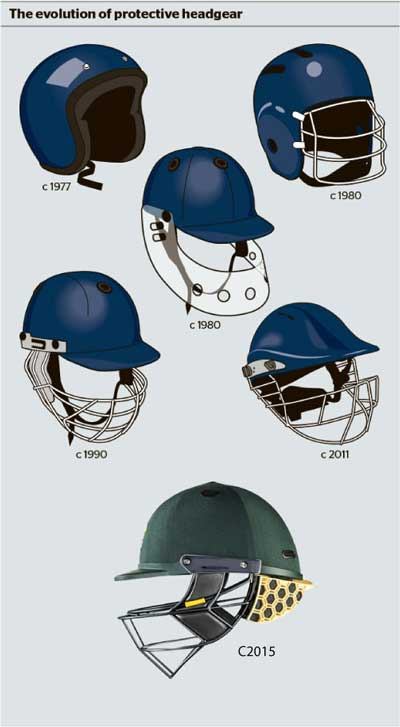
It wasn’t just the heads that were in danger. In the mid 1970s, cricket didn’t even have proper thigh pads, within a few years the sport had them, helmets, chest pads and even early arm guards. Cricket was facing an invasion of pace, and the sport evolved almost as quick.

Everyone needed a backfoot game, and survival suddenly meant something very different in cricket.
Andy Lloyd was an English opening batter playing in his first match in 1984. He got to 17 not out before Malcolm Marshall ended his career. Lloyd has still never been dismissed in Tests.
What has never ceased to amaze me is that just as batters had to protect their head, bowlers found something to go after, their feet.
It took a couple of decades for reverse swing to go from something that happened by accident to being weaponised by Pakistani bowlers. And shortly after, elsewhere in the world. What this meant was that seam bowlers had become even more important, as they had their first ever old ball weapon.
For the first time since the 1950s, batting averages dipped below 30. Faster and taller bowlers dominated with a weapon they could use in their third spell.
But just as they started to take over, the market intervened. Many people say that batting is capitalist, and bowling is socialist. One is about the individual gains that hopefully trickle down to the rest of the team. The other is a collective effort in which only endless, communal hard work will save you. So it would make sense that cricket’s biggest capitalist gamble, limited overs, would help the batters.
Invented to get crowds in on Sundays in England, sponsored by countless cigarette brands, exploited by the rebellious Kerry Packer and then commodified by Asian cricket markets, limited overs cricket took over the 90s as the main form of entertainment.
The Australians had a headstart on everyone, as Packer played so many ODI games, and then the players started to take the format seriously earlier than most.
This helped their Test game, because in the 90s, frustrated by draws, they decided to use their limited overs skills to ensure their games ended quicker, and in their favour. In 1980, Australia scored at 2.7 runs an over, in 2003, they were the first side to score more than four.

The weird thing was that during the 90s, everyone was complaining that ODIs were ruining Test batting.
Yet, no one seemed to noticed that these new scoring rates meant that bowlers had ceased to be the only hunters in Tests. The 2000s were the first decade ever with a scoring rate of more than three an over. Every decade since the millennium has been over that mark.
Limited overs also changed batting in two very important ways. The reverse sweep was the first shot where you had to change your position before the ball was bowled and hope it worked. And after that, several different - but related - shots were invented to get the ball behind the keeper. Meaning that now the entire field was open.
In cricket, that almost felt like a scientific breakthrough. But the sport was about to have a real version of that.
After Muttiah Muralidaran made his debut, things changed. His action was weird. Bowlers had always delivered with the front of their wrists pointed at the target, or at least a flash of that happening when spin was bowling.
Murali inverted the wrist. When he delivered, it his wrist was staring back at him. His bowling style looked awkward and illegal. For generations, people like him had been shunned, but Sri Lanka fought back, and they brought science into the game.
This was the biomechanics era of our sport, which not only ultimately cleared for Murali, but also we found that all bowlers were actually straightening their arm.
This allowed for common sense, after generations of bowlers had been literally ‘thrown’ out of the sport, often on little more than weird actions, or because we didn’t know about hyperextension.
Of course, not everyone was happy about this new information era. It changed what we understood about cricket. Because as Saeed Ajmal once told us, science is the man.
Our next big change was when a little-known semi-professional cricketer named Paul Hawkins was given LBW for a duck on his pro debut. He invented a ballistics-inspired umpiring tool he called Hawkeye. Even before it was used to officiate decisions, it changed how umpires called them on the field. Altering lines for spinners and lengths for seamers.
It changed finger spin the most. In the early ball by ball era, we have data that says left handers were scoring more against offspin than right handers. From the moment the umpires start to self correct for LBWs, that changes.
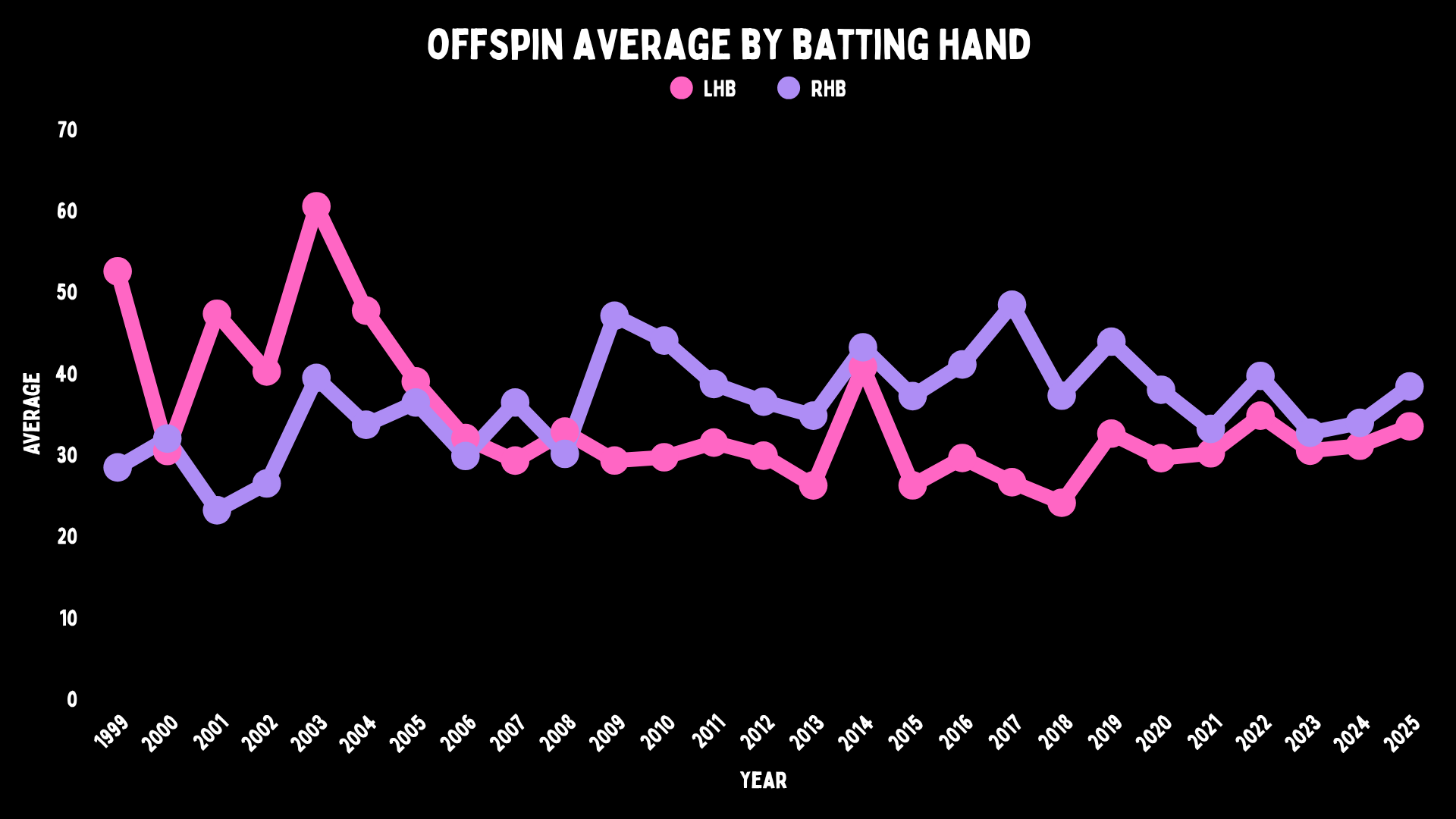
A whole generation of tall batters with big front steps were suddenly struggling. Kevin Pietersen against left-arm spin became one of cricket’s first memes.
Shane Watson’s front pad became an even bigger one. Because while seamers were slower to work it out, soon they were pitching the ball up further, and bowling straighter. The line just outside offstump came in several inches.

That was partly because of DRS, but also a new delivery that had been invented. Well, not invented, harnessed. For a 100 years, bowlers ran in and tried to hit the seam. Attempting to keep the string as straight as possible. But for some bowlers that was tough, and the ball wobbled.
In the 2000s, Mohammad Asif and Stuart Clark perfected this delivery deliberately. Then Jimmy Anderson with English cricket spread it around the world.
When they did this, batters were dominating Tests. Since the beginning of ODIs, there was always more runs made by batters in red ball than 50 overs. And in the early 2000s, Test batting went into a crazy era, maybe the greatest period of the batriarchy ever.

But that was stopped by the wobbleball era (which also overlaps with WTC - but the averages dropped two years prior). It even changed the powerplay in limited overs, but the white ball is so bad, it ends quickly.
So in Tests, players started making fewer runs, and they seemingly all went to white ball.
Bowlers fought back in one format, and were almost replaced by robots in the others.
From 1960 until the end of 2025, the average of pace bowling per wicket was 30.7. That dropped to 25.4 in 2018, the lowest in that period. It was 26.3 in 2019 and 27.1 in 2021. This was incredibly low, and it meant that batters had to work out a whole new method. Modern legends like Steve Smith and Virat Kohli saw massive drops in their averages. There is always more than one reason why. But the wobbleball was certainly a huge part.

So batters did find a new way.
They called it Bazball.
In many ways, this is the modern version of the entire struggle. It was a combination of white and red ball skills, was short-lasting, and ultimately annoyed fans around the world. Maybe the perfect cricket invention for this era.
Bazball gave the modern world a unified, that’s just not cricket moment. In meme form.
***
The story goes that when the first forward defensive shot was played, people said that wasn’t cricket. This is a sport that seems to only look back, never forward. Yet, it has changed in every era.
But for all the push and pull of bat vs ball, the Impact Sub might have one of the biggest effects.
It is a quirk of fate that cricket never had substitutions. Basketball had subs from the 1890s. American football in the 1940s. And by the 1960s Football and Rugby did the same. There is no reason they need it and cricket doesn’t. A sport that goes for five days, and can have an injury in the first minute should need subs.
But no real movement ever came in to change it.
Eventually we had the ODI supersub rule, that made almost no sense at all. The Big Bash tried an X-Factor, a name that hid another flawed substitution theory. And now we have the Impact Sub. Still not an ideal plan, but the first to have a real impact on cricket.
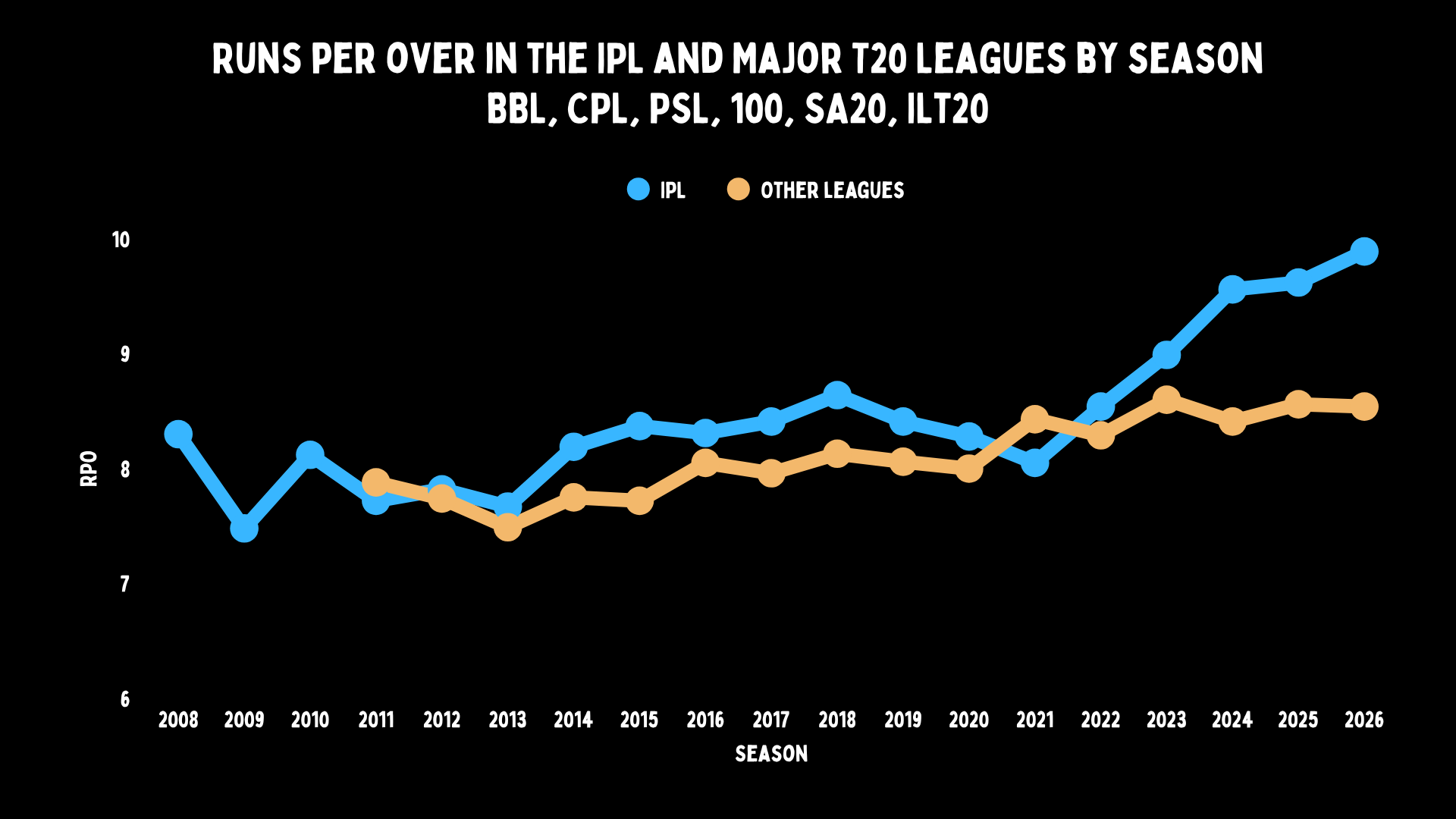
The IPL was always a high-scoring league, but it was not a standout on runs per over. The Impact Sub has separated the IPL from all other franchises. It is not cricket, it is cricket with substitutions.
In the early 1800s, cricket started its decades long fight for and against the overarm delivery. If that had not been won, cricket wouldn’t be the second biggest sport in the world. In the 1970s, limited overs cricket started its journey to change the game commercially, turning it from a government run sport to pure capitalism.
And now we have the Impact Sub.
Is this cricket’s next great evolutionary leap? One that will help batters more than bowlers in their eternal battle. Bowling is not extinct, it just has to evolve.