


Cricket has a new soundtrack.
Clicky Ponting. That is what they are calling him.
Many cricketers have been said to have magic fingers, especially the spinners, but could any of them get wickets when they were standing at slip or silly point without ever touching the ball? Brian Devine is in a league of his own.
With every click of his fingers, he was tricking batters and umpires into believing there was an edge being taken.


He turned the internet into Good Areas, as they started an investigation into Devine’s assistance to his wicketkeepers. The stats are clear, the video even more so. When he is around, you are far more likely to be out caught behind because of Devine’s black magic fingers.
It is a weird story that is captivating people around the world, even outside of cricket. This is about the club game, not even a first XI, and yet it’s everywhere. So far we’ve had statements from his mother-in-law, and he has lost his local sponsorship from a restaurant.

All because, as the ball passes the bat in amateur cricket, he clicks his fingers to try to get wickets.
If anything good has come from this, it’s that his fingers have completely disproved the ‘they always know when they’ve hit it’ myth. As some of Devine’s victims are walking after his clicks. His fingers are creating a Pavlovian dog reaction from poor unsuspecting amateurs who just wanted to make some runs on their weekend.
Of course, what the man from Saltburn Cricket Club has done is nothing new. Players have tried clicking sounds with their mouths or fingers for years. It’s remarkable how successful it can be. But Devine turned it into an art form. The click of his fingers was clearly better timing than his batting.
Piers Morgan, a noted expert on clickbaiting, said he was “the biggest cheat in cricket history.”
But cricket is built on cheats, sharp practice, and all sorts of dodgy reimaginings of the game. At Lord’s, the main gates are named after W.G. Grace.

That is a man so famous that he has featured in a major film as God almost 100 years after his peak. He was a great player, and yet was happy enough to use any means necessary to win a game. Someone who would put the bails back on when he was bowled, yet they called him the Doctor.
Grace helped build cricket. And our sport would not be what it is without its dodgy bastards.
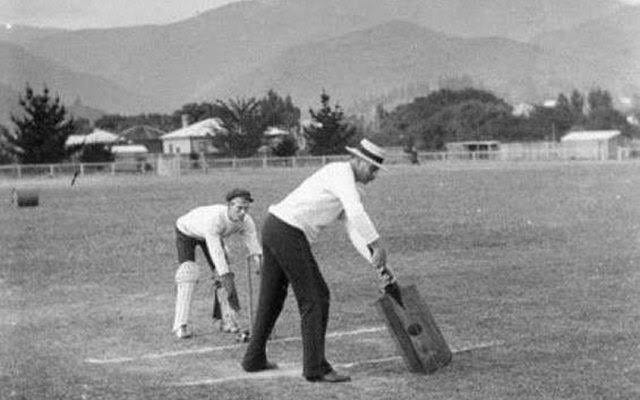
In 1771, a man called Thomas ‘Daddy’ White was playing for Chertsey against Hambledon and he came out to bat with a piece of wood that covered the stumps entirely. It was a close match, and lots were being bet on the result. So this annoyed the opposition and many bettors.
Daddy White was impossible to bowl, but also couldn’t score. Either way, we needed a law to stop this happening again.
Not long after, again at Hambledon, Tom Walker, or as he was known then, Ol’ Everlastin, bowled a delivery with a round arm. He was told very sternly as a professional to stop that nonsense.
You have probably not heard of Walker, but perhaps the story of John Willes has been told to you. He did the same thing decades later, having been inspired by his sister bowling in hooped dresses. That fashion and sister story is not true, but Willes did bowl round-arm. What he did was start a huge cricket civil war between normal modern bowling and under-arm factions that lasted more than 40 years. It was Edgar Willsher’s overarm blasphemy that finally took cricket to what we have today.
All three of these men broke the laws of the game. But without them, the sport would be largely insignificant in the modern world.
Would we really want to watch five days of underarm bowling?
Hilariously, you know who didn’t break the laws of cricket? Greg Chappell, when he insisted his bowler (and brother, Trevor) deliver the last ball under-arm to beat New Zealand. With six runs to tie (not even win), Trevor rolled the ball along the ground to Brian McKechnie so he couldn’t hit a six. That was perfectly legal at the time. Not cheating at all, just an Australian captain knowing the laws really well.
That kind of behaviour from the Aussies dates back to Warwick Armstrong. The Big Ship, as he was called, was an Australian captain who basically pioneered Aussies being dicks on the field. And in terms of cricket laws, he did all sorts of weird things. He was the first to bowl down the legside on purpose to slow down run scoring (now you can be called for wides) and he knew the declaration laws better than the umpires, which also led to him bowling two overs in a row in a Test.
But the best story has to be when young allrounder Frank Woolley made his debut. He came out to bat and then had to wait roughly 18 minutes before facing a ball. Armstrong, understanding the laws better than those who wrote them, bowled warm-up deliveries while Woolley just had to wait for ages before facing his first ball in Tests.
The Big Ship was almost always within the laws, but he knew them so well he’d turn them into a shiv to shank the opposition.
Cricketers have eternally looked for loopholes. Batters using their pads to stop being bowled led to LBW. Bodyline and creepy inswing bowling led to only two fielders behind square on the legside. Putting all the men out on the boundary made us invent the ring for limited overs. Cricketers push the limits of the game.
Like South Australian David Hookes when going up against Victoria in a Shield match. They put everyone on the boundary when he was with the tail, so Hookes hit the ball out to the deep, and then purposefully ran one short so he could get singles and keep the strike. Kieron Pollard would do the same years later, which is when the loophole was finally closed.
Steve Harmison tells stories about how Freddie Flintoff was so strong that on days when the ball was doing nothing, he could squeeze it out of shape so it had to be replaced.
That is technically ball tampering, and that has been going on for about 100 years. Before reverse swing there were people picking at the seam to get it lifted for the ball to dart more. But there were also players who put things on the ball to get it to swing more.
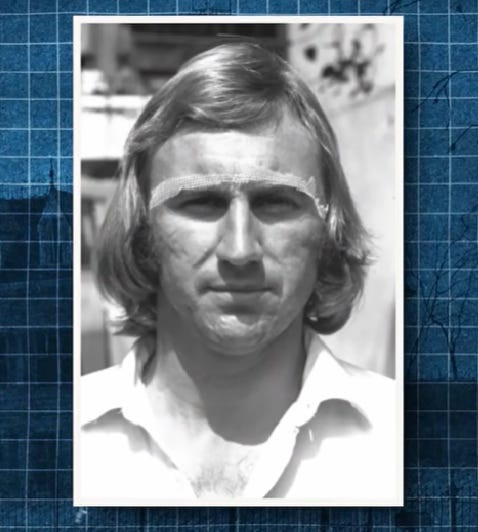
There is a short Wikipedia article on the Vaseline Affair, when English seam bowler John Lever was accused of putting vaseline on his forehead, and then rubbing the ball there to get more swing. Before that bowlers tried hair gel like Brylcreem. After that would include sunscreen, Murray Mints and cough drops. After Covid, some players put furniture polish on their trousers to shine the ball more.
For reverse swing, we’ve had bottle tops, sandpaper, zips on their trousers, and picking the ball up from the gutters at grounds and dragging it across the concrete. Not to mention that in modern cricket, it is basically impossible for a fielder to throw more than 25 metres without “accidentally” bouncing the ball onto the square.
Some players actually go as far as using the same things vets use to strengthen horses’ hooves so they can better scratch the ball. Oh, and Shahid Boom Boom Afridi bit it.
The Pakistani legend also got caught running, or dancing, maybe twirling, on the pitch. Matthew Wade did as well. Not to mention the many players who have done that by bowling or running down the surface too.
That is old-school stuff, but we’ve had modern techno-shenanigans. Remember when Australia worked out the DRS system by checking in with the changeroom who were looking at the replays? That was called Brain Fart Gate, if I remember correctly. You can’t do that any more. We used to have a technology called Hot Spot that would show if an edge was taken, but batters were using lubricant on blades to try to nullify the thermal signal.
How much would the Big Ship have liked to try that in his day? He would have nullified the shit out of thermal signals - his blade would have been fully lubed up.
If that is hi-tech, a rudimentary version was fake fielding. It may not be everyone’s thing, but there is a devious art in this. A wicketkeeper up at the stumps jumps down the legside, swears like they have missed the ball, and then looks back over their shoulder to sell the lie, waiting for the batter to start their run and to quickly take off the bails. Fake fielding has also become illegal, after every time in a limited-overs game the ball would be fake thrown once, and then really thrown a second later.
Another newer law change is that if a bowler hits the stumps on the way in, it is a no ball. This would be Finn’s Law. After the tall England seamer Steven Finn who would run into the stumps when bowling. This was one of those things that really should have been fixed years prior, but is also worth a shoutout because Graeme “Biff” Smith largely used it to get into England’s head, and then later to save his own wicket.
And then there was Vinoo Mankad. He saw Australian Bill Brown leaving his crease early, and decided to run him out, twice. Some things within the game need to be fixed, but they paint the line down on the ground before the start of play. Jonny Bairstow, Bill Brown, or Sammy Jones can be upset, but they also could have been behind the line while the ball was live.
Those run outs and stumpings are legal, but they hurt some people’s feelings. And those apart, there are plenty of dodgy things that happen all the time in cricket.
With the advent of better cameras for TV, we started seeing that a lot of pro players were appealing for one hand, one bounce. These were the sorts of things that we just couldn’t see earlier.
When it came to slowing cricket down for tactical reasons, we have maybe our longest list. Ishant Sharma coming out with two of the same gloves, Stuart Broad taking off a shoe to ensure he didn’t have to bowl extra overs, or Moin Khan stopping the world entirely to try to save a game against England. A crowd favourite would have to be Gulbadin Naib’s exploding hamstring. If you are a batter in the potential final over of the day, and you haven’t stopped to garden the pitch, are you even really cricketing?
Cricket’s greatest cheats are different from other sports. Our game is so fucked up that our biggest villains are actively trying to lose games. Forget steroids to make you big and strong so you can be the fastest runner ever, in cricket, we try to lose so Hansie Cronje can get a leather jacket for his wife. Making our cheating dirtier, but also more stylish.
Australia have been world leaders in cricket and sharp practice. In the 1999 World Cup, they wanted to keep their points going into the Super Six round, so they needed the West Indies NRR to be higher. They required 49 runs to win with Michael Bevan and Steve Waugh at the crease. They took 127 balls to get the runs . At one stage Phil Simmons’ mild medium-pace wobblers went for two runs in three overs. Eventually the West Indies finished the game with wides and no balls.
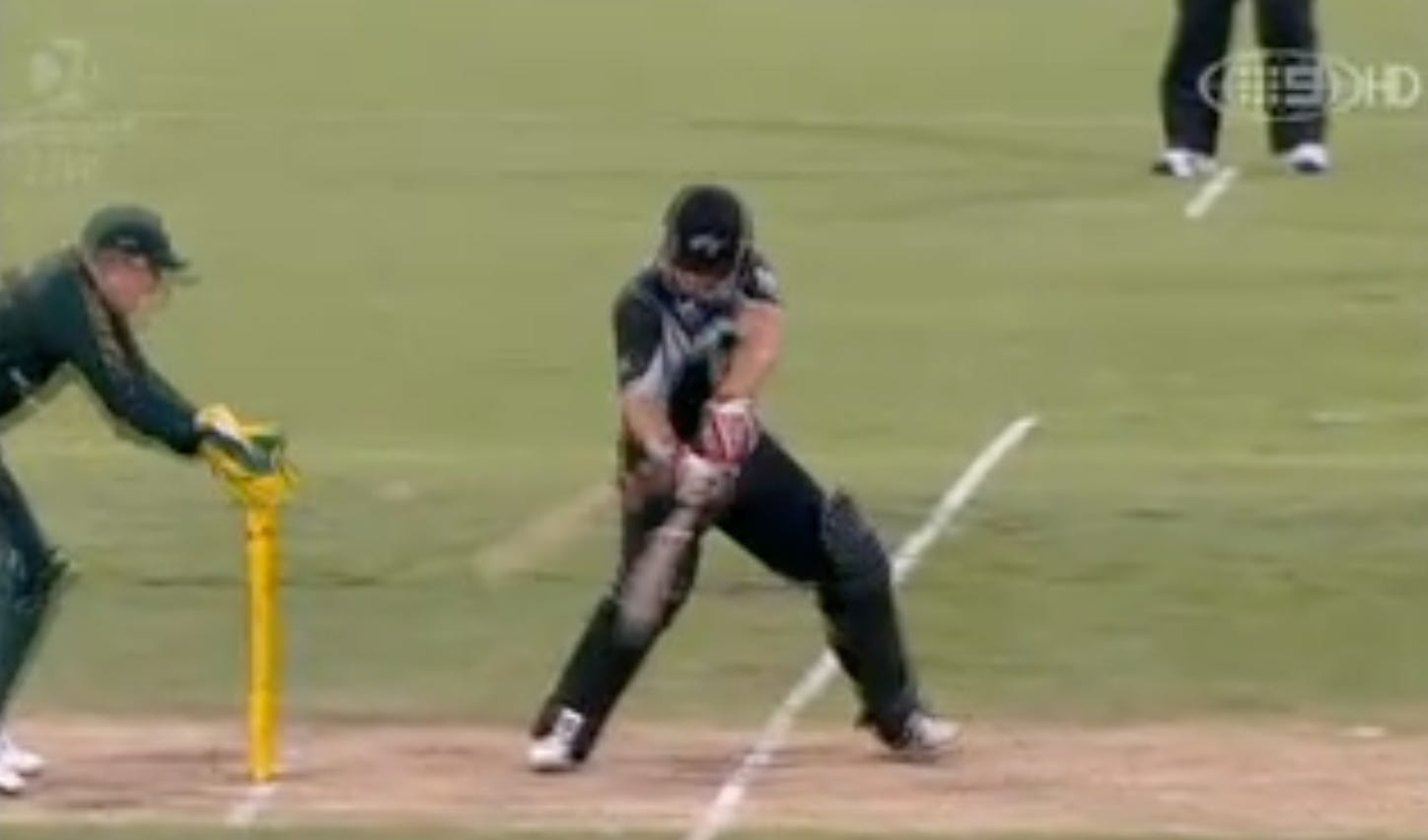
But Australia also have a thing with touching the wickets. Brad Haddin claims that he did not know his hands punched the stumps before the ball even got to him in an ODI against New Zealand. Neil Broom was “bowled.”
Weirdly, Australian hands are odd. Years before, Australia appealed when a bail was on the ground against Sri Lanka, and here is Justin Langer, who claimed to not know his hands knocked it off.
But that is where we started, right. With the man famous for bails, WG Grace.
The actual story about him replacing them after being bowled is probably not true. If anything, it was maybe another player who did that.
But WG was a man who believed the rules (or laws) did not apply to him. When Sammy Jones went to garden down the wicket, Grace ran him out and sort of created the Ashes as a billion-dollar industry. Another time he was upset that a player was not available to him, so he travelled across the town and basically kidnapped him from the Australian side. He pressured umpires and scorers numerous times. He was certainly involved in betting on matches one way or another. And he scammed the cricket world by telling everyone he was an amateur while actually making more money than professionals.
The Doctor was the name given to him because of his profession. But it’s also about reverence. If you call someone ‘doctor’, you are giving them respect. And yet that man had little of that for the game.
Brian Devine is just a club cricketer with an opposable thumb fixation and a twitter friendly nickname.
Unlike him, the Doctor, and many others, built cricket, one dodgy action at a time.