



Buy your copy of 'The Art of Batting' here:
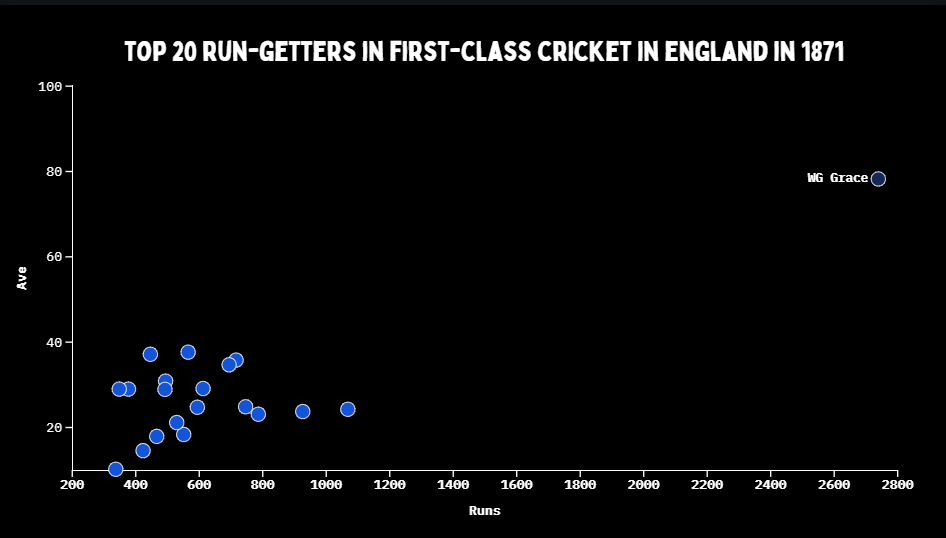
In the summer of 1871, William Gilbert Grace scored 10 tons. The player with the second-most runs that season averaged less than a third. All the other batters made seven hundreds in total, and nobody made two.
At the age of 23, W.G. Grace outscored the rest of cricket combined.
Eight years later, he became a qualified doctor. But Grace wasn’t a saint; he was a misogynist, cheat and shamateur. The man with the big beard had a flawed legacy everywhere, except batting.
If we look at the greatest cricketers of all time - not just international cricket - Grace would have an excellent case to be compared with the likes of Don Bradman and Garry Sobers. And his impact on the sport as a whole might just be at the same level. He invented modern batting. It may not sound revolutionary, but for 70 years there were front or back foot players, making a decision before the ball was bowled. Grace opened up batting by picking the right ball.
But Test cricket starts after his peak. His record of 1098 runs in 22 Tests looks mediocre. But in the matches he played in the 1880s, he was 78% better than other top-order batters. For context, the only person with a greater ratio than him for a long period of time is Bradman. However, it is only from 11 games.
After that he was still playing Tests, but he’d already turned 40. He was 50 when he played his last match, and his peak was before Test cricket began. His average in Tests is 32.29, which may not sound awesome to modern fans. But it does not tell you how great he is.
Grace might average less than 40, but like many batters, that is only part of the story.
***
There are 20 batters with 5000 Test runs who average under 40. Alec Stewart is the only one who makes it to the 8000 club. His career is fascinating; he plays in a weak English side and keeps wickets for over 60% of the time. His career average drops below 40 only in his final few matches. He has solid numbers when batting in the top three, and that’s even when he was a wicketkeeper in some of those. The magic number for Stewart is that he goes at 35 when keeping, 47 when not.
His numbers also hold up quite well compared to his teammates, Michael Atherton and Nasser Hussain, who also make this list.
There are a bunch of modern batters too.
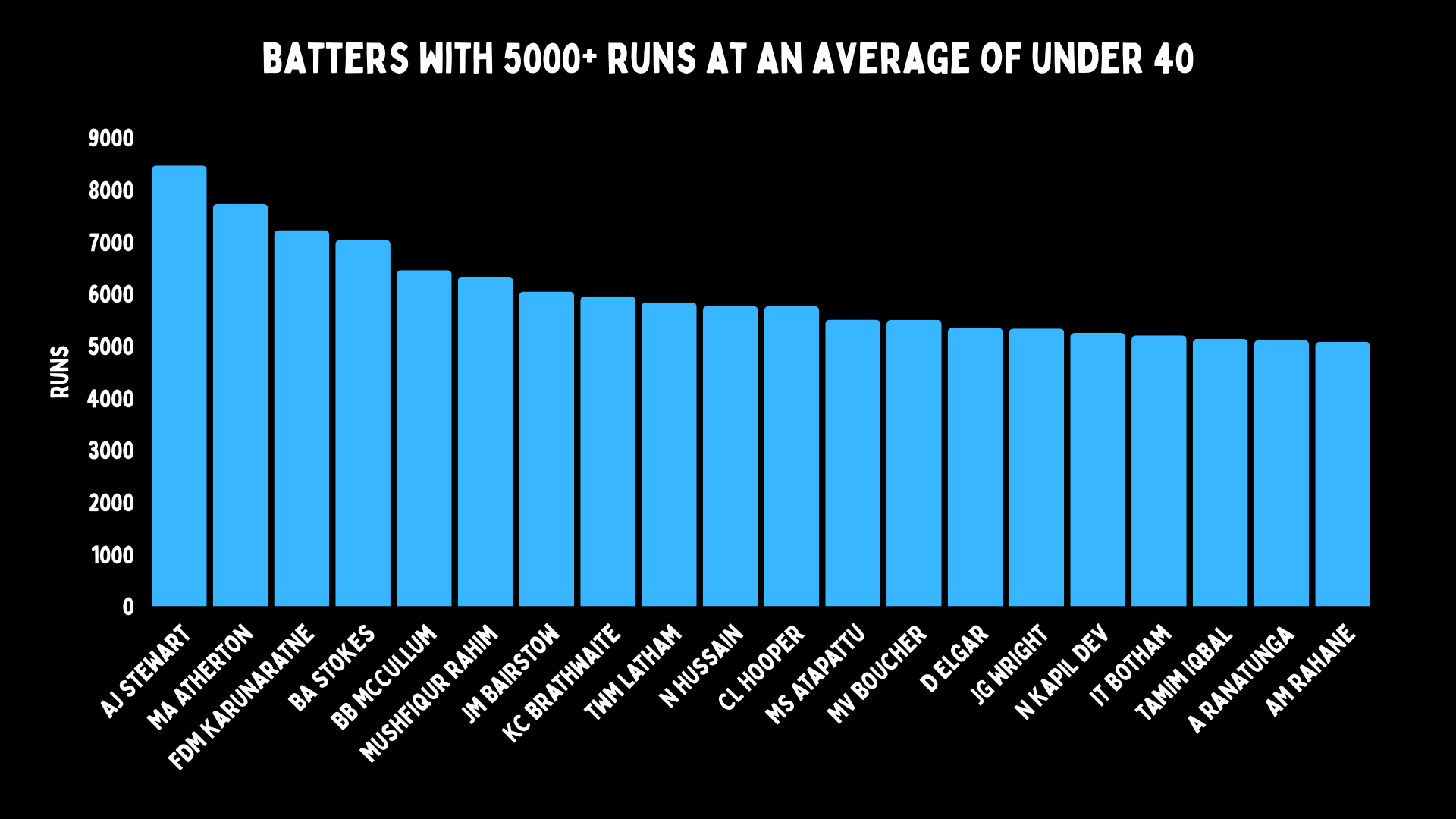
Dimuth Karunaratne retired recently, and he was certainly one of the best openers for a period of time. He was never a star, so averaging a lot in this era was always going to be tough. But he was a smart player. Ben Stokes almost inspires the idea of a list like this on his own. There are reasons he doesn’t go at more than 40, but we also know what he can do. He’s a player of great knocks, but not a great batter.
Right after him is his Bazball partner, Brendon McCullum. He did eventually become better in the second half of his career. In the 2010s he went at 44, but it was all the way down at 32 in the 2000s. Like Stewart, most of this was giving up the gloves. On the flip side is Jonny Bairstow, who averaged more when he kept wickets. He’s a bit like Stokes because of his ability to play game-changing knocks. He was at the forefront of Bazball’s beginning, showing his teammates how it’s done once Stokes and co decided to play that way. But he also gets bowled an awful lot.
This piece is about averages, but eras and pitches play a part.
Two Golden Age Aussie batters followed by four modern Proteas top the match factor charts. It makes sense; pre-World War I was not an easy time to bat, and so if you made runs, you popped. The same for modern South Africans, and they also play on tough wickets at home. Three of these are openers: Victor Trumper (although he averaged 33 up top, and 49 otherwise), Aiden Markram and Dean Elgar.
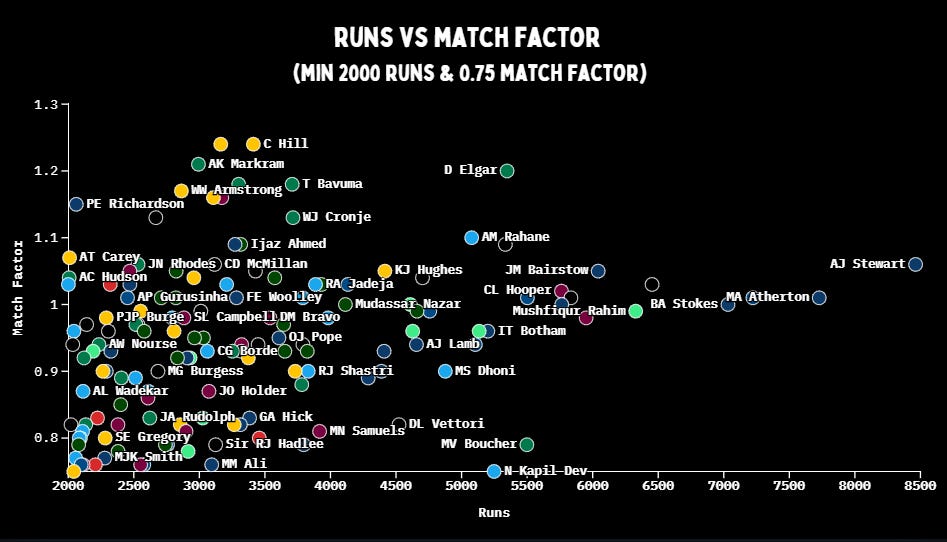
But the overall match factor is often influenced by the strength of your bowling attack. It’s part of the reason why we see these South African batters with great numbers.
