


Smriti Mandhana punished England’s new ball attack. It wasn’t reckless, or loose. It was a star player realising that the opposition was not at their best, and this was her chance to shine. She plays the ball on line, and England bowl wide or too straight, allowing her to pepper each square boundary with ease. India lose wickets, but not hers, as they race to 122 in the first session.
But in the second, Mandhana changes gears. Her captain, Harmanpreet Kaur, comes in to defend, and the star goes from a run a ball to a more normal Test rate. In the first session she slashed, in the second, it was a grind. That is proper batting - gearing up and down. She is a star, but also a professional. She performed each duty as it was needed.
As the partnership is about to take the game away from England, Harmanpreet has an arm issue. A long break occurs, and when it is over, Issy Wong bowls a benign length ball wide of the stumps, and Mandhana nicks behind.
At the time, it feels like a missed opportunity; Mandhana could have got her name on the board, and she also could have won the match. But when she is out, the score is 190/4.
England will not pass that amount in either innings.
***
India went in with only two seamers for this match, England had three. On a green surface on day one the ball nipped around, and it would continue to do that on the second. The difference was that England’s seamers could not deliver three good balls in a row, so there was no pressure.
The Indian seamers are slower. Kranti Gaud is about Issy Wong’s pace, but Sayali Satghare is considerably slower. Pace is important, but on a wicket like this, accuracy matters more. Both Gaud and Satghare swing the ball, and importantly in different directions. Gaud’s natural swing is in, and Satghare’s moves away.
That was a conscious choice. England’s bowling attack was built on bigger names and faster pace, but at times Bell and Filer seemed to be fulfilling the same role.
But Gaud on this surface might have been even better when bowling the wobbleball, and Satghare downed Alice Capsey with a huge hooping inswinger. England’s attack is quick, India’s is skilful. They dissected the England techniques, finding every gap between bat and pad, exploiting angled blades, and at times humbling the local players. It was like their seamers, analysts and bowling coaches combined to make a symbiotic partnership. Gaud got on the honours board, Satghare ended up with four tidy wickets in the match.
England had all the seamers, India had the better ones.
Along with Mandhana, Harmanpreet and Deepti Sharma also made fifties. Even on a tricky surface, India should have scored more from the situation they got themselves in. But by scoring that big first innings, they set up the match.
England’s last chance was early wickets in the third innings.
Shafali Verma opened up with Mandhana. She was out in the 21st over, the score was 88/1, and the contest was over. Sadly Mandhana couldn’t get her name up on the board, despite two half-centuries. But another batter did.
India had a plethora of wicketkeeping options available to them in this match. They could have picked Richa Ghosh. Instead, they chose Yastika Bhatia. According to Mel Farrell, one of the reasons was fitness - they believed that over the four days, picking the fitter player would be better. It was quite a choice, being that Bhatia bats at number three, so would have a much bigger workload.
They backed their selection process and believed in their fitness standards. Both were right.
The game might have been over when she came in, but Bhatia signed the death warrant in style. Cover driving along the ground and in the air. England had plans that she constantly escaped from. The only time she looked nervous was when she made the decision before lunch that she wanted her hundred, without seemingly clueing in Deepti that she would need more strike.
Luckily at the break she was 91*, and had the chance to chill out before coming back out to put her name on the board.
Her wicketkeeping was not always great, missing some chances, but she was clean and competent behind the stumps. India bet on her fitness, and she spent most of the game in the action proving them right.
And Richa Ghosh didn’t pout. In the second innings, she knocked up an unbeaten declaration fifty from her comfy space as a specialist number seven. She was asked to do less, put her ego to the side, and nailed it for the team.
Everything India did worked.
They came in with three spinners, with the thought being they needed a left-armer against England’s never-ending line-up of righties. But having the two offies of Deepti and Sneh Rana was what really worked, as spinning the ball back in caused all sorts of issues on a wicket with occasional turn and low bounce.
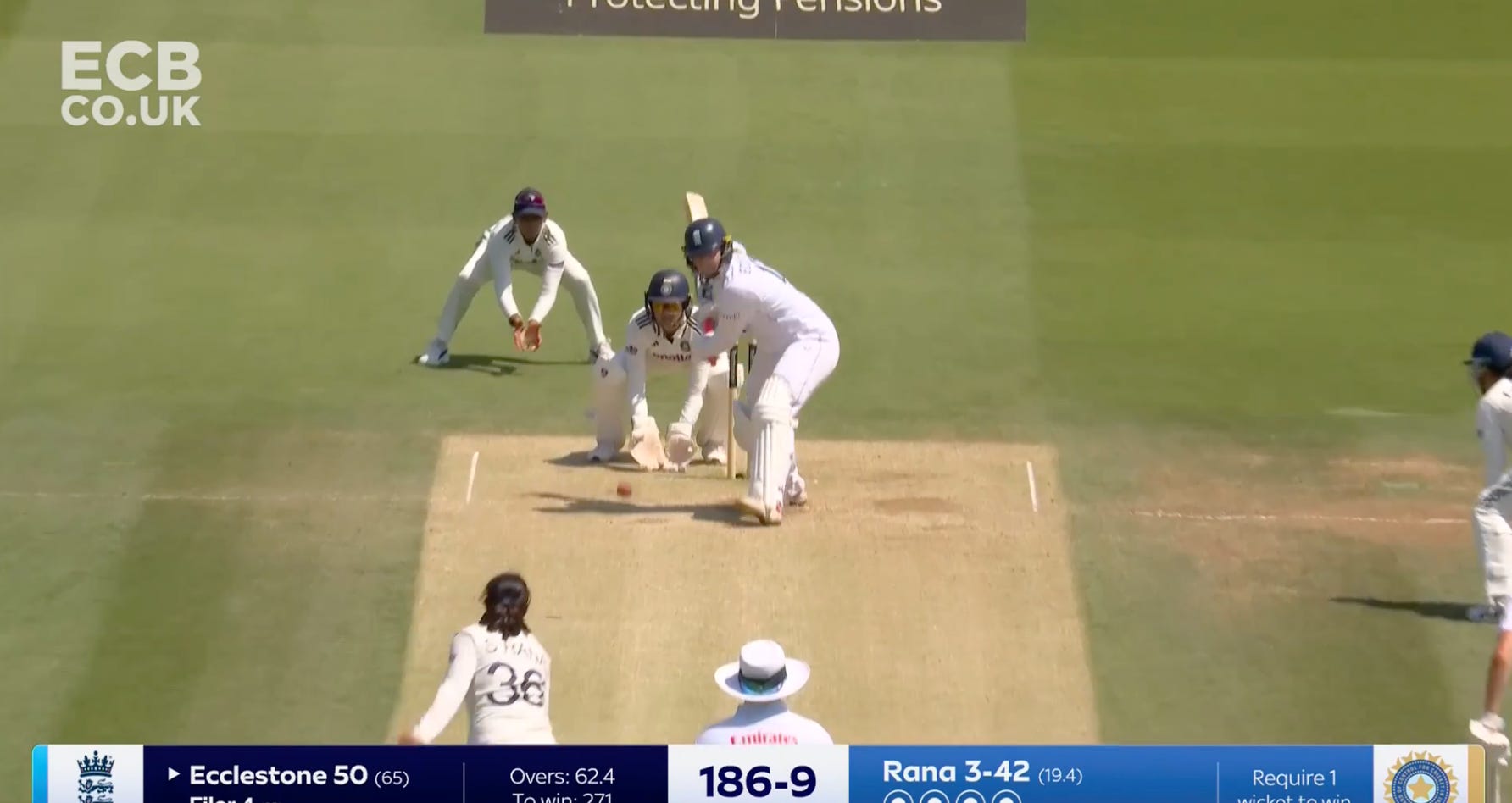
This was perfectly illustrated when Sneh Rana rags one back onto Sophie Ecclestone’s stumps to close the match. It is the kind of ball they have been delivering a lot. The English bowler has her fifty (to go with a five-wicket haul in the third innings), but again, the turn and low bounce is too much. Ecclestone is the final wicket, India have won.
When India won their Test at Wormsley in 2014, joy was the overwhelming emotion. The celebration photos went viral because they were so passionate.
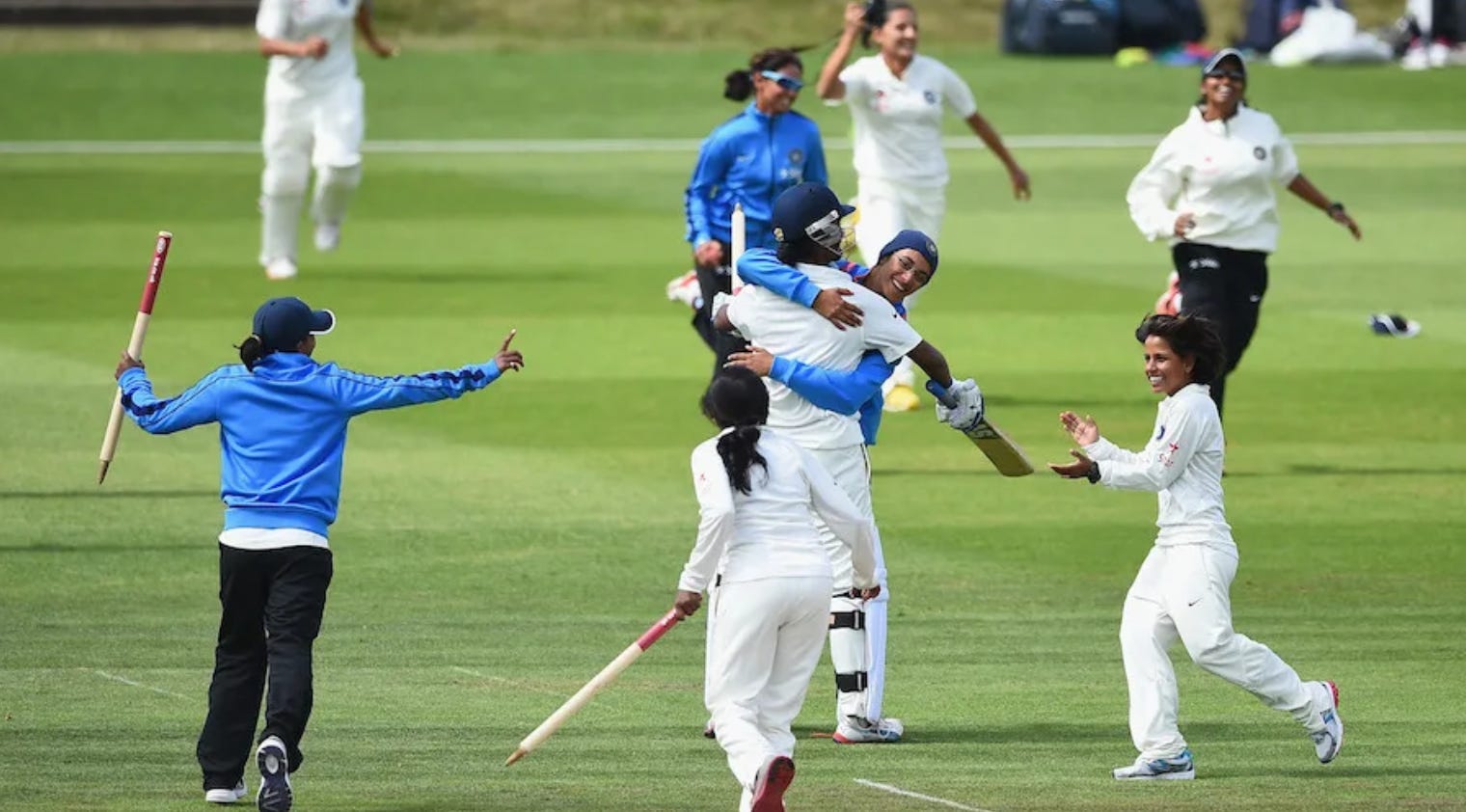
But at Lord’s, it isn’t like that. The team celebrates and they enjoy their win, but it feels different. In 2014, this was still an amateur team. Wormsley is not the home of cricket - it is a private ground owned by US billionaires.
That was a different time and team. Now they play in cricket’s billion-dollar stadium; they are WPL stars and World Cup winners. This could have been an emotional Test, and it was like a celebration of the women’s game at many moments. But when it came to cricket, India were cold-blooded and professional.
The occasion was historic. Their cricket was ruthless.