


Jack and Meg White are sitting down on a trunk. There is a rogue power cord going up Meg’s leg. Behind her, a human skull hides. A random light hangs down behind Jack. He is wearing a 1960s country music homage, and Meg’s in a white tradwife dress. Down near her feet are peanut shells. Apparently, the entire thing is supposed to look like an abstract image of an Elephant, the name of the album.
It was the record that launched the White Stripes around the world. But if you are a cricket fan, the first thing you will notice is the bat in Jack’s hand.
By 2003, I already owned White Blood Cells and De Stijl. So when Elephant came out, I bought it straight away, and from the moment it was in my hand, the cricket bat was the only thing that stood out.
Why was a Detroit band holding a cricket bat? The reason is a music promoter named John Baker, who often travelled with a bat he had used with his family years ago and gotten from his young cousin. He claims to have left it in Detroit, and Jack then used it as a prop.
Baker did work in the music industry and with the White Stripes. But there is one more part of the story, the cousin that Baker speaks about is Kane Williamson. Meaning that one of the most important albums of all time has a cricket bat on the cover, and it may in fact be from one of the most important batters.
This is not a story that seems to have been verified by multiple sources, just the guy telling his story. But if it’s correct, then it would be completely off-brand, as Williamson is the least likely player in our sport to rock out with his cock out.
Kane Williamson is not rock’n’roll. To paraphrase Jack White, he is the boy to warm your mother’s heart. Or, steady her ship.
***
Former Test batter Ian Ward is confused. He’s conducting a masterclass on Sky, and something has just been said to him that’s extraordinary. Kane Williamson is in the Nursery Ground nets, and he’s saying that he tries to hit the top part of the ball. A cricket ball is less than three inches high. Most people are just trying to hit it, and Williamson sees the ball so well that he doesn’t need to look at all of it. Part of this is because he plays the ball so late, he always has more time.
So while the world is biomechanically studying Vaibhav Sooryavanshi’s mega backlift, Kane Williamson is leaving the game.
The Kiwi legend can hit sixes, but he is a nudger and deflector by trade. There is no meeting the ball early, or power stances. He waits until it is under his eyes, and then usually tries to run it safely through backward point or third.
It is a similar method to Rahul Dravid, but Williamson doesn’t quite have the same elegance or big forward press. He hovers around his crease, deflects the ball, and runs. It is a scoring method that has been used since the 1800s. Simple, elegant and very repeatable.
Playing it under his eyes means he always has the best view, there is no thrusting when the ball seams or spins, and he has maximum control on the ball. It is the Volvo of batting styles, but we’re heading towards a Maserati era. Will there ever be another Williamson-like batter, or is he the last of a dying breed?
In more ways than one. When he made his Test debut, Ricky Ponting, Kumar Sangakkara, Jonathan Trott and Rahul Dravid were still batting at first drop. Number four had taken over as where you put the best bat, but threes were still very important. By the end of his career, we were in the era of the false three. Anyone with warm blood who owned a bat had a chance of being at first drop for their country.
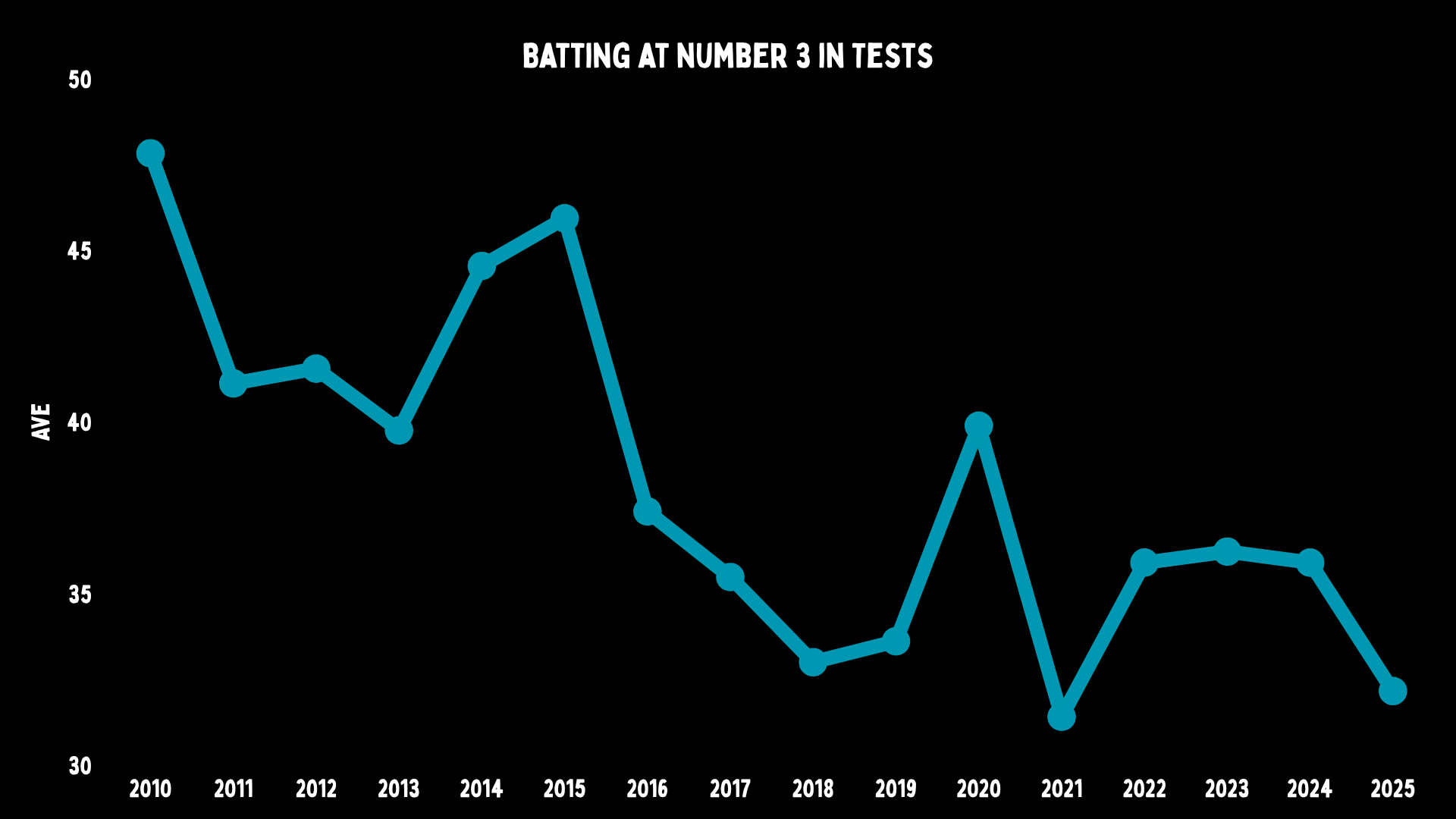
The floor has fallen out of number threes entirely. The best bats try and stay at five now, not even at four, and Raymon Reifer and Jacob Bethell have to do the hard work.
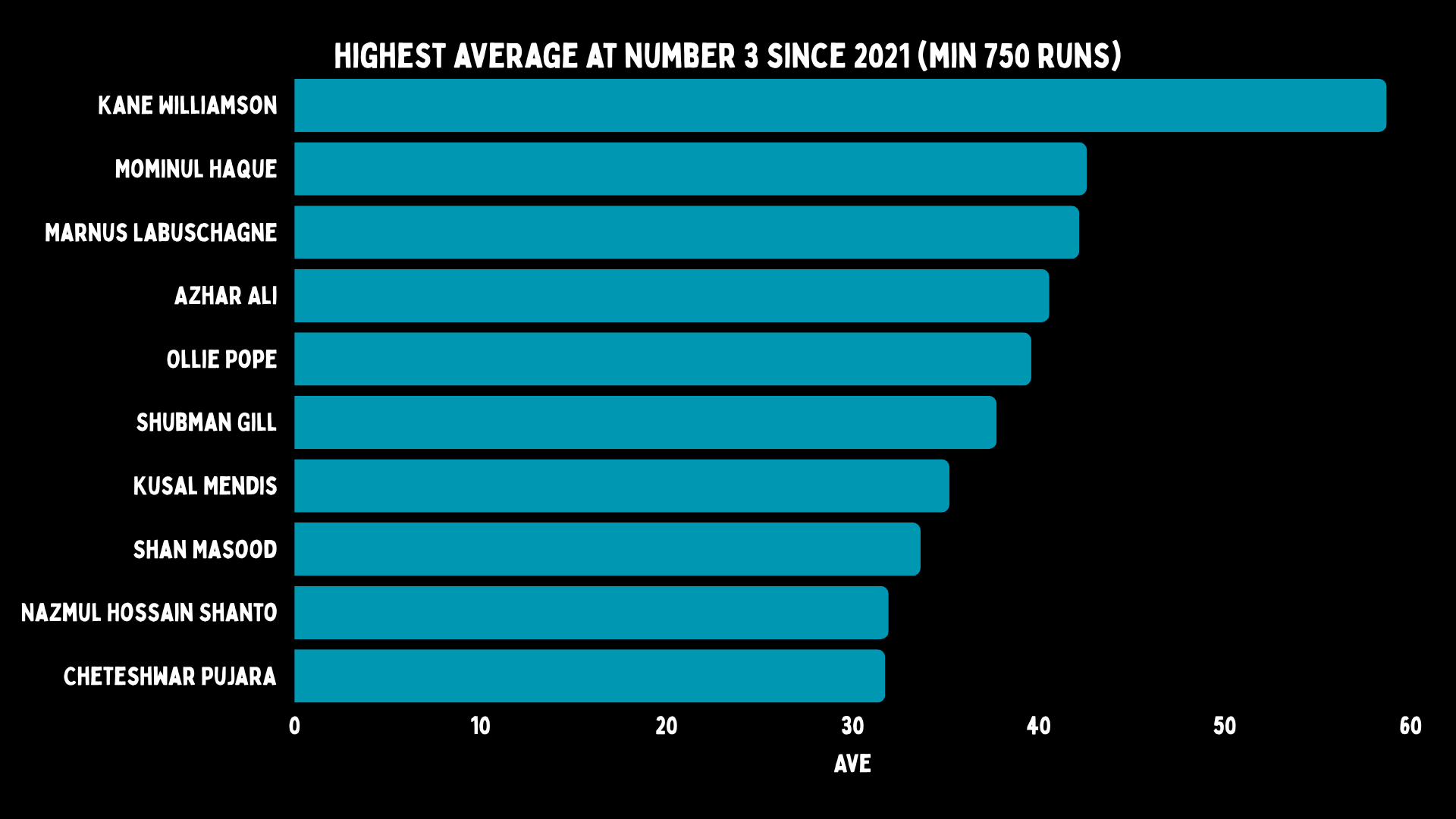
Yet, nothing changes for Kane Williamson. He bats at number three, because that’s his spot. Cricket often evolved around him. But he didn’t flinch.
***
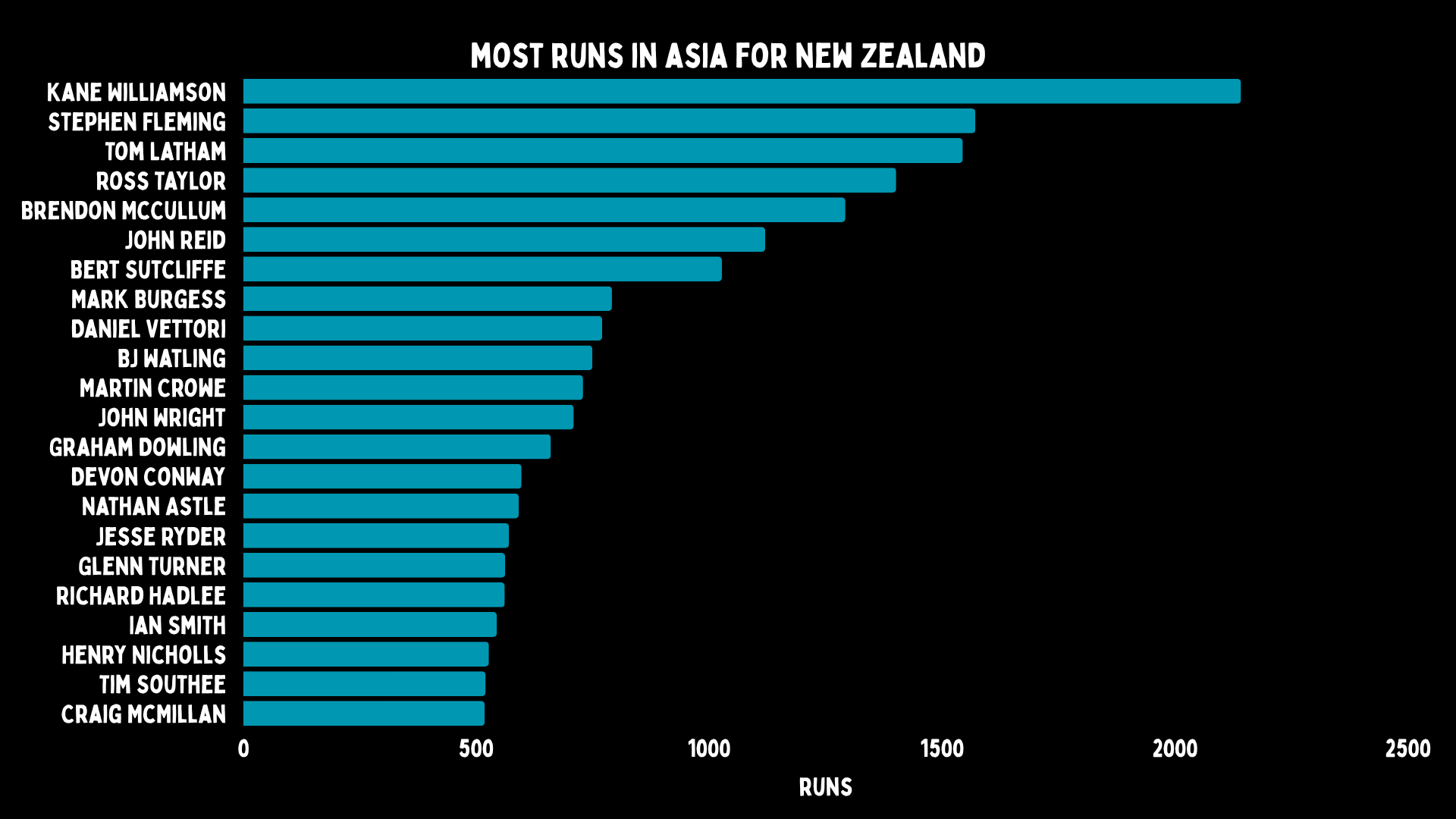
Kane Williamson averages almost 50 in Asia, which includes Test hundreds in Sri Lanka, India, the UAE, Pakistan and Bangladesh. His record is not good in Sri Lanka or India. But a player from New Zealand having hundreds in five different Asian nations is almost unthinkable. The land of the long white cloud is where spin goes to die. Growing up, he wouldn’t have been facing world-class spinners, or batting on turning tracks.
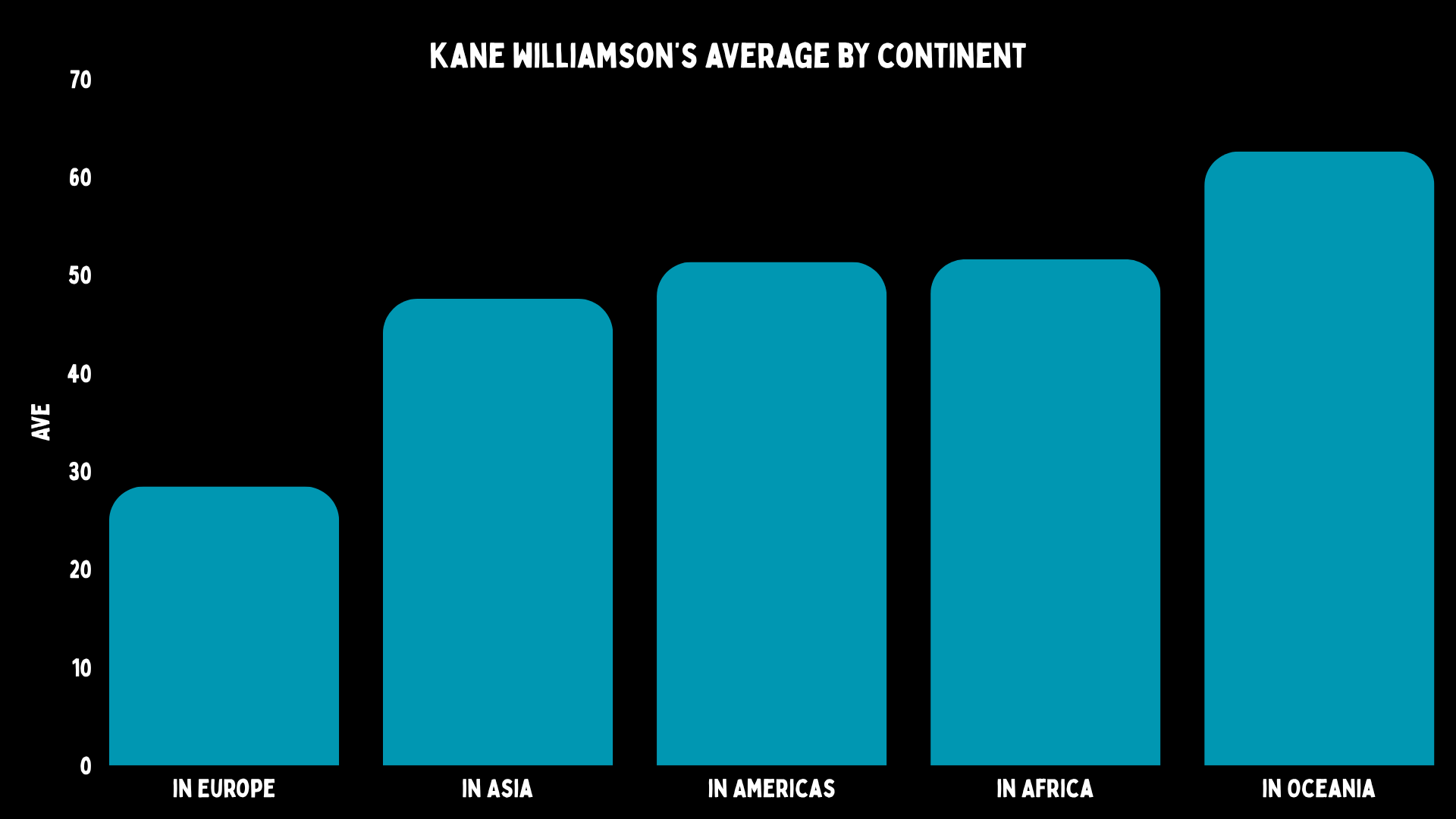
In total, he’s made 570 more runs than anyone from his nation in Asia, and has Ross Taylor cleared by 740, despite playing the same number of matches there.
But what’s most remarkable about Williamson is the fact he averages the same against spin in Asia as he does against pace everywhere. And he still averages almost 50 against the fast bowlers.
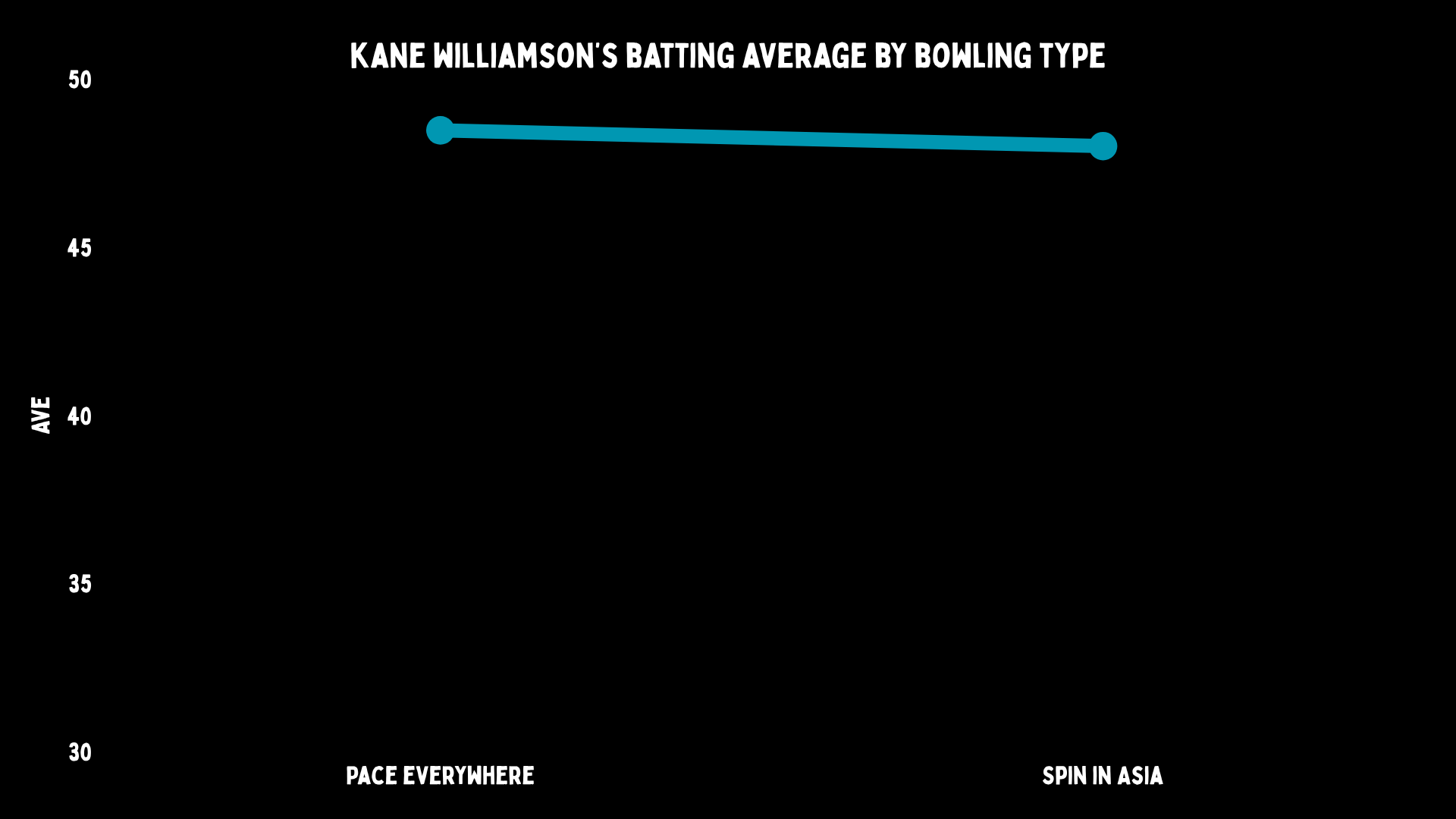
There are players with incredible records in Asia, but that is because they are specialists. That is not Williamson.
Since 1970, no one averages more at home. Williamson is a beast in New Zealand, and yet can score in Asia. That is not a normal batter. For the Kiwis, it means they have an incredibly multi-skilled player.
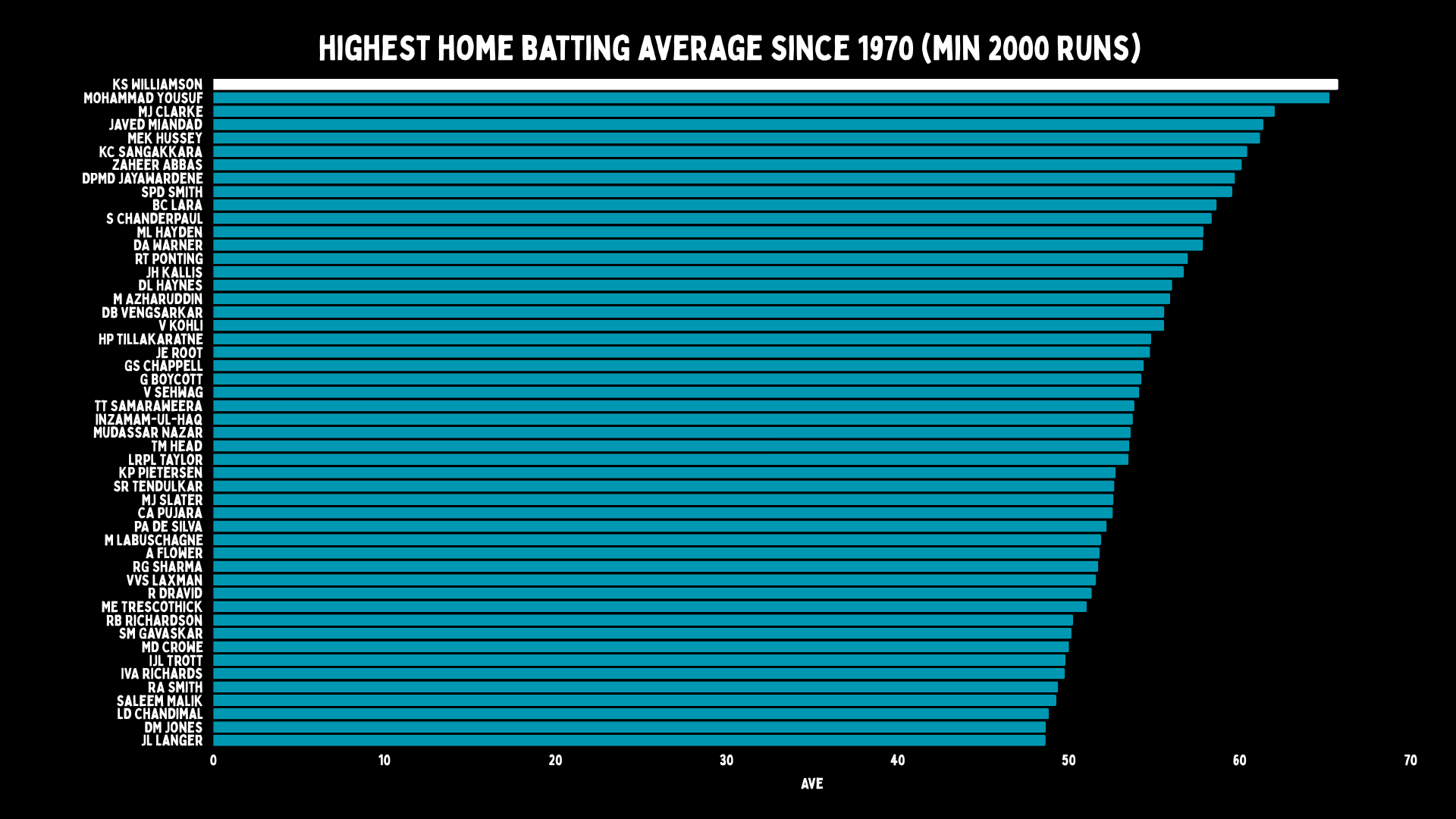
A green top, a dust bowl, Kane does both.
***
Walter Hadlee led New Zealand to England in 1949. For that series, he tried to do two wild things: pick a Fijian batter who often played barefoot and choose a team without much bowling to ensure they drew every match. The first idea didn’t come to fruition, but the second worked.
New Zealand leaders are simply built different. To this day, Jeremy Coney remains one of the most original thinkers in the sport. A man who openly trolled England when they made fun of this team. Graham Gooch (or Mike Gatting in Coney’s recollection) said it was like facing a World XI at one end (Richard Hadlee) and the Ilford 2nd XI at the other end (everyone else). Coney had t-shirts made that said “Ilford Seconds” and then won the series.
Martin Crowe was a New Zealand leader and their greatest ever batter. That would be enough, but he was also a cricket savant. He was the first batter to understand and conquer reverse swing. Wasim Akram still talks about him. He was the first person to use a genuine pinch-hitting middle-order player as an opener, and also open the bowling with spin in ODIs. Later, he would pioneer a new form of cricket that was not quite T20, but had elements of it before that format was invented.
Since then, the Kiwis have had Stephen Fleming and his many crowded offside fields. Later, he would be the man in charge of CSK when they did well. And Brendon McCullum, who set up a limited-overs system that England used to win World Cups, and then took over as coach to help them try the same thing in Tests, changing the game entirely.
This is one of the more interesting captaincy histories in our game. Theatric, cunning and just weird. No two alike, all of them full of wondrous sharp edges.
And then came Kane.
As a captain, he went within several overthrows of winning a World Cup, but then was victorious in the first World Test Championship. No other New Zealand captain has had that level of success. But none before him had the bowling attack he was gifted with.
Even so, his win percentage is 55, which is exceptional. However, his stand-in and replacement, Tom Latham, has the same Test record.
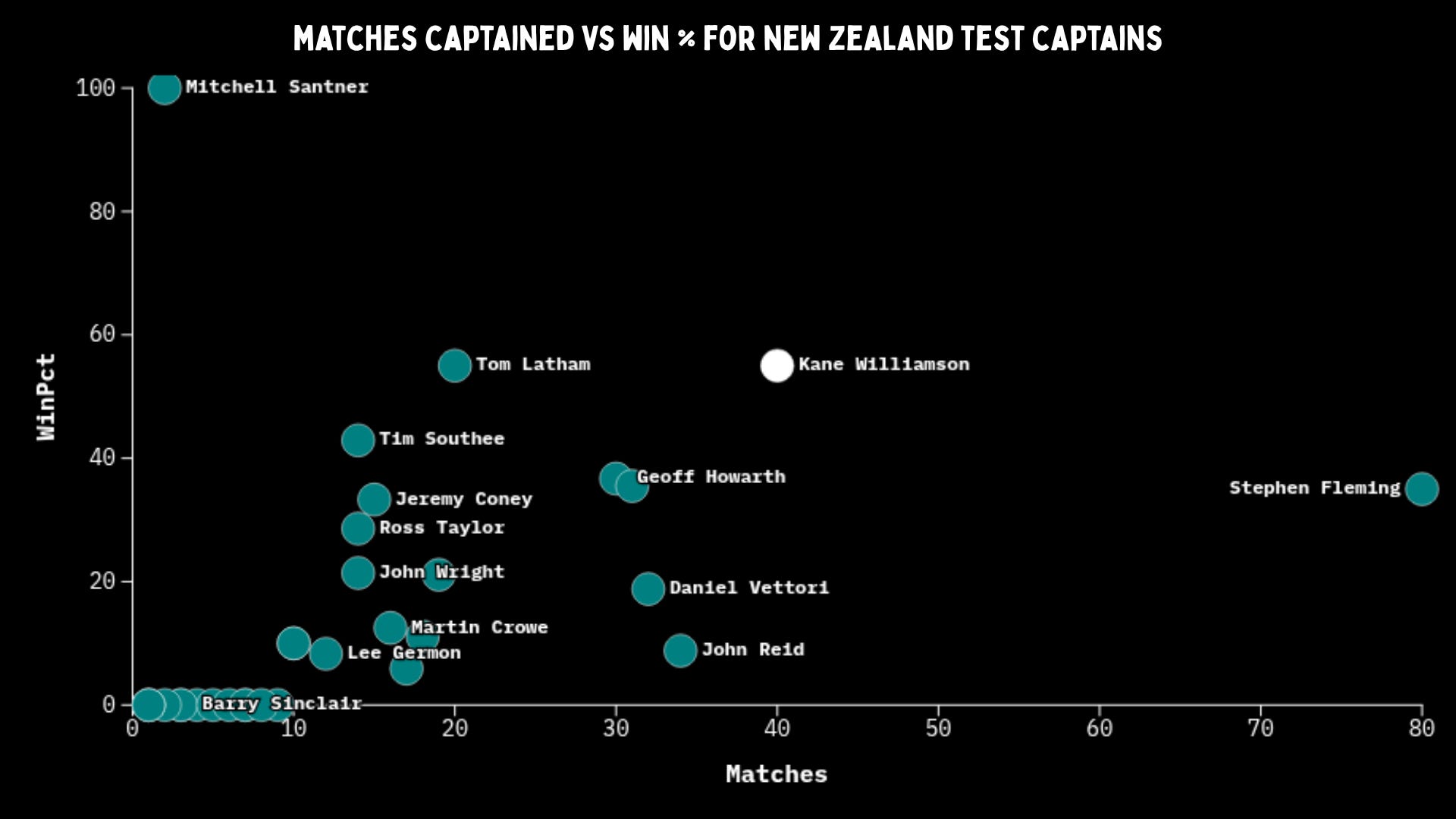
What Williamson’s reign really shows is the continued improvement of New Zealand cricket.
Outside the Crowe-Hadlee-Ilford era of the 1980s, which seems like a blip, New Zealand cricket has been in constant improvement. He is the chief custodian who took on that legacy.
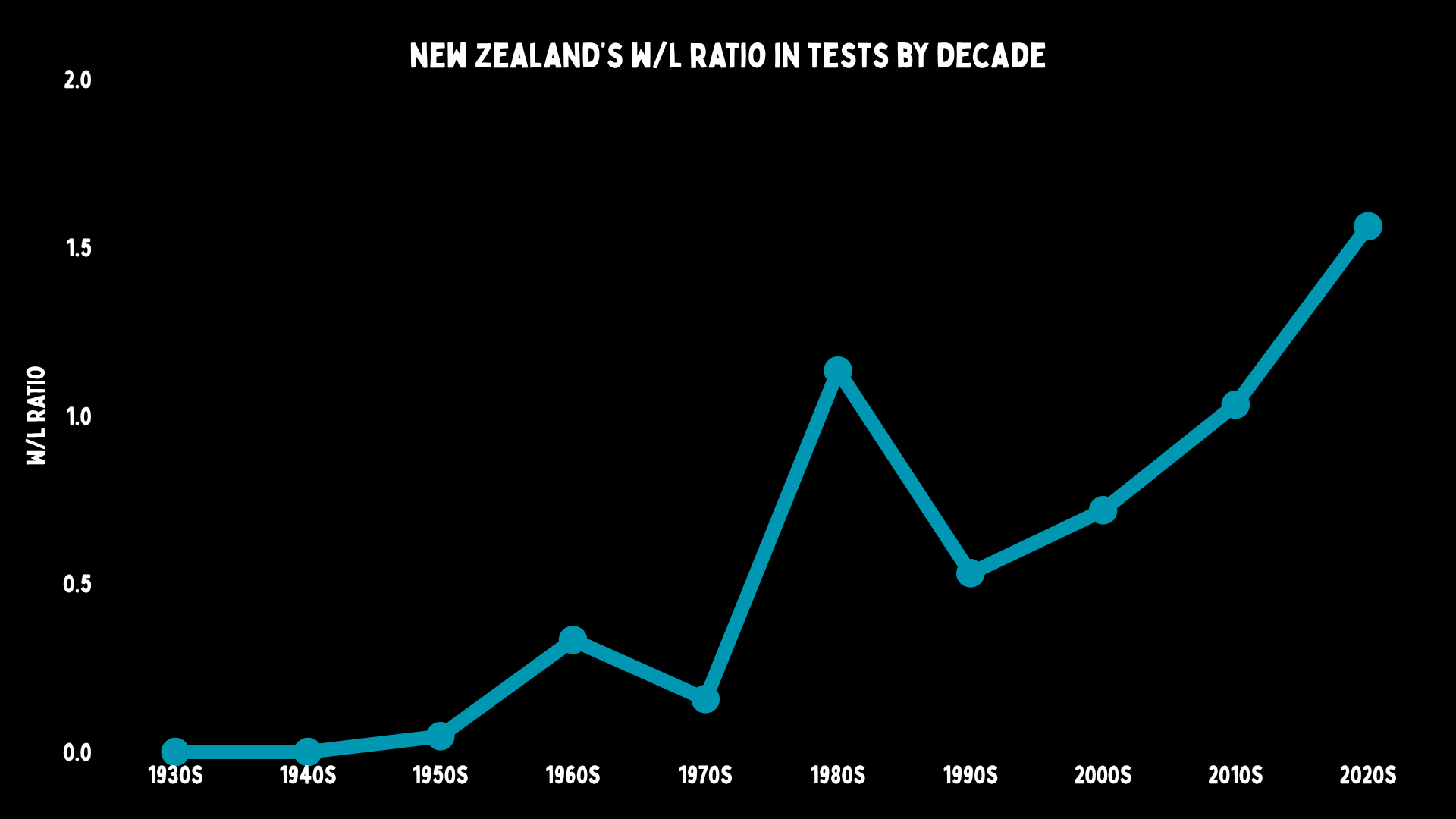
Because of a lack of people, the Blackcaps have passed on institutional knowledge in a way other nations haven’t.
The issue with judging captains is often tied to how good their teams are. And Williamson is also a continuation of a wonderful think-tank. However, he should get praise for what he has done because even within the hive mind of New Zealand cricket, Williamson became the queen bee.
Maybe what he has really done is taken their best bits, and let go of their throbbing eccentricities. A nation of John Lennons, finally, needed a Paul McCartney to bring it together.
To get where he did, he stood on their shoulders to reach heights the rest could not. But he did that carefully, wearing a harness and having first completed a thorough safety test.
***
If someone online says Kane Williamson is a great batter, within 12 seconds, someone must reply with his record against the best teams. It’s Kane’s law. You cannot praise him without questioning.
He averages more than 50 against six Test nations, which in any other era would be automatic legend status. However, the problem is the ones he struggles against.
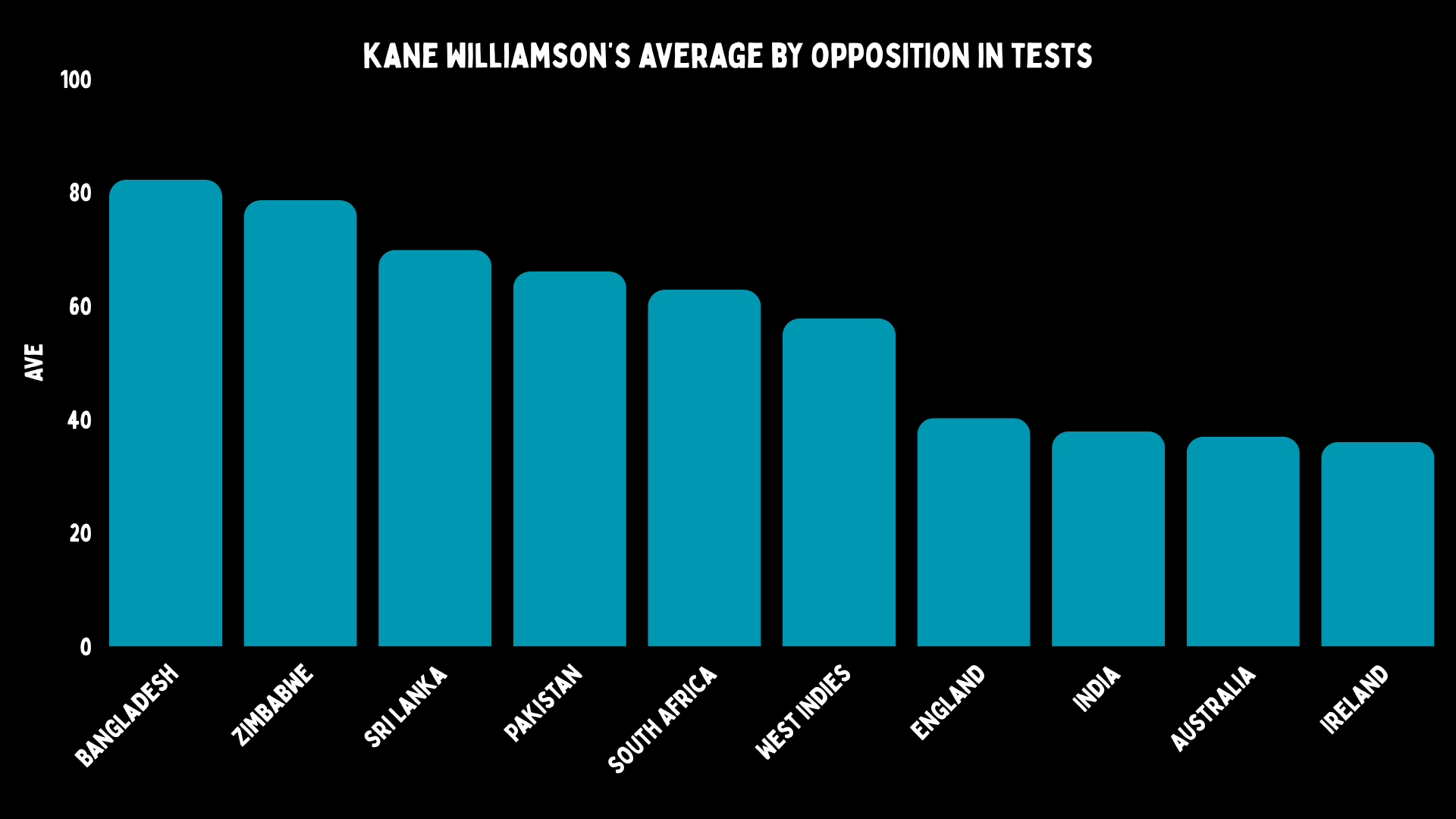
One is Ireland from only a single match. Fine. But the others are Australia, India and England.
It is very rare for a batter with a 50-plus average to not be good against the best attacks. While the world talks about flat track bullies and statpadders, most greats also do well against their best opponents. If not all of them, at least a couple. And Williamson hasn’t.
At least he has a great record against South Africa with six hundreds in 12 matches. Alas, the issue there is that three of those hundreds are against the South African D team that toured New Zealand in 2024. That does change things, but that only drops his average to 48, which is still more than solid.
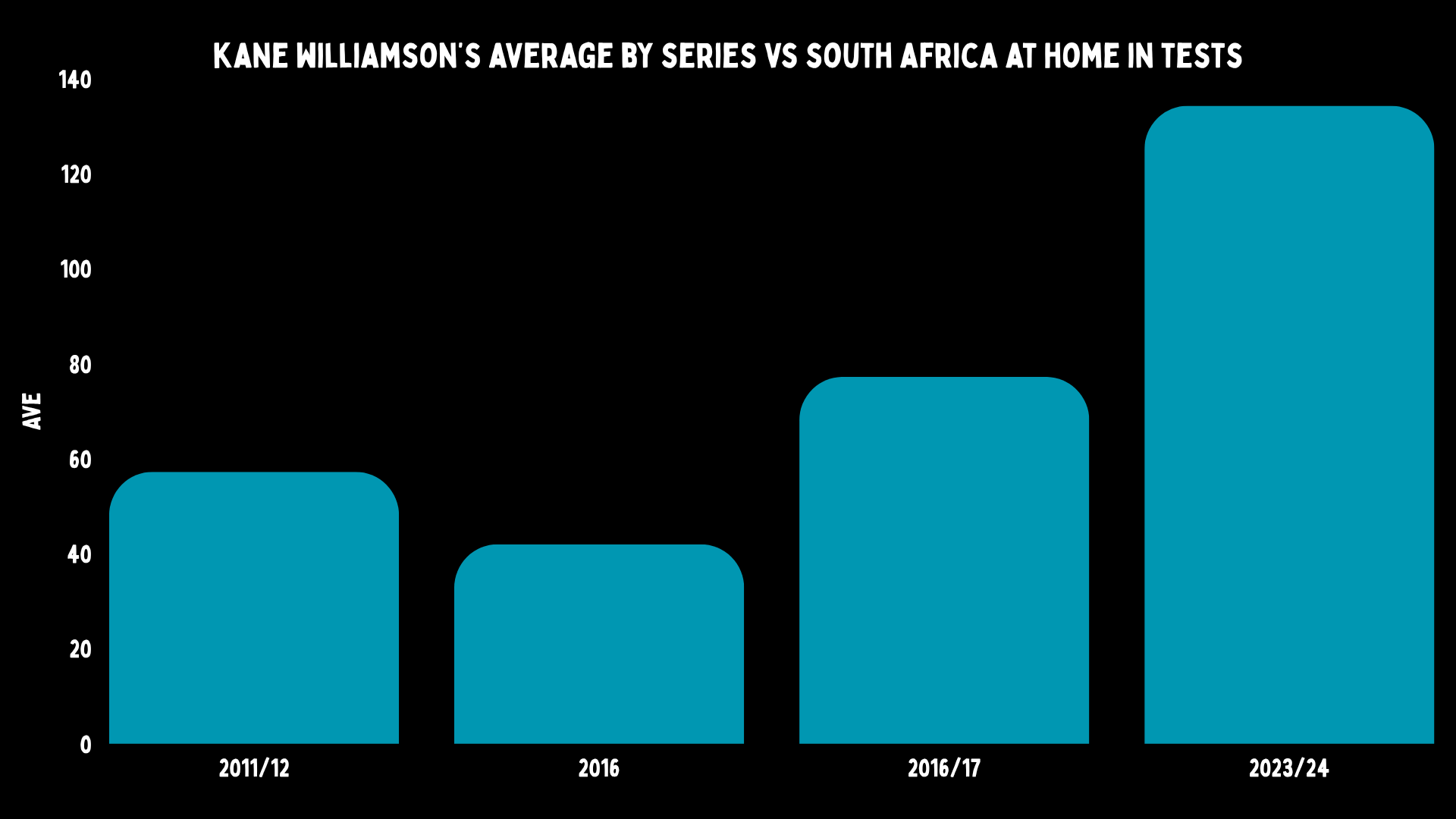
But, all of that is from home Tests. In four matches (crazy that is all he has played in a 16-year career) in South Africa, he averages 21. But given it is from such few matches, you can give him a pass.
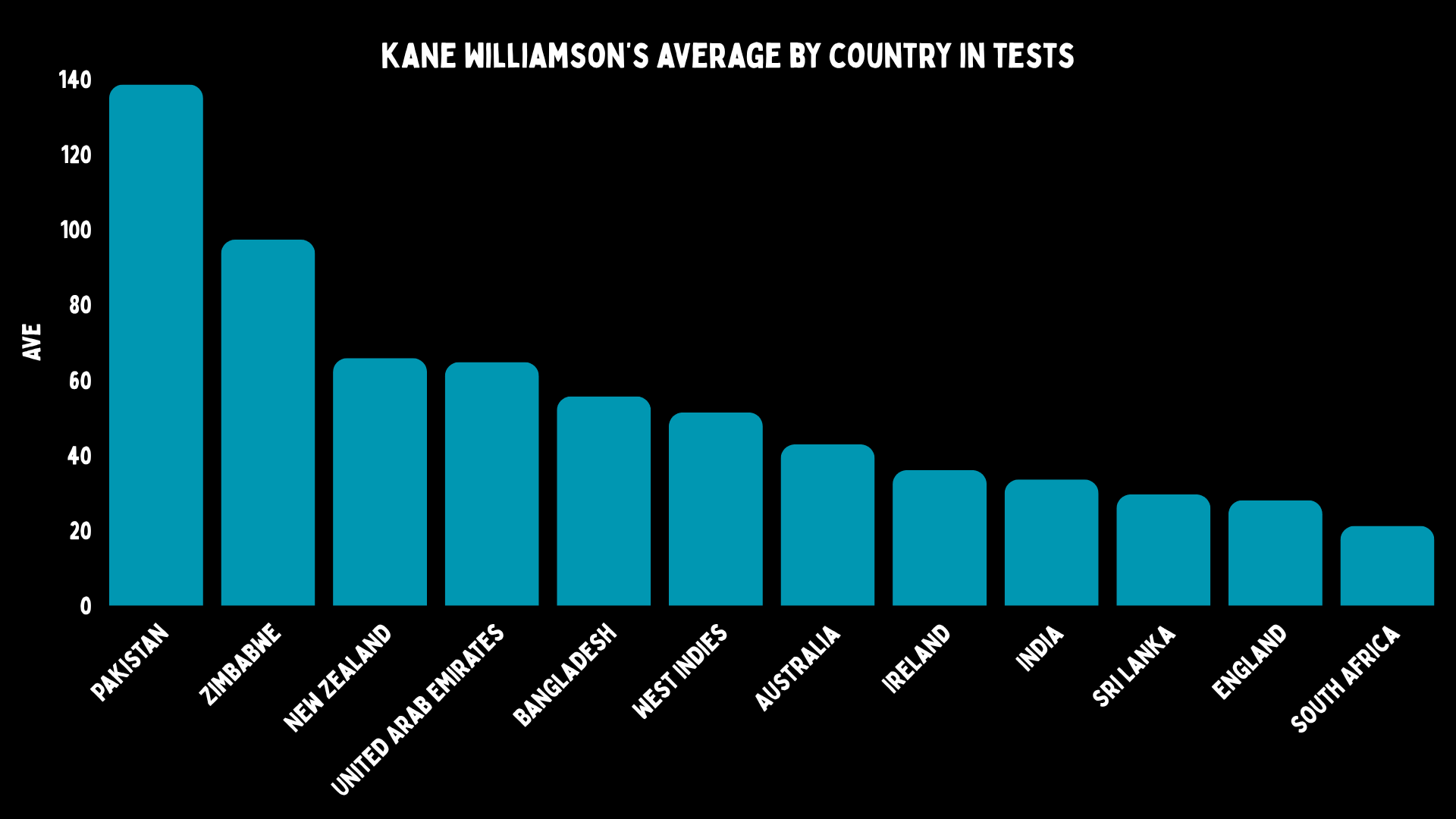
If you look at his record when in Australia, England and India, you will see again, he has struggled there. Australia is the one that holds up the best, but England and India from a combined 17 Tests is bizarrely low.
For a man who grew up on green tops, England makes no sense. For a man who played the spinning ball so well, the numbers in India also make no sense. It does lead you to believe it was about the quality of the bowling.
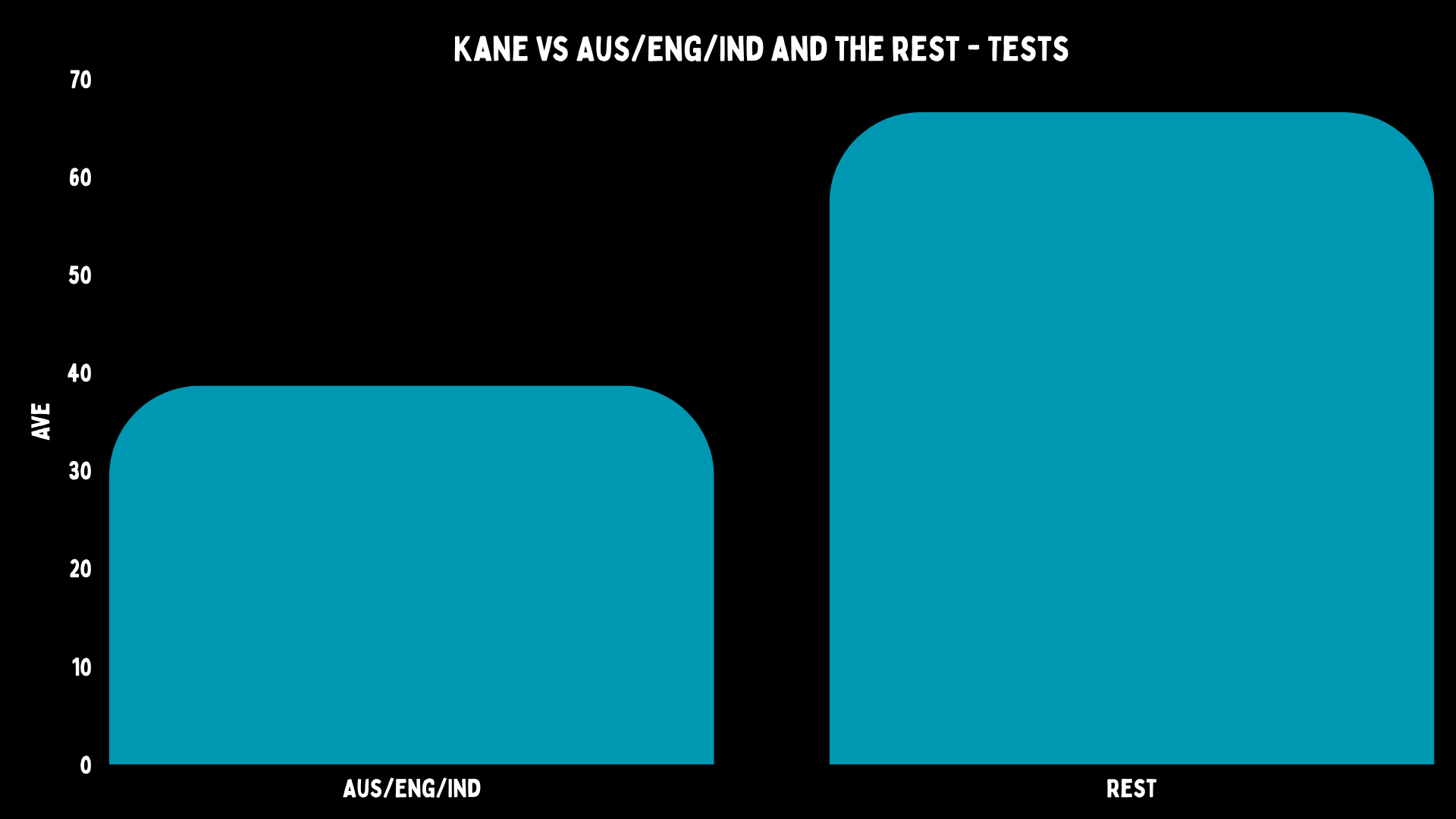
Against the best bowling attacks and biggest teams, he is almost 30 runs worse than the rest.
I have run the numbers a bunch of ways, and I can’t find a pattern. Against England, you can argue that Jimmy Anderson tormented him. But he is hardly alone there. And that was for nine dismissals, no one else has him more than six. And for India, Zaheer Khan gave him early trouble, but again, there is no obvious pattern.
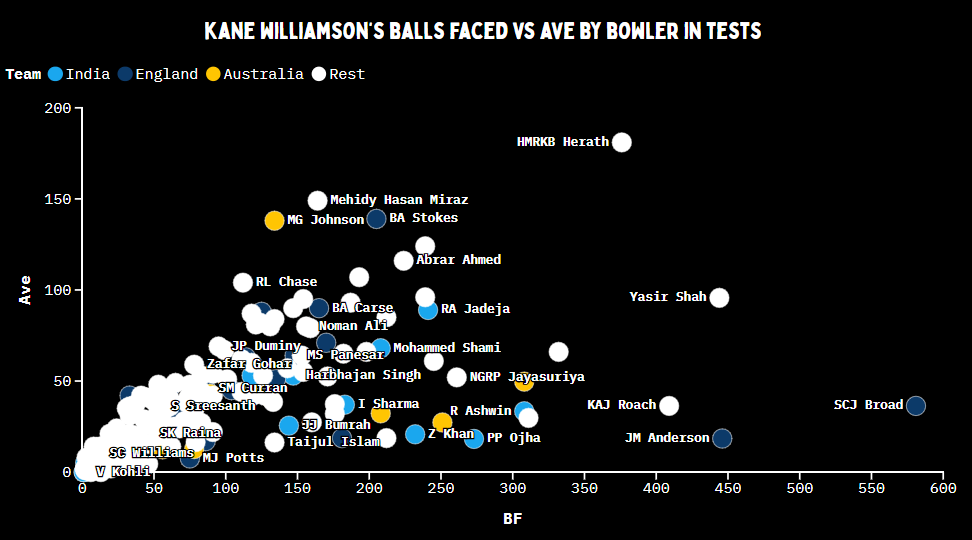
The Australians all do well, Starc the best, without him really being destroyed. In terms of Cummins, Williamson has been dismissed by Miguel (real ones remember) more than Pat. He has a good record against Josh Hazlewood, and bodied Mitch Johnson. Mohammed Shami never troubled him, and neither did Morne Morkel.
But this is an issue when it comes to Tests. Some will point to short Test series, and that makes sense, until you peel it back. Two Test series mean that Williamson can’t cash in when on top, but he hardly got on top.
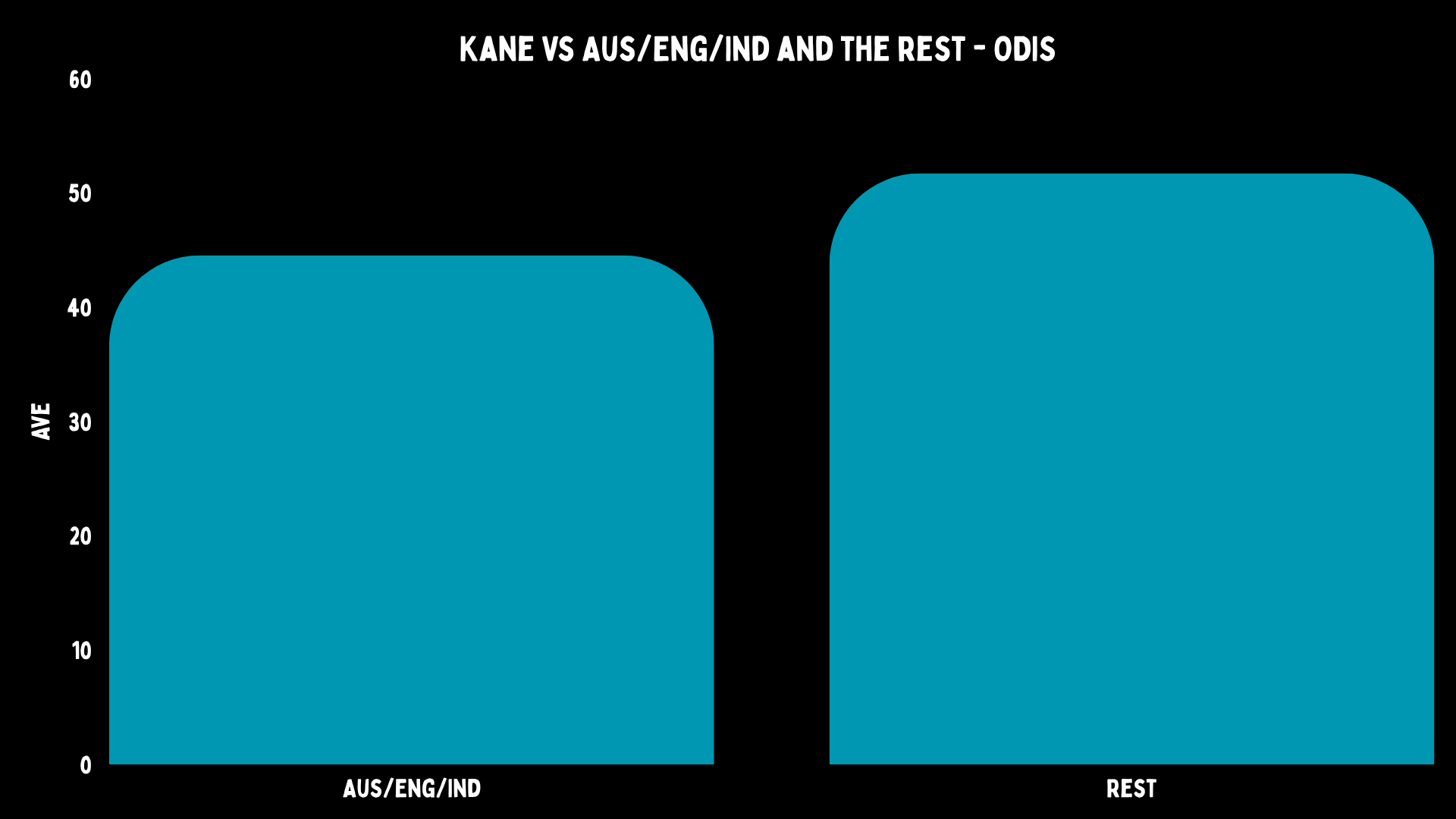
Is this a weird blip or a real sign? We put him lower in the Art of Batting partly because of this. Yet, in ODI cricket, he has been great against England and more than decent against India, though not as much against Australia.
Cummins (Pat, who dismissed him once in Tests) was interviewed by Adam Gilchrist years ago, and asked about Kane Williamson. Cummins said that he was not a player who gave them problems. It is obviously true looking at the stats. But it’s also a very weird thing to say about a player of his level.
When everyone is watching New Zealand in Tests, usually Williamson fails. The minute they turn away, he’s a monster. He did his best work in the dark.
***
The 2019 one-day international World Cup semi-final is a lie. It was not one day, it was two, because the rain came and the match restarted the following morning. That gave New Zealand a weird advantage and certainly changed the shape of the match.
But the Kiwis had another head start in that match; Williamson walked out on that surface and worked out what a good total was. This was the World Cup when cricket started to change. England was blitzing, and it was about all-rounders, bouncers and bossing the middle overs.
Yet, Williamson just knocked the ball around, content that he was right. His limited-overs cricket feats are barely part of his overall canon. He made runs in both formats, but slowly. He could often get left behind in big scoring matches.
His skill was really on the surfaces that suited bowlers. Which is generally what happens in World Cups. And there, while his strike rate remained platonic, his record went through the roof.
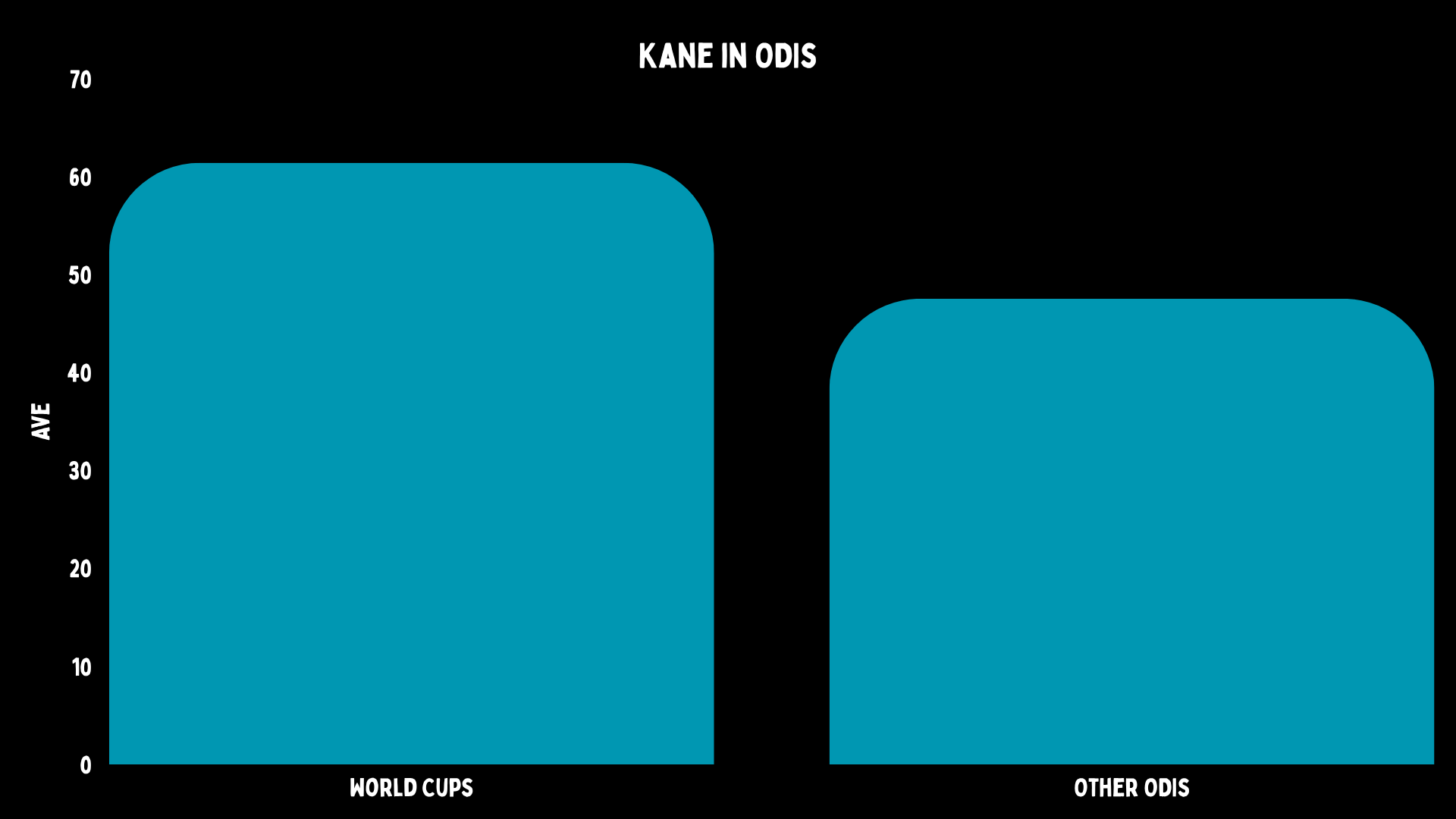
Part of it was simply that he would bat to the conditions, and not his strike rate. It ultimately cost him in T20s, but his ambivalence to anything bar the conditions allowed him to make a huge impact on tougher pitches.
You pair Williamson with a good bowling line-up, be it New Zealand or even Sunrisers Hyderabad, and you have a very interesting team built for clutch games. On a flat smash ‘em surface, they might get lost. But as the tournament goes on and the surfaces get more two-paced, suddenly he is the man for the job.
When fast runs were needed, not so much. In the 2021 T20 World Cup final, he arguably did his best work but also caused many issues for his team. After ten overs, New Zealand were 57/1, and he was on 18 from 19. He eventually came good, taking on Glenn Maxwell and Starc. So his overall score reads 85 from 48. Which is great. But after ten overs, Australia had also lost one wicket, for 25 more runs, and the match was over.
On a bowler’s surface, there were few better players to have in your team, ever. On a flat one, he was really often a complete liability. Often saving his best hitting (which he could actually do) until so late it had no impact.
In modern T20, he works as an insurance batter. If the ball is nipping around you use him early to put out the fire. But when the sixes are being hit, you never want him at the crease.
Kane Williamson was not a bad limited-overs player, just a thoroughly complicated one. In the epic group game between Australia and New Zealand at the 2015 World Cup, where Australia collapsed and McCullum went for net run-rate, Williamson was a steady hand on the tiller. Scoring at less than a run a ball until the final delivery as 19 wickets fell for 303 runs.
Then with his team 9 wickets down, he dumped Pat Cummins into the stands to win the match. That was Kane Williamson the white-ball batter. A man looking for calm in a sea of noise.
***
When Don Bradman turned up, he scored at levels no one had ever fantasised about before. And yet, there were still old heads talking about Victor Trumper. A player who couldn’t average 40 in Tests.
To people who missed Trumper entirely, that made no sense. Those who saw him got it.
Martin Crowe averages almost ten fewer than Kane Williamson. For many people, the conversation stops there. But Crowe was an experience, near technical perfection, yet also so aesthetically pleasing. He was a genius, too, and perhaps missed his best years as his knees ended his career early.
In my book, Crowe is rated 40, eight places below Williamson.
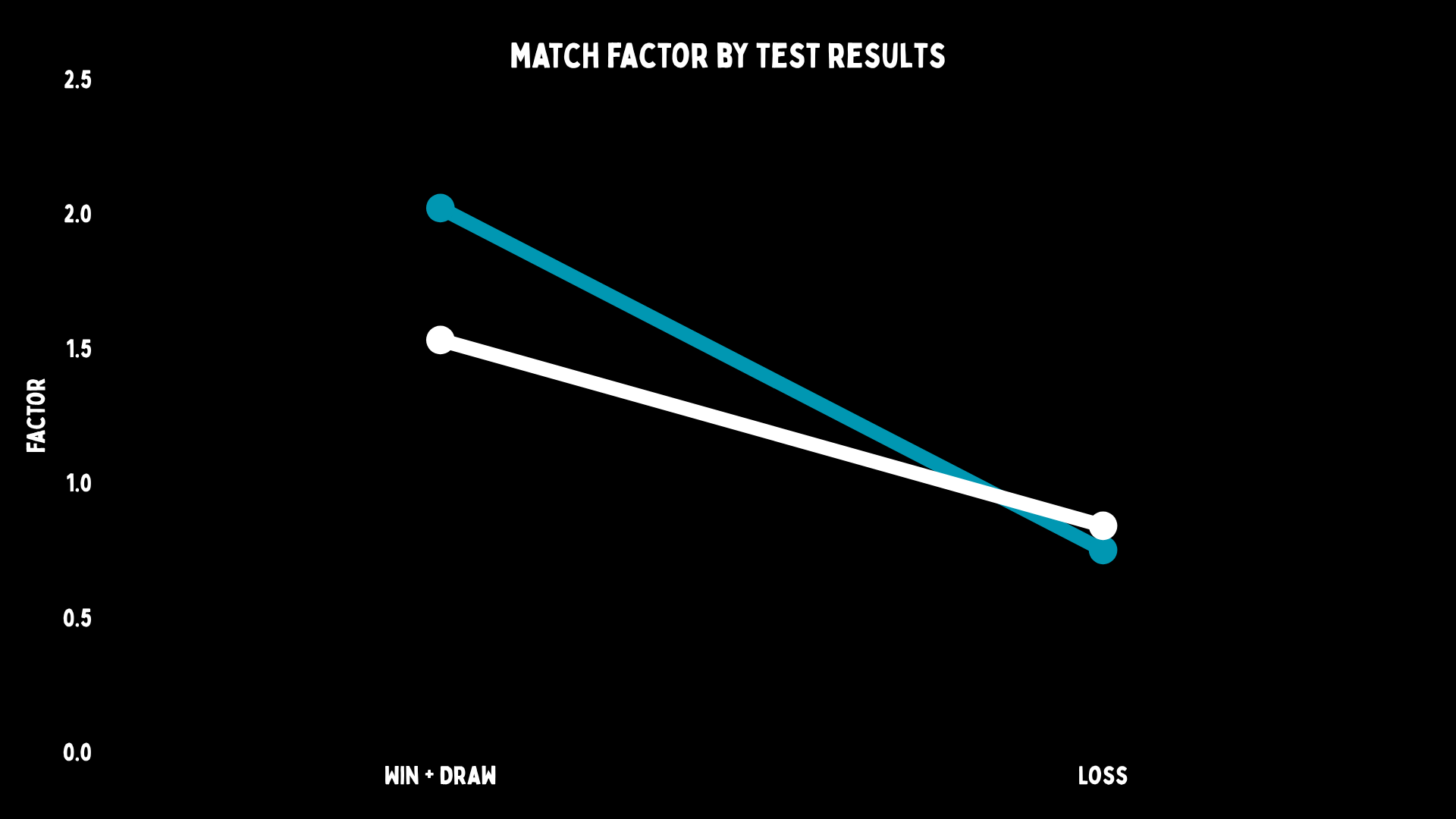
So the average is misleading, but even the match factor shows that Williamson has more impact. Though it does bring the gap down a lot.
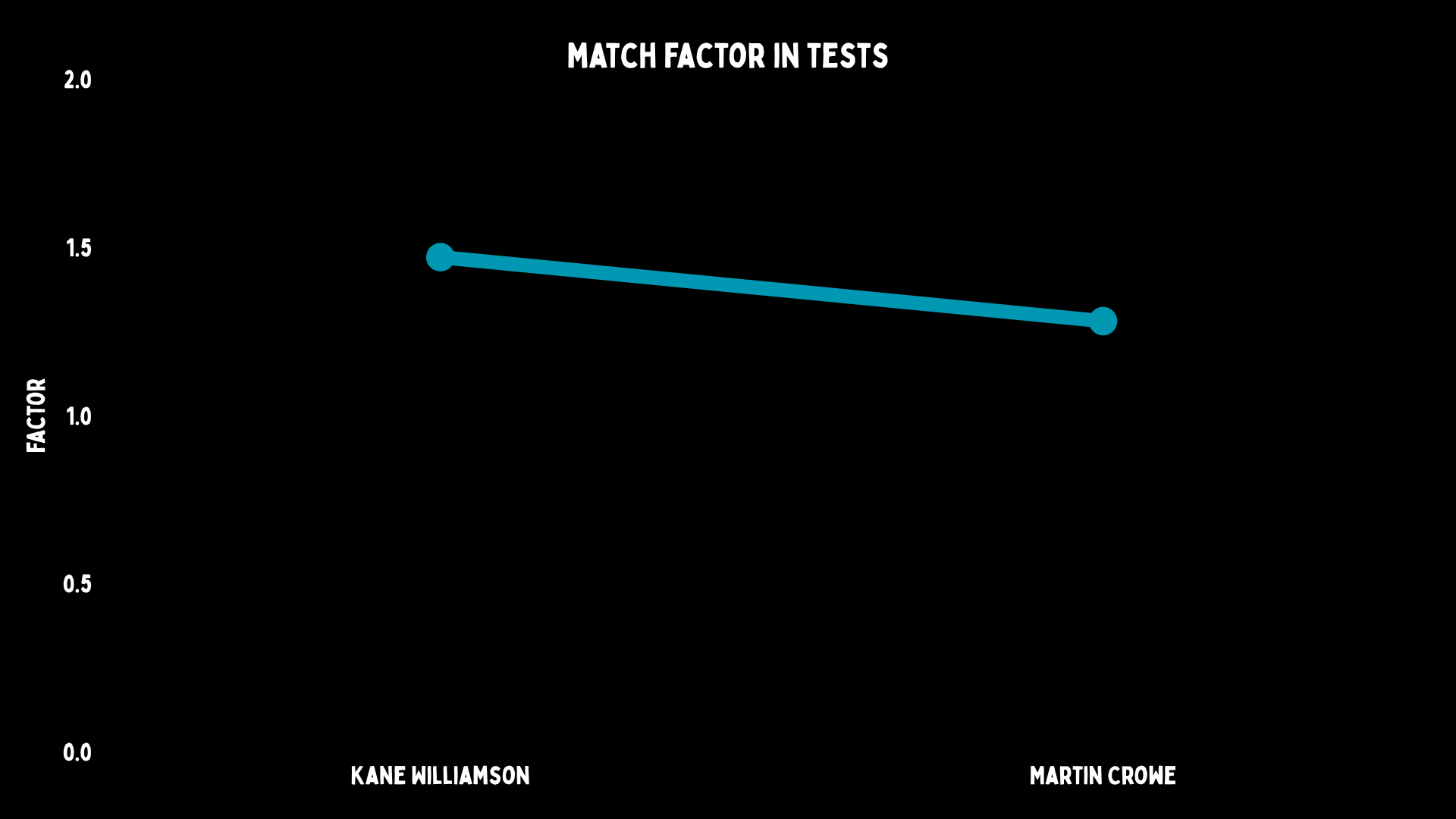
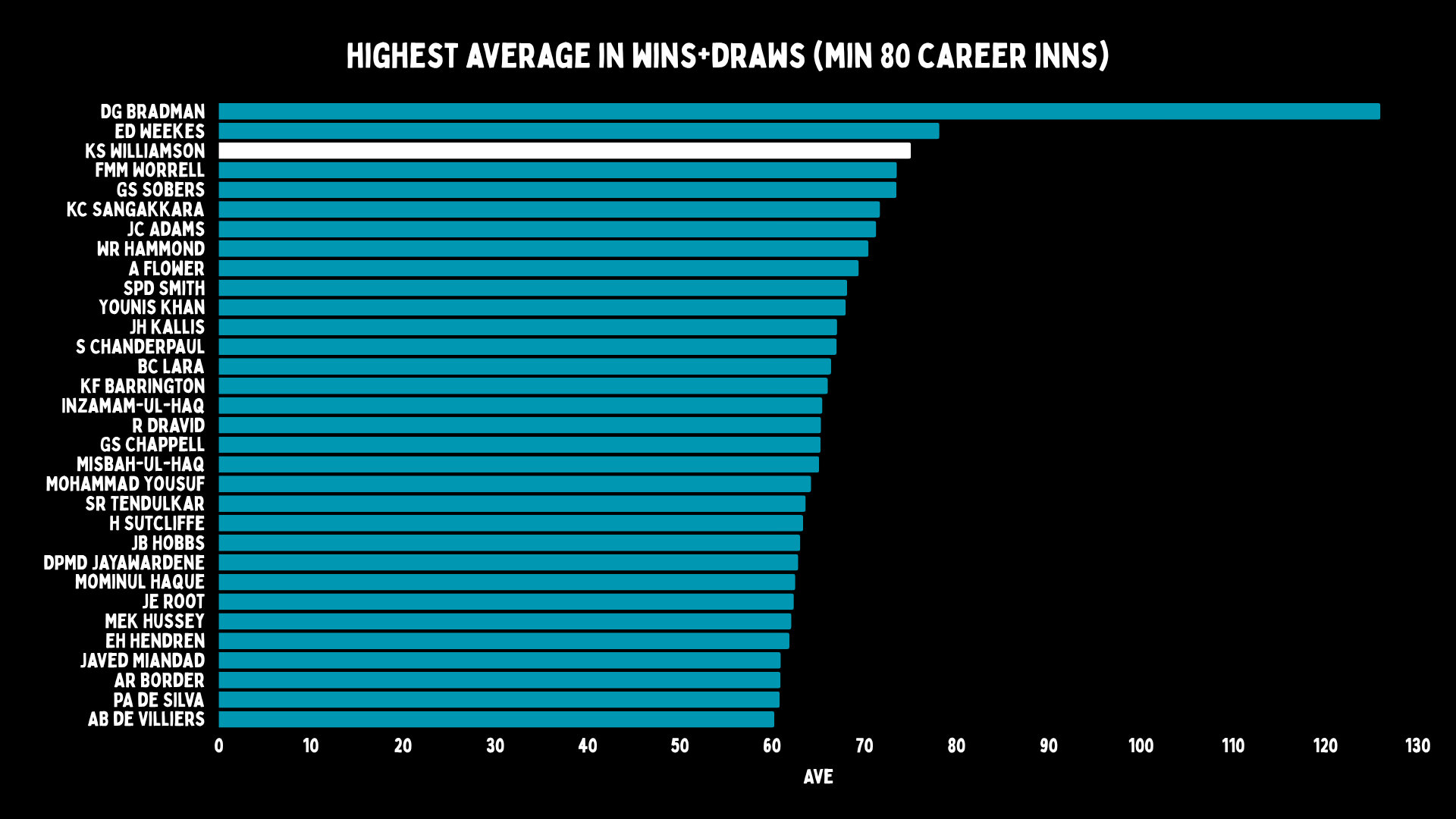
The key difference for me is not batting average, but impact in wins. When Williamson makes runs, the Black Caps often do great. Clearly, he had a much better bowling attack than Crowe batted behind. But even so, the third-best mark ever in wins and draws is pretty special.
If you look at the match factor in these games, you’ll see that Williamson is miles ahead of Crowe here. But Crowe is better in losses. Does that add to the mystique of the genius holding up his team on his own?
But the real reason Crowe is held so high is how he went against the best sides. His toughest attacks to face were the great West Indian and Pakistani attacks, plus those from Australia and South Africa. Williamson has the last two attacks, plus England and India.
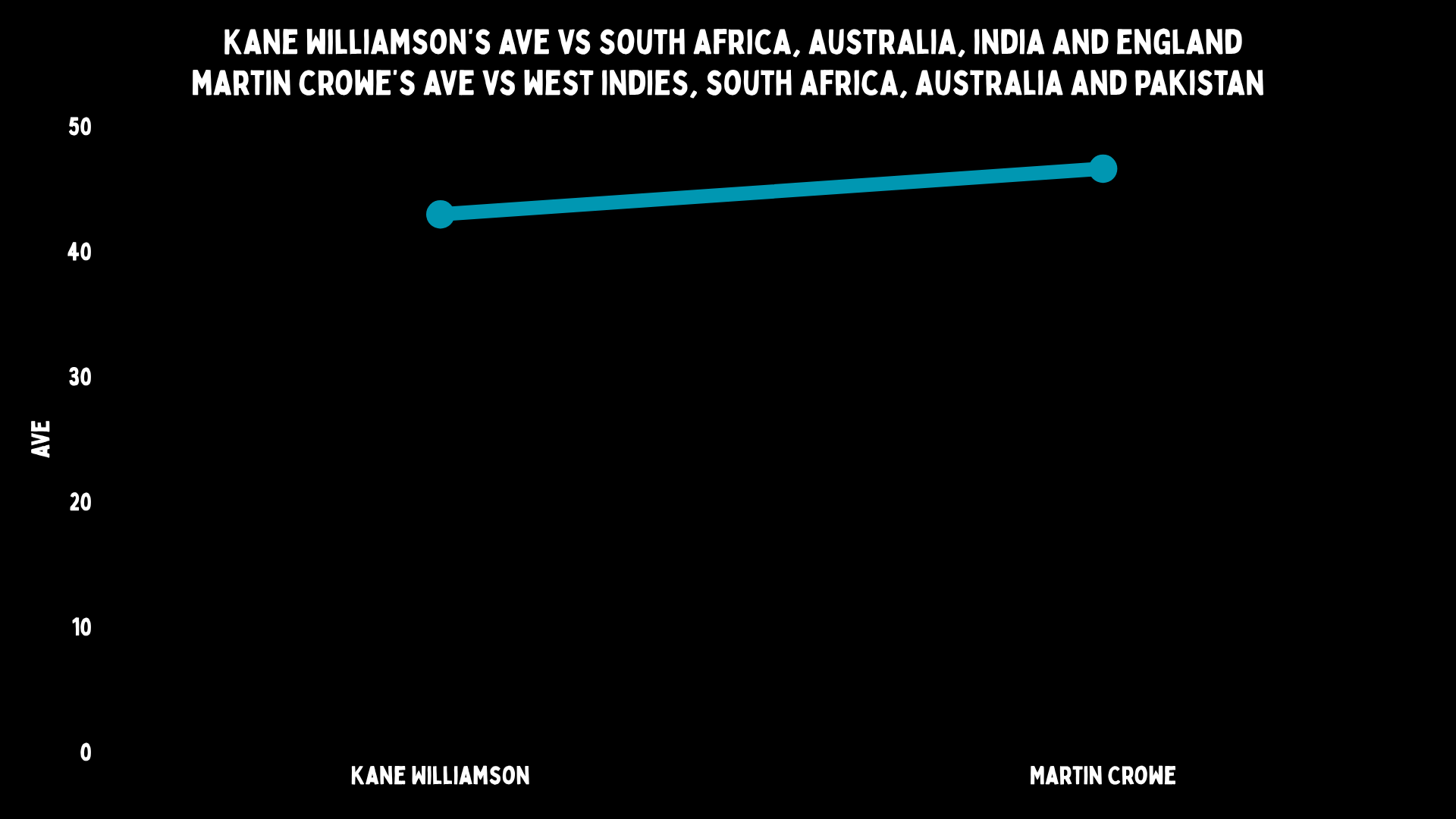
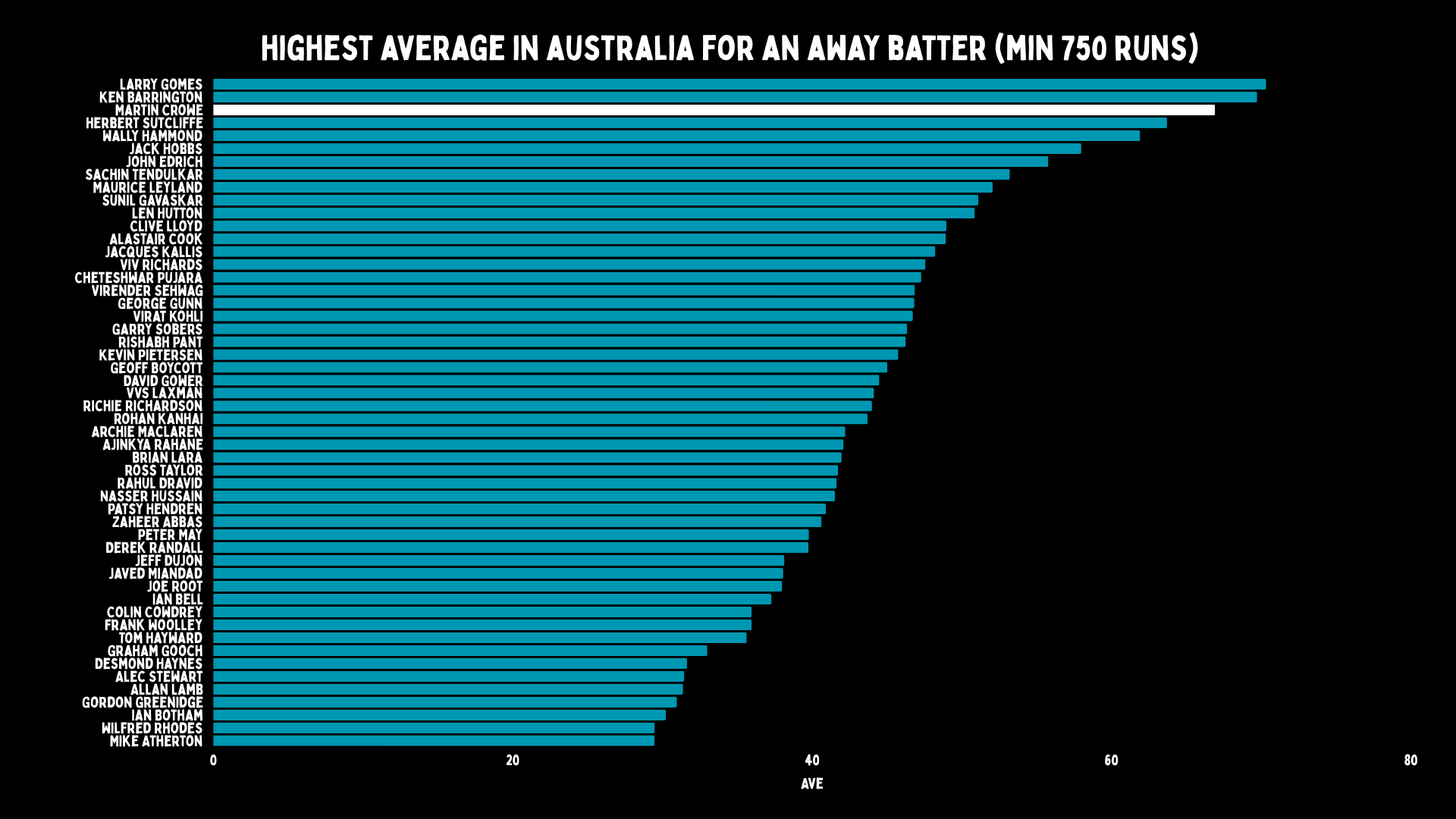
Crowe averaged 45 against the great West Indies, and almost 60 against Pakistan’s spin and reverse swing. But he is known for what he did against Australia. He averaged almost 50, which is already good, but it was 67 when he crossed the Ditch.
It is the third-best mark of any player in Australia. He was so good there that many Australians had him as their hero in the 80s and early 90s.
Kane Williamson has been a freak. But New Zealand cricket is often measured on how they go against Australia. That is the dragon on their doorstep, the biggest, baddest, loudest brother.
Crowe won series home and away against the bullies, making runs for fun, and corrupting the hearts of the locals. And Williamson has almost no impact on Australian cricket.
For Crowe, there is something else. Harder to see in stats or even highlights packages. He was a punk rock mad scientist. There was an edge to him.
Williamson has none of that. He is like a robot on a factory floor, with continued precision until a part needs replacing. Williamson is better, but Crowe hits different.
***
International cricket is hard. For nations with big money or populations, things go wrong. For New Zealand, a place without much of either, it’s way tougher. It took them 39 years to win a Test series. They became world-class in the 1980s, but in the 1990s fell back off a cliff. For most of their time they have been fighting clubs, counties and franchises to use their own players.
And so maybe what they needed when their second greatest player came along, was simply, calmness.
Or maybe that is just Kane Williamson.
Players at his level often have cool nicknames or phrases attached to them. Punter, Universe Boss and Captain Cool. But there is a phrase associated with Williamson, and it’s not like them.
Steady the ship.
It even comes with its own cricket cosplay. Is there a less sexy image in cricket than a New Zealander wearing a captain’s hat in a ground? But there is something sweet and comforting about it. Maybe that is also inspired by the man.
You can’t imagine Williamson inspiring people to wear coconut bikinis or denim g-strings. He politely shows composed dad energy, you wouldn’t be surprised if he was a volunteer firefighter, and he’s clearly a concerned citizen who pays his taxes early. His facial hair is not a fashion statement, but a big bushy beard. His voice sounds like someone ordering a coffee after a 5k fun run.
This is his image.
The White Stripes spent a long time crafting and then perfecting their tri-colour aesthetic. Their image was a beautifully executed extension of their music. It is supposed to look cool.
The White Stripes are artists; Williamson is a tradesman.
He trims his beard, makes sure his hair is the right length, and runs the ball down to third. That kind of man gets a phrase that he deserves. Because in cricket matches, things go wrong. He tried to fix that.
Kane Williamson is not rock’n’roll; he’s equilibrium.
When New Zealand were in trouble, he was calm, stable, and controlled the situation. His greatness was the ability to soothe a nation. When Kane Williamson played, New Zealand was at their most stable. For a generation, their ship was steady.
As Walt Whitman said for a slightly different topic, “O Captain! my Captain! our fearful trip is done”.