



Buy your copy of ‘The Art of Batting’ here:
Almost everything about Shubman Gill has been automatic.
In 2017-18, if someone asked which youngster showed the most promise in age-group cricket, that would have been the most likely answer. Because in two years at the Under-19 level, including a Player of the Tournament show in the World Cup in 2018, Gill made 1149 runs at an average of 104.5 and a strike rate of 103.2. That’s not a typo.
At the end of the 2010s, if you were wondering who would follow in the tradition of great Indian batters, the automatic choice would be him. Gill had a first-class average of 67.3, and crossed 50 every second innings he batted.
Selectors, IPL team owners, teammates - everyone said it when looking for the next batting superstar, the next leader. Shikhar Dhawan hadn’t done too much wrong in ODI cricket, but he had no issues with the selectors dropping him for Gill.
When Hardik Pandya was traded from Gujarat Titans back to Mumbai Indians, the Titans owners didn’t even need to ask the question. It was clear who their next franchise leader would be. And when another Indian selection panel needed to appoint a new Test captain, they were faced with the same question and arrived at the same answer.
Gill had dominated every stage of cricket he had spent some time in. International Test cricket took a while longer. The higher standards and the bowling-friendly era he debuted in meant he wasn’t stacking runs the way he was used to doing. But even there, Gill showed what he could do when presented with flatter pitches against England.
Perhaps the only question mark that remained was T20. Gill had enjoyed great success in the IPL, so it wasn’t a question of whether he could succeed in T20. It was more about whether his batting style fit the philosophy of the modern game. To the Indian selectors, it emphatically did. Because they didn’t just bring Gill back into India’s T20I set-up, they also made him vice-captain. Other teams don’t really attach great importance to the vice-captaincy. But India does.
So Gill has been automatic when it comes to India, and they are fast-tracking him to all format captain. But is he part of India’s best T20 side? Because they are treating him like a certainty, but for the Indian T20 team, is he automatic?
***
Gill the T20 player cannot be judged without nuance because there’s been a distinct shift in his game from 2023 onwards.
For this analysis, we’ve looked at Gill in the IPL only. His T20I appearances have been sporadic, and the IPL provides a more consistent sample size in a high-intensity, high-quality competition. (Explanation of advanced stats can be found here).
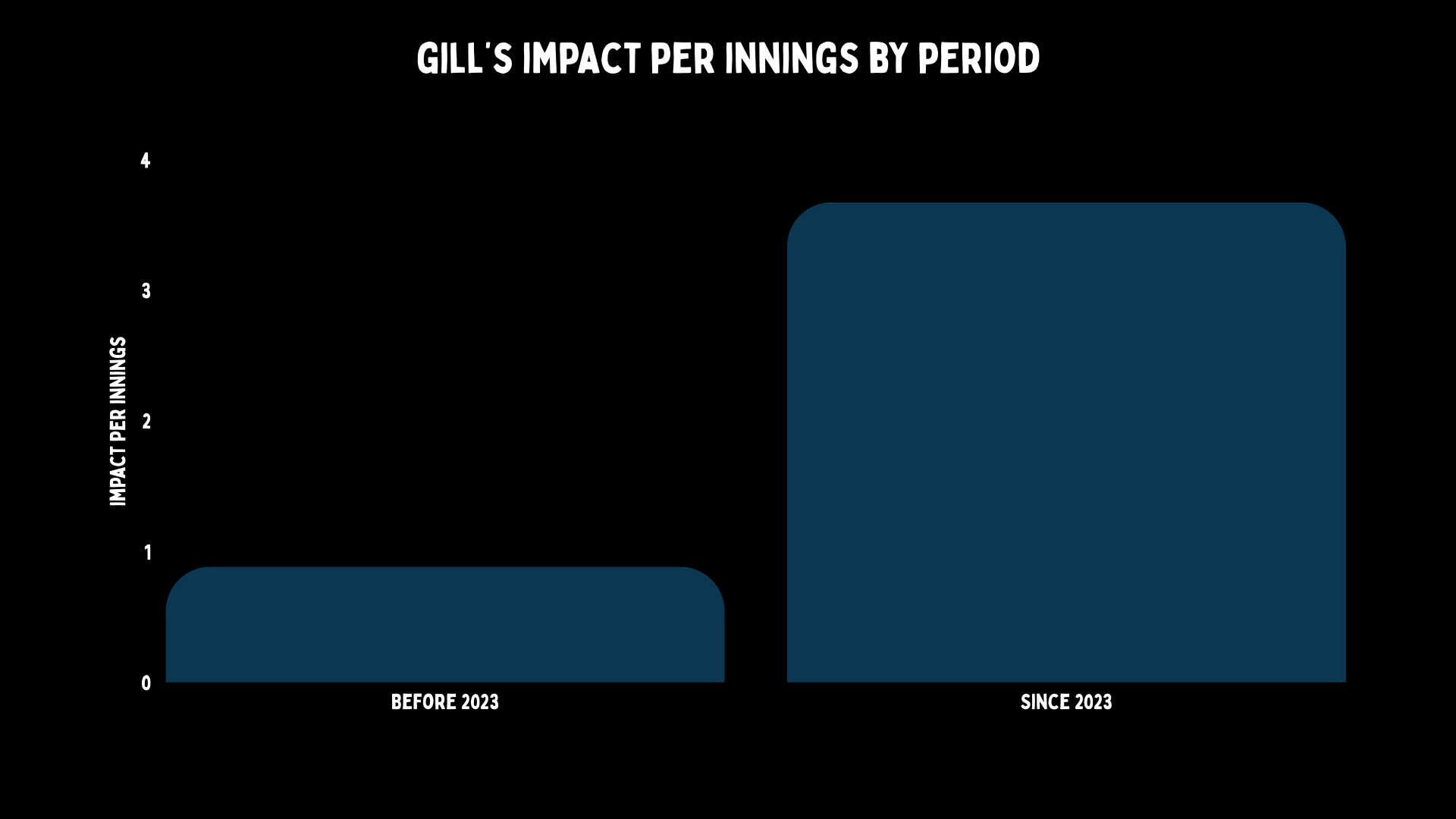
You can see the radical difference in the impact Gill has in his T20 innings from 2023 onwards. Until IPL 2022, Gill’s impact per innings was 0.89. Since IPL 2023, it’s 3.68 - a four-fold increase.
The difference is even more stark when you look at Gill’s true values. Before 2023, he was slower than average and was scoring a par number of runs. He was a net negative batter, scoring about the same as others in his position did, but taking more time to do so.
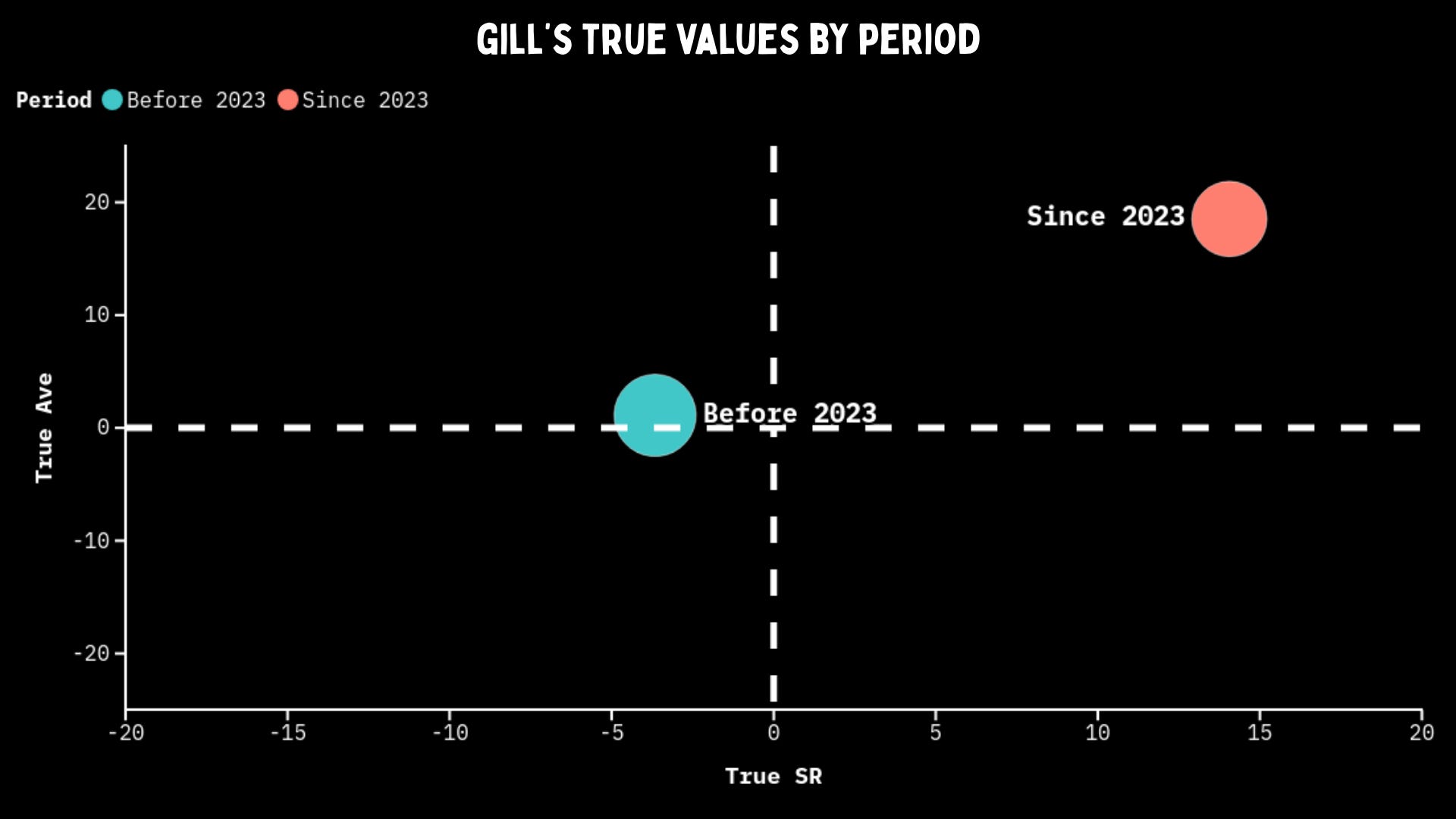
The transformation post 2023 is stunning. He’s not only scoring more, but he’s doing it way quicker. Gill has spoken about this at various points in the last couple of years, and particularly in IPL 2025. He recognised the need to accelerate his run-making in the Impact Player era.
While you can see that Gill’s game has come on by leaps and bounds individually, it’s useful to see where he ranks among his peers.
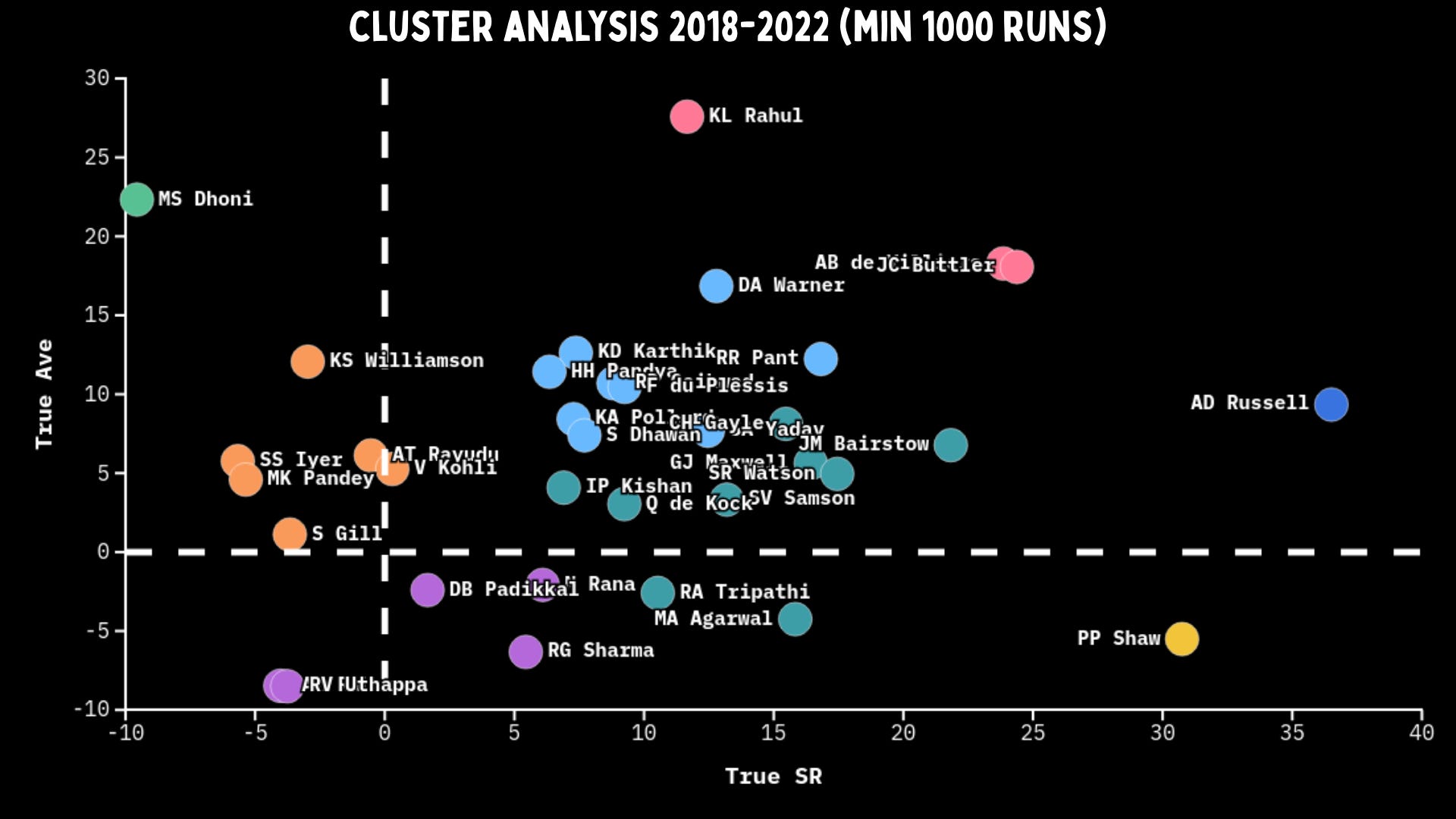
Before 2023, he was in the same cluster as Kane Williamson, Shreyas Iyer, Manish Pandey, Ambati Rayudu and Virat Kohli. And trust me, you do not want to be in the same cluster as them in that period.
Since IPL 2023, Gill is approaching elite figures. He has scored quicker than Virat Kohli, Sanju Samson, Jitesh Sharma, Tilak Varma, Shivam Dube, Ishan Kishan and Rohit Sharma among Indians. He’s even been quicker than Jos Buttler.
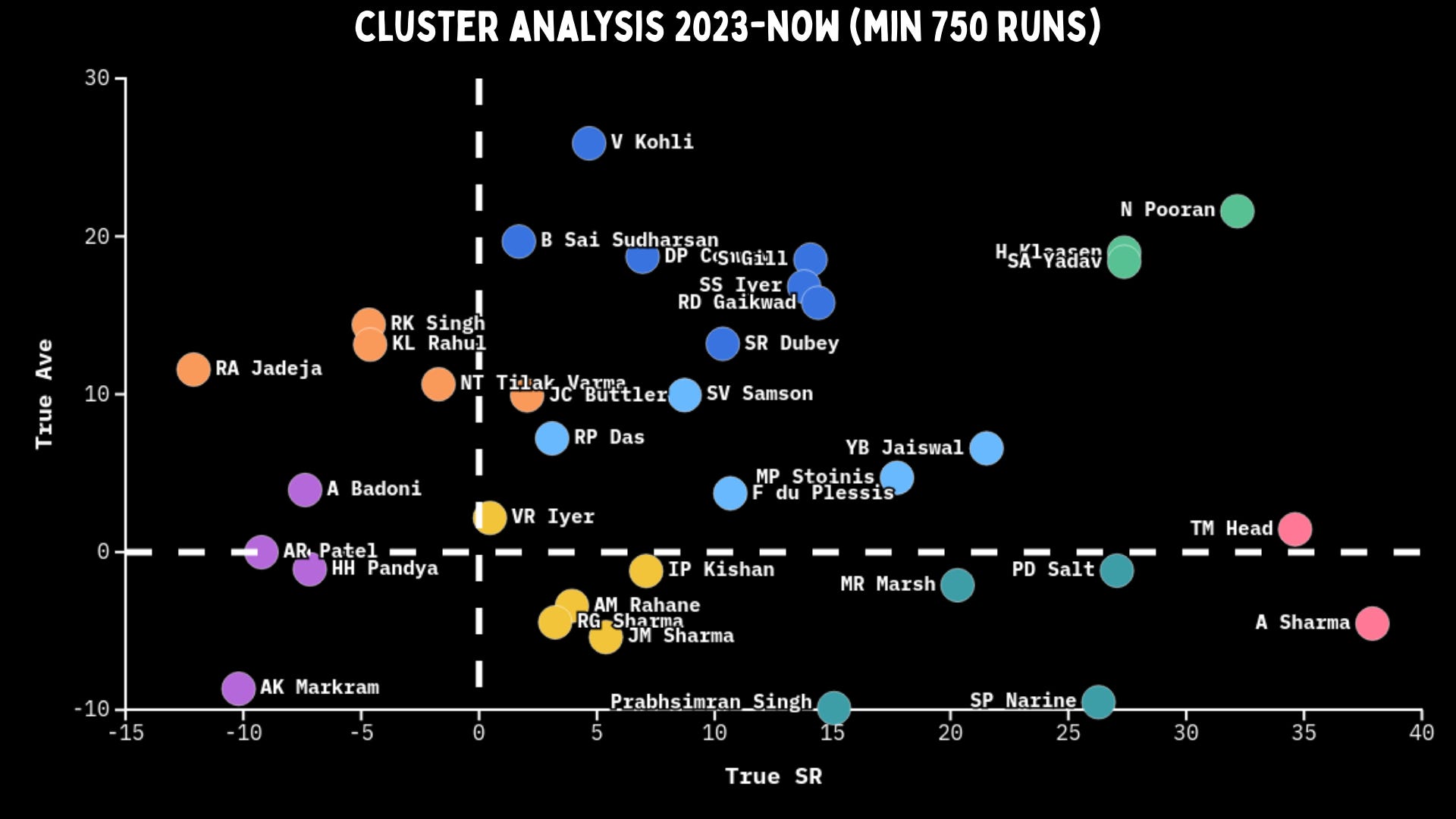
Nobody had Gill scoring faster than Buttler, Samson, Dube and the like in a three-year IPL period on their bingo card. It defies all perception, which is another reason why true values are a far better measure to compare batters than bare strike rates.
Gill was a better batter against spin than pace even in the 2018-2022 period, but since 2023, he’s made a quantum leap against both bowling types. While he’s solidly positive vs pace, he’s elite vs spin.
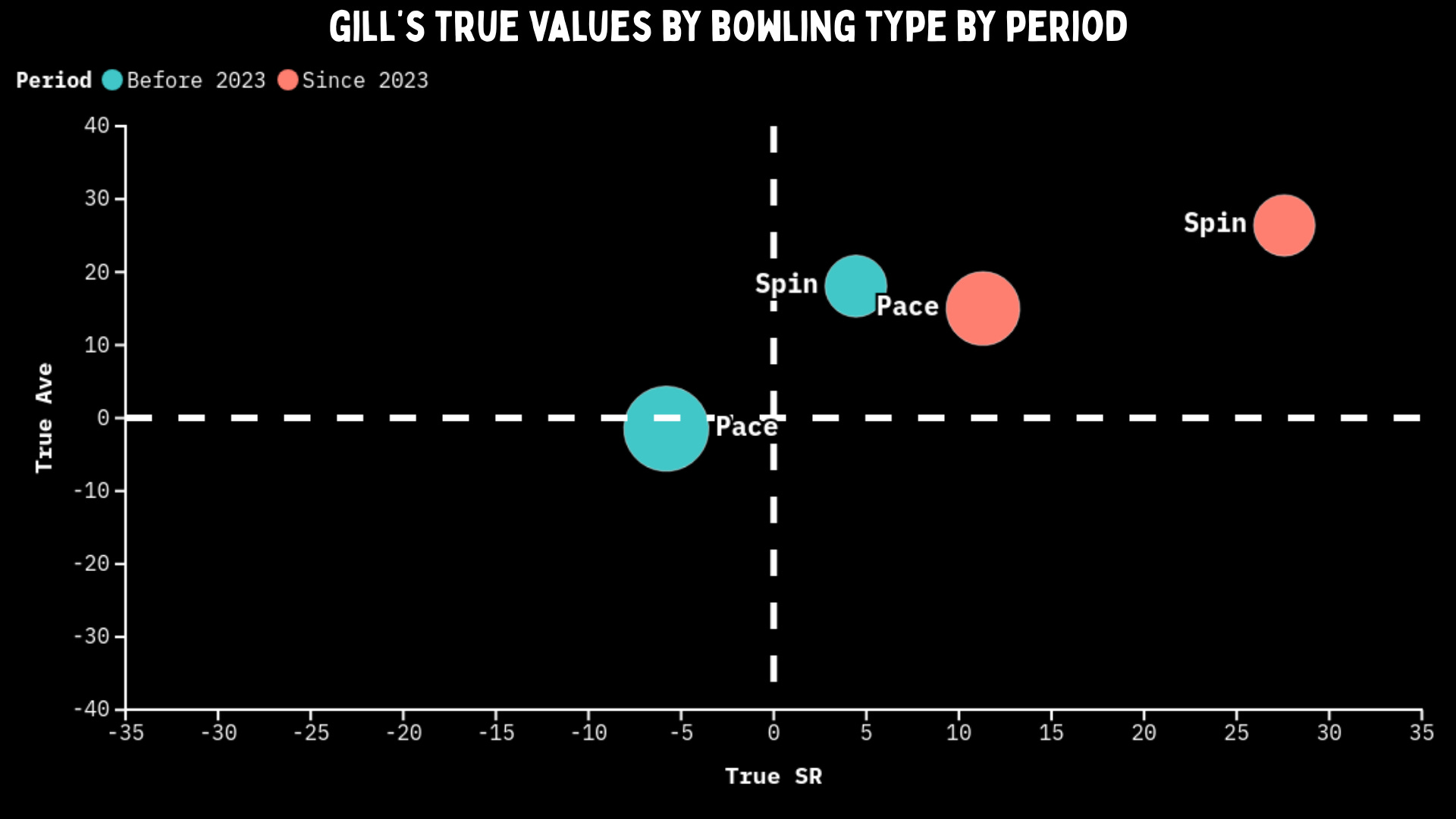
That is a bit counterintuitive for a man who has almost exclusively opened the batting. Only 18 of his 161 IPL innings have not been at the top of the order, and none since IPL 2020. This could actually suggest Gill might be successful coming in at No.3 or No.4 too. The caveat is that when he opens the batting, he’s more set when the spinners come on. Will he have the same success if he has to start against spin? There’s no good reason why he shouldn’t, but batting is not linear like that.
It does give the Indian team an option to structure their order differently though. If Gill moves down, it could create a spot for Yashasvi Jaiswal to open alongside Abhishek Sharma.
