


Buy The Art of Batting here:
Matt Henry is not very threatening.
Those are not my words, but those of the ICC. They are putting them on the screen for everyone to see. One of the world’s best new-ball bowlers is basically a teddy bear in their eyes. To be exact, he’s less threatening than his teammate, Jimmy Neesham, and not even a little bit.
According to this ICC-sanctioned metric, Neesham is a 93 on the threat level, an unlikely strike bowler, and Matt Henry is the part-timer who occasionally rolls his arm over.
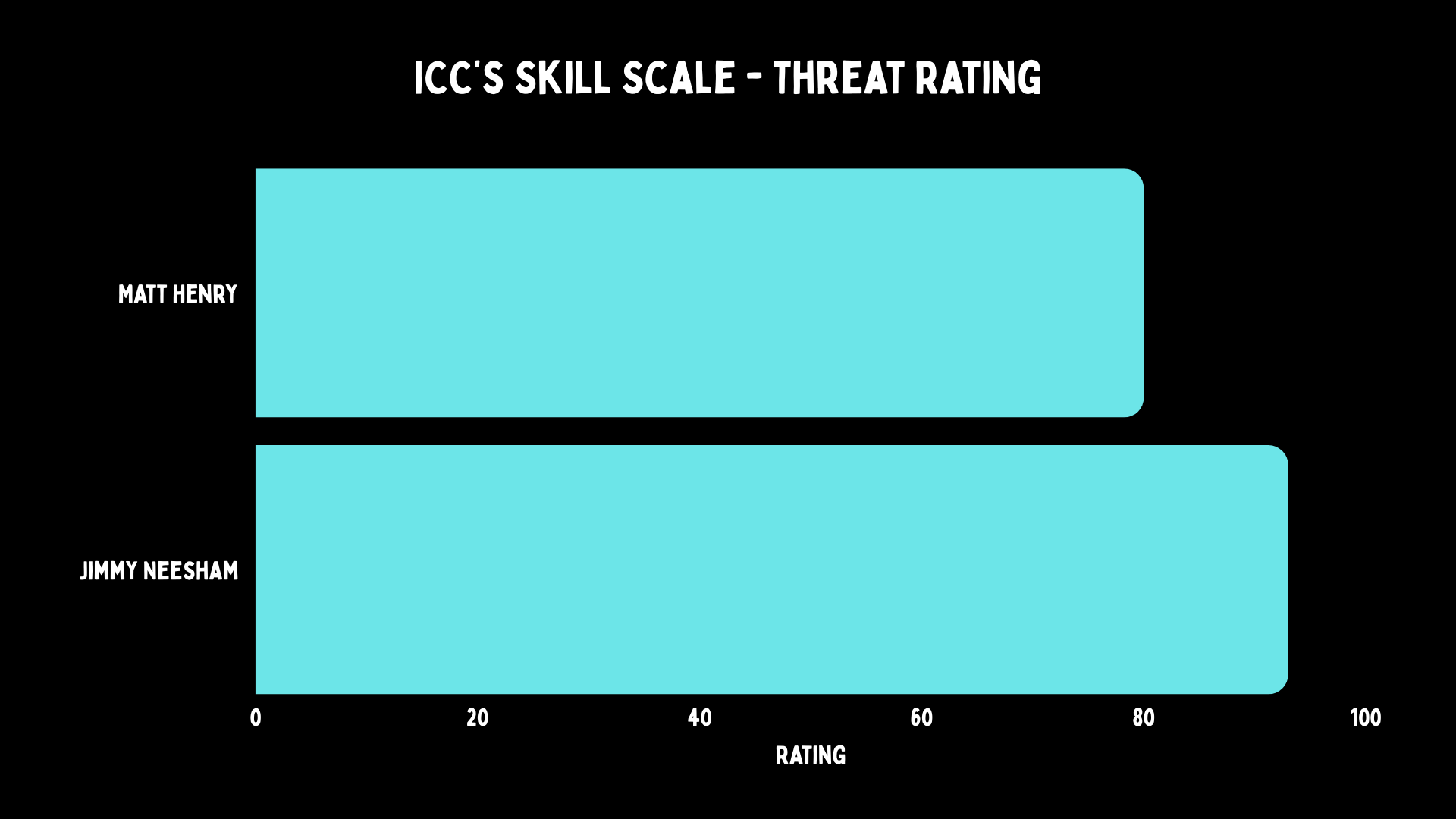
Yet somehow, Henry averages 1.2 wickets a match, while Jimmy is down at 0.82 wickets.
That is down to usage, shortly.
So if you had a weapon like Neesham - let’s call him Threat Level Midnight - you would bowl him all the time. And yet, old Teddy Bear Henry is the one delivering most of the overs.
In fact, if you look at more of the bowlers’ threat ratings from the ICC, you’ll also see other numbers that don’t make much sense.
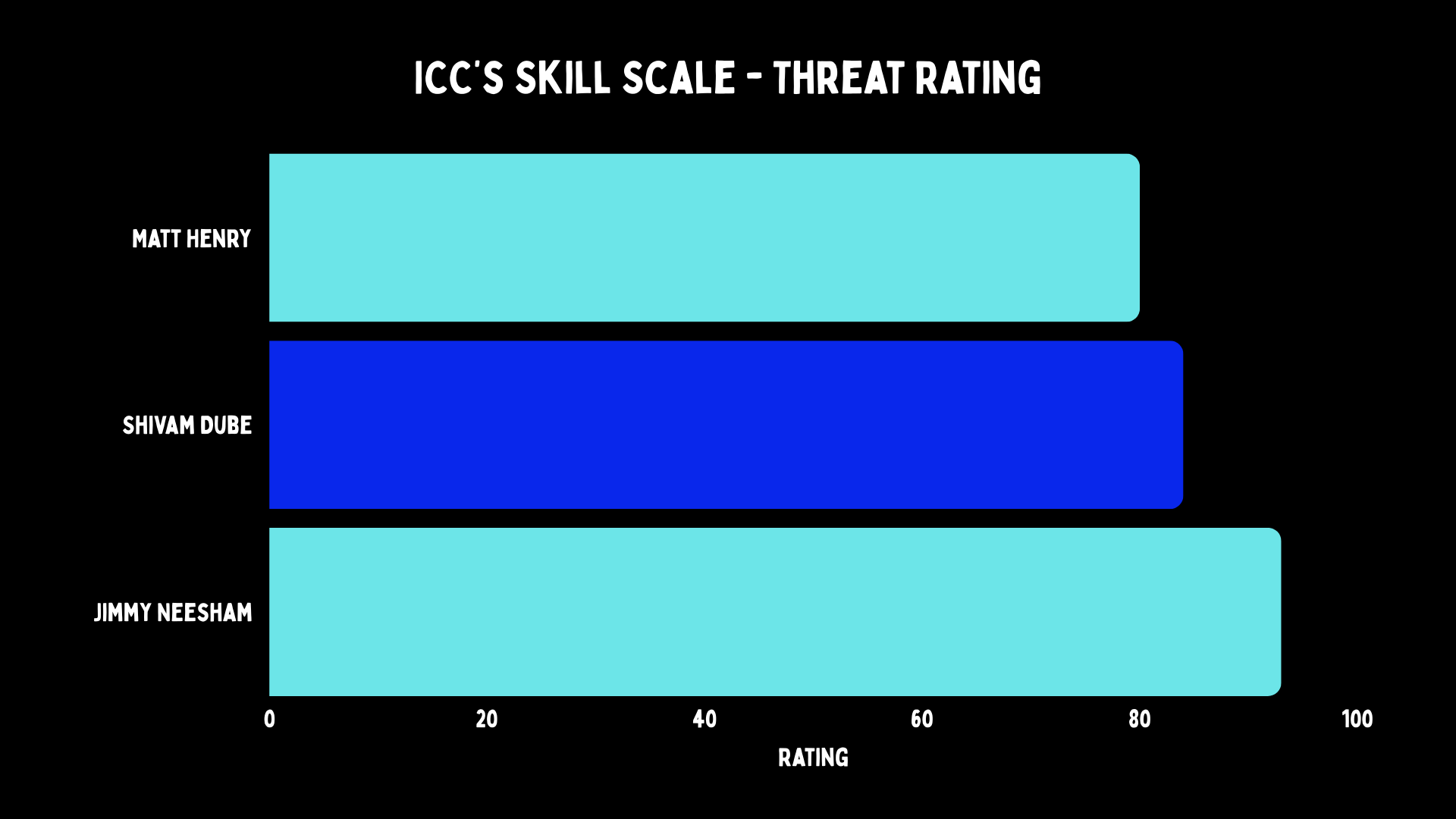
The reason Shivam Dube and Neesham take wickets is not that they are threatening or scary bowlers. It is because they are the fifth, and sometimes sixth, options that you obviously have to attack.
So “threat” is already the wrong word with respect to these two players, who are also both batters first. Their bowling is about as threatening as a silent fart in a tornado, but it can be effective when they bowl on surfaces that help.
And this is the thing - they don’t even always bowl.
Neesham delivers just under 14 balls per match, suggesting he’s really more of a 5.5th choice bowler. Shivam Dube has played 196 T20s and bowled in 104 of them, so about 52% of the time. He delivers around seven balls a match. So, definitely a sixth bowler.
Even before the IPL brought in the Impact Player rule, he never bowled 10 overs in a season. For India, he delivers eight balls a match. It seems like India are underusing his “threat”.
According to the ICC’s skill scale, Shivam Dube and Jason Holder are rated as equally threatening. But it’s worth noting that in the last year, Holder broke the world record for the most wickets in a calendar T20 year.
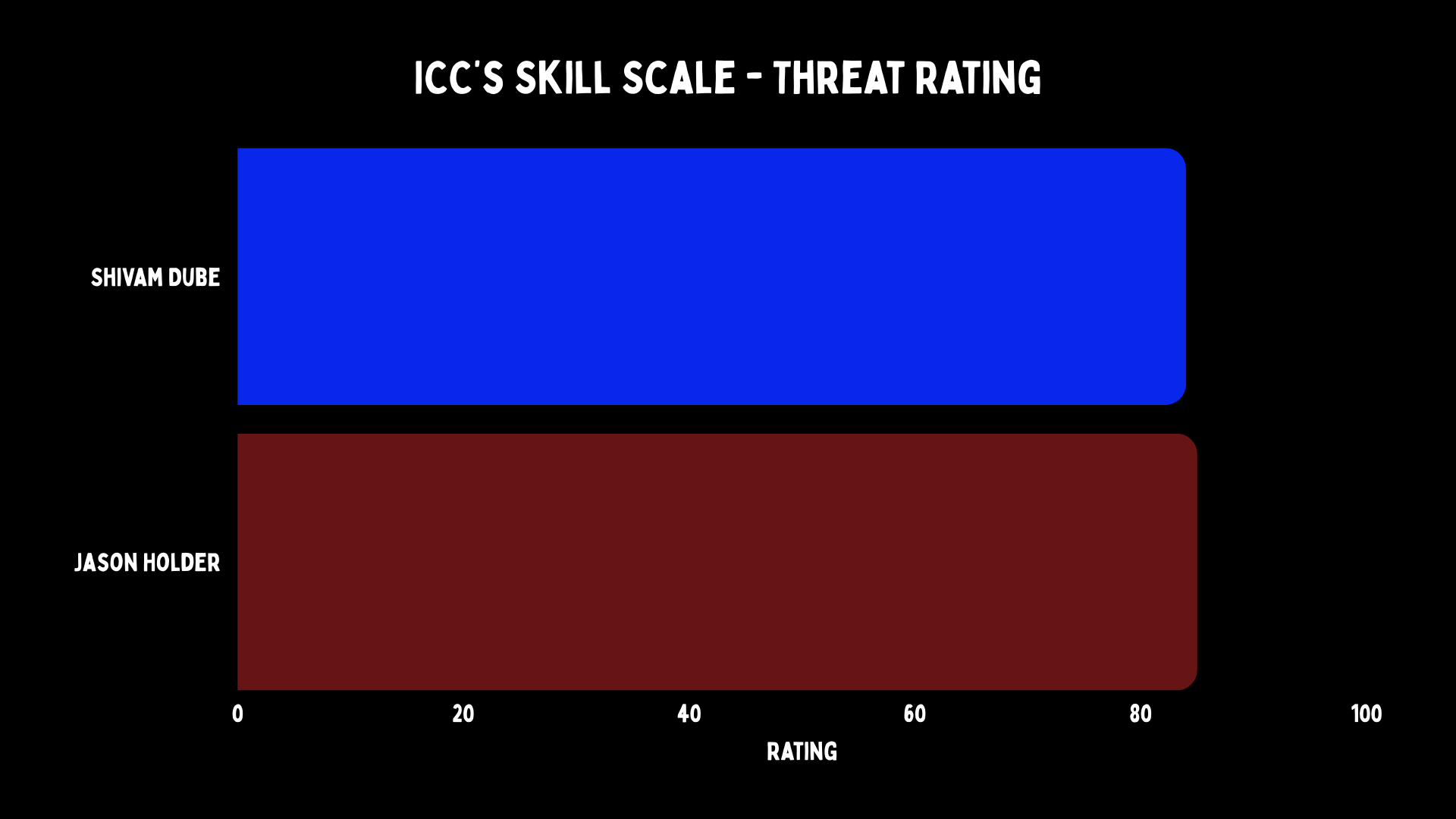
So if that’s the case, maybe all these teams should be using Dube more as well.
If you are looking for threatening bowlers right now, and you had to pick between these four men, then clearly Matt Henry - with 47 wickets at 23.78 for New Zealand - is not worth the ICC’s selection.
***
Our friend Himmybear (also known as Himanish Ganjoo) has confirmed that the skill scale we see on TV is coming from the ICC and CricViz.
And to be honest, I think this is a fantastic idea. It’s gamifying cricket so that people understand things quicker. It’s the sort of thing this sport should be doing over and over again.
Does this person bat long or fast? With power or strike rotation? These are all questions we should be answering for casual cricket fans, who might only tune in for a game or two at a major event.
But let’s zoom in on noted cricket TikToker Max O’Dowd’s numbers here.
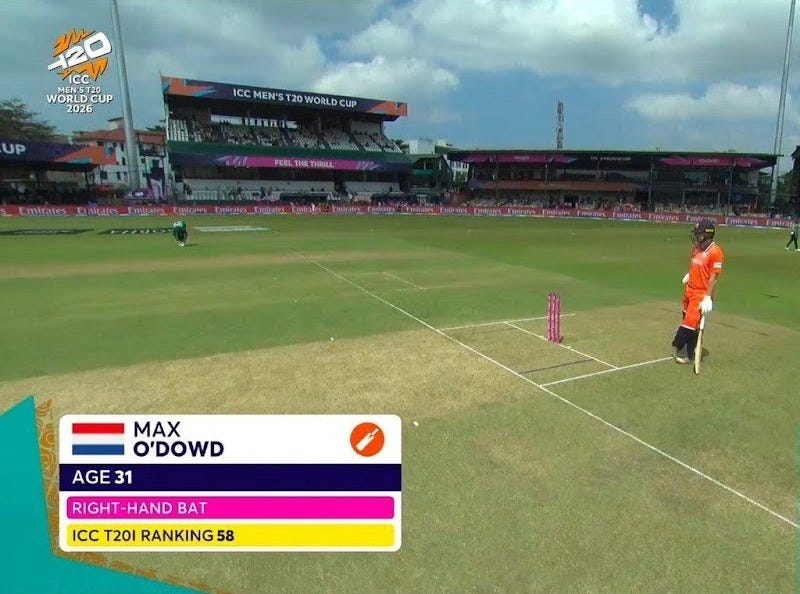
Innovation, 45. Very fair. He’s a traditional batter who knocks the ball around. Power, 59. Late in his innings, O’Dowd can hit, but it often takes him a while to get there. Yes, it feels a bit low, but you could make an argument for that number.
But control, 38. What on earth?
In the last two years of T20 cricket, I have him as a 74% in-control player. For a modern T20 opener, that is pretty high, especially in an era of thrashers.
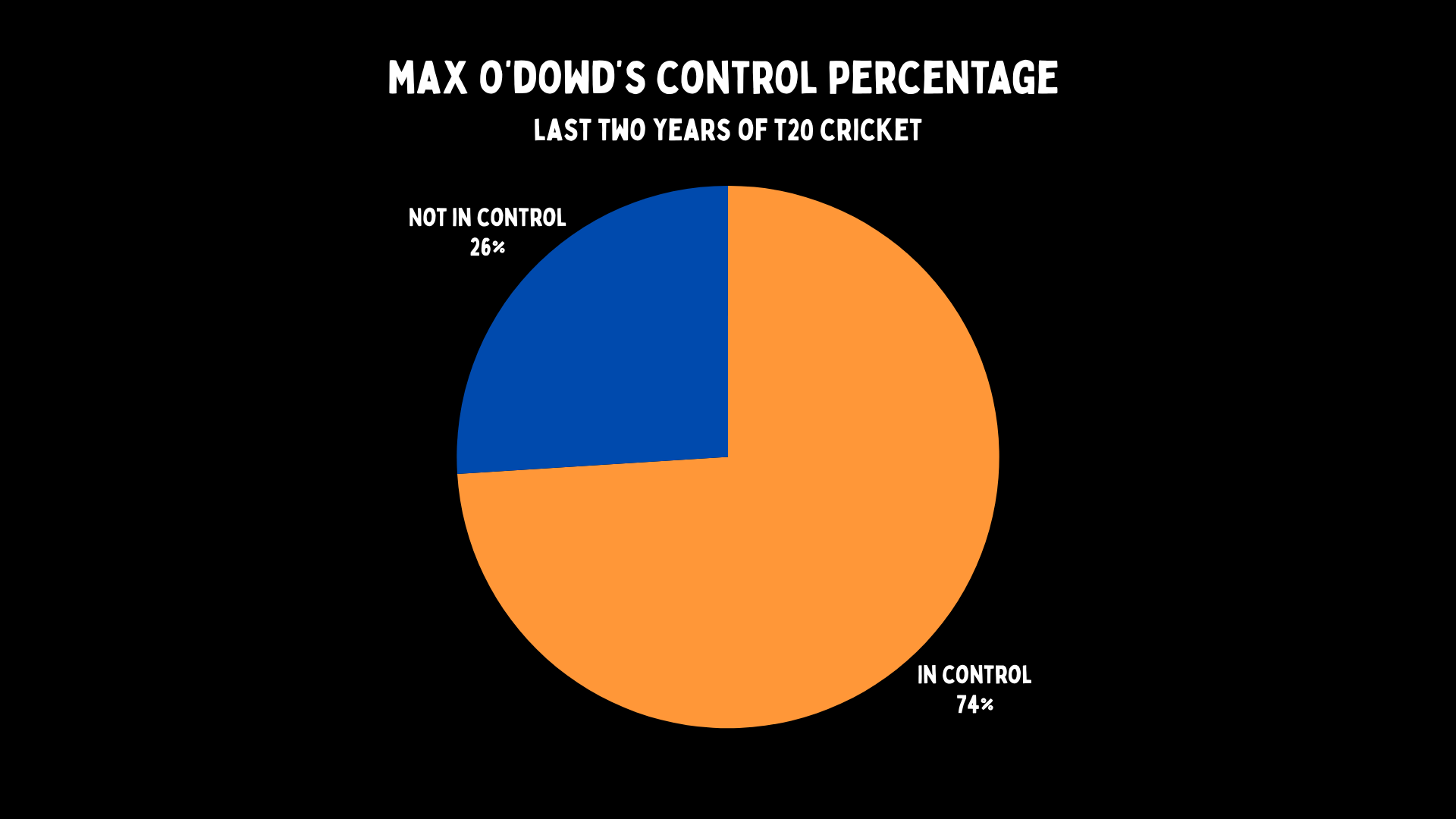
And it turns out O’Dowd’s control percentage is actually higher in the last two years than normal. His game is set up to keep out the good balls, find the gaps, and later, if he’s in long enough, slog over midwicket.
So we know this number isn’t just wrong, but it’s comically insane. It’s like looking at a cheesecake and calling it a helicopter.
It also depends on what you show. If you looked at Logan van Beek’s numbers, you might think he was the better batter, despite being a number seven or eight compared to his opening teammate.
But forget the maths and stats for a moment. How would Max O’Dowd feel about this? The International Cricket Council is effectively saying he’s a terrible batter.
Four years ago, he was the second-leading scorer at a World Cup, sandwiched between Virat Kohli and Suryakumar Yadav. You might have heard of both of them.
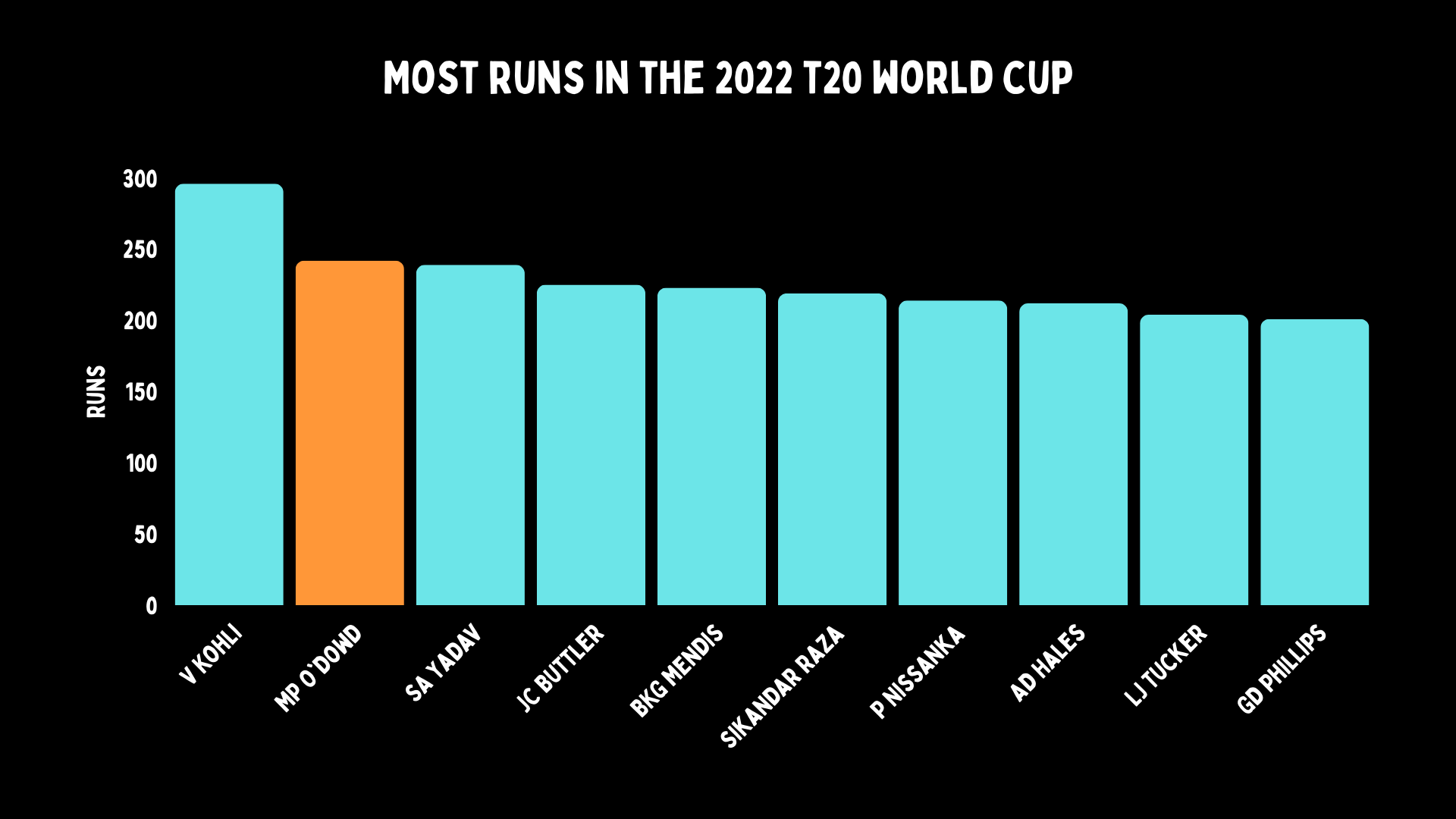
O’Dowd isn’t some random nobody. He’s made a lot of runs for the Netherlands, specifically at World Cups. And now the governing body of cricket is telling him - and the world - that he’s bad.
The idea of the skill scale really comes from sports video games like FIFA, NBA 2K, and maybe even a video game like Dungeons & Dragons. Athletes in those sports are used to being upset about their ratings.
