



Australia and England meet again in a T20 World Cup final after eight years. The last one was at North Sound in Antigua, as the Aussies lifted their fourth title in the shortest format. They also faced each other in the 2022 ODI World Cup final, which Australia won.
Both teams have six players each from that final in their current squads.
But remember, they are playing this final at Lord’s, where England won the inaugural T20 World Cup final against New Zealand in 2009. They also won the 50 over editions at the same venue in 1993 and 2017.
Either way, there is going to be a first for the hosts. Finally defeating Australia in a World Cup final, or finally losing one at Lord’s.
***
Australia
With South Africa and India on the same side of the draw, Australia were in the ‘Group of Death’. And they’d play the former to kick off their campaign, while the latter was the final match of the league stage.
And things did not exactly begin their way at Manchester. South Africa arguably had the best new ball pace duo in the competition, and they got rid of the openers early. Phoebe Litchfield decided to respond with a counterattacking half-century; the fifth-fastest in the tournament’s history. But again, they lost two wickets in quick succession after the powerplay. Ellyse Perry and Georgia Wareham then had a crucial partnership, while Annabel Sutherland also chipped in with a few handy runs. Their ultra deep batting allowed them to get to 172.
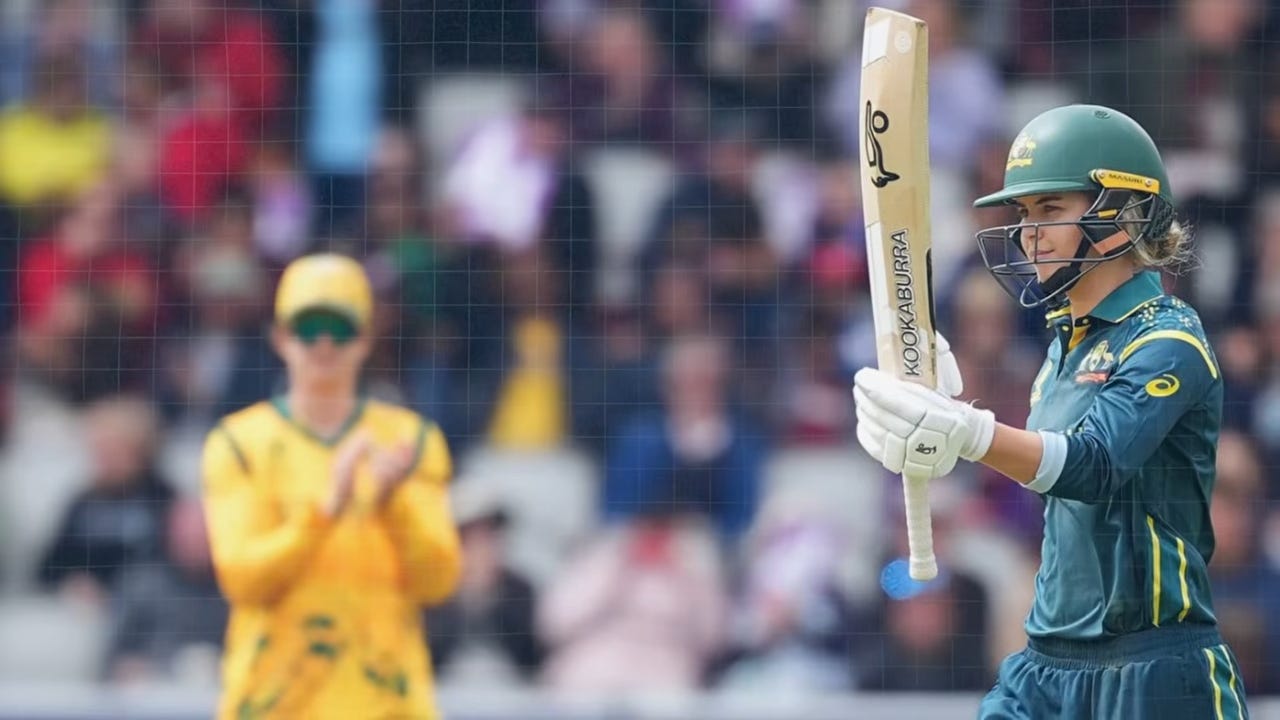
Sophie Molineux and Kim Garth also took two wickets in the first 11 balls. They did a great job keeping Laura Wolvaardt - the new, evolved T20 version - quiet for most of her innings. A sharp throw from Wareham in the deep cut short Kapp’s innings. And the South African lineup just fell apart once Wolvaardt was gone. Their spin quartet combined for eight wickets.
They didn’t have Litchfield and Ash Gardner against Bangladesh at Leeds. Not that it would matter; Australia won the toss and elected to destroy them anyway. Garth got the ball to move and her two early wickets came from attacking the stumps. Perry took two wickets in the eighth, which had them 27 for 5. If you want to be really nitpicky about it, you can say they should have been able to get Bangladesh all out. Instead, they finished 77 for 8. Voll scored 45; they won with more than half the overs to spare.
Beth Mooney turned up against the Dutch in Southampton. She smashed six fours in 19 balls in the powerplay. And once the field was spread out, she scored even faster - from twos, not boundaries. However, a stiff back meant she had to go off, and that meant Georgia Voll was their emergency wicketkeeper. Voll did take a catch and managed not to concede a bye either, so that worked out fine. Gardner and Wareham scored really fast, too. Garth took two powerplay wickets, but the innings was a slow burn as the Dutch made 121 despite losing their third and final wicket in the 20th.
Before they faced Pakistan at Leeds, India also lost to South Africa, which meant it could end up being a two-way battle between those sides for the second spot with Australia’s NRR. After losing Mooney on the first ball, Perry and Voll added 100 in under ten overs. Perry was the aggressor in that partnership, but after losing three wickets in seven balls, she geared back. Sutherland and then Carey played important knocks to set Pakistan 200. Australia tried eight different bowlers in this innings, and none of them were part-timers; a unique luxury. But Pakistan lost three wickets to runouts, and failed to achieve even half the runs.
The game against India at Lord’s was a must-win only for them, not the Aussies. India did not lose a single wicket in the first six overs, but they didn’t bat as fast as you’d expect them to. Of the four wickets, there was a runout, a retired out and a 20th over dismissal. So each of their top four made runs, but nobody did it as fast as the Harmonster. Lucy Hamilton - playing her first World Cup - and Wareham both went at under a run a ball.
Voll was out in the first over, so Mooney and Litchfield had to rebuild. It was an uncharacteristic knock from the young left-hander, striking at 96. And it wasn’t quite an easy road ahead when they were 68/3 in the 10th over. But the two experienced allrounders - Perry and Gardner - made it seem like a walk in the park. But if you look at their entire campaign, it was the game that challenged them the most.
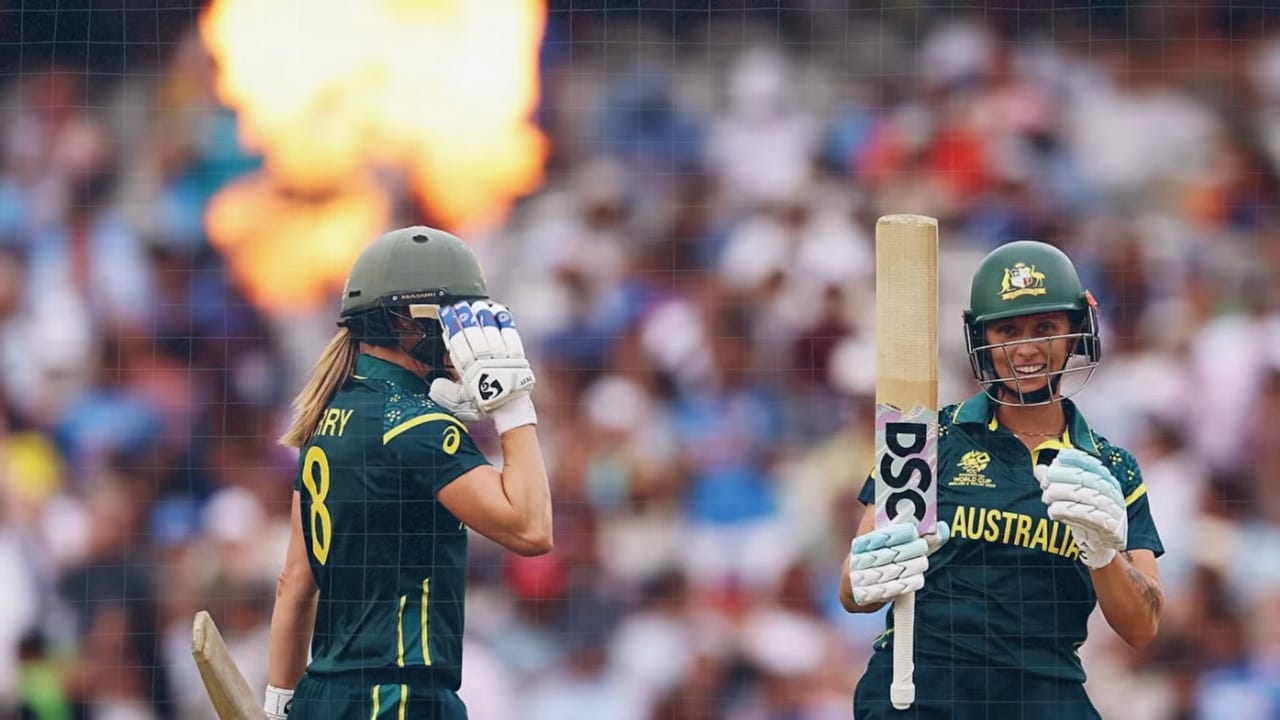
In the semi-final, Australia did not take a powerplay wicket against the West Indies either. But they only conceded 35 in that period. However, they won this match in the middle overs, taking six wickets for only 49 runs. The spin trio got two dismissals each. Mooney killed the chase in the powerplay, and finished it off with Gardner. But Perry had to retire hurt after the 7th over due to “minor quad awareness”.
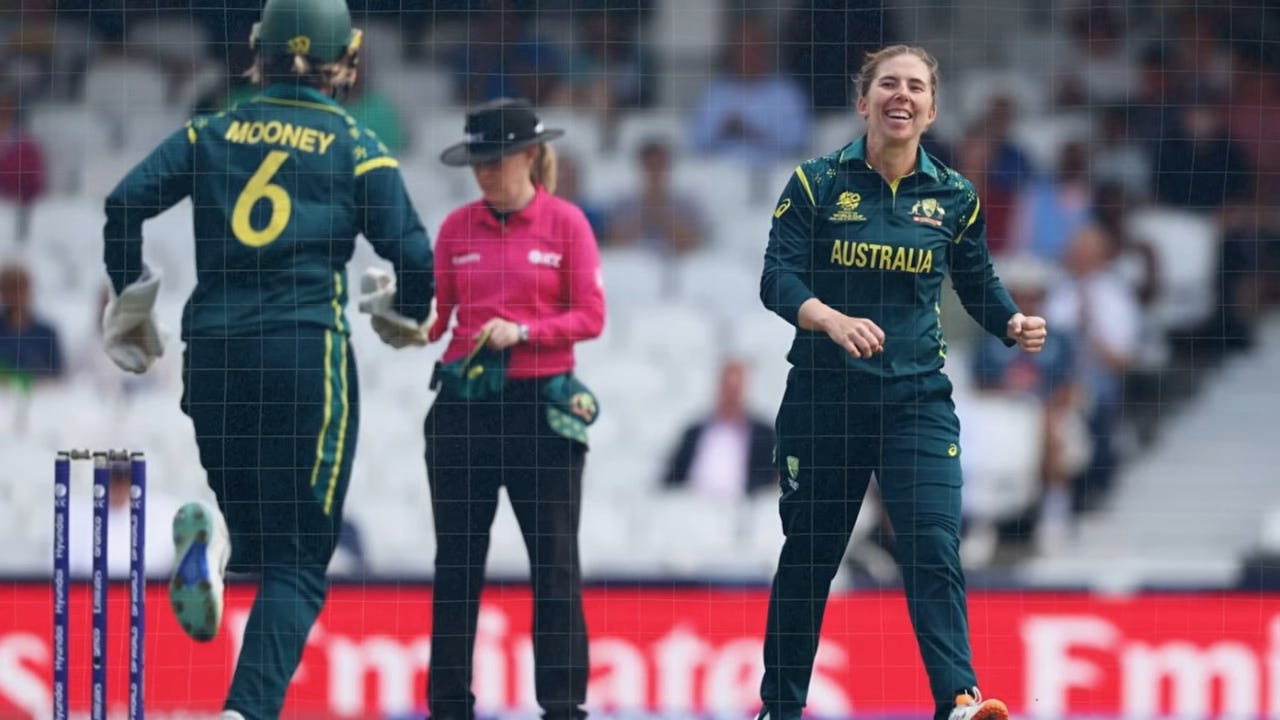
If you really have to nitpick Australia, it’s that Voll hasn’t yet shown up against the best teams, they perhaps haven’t taken the wickets you expect, and Sutherland hasn’t been elite with the ball. But they’re through to the final after three tournaments, so they really wouldn’t be complaining much.
England
England played Sri Lanka in the first match of this tournament at Birmingham. They lost the toss and were put in to bat first. And that matters, because the hosts did not go all guns blazing in the powerplay and lost zero wickets. The opening pair would then smash another 84 runs in only 7.4 overs after that. Some poor fielding by Sri Lanka certainly aided them. Nat Sciver-Brunt took a little bit of time before clobbering five boundaries in the final two overs. But it was Danni Wyatt-Hodge’s day, as she made an excellent hundred to kickstart their campaign. Sri Lanka lost three wickets in the powerplay, and Charlie Dean took the biggest wicket of Chamari Athapaththu. Even before Freya Kemp took her four-wicket haul, England had practically won the game.
Ireland were 57 for 5 in the 10th over, but they managed to bat out the 20 overs and set England 119. They lost both their openers and Alice Capsey in the powerplay, so the onus was on the two most experienced batters - Sciver-Brunt and Heather Knight - to take them out of trouble. And so they did, adding 64 runs in about eight overs. They did stumble a little even after that, but won with four wickets and 15 balls to spare.
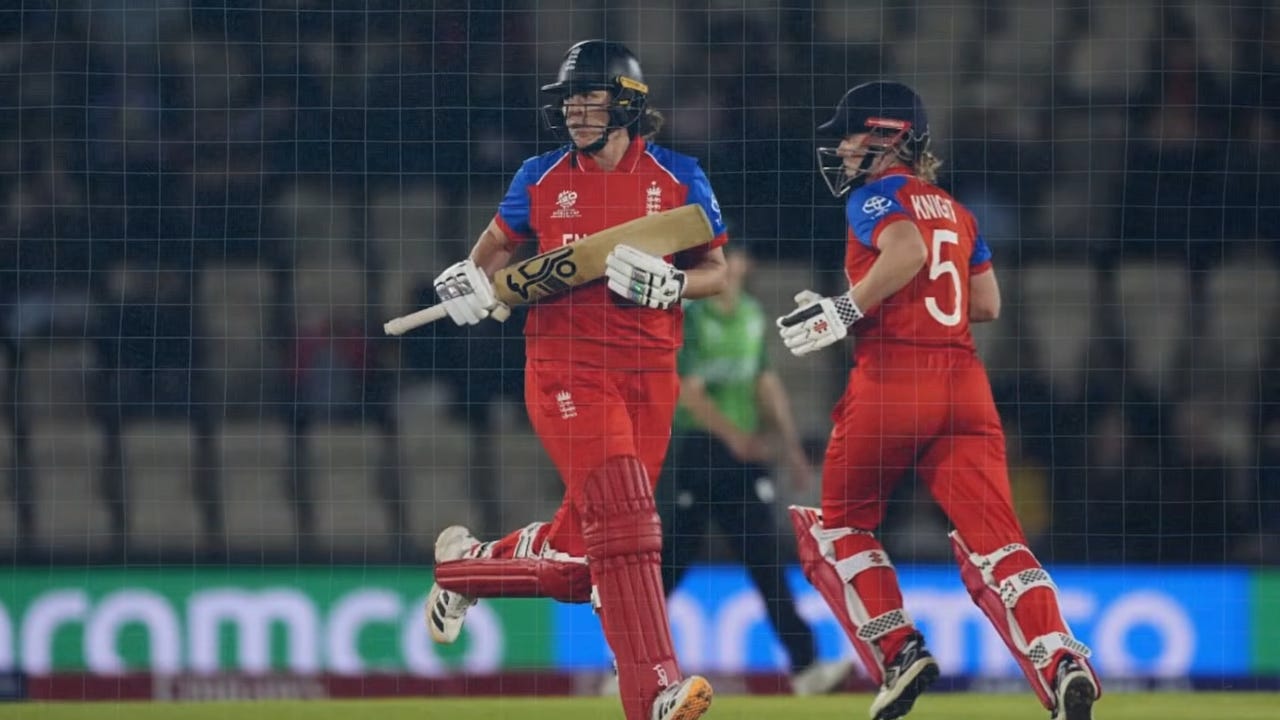
Coming in at three in place of the injured Sciver-Brunt, Sophia Dunkley made 43 of England’s 51 runs in the powerplay against Scotland. Apart from the openers, everybody else chipped in with contributions, but the standout partnership was Kemp and Dani Gibson adding 61 in the last three and a half overs to take them to 200 for the second time in this competition. And though Scotland put in a good effort, it was never going to be enough. Sophie Ecclestone was the pick of the bowlers at Leeds.
They then had to face the unbeaten West Indies at Lord’s. They were put in to bat first, and despite losing two powerplay wickets, they didn’t really slow down much. The innings was held together by Wyatt-Hodge first, and then Knight. Hayley Matthews had a controversial dismissal where there was a clear gap between bat and ball in a caught behind, and then Dottin also perished in the powerplay. Bell and Ecclestone both conceded less than six per over as they won by the same margin as against Scotland. That sealed a berth in the semi-final.
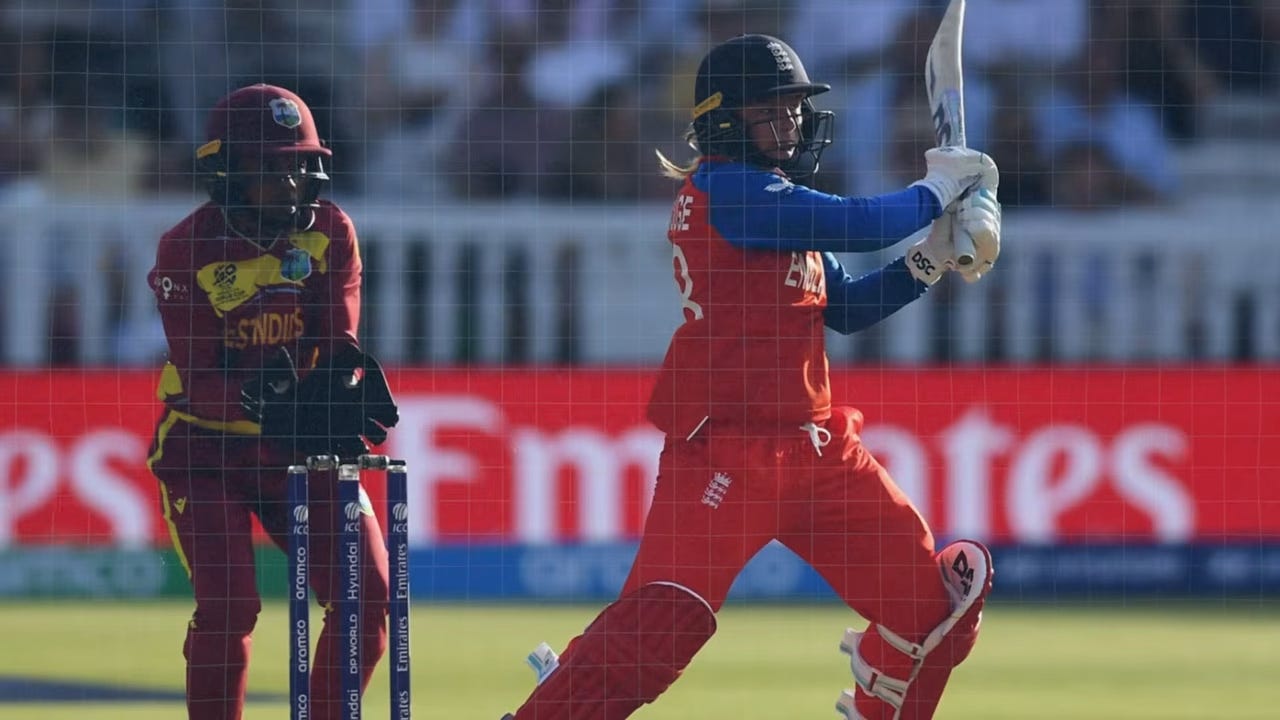
After the West Indies lost to Ireland, New Zealand had one last shot at making the top four, and that would be by defeating England. The hosts didn’t take a new ball wicket against the Kiwis, but they only allowed 44 runs in that duration. Kemp and Gibson took three wickets in four balls from 9.6 to 10.3. Bell took the big wicket of Sophie Devine, who was on 30 off 13 before the dismissal. Her, Ecclestone and Linsey Smith were the most frugal of the lot. They then conceded only 35 runs at the death, and Wyatt-Hodge’s unbeaten 89 ensured yet another comfortable victory.
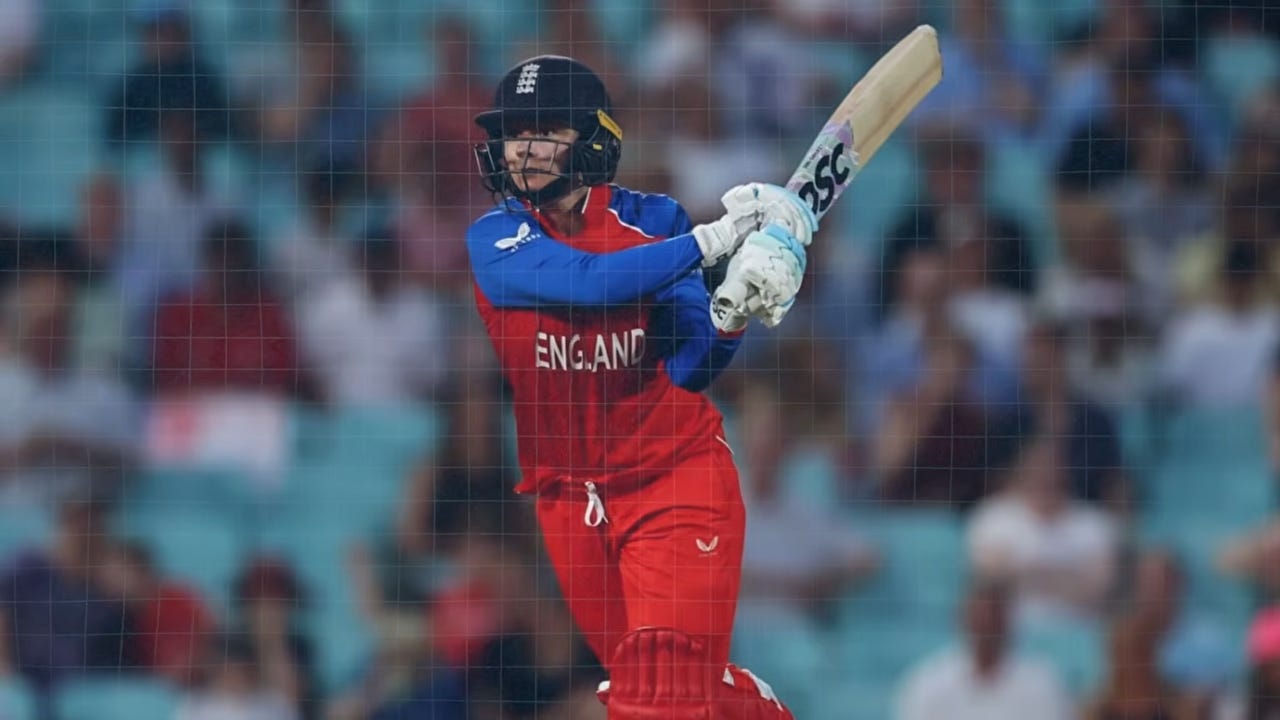
England were in a major spot of bother after South Africa’s quicks had them reeling at 23 for 3 in the fourth over. Of course, it had to be Sciver-Brunt and Knight again. Their century partnership would ultimately define the semi-final. The current skipper scored quicker, while the former World Cup winning skipper held one end up. If anything, they could have even gotten to over 180 but both of them got out just before the final push. Defending 169, none of their bowlers went for eight an over. Linsey Smith got the biggest wicket of them all in Laura Wolvaardt, as Sophie Ecclestone took a good catch in the ring. Dean got rid of Kapp and Tazmin Brits, and it was all over.
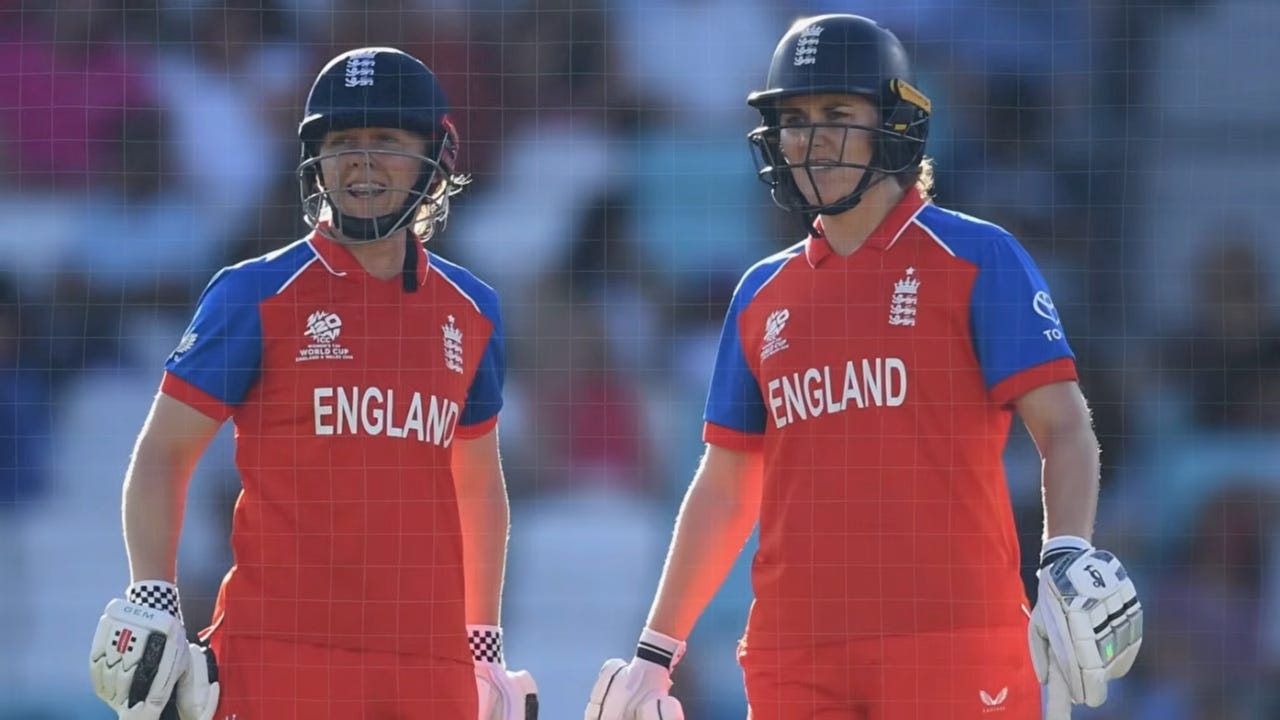
Their batting has found a way, without ever looking invincible. Jones and Capsey are not in form. There isn’t much to worry about when it comes to their bowling as even their fifth option overs have been covered well by the all-rounders.
***
These are the two unbeaten teams, so that makes it cleaner. Since the last T20 World Cup, they’ve played each other in a three-match series, which the Aussies clean-swept. But that was played Down Under, and England have certainly improved as a cricket team since. Plus being at home helps.
So will Australia get back to collecting trophies after two semi-final losses, or will England finally win their second T20 World Cup at Lord’s?
Australia are massive favourites, as they have been this entire time. But one off T20 finals don’t care about stuff like that.
Great preview. Australia deserve to be favourites given how complete they’ve looked throughout the tournament, but T20 finals have a habit of ignoring form. England’s record at Lord’s and the home crowd give them genuine belief, while Australia’s experience of winning the biggest games is hard to overlook. It feels like one of those finals that could be decided by a single spell or one explosive innings. If Perry is fully fit, Australia have the edge—but if Sciver-Brunt and Knight produce another partnership under pressure, England could finally break their World Cup final hoodoo against the Aussies. Can’t wait for this one.