



Buy your copy of 'The Art of Batting' here:
Aaron Finch. Fakhar Zaman. Dawid Malan.
Those were three of Pathum Nissanka’s neighbours in T20Is from 2021 to 2023. That may not sound like the worst group, especially for a young batter. Both Finch and Malan were once ranked #1 by the ICC. And while Fakhar may not have maximised his potential for Pakistan, he has had a solid PSL career and was also second in the ICC rankings in July 2018.
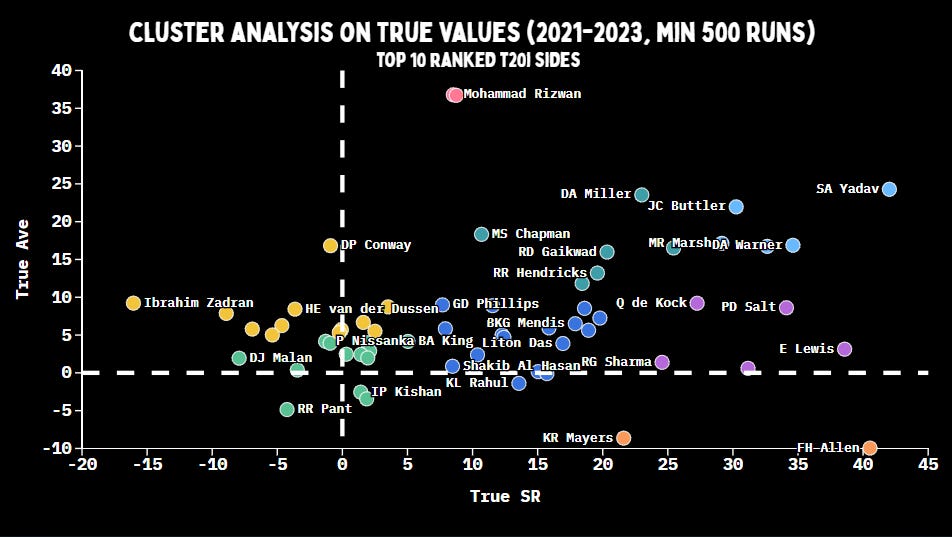
But that was late-career Finch, who had a pretty steep fall-off. Malan had a great start for England, but we now know he heavily overperformed at the start of his T20 international career. And unlike in the PSL, Fakhar has only really had two noteworthy years (2018 and 2024) for his country in the shortest format.
These are not the players you want to be matched with at that point in their careers. Pathum Nissanka was a timid, technically correct player who looked short on confidence and overly reliant on a method of staying in. When he hit a boundary, it was from a grammatically correct checked drive. He was made for uncles sipping tea to nod at in appreciation.
But then Nissanka would pull. Sri Lankans throw their pull like a punch, and he is one of those. But for a long time, he would only play the shot when the ball was right for it, often just to rotate. Now, when he pulls, it is for the knockout.
Bangladesh were already struggling when he came out to bat in their Asia Cup clash, but his pull shot from Mustafizur Rahman almost ended the contest.
Pathum’s nearest neighbours are from a far nicer part of town now.
***
The pull shot is an attacking weapon in cricket.
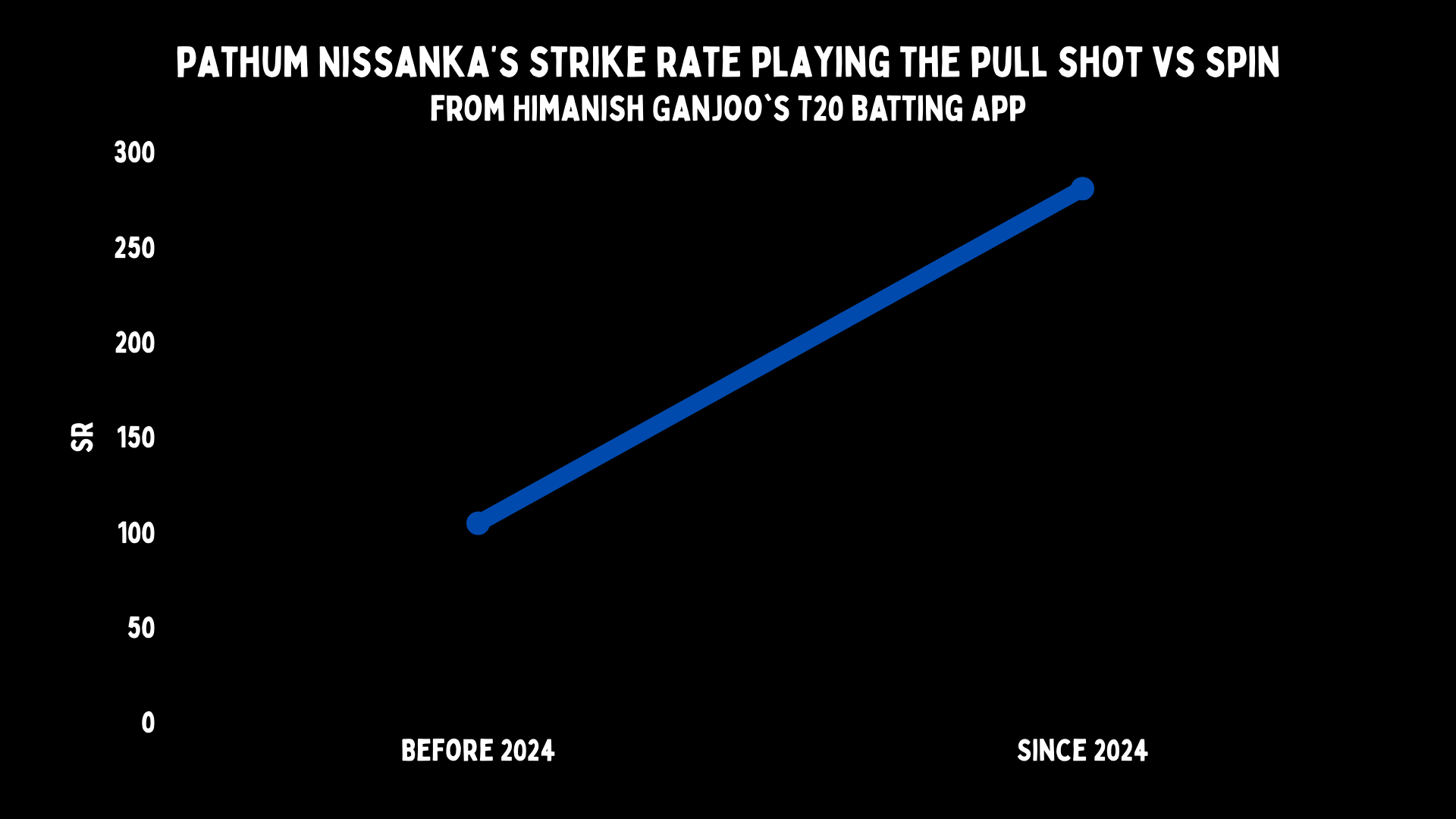
But Nissanka didn’t really use it that way against the tweakers, striking at just above a run-a-ball when pulling till 2023. Since then, he has struck at a whopping 281. The transformation was like going from Jacques Kallis in the early days of T20 to present-day Abhishek Sharma.
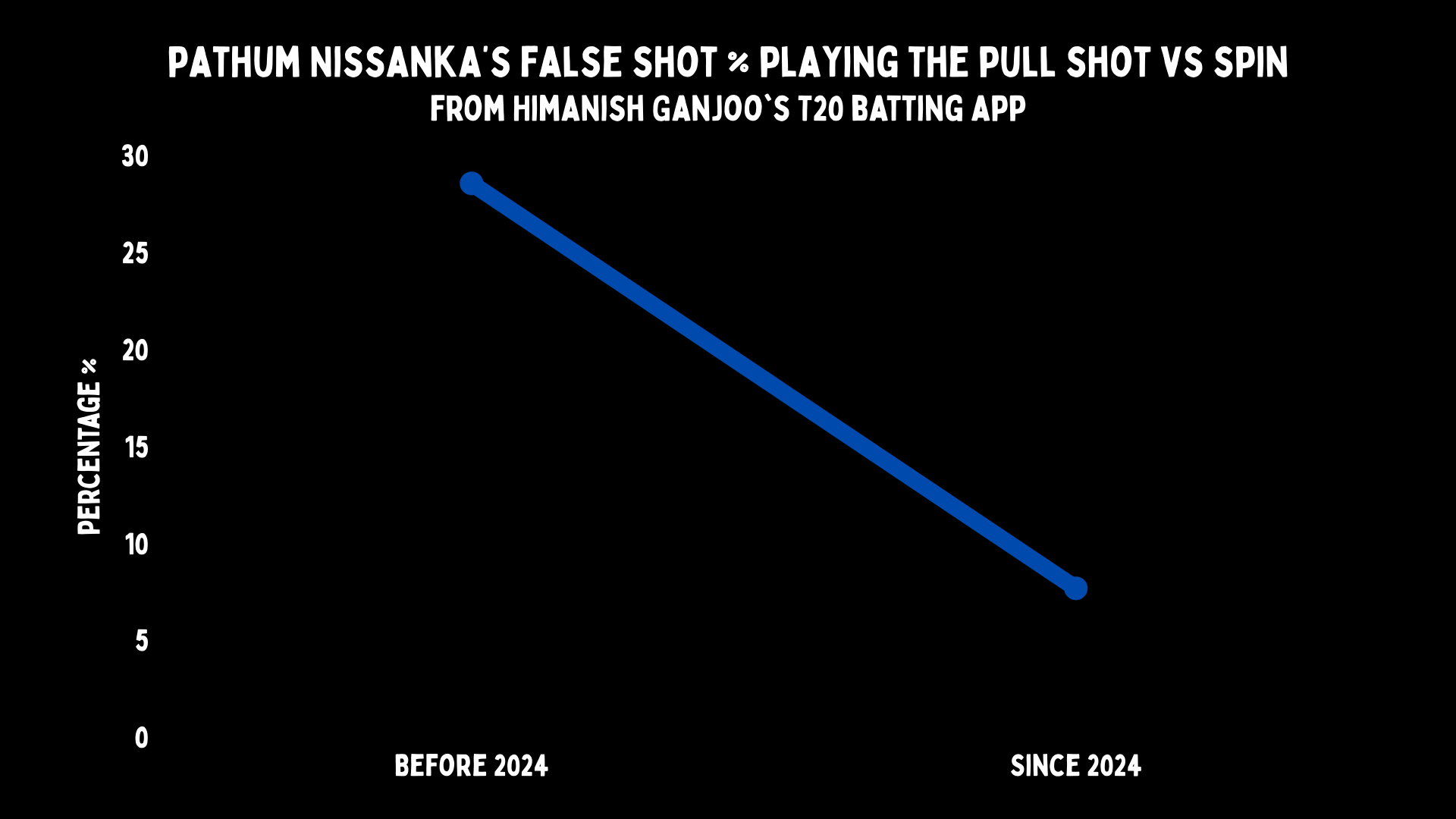
His false shot percentage also went down from 29 to 8. He’s pulling the slower bowlers with much greater control than before, while smashing the lacquer off the ball.
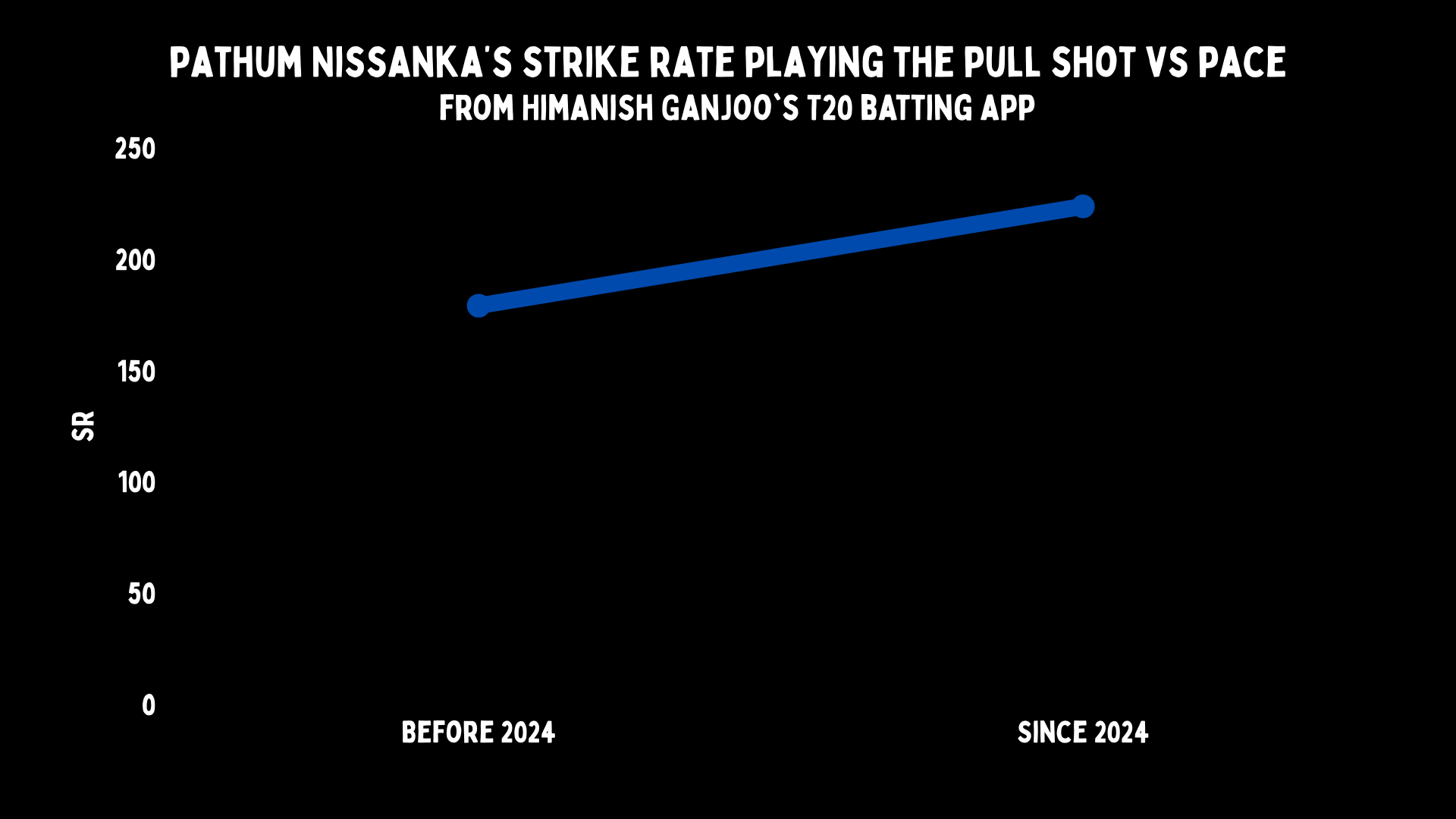
Against fast bowling, he was pretty handy when pulling the ball even before 2024. He had a strike rate of close to 180, but it was at the cost of frequent dismissals. That has risen up to over 220, and he’s getting out less often too.
So he’s achieved the dream by unleashing more power from one of his best shots, without being dismissed as much. He’s also in more control now.
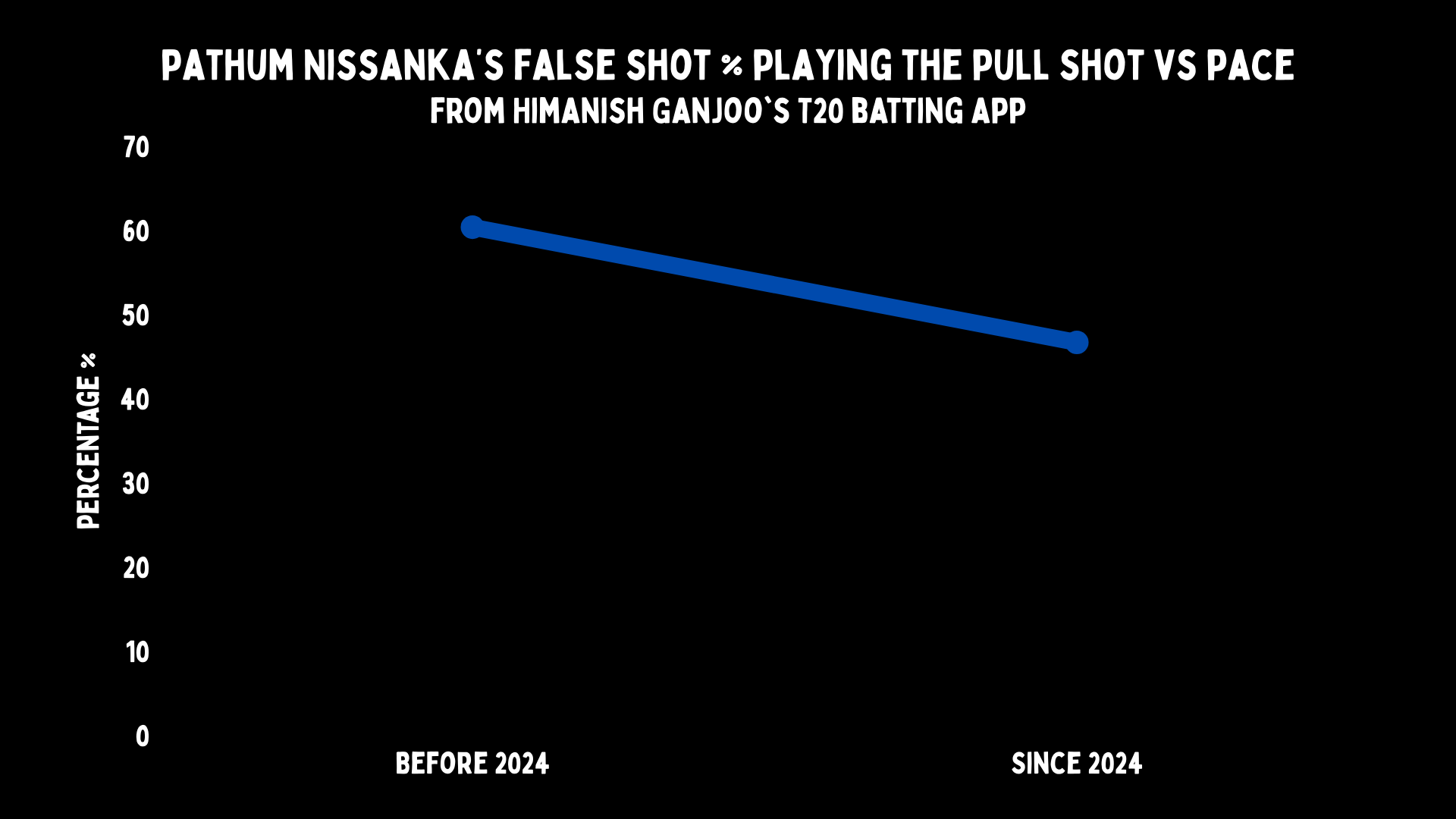
It wasn’t among his most used strokes, now it’s second to only the cut shot.
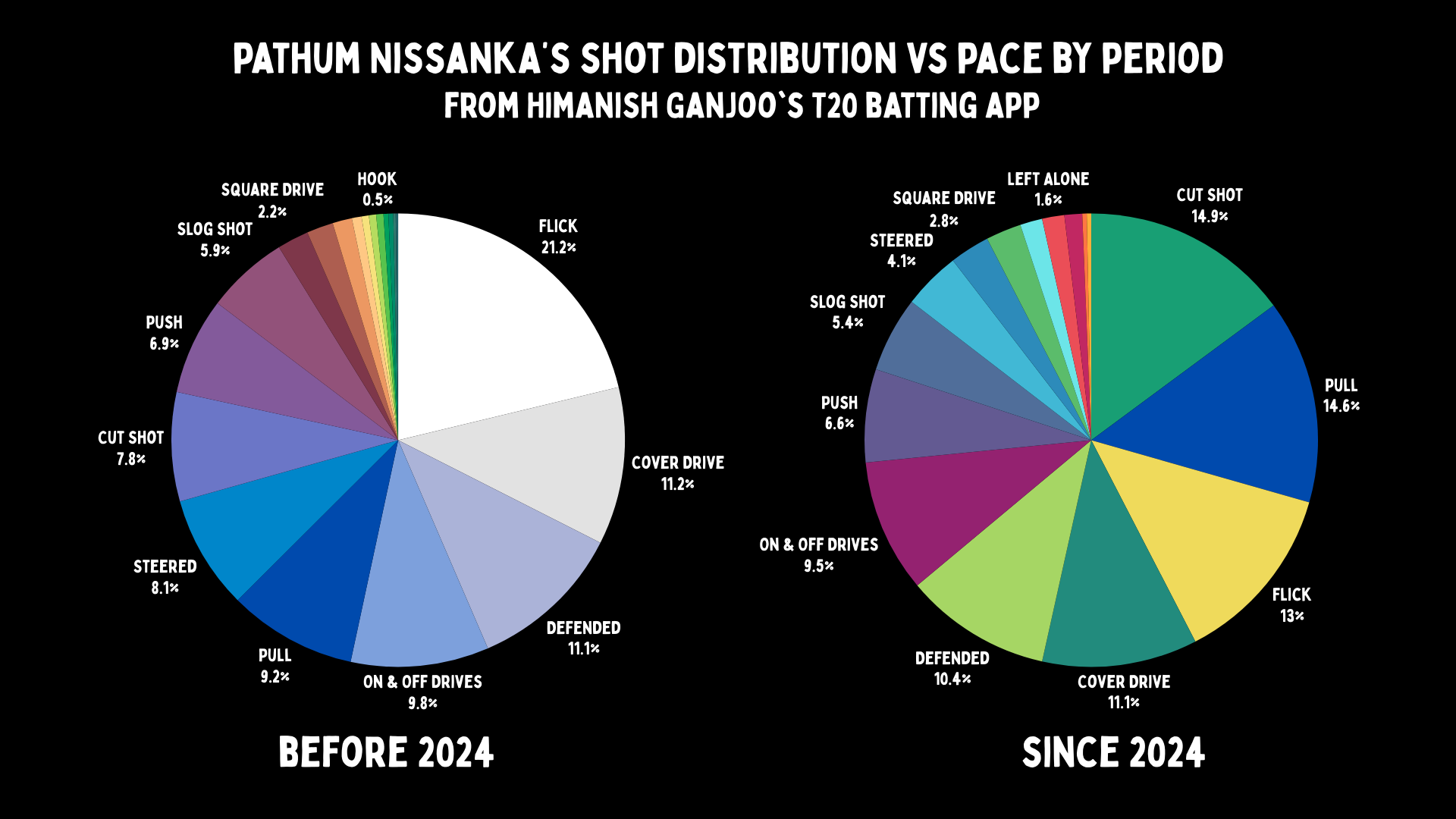
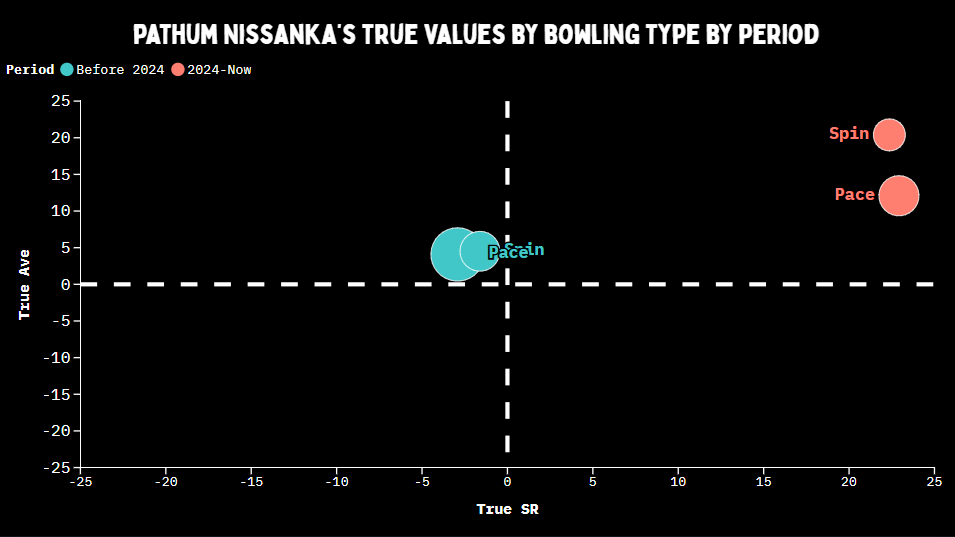
The pull shot is only a part of the story, though. Nissanka has shown commendable improvement as a T20 batter in several other metrics as well. To put it simply: since 2024, his raw strike rate and average have improved by about 25% and 34%, compared to his first three years for Sri Lanka.
There wasn’t really much between his true values against both bowling types in the first three years. He was an anchor who didn’t give you a lot of runs. Now, he’s scoring fast and staying in.
Nissanka has gone from a player who was nice to look at, to one who is nasty. Some of this is just coming closer to peak batting ages. But this is a different player than before.
Nissanka made his international debut in all three formats just a few months before turning 23 as part of the Mickey Arthur years. Before he was picked for Sri Lanka, his T20 average was 26 at a strike rate of nearly 130 - a low-scoring anchor. After being below par in his first two domestic seasons (SLC Twenty-20 Tournament), he had a strong run in 2020 - which was the last tournament before his selection.
He wasn’t too bad in his first year of T20 Internationals. He had a true average and strike rate of about six, which isn’t elite but shows potential. After only three knocks in bilaterals, he was opening the batting with Kusal Perera in the T20 World Cup in UAE.
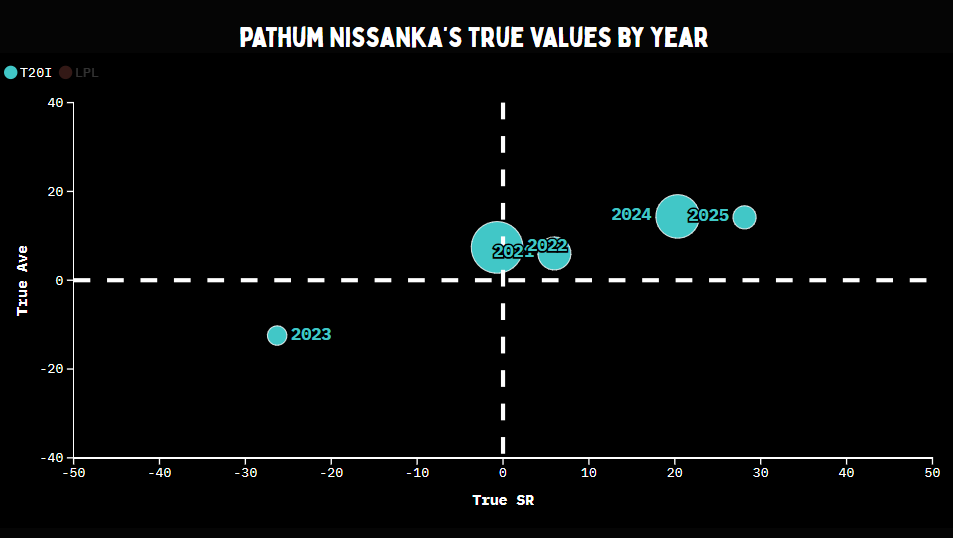
In the tournament, he was Sri Lanka’s second-highest run-getter behind Charith Asalanka. However, his scoring rate was the worst of all players with 100 or more runs. But he did pick up three fifties - all batting first.
Again, he was the team’s second-highest run-getter in the T20 World Cup in Australia. Again, no Sri Lankan scored 100 runs slower than him. And again, he made a couple of first innings fifties.
His worst year for the national team has been 2023 by a distance, though it’s only from six innings.
At that stage, Nissanka was scoring more runs while setting a target, but batting faster in the second innings. He was like two different players.
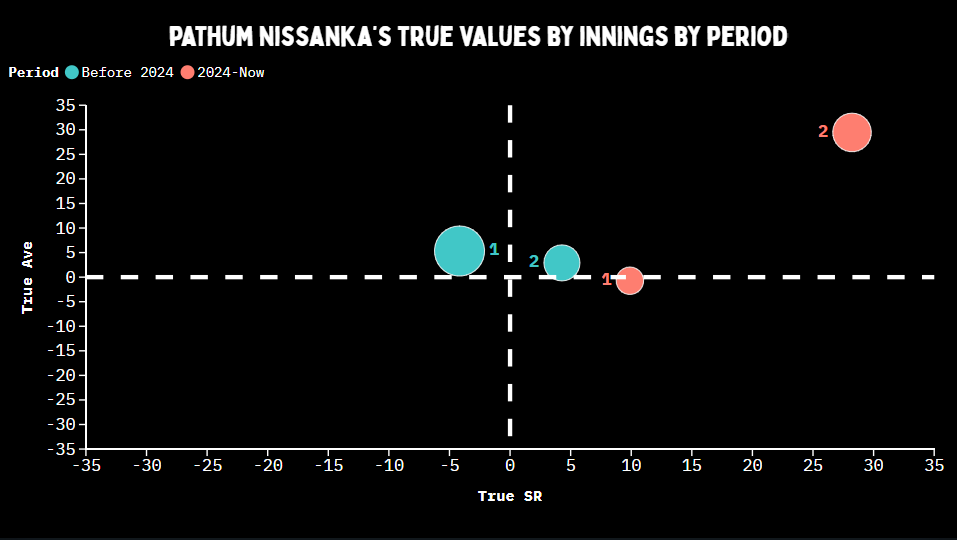
But that is nothing compared to now. He’s batted a lot less in the first innings since 2024, but the true strike rate has gone up from -4 to almost +10. However, that has come at the cost of runs. Chasing is different, he was slightly above par when he first started, but he’s absolutely world-class at the moment.
You don’t want to put a target in front of Nissanka, because he becomes a player and a half. It’s like he’s putting on a Virat Kohli costume. He’s an entirely different player from 2023 and earlier.
