


Buy your copy of 'The Art of Batting' here:
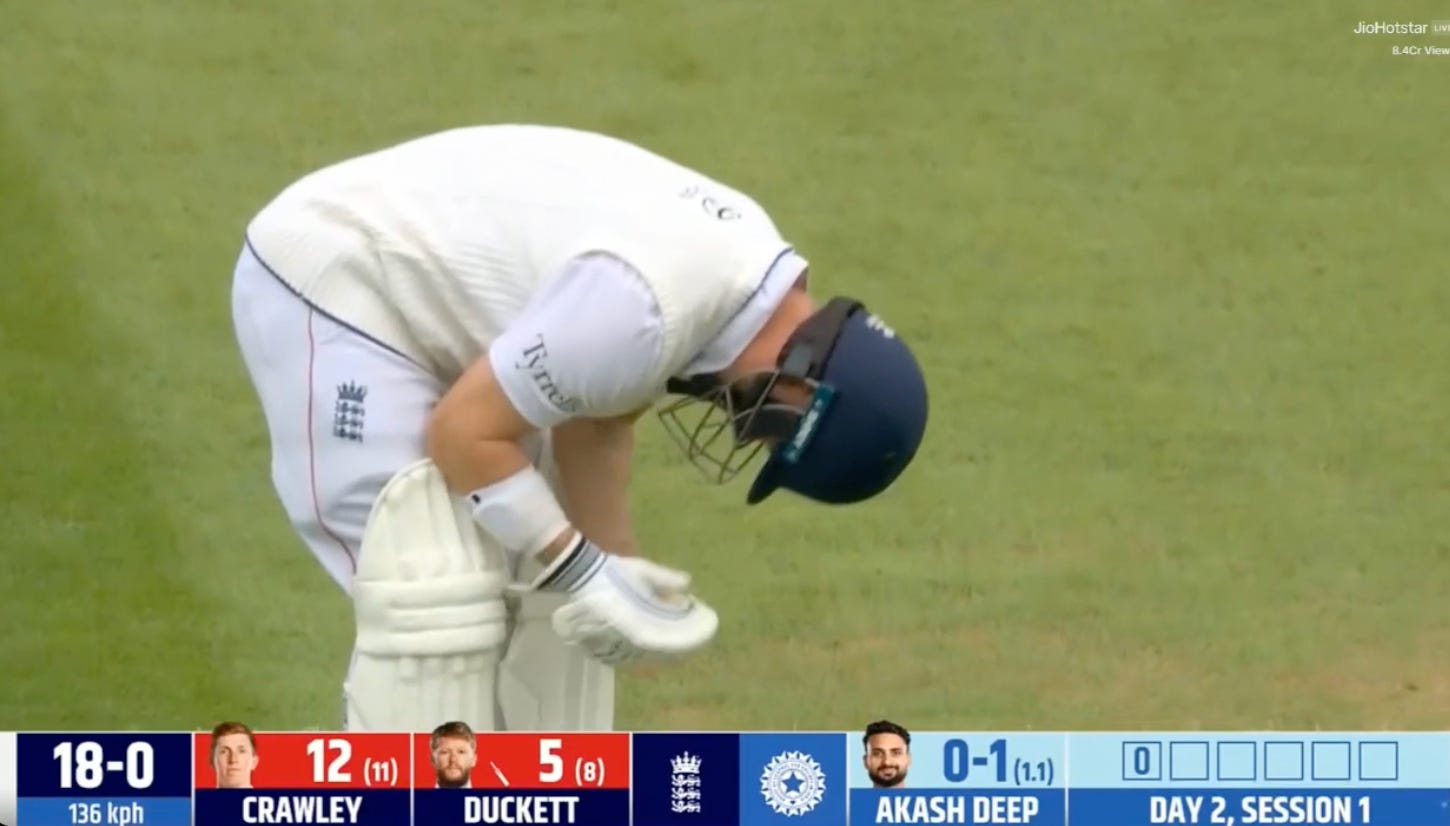
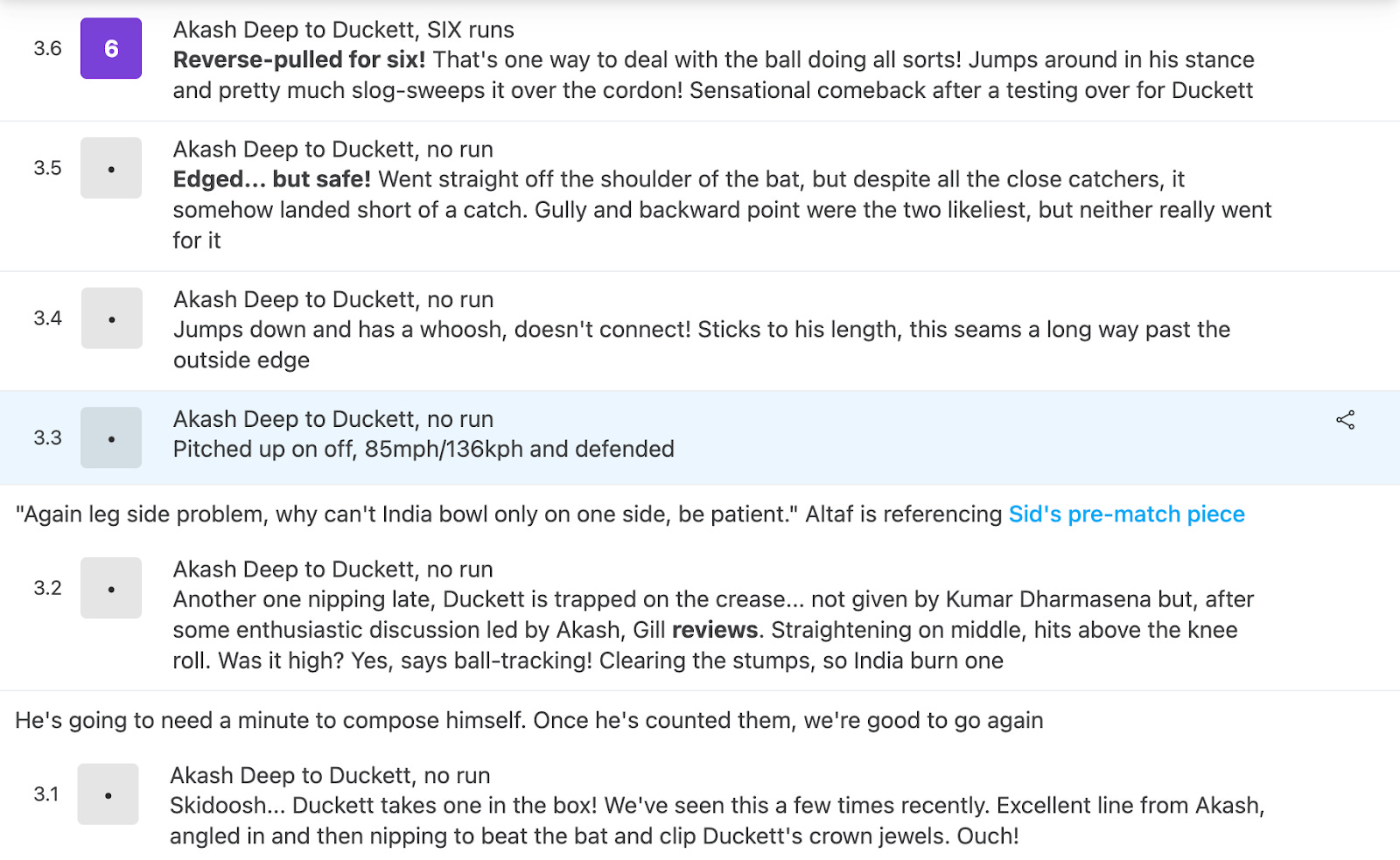
Ben Duckett is bent over, looking for air, after he’s been struck in the box by Akash Deep. England are 18 without loss. There have been plenty of opportunities to hit for boundaries, but the wicket has seam, and the ball is swinging a little.
Next delivery, he’s rapped on the pads, and it’s very close. But technology tells us it’s a little high. Duckett is clearly rattled - he’s been in an awful position two balls in a row.
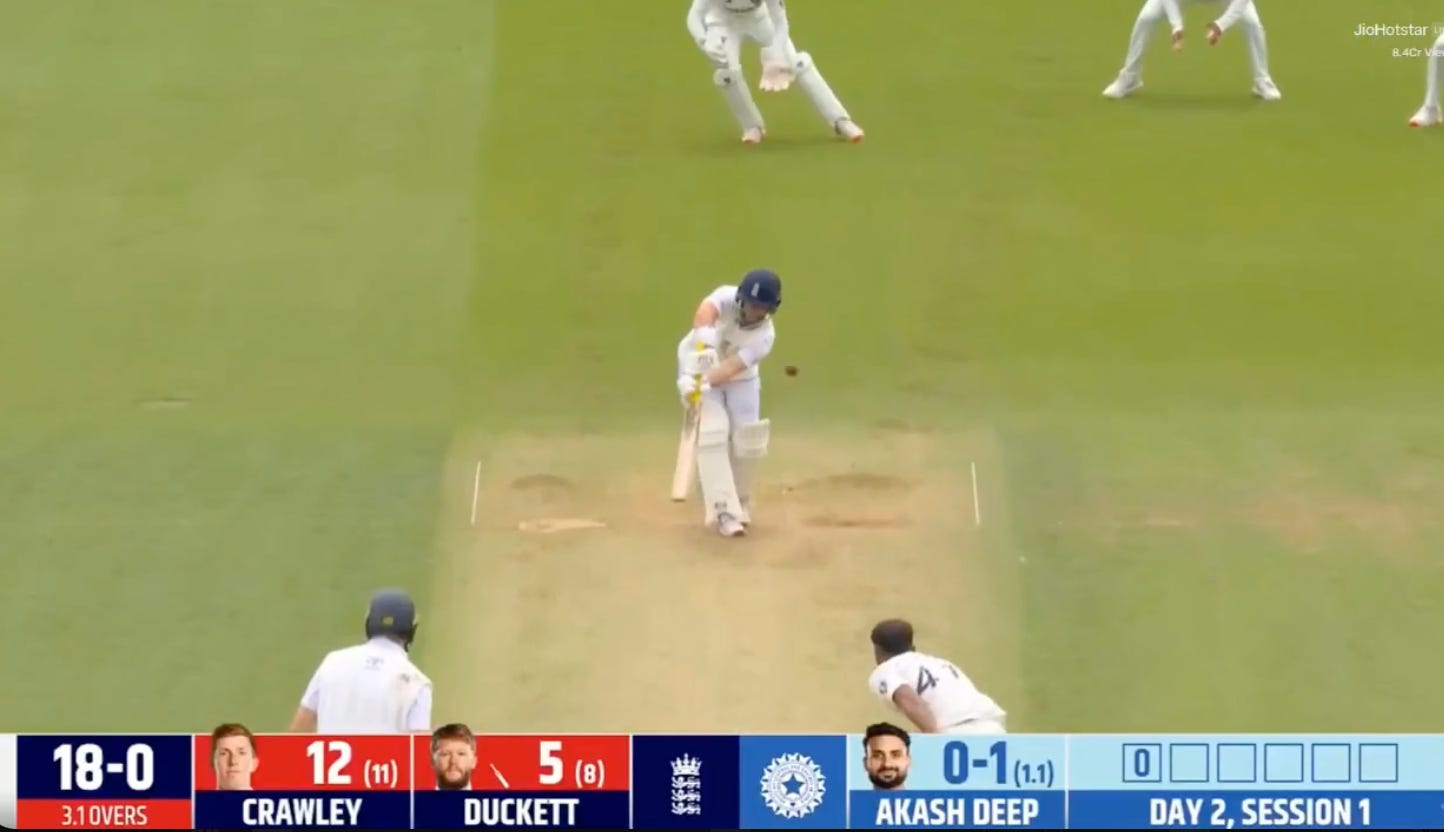
So for the fourth delivery, Duckett runs down the pitch and tries to slog the ball away. It’s an awful effort.
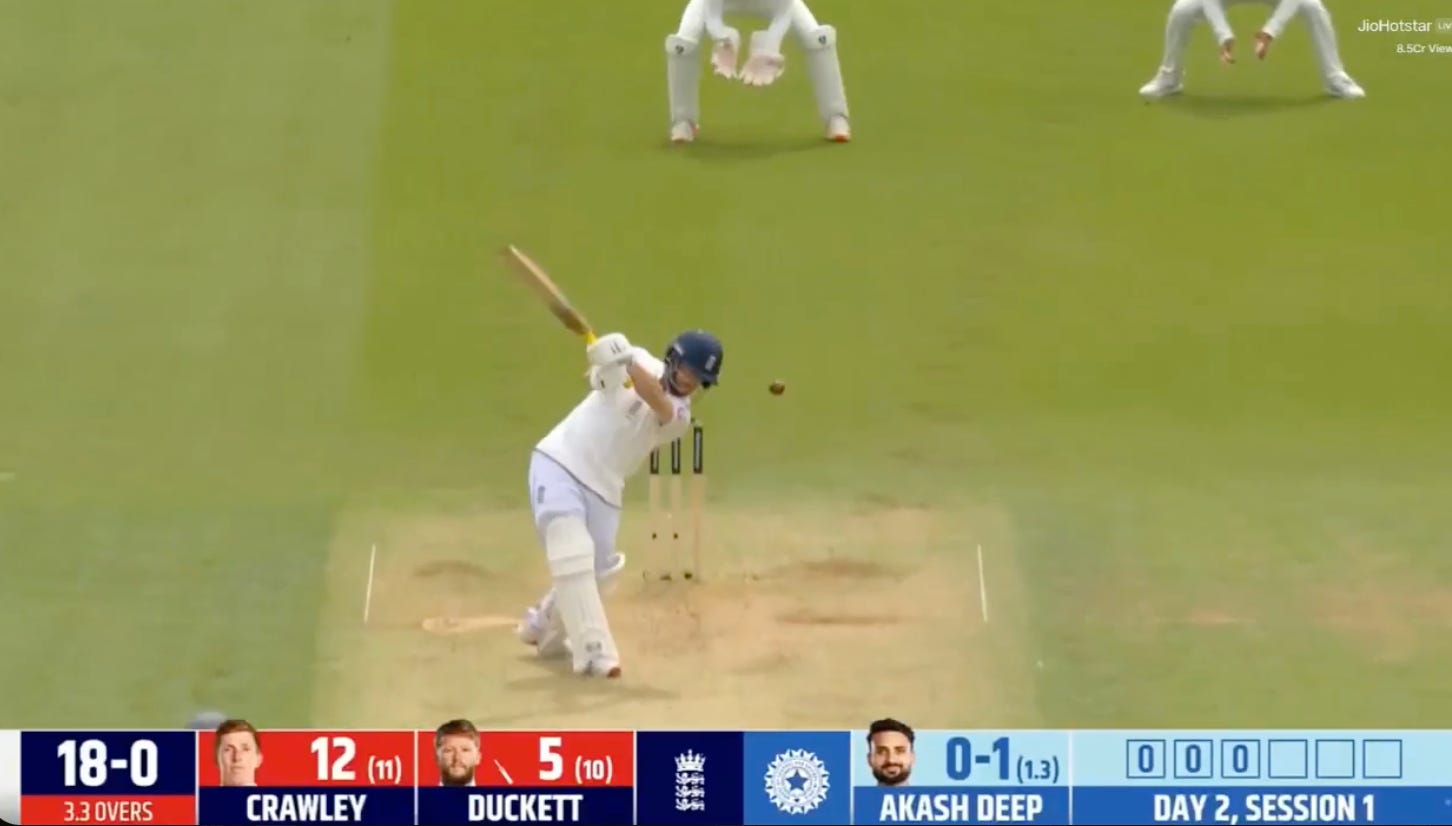
The fifth ball takes the gloves when it rears, and it loops up near two fielders. Duckett has been struck, almost LBW, played and missed, while also edging a ball. This is the kind of over you just want to get out of.
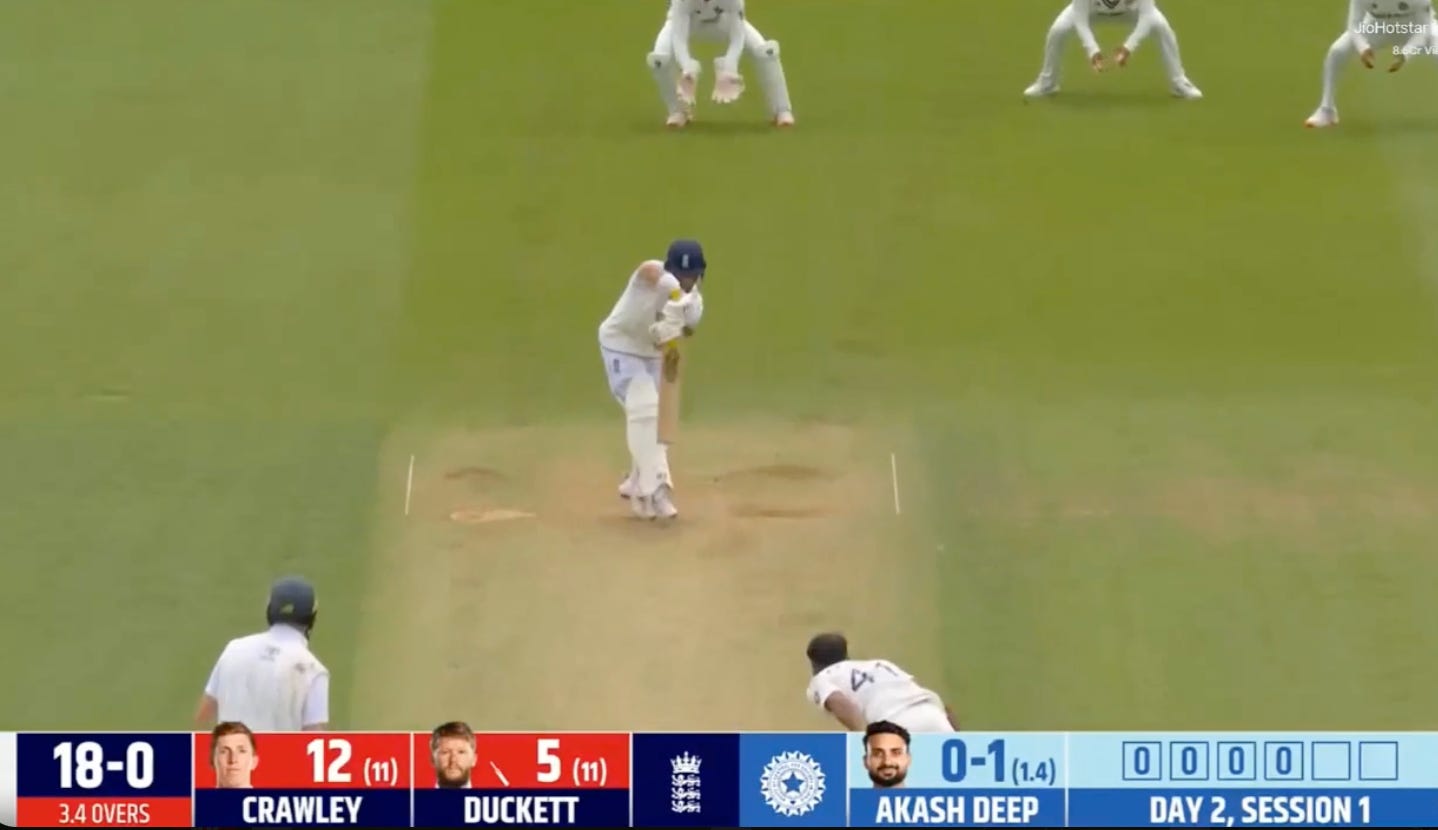
For most of the last 148 years, the batter would simply block, leave or at most nudge that last delivery.
That is not how modern players look at this. Duckett didn’t want to be trapped on the crease, or punching one to the cordon. He wanted to get out of the over by ensuring that next time Akash wouldn’t bowl another few overs of great line and length at him.
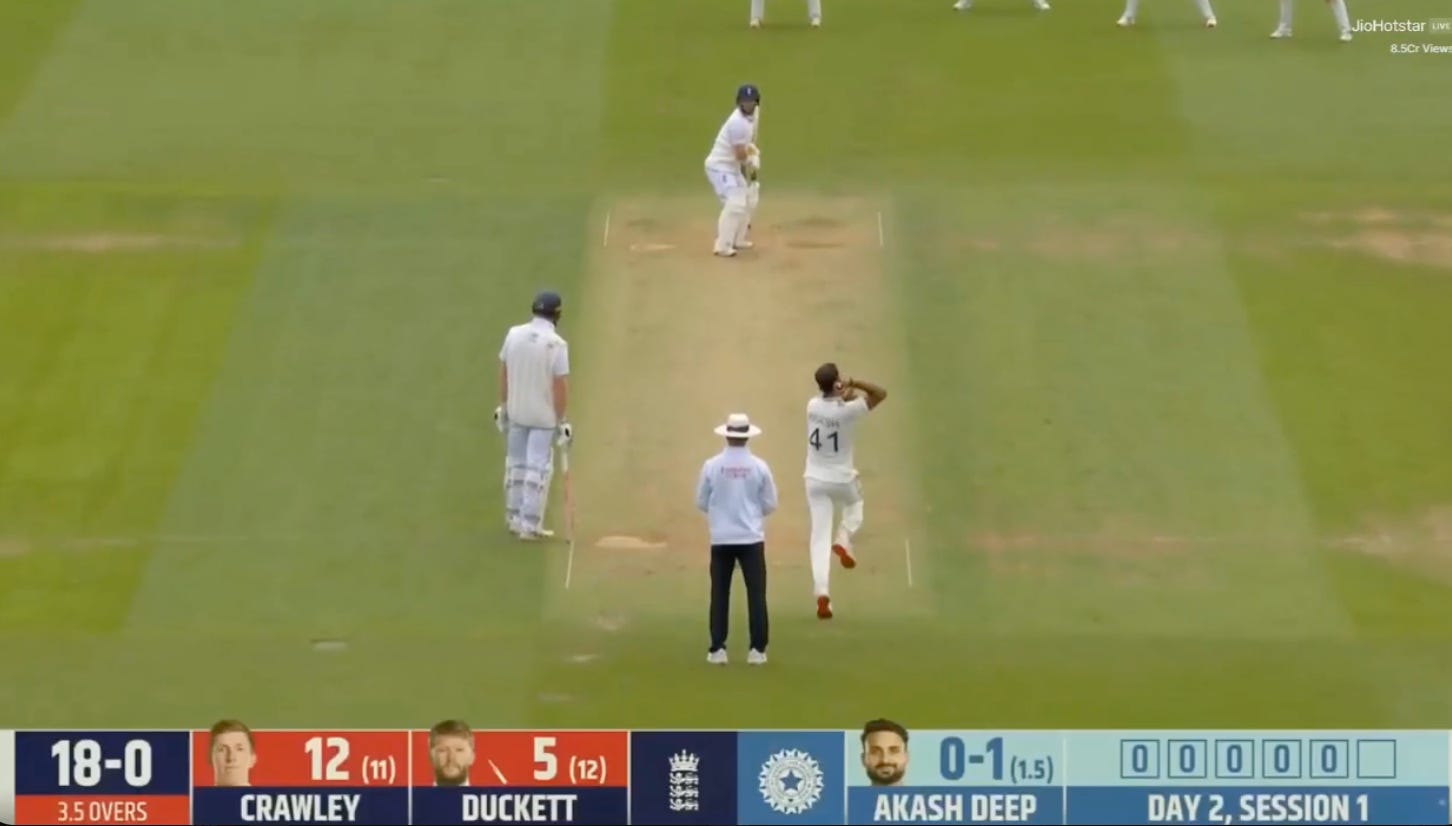
So Duckett literally flipped the script.
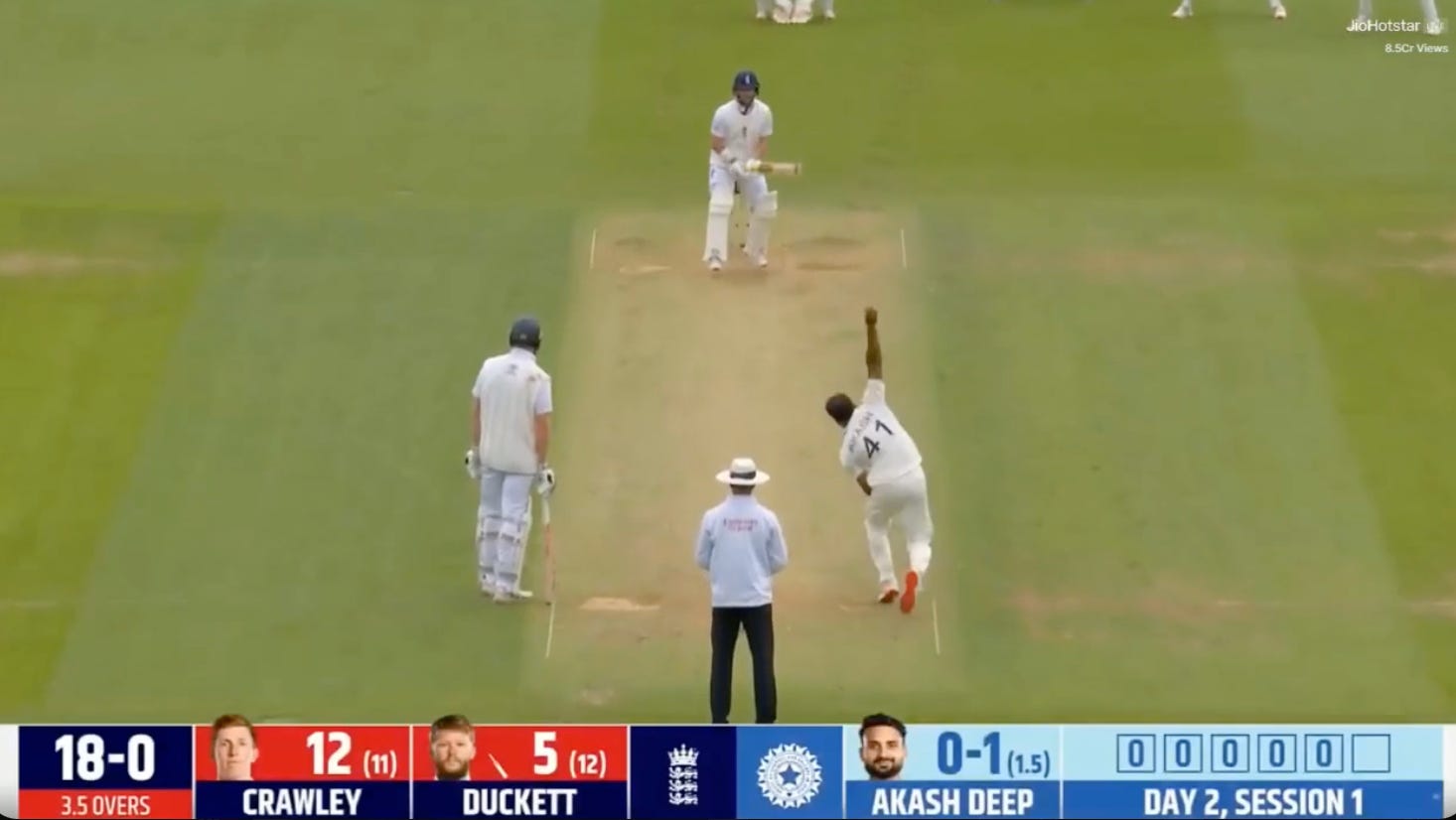
Akash saw it, and he changed his length to short, so Duckett just went with it and reverse pulled it over the slips’ head for six. The spell was broken, and the following over Duckett went back to running at Akash and slapping him.
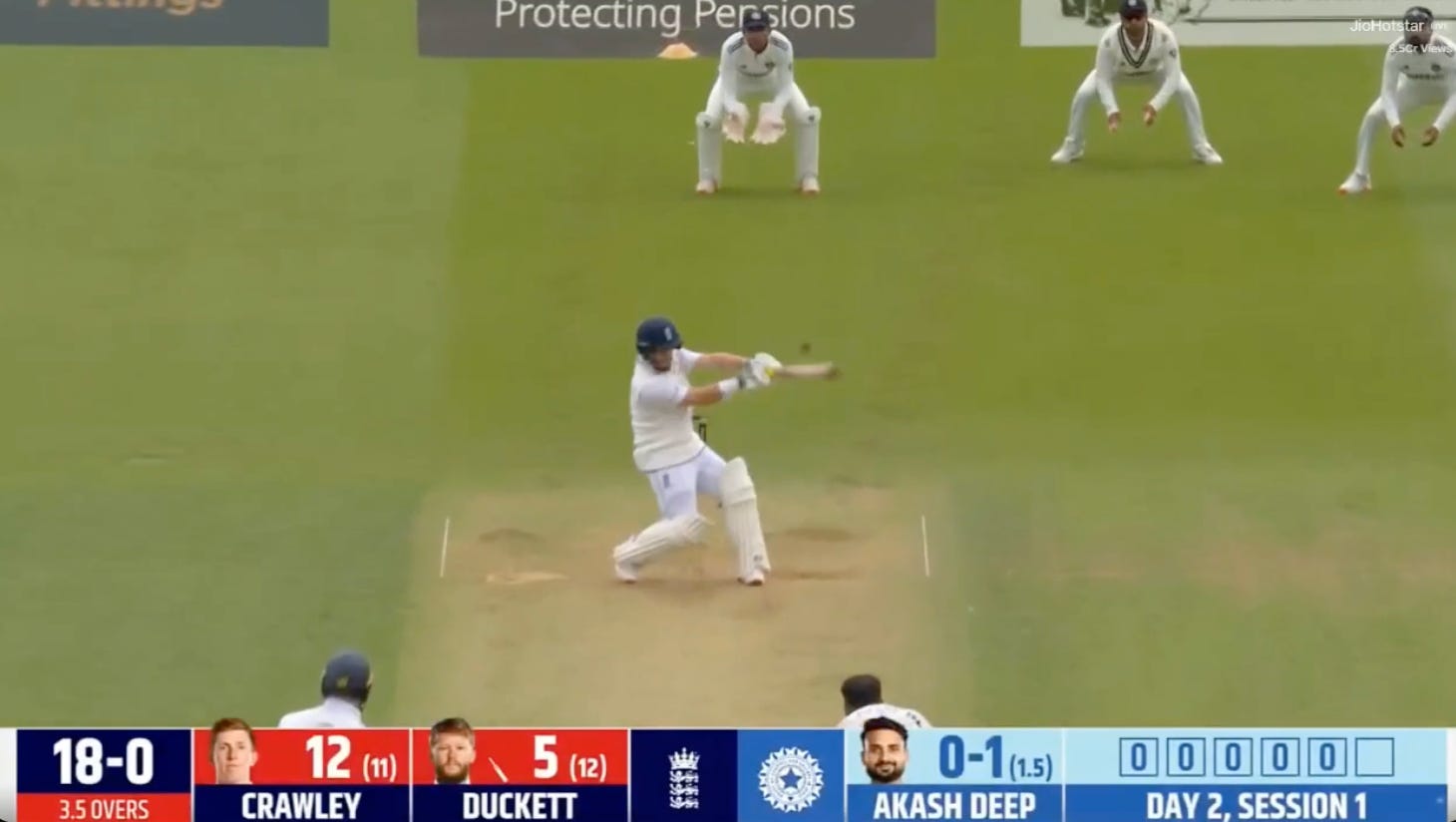
England were away.
This was not a bad shot, because it worked. If he hadn’t, it was. Batting now is almost binary: the best shot you’ve seen, or the worst.
***
What is a good Test shot?
I used to know, it was pretty simple. Yes, many of us have been sucked in by the two cover drive theory. The one that goes to the boundary is a good shot. The other, that is caught at second slip, is poor.
But we understood certain shared principles of batting. There was a price on your wicket, that some players like Viv Richards, Adam Gilchrist and Quinton de Kock could bend, but never break.
Up until recently, a good ball would be honoured by the batter. Perhaps you had a Richards whipping it through square leg, VVS Laxman making his own line and length to a spinner when set, or Ricky Ponting pulling whatever he pleased.
But most batters would show respect. They were taught from childhood that the best balls should be blocked, left, or at most pushed. They waited for the mistake.
This lasted well into the T20 era. In fact, as late as 2021, batters tried to go defensive again. It was the lowest scoring rate in more than 20 years. So it isn’t like batters didn’t try this approach. It just didn’t work, bowlers were still on top, and the global average was 28.
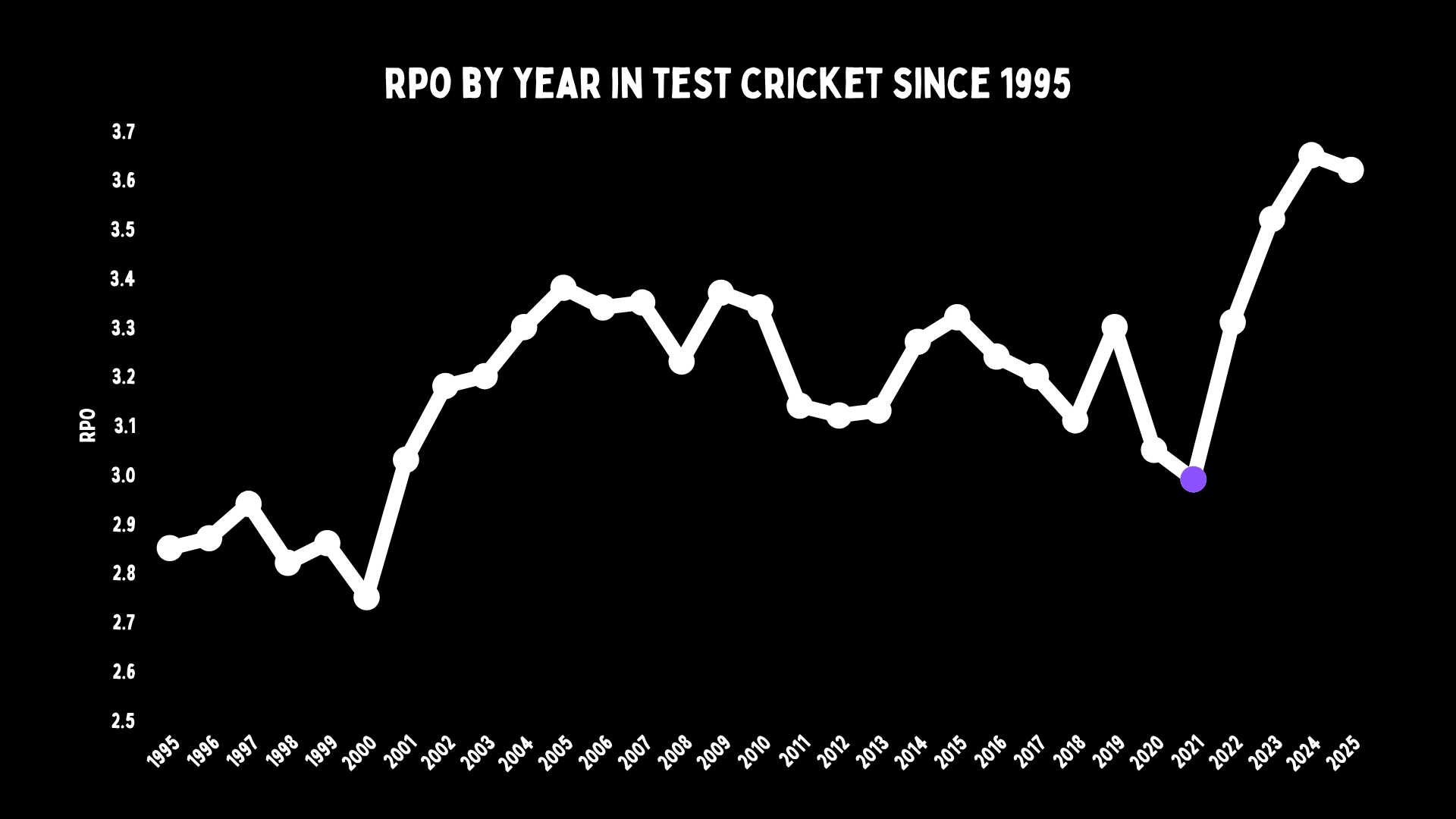
So batters changed how they go about it. Obviously, this is at least in part because of T20 cricket and the development of modern players. And it was also about the weirdness of England, that they were producing ODI batters and not much in Tests, plus Brendon McCullum taking up the wrong job.
Maybe Bazball meant we’re here earlier, but Rishabh Pant and Travis Head were independent of that. So we were heading here regardless. Modern batters react to tough situations in an attacking way. We don’t really have draws anymore. Instead of trying to defend out of a hole, they attack.
Think of Pant. He manufactures his own length to balls. Obviously, like most players, he can do that against the spinners.
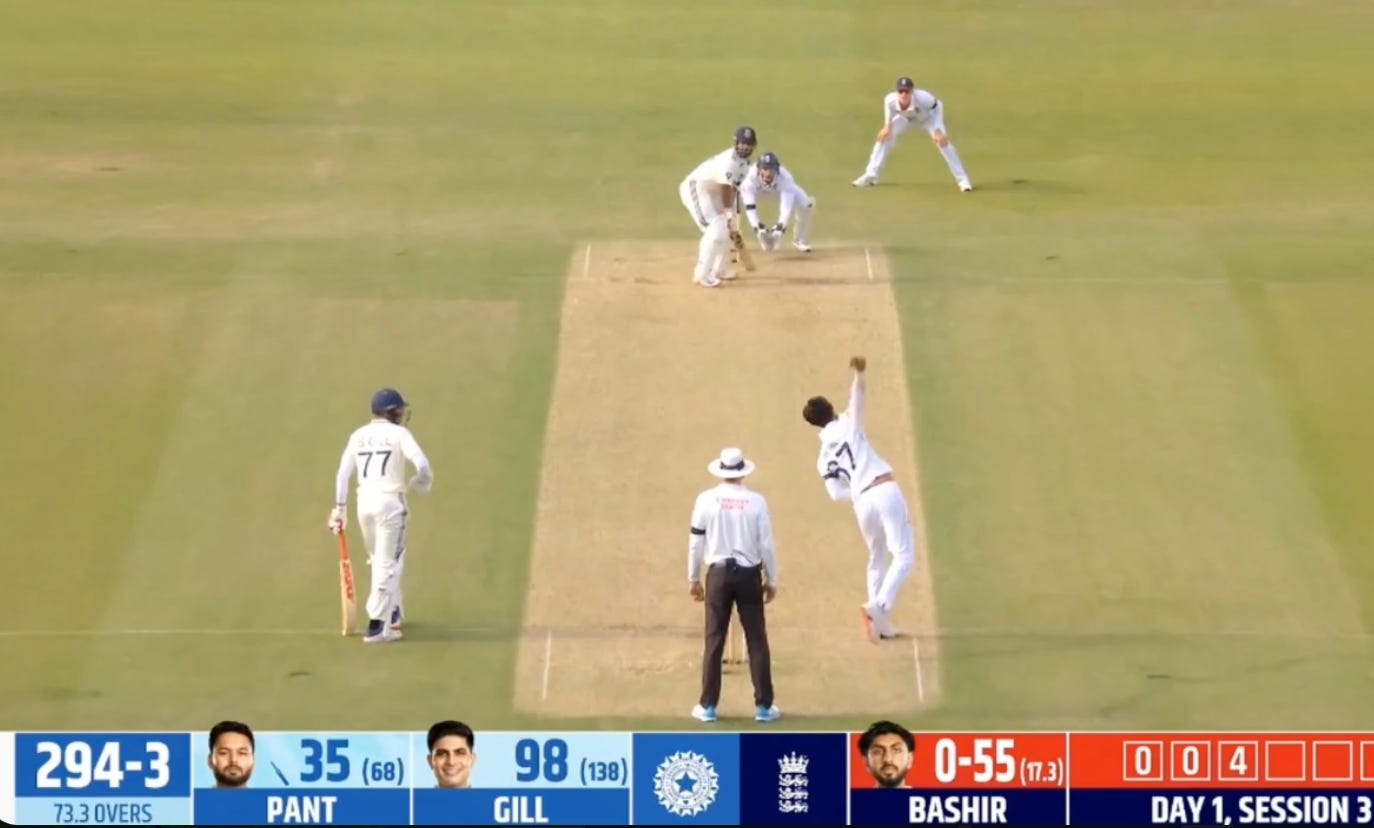
He has fast feet and is not afraid to use them. This is all very normal.

But it’s less standard to do it against seam bowlers. Again, Pant does it very fast. As the bowler hits the crease, they don’t really have a clue. Then he’s moving at them at speed, and their length is upset every time. That has become more common in modern cricket.
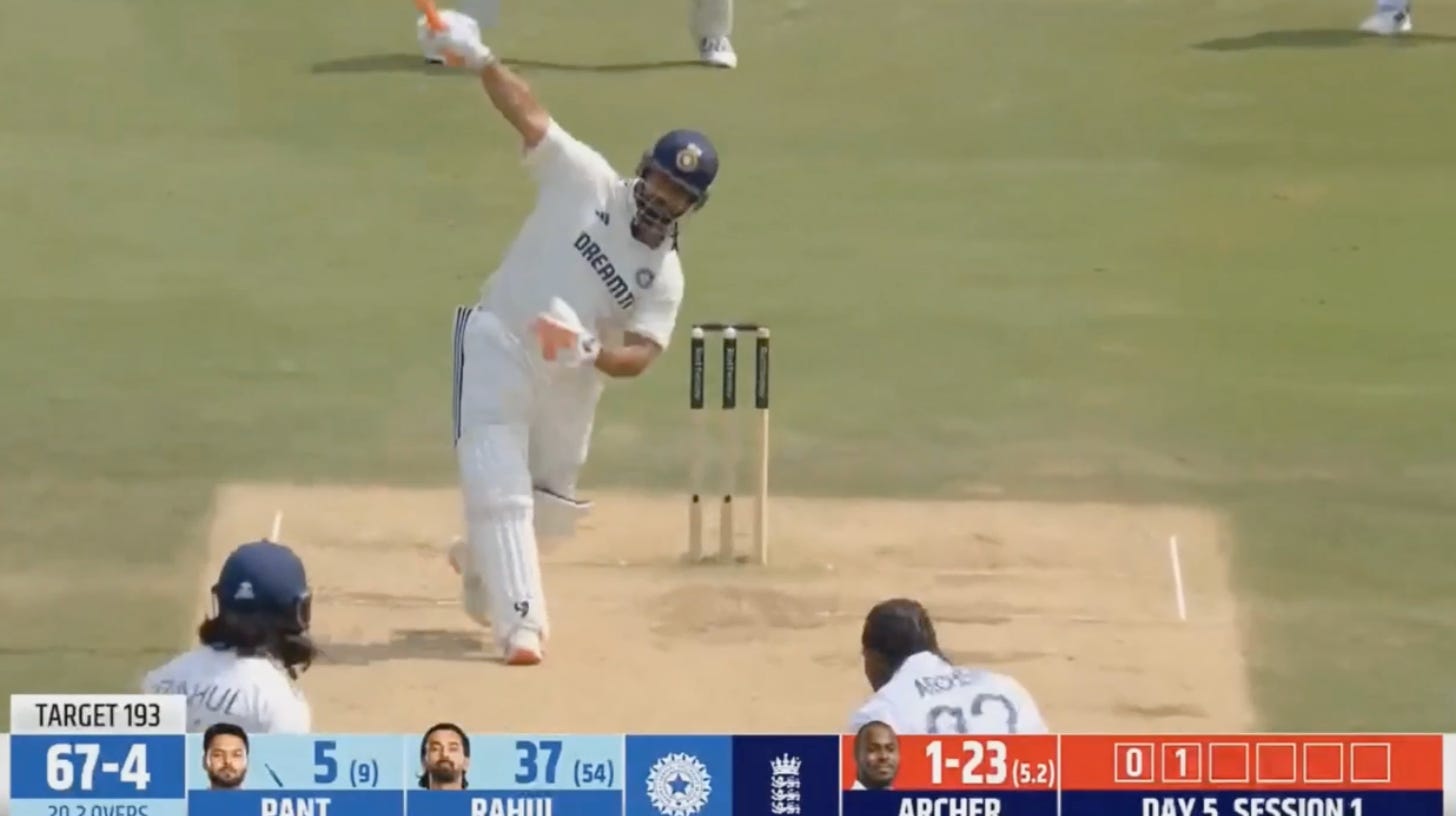
However, Pant also has other ways of rising length. Pant gets low where he can sweep or launch the ball from the quicks off length. This might be the bowler’s best delivery, but in this position he can hit a boundary by using the pace.
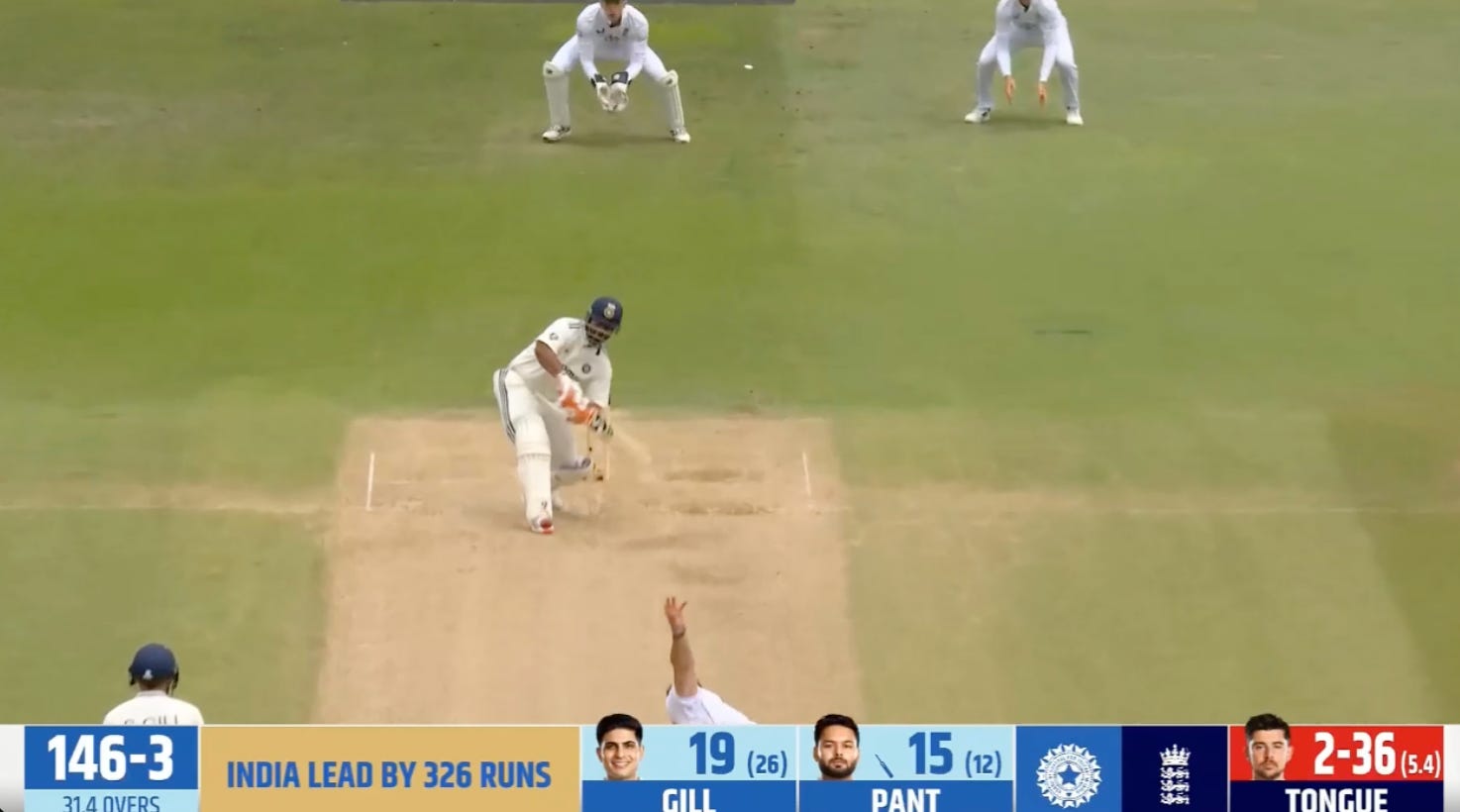
His most interesting shot is actually the one where he drops his centre of gravity. It isn’t a sweep or scoop. It’s just that he changes the length by changing his height.
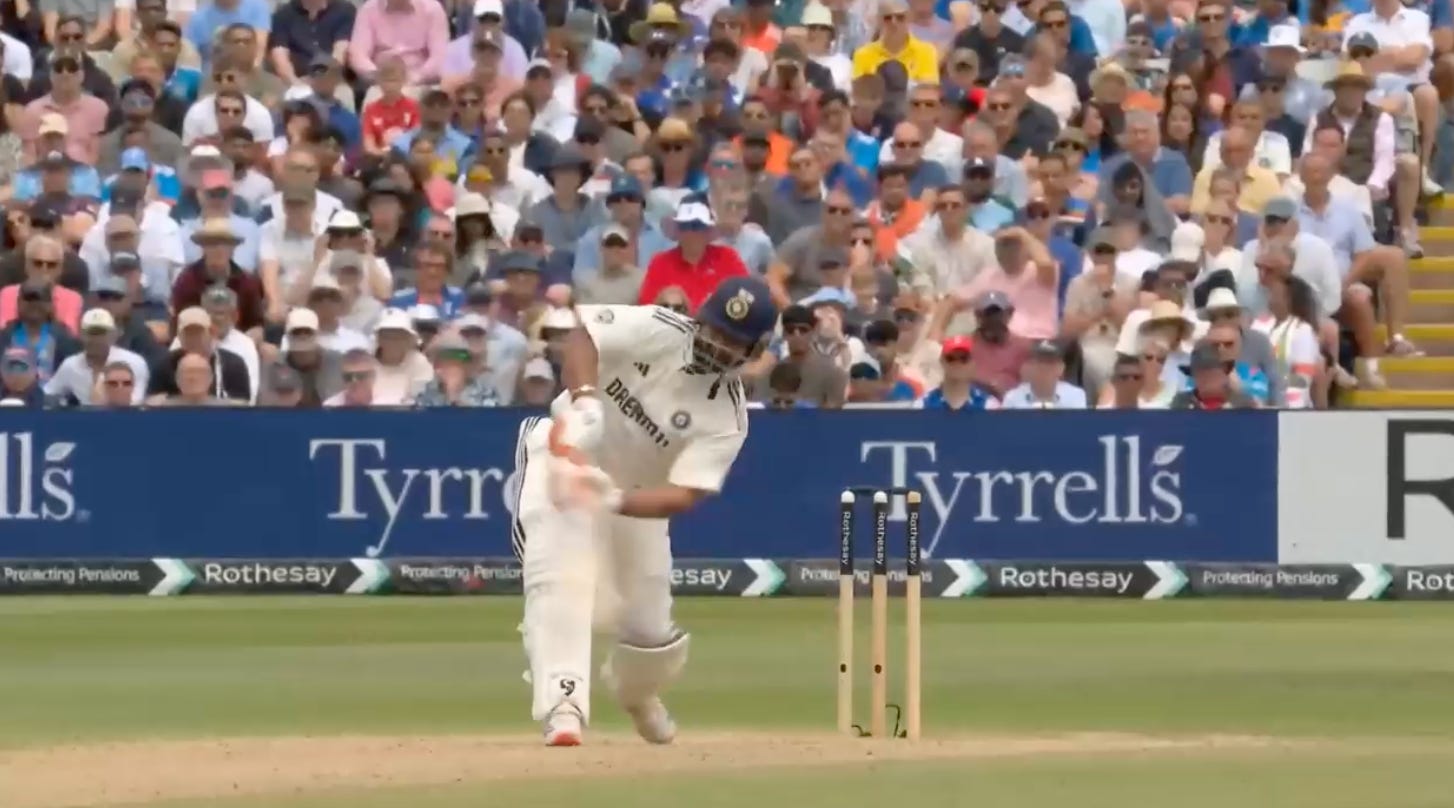
At times he’s actually getting low to pull a ball that you could never play that shot from if you weren’t squatting down. The bat is so high, it’s almost above his head.
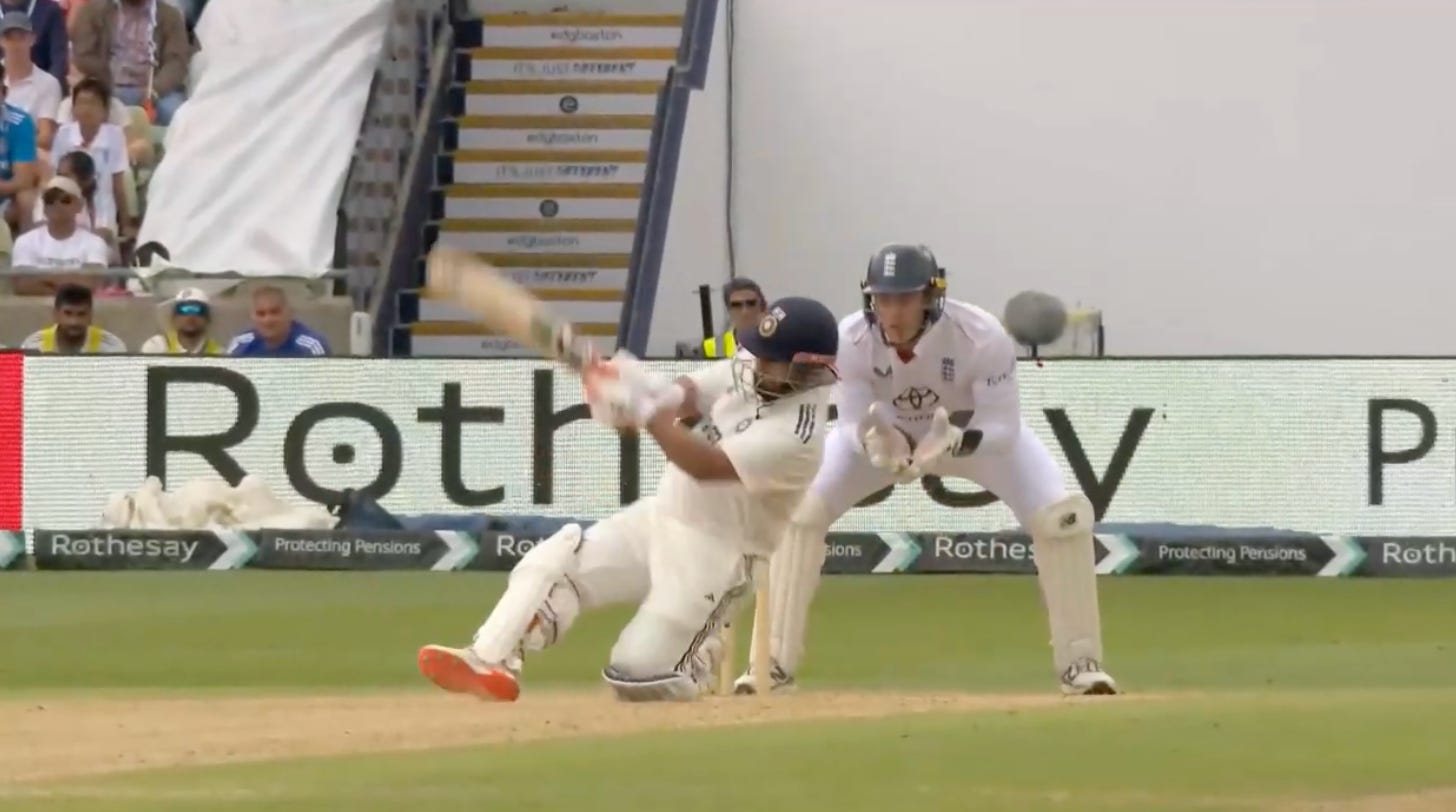
You’d think it was a sweep, but it really isn’t. They’re like pulls, or even hooks. It would feel like craziness a while back, but in modern cricket, it’s just normal. Pant’s risks are crazy, but we know what happens when it comes off - there’s no way to bowl to him.
This is how modern batting goes. It’s high risk vs high reward. A little different from when your uncle pretends batters only defended with a perfect straight bat every delivery. Batting game theory is about destroying the fifth, or fourth bowler. It’s about exploiting the field, even at the risk of a wicket. And ensuring that no one can deliver their best ball to you for hours on end.
So with that, do we need to change what is considered a good shot in Tests?
Let’s go back to Rajkot, when England were in India. They were 224 for 2, with Root just getting set. Jasprit Bumrah was bowling to him with a second and third slip formation.
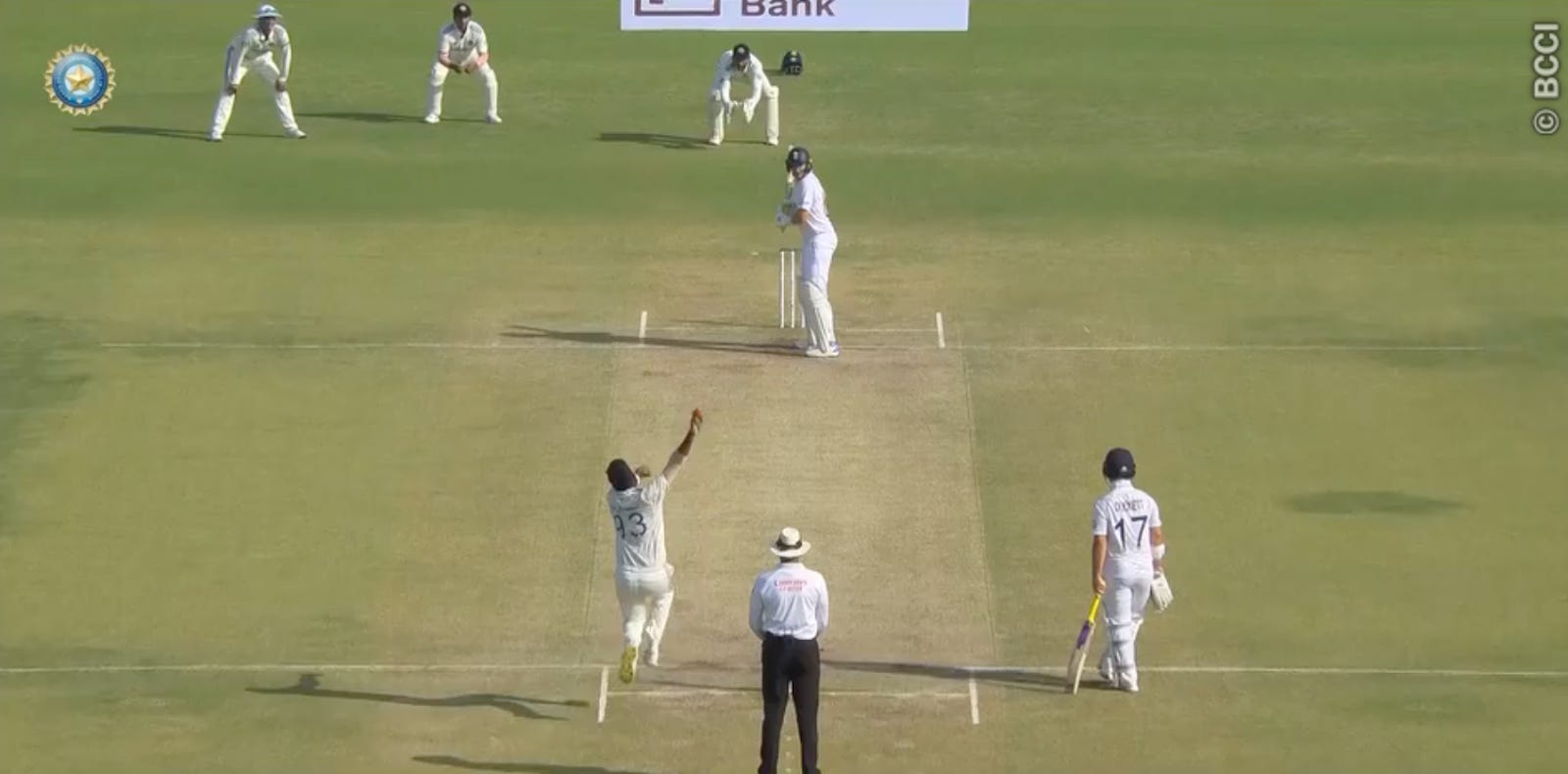
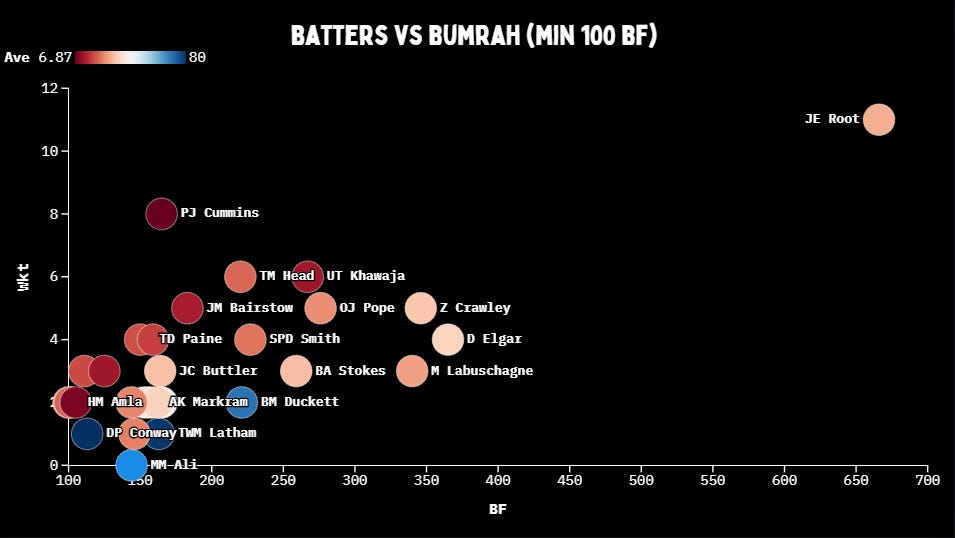
Now, Bumrah has a psychosexual hold over Root. He has bowled twice as many balls to him as any other batter, and the Englishman’s been dismissed 11 times. Six of them are outside offstump, caught in the cordon. Root’s used to Bumrah tormenting him outside off.
He decides on drastic action. As the foot of the Indian quick hits the turf, Root twitches, but not really enough to give the bowler any time to make a change as the arm is already in action.
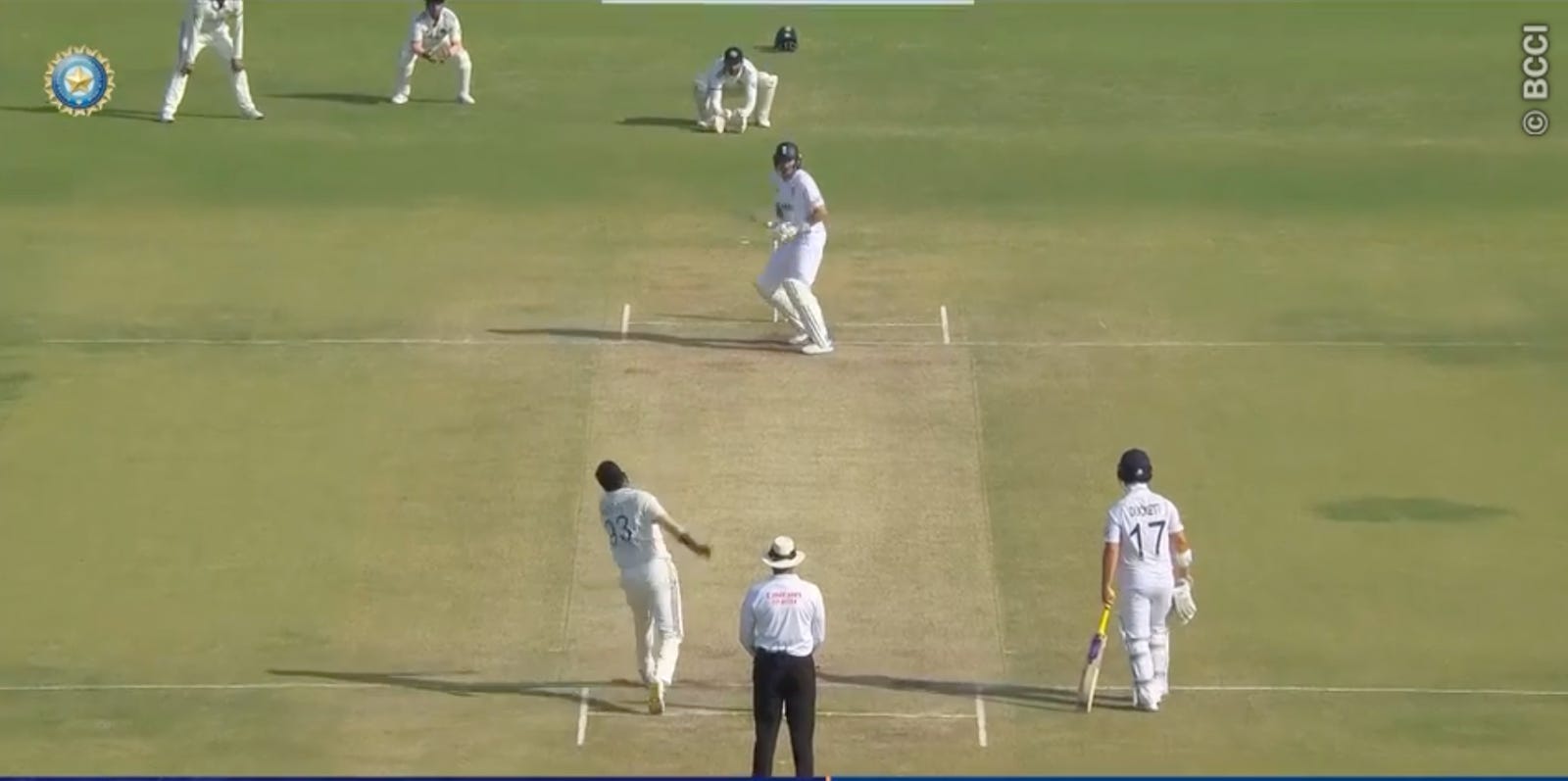
He is doing this because he believes Bumrah will be bowling outside off. That is a big advantage of Test cricket that batters haven’t always used. In limited overs cricket, you’re not sure what the next ball will be. In Tests, you are.
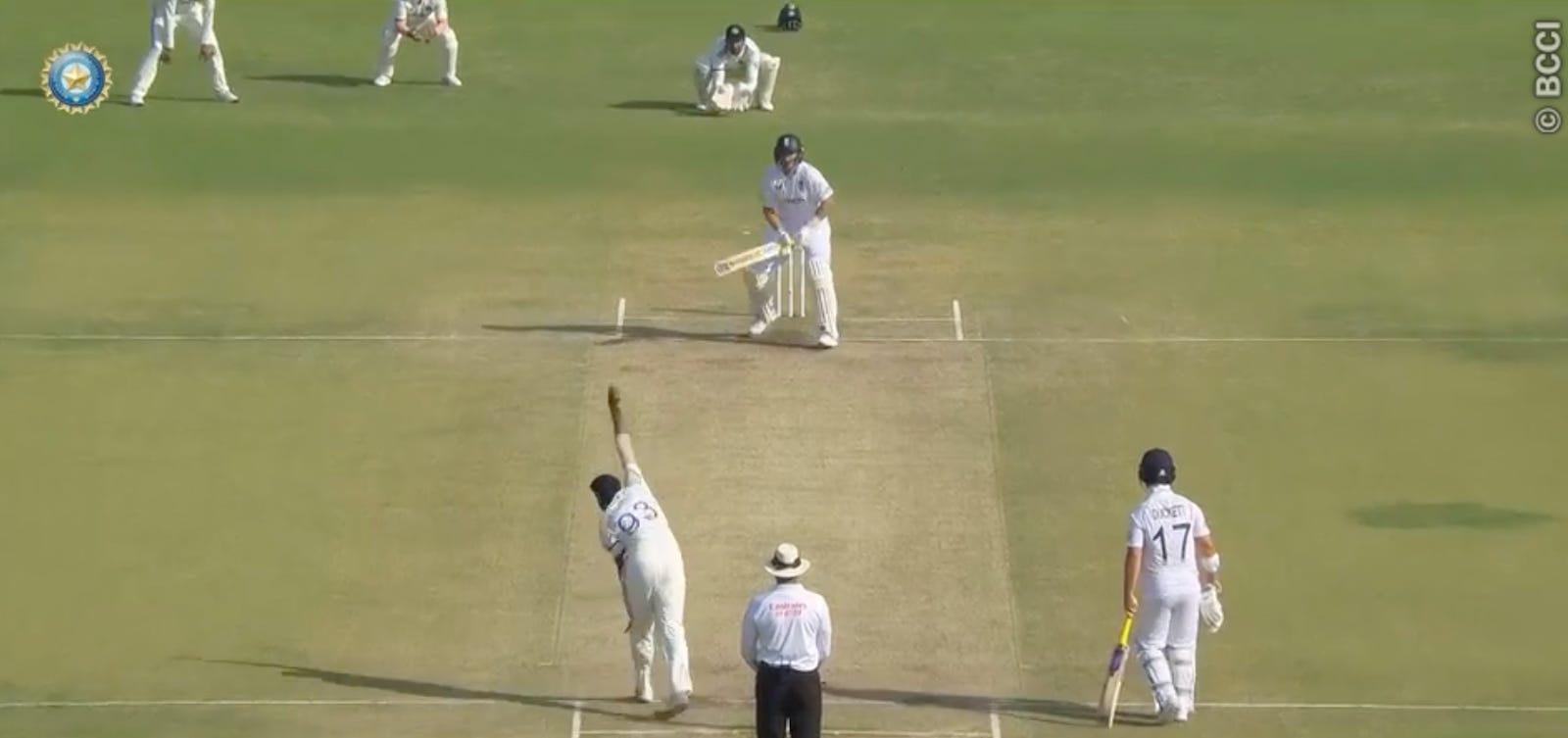
Another thing that comes through the McCullum style of cricket is taking out the slips. There is an idea, which is a little flawed, that the reverse scoop can take them out of play. It makes sense, and certainly changes the field, but it is clearly a risky shot.
You can argue this shot is just bad. Because of Bumrah’s angle in, it means this is going to be more cramped. It’s also fuller than Root expects, which doesn’t allow him to get under it.
He just doesn’t make the right contact with it. It hits up on the blade, and not in the middle, so it flies to the slip he is trying to take out.

In some ways, it’s not much different from driving on the up against an outswinger. It was a bad shot, not because of what it was, but who it was against.
The reaction to this - and Root’s error against Neil Wagner in New Zealand - was utter uproar. Yet, it was not Root’s worst shot of the series. And certainly not England’s.
Ben Duckett played what has to be one of the worst shots in Test cricket, and yet, it was barely talked about.
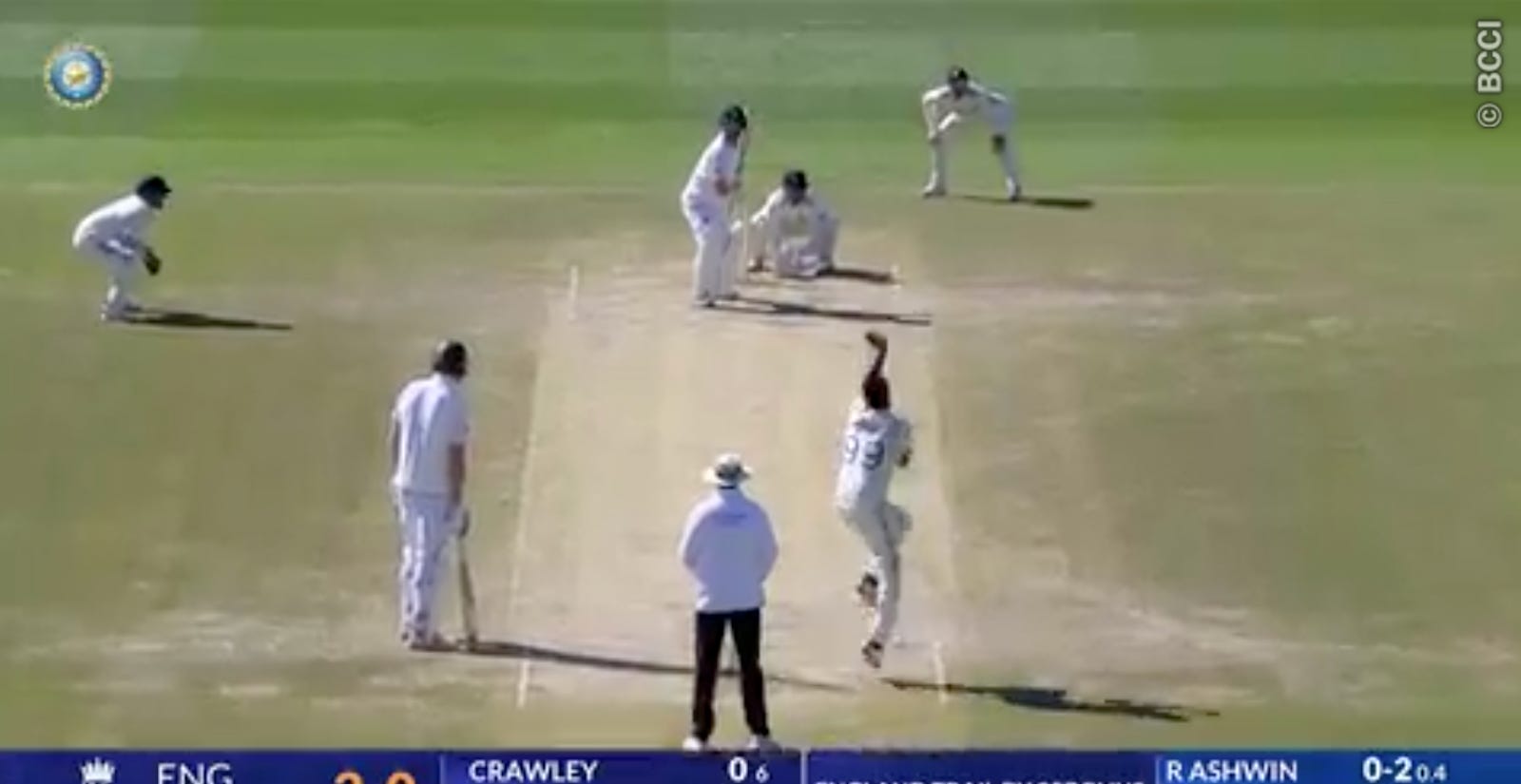
The reason is that using your feet to a spinner is seen as a normal shot. Duckett sees mid-on and mid-off up, and decides that he can clear them and pick up a boundary.
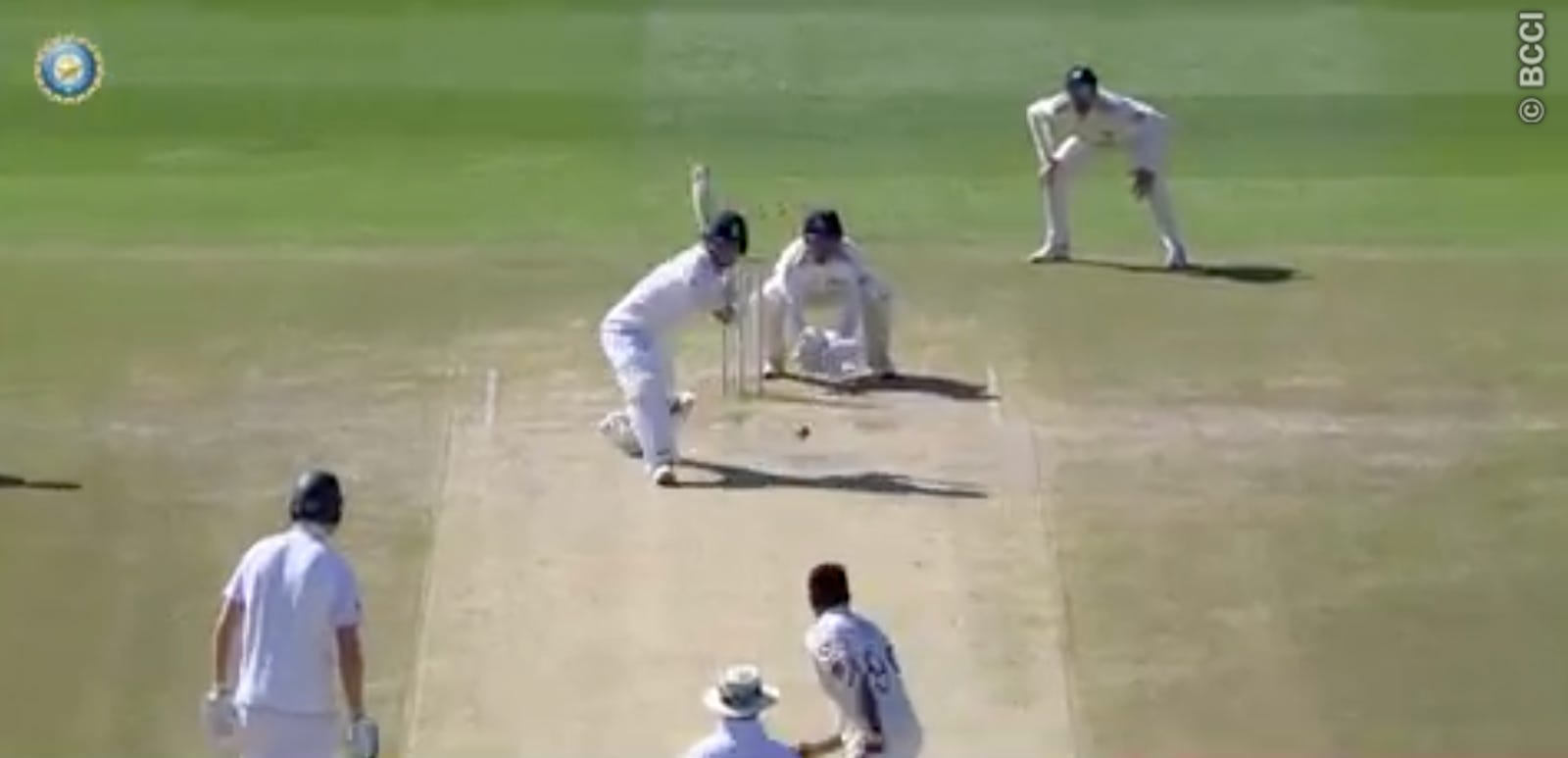
But Duckett has used his feet in an apocalyptic way here. He comes down on the legside of the ball, against someone who usually spins the ball further away. Ashwin doesn’t seem to have seen him, as he would have bowled far wider.
Instead, it's straight. Had Duckett come straight down the wicket, he would have been in a good spot to hit it. But he’s almost 80 cm from where it pitches, and his head is falling over. The only way he can reach the ball is by angling his bat.

And that is a problem, because Duckett has played over a near full toss while standing nowhere near it.
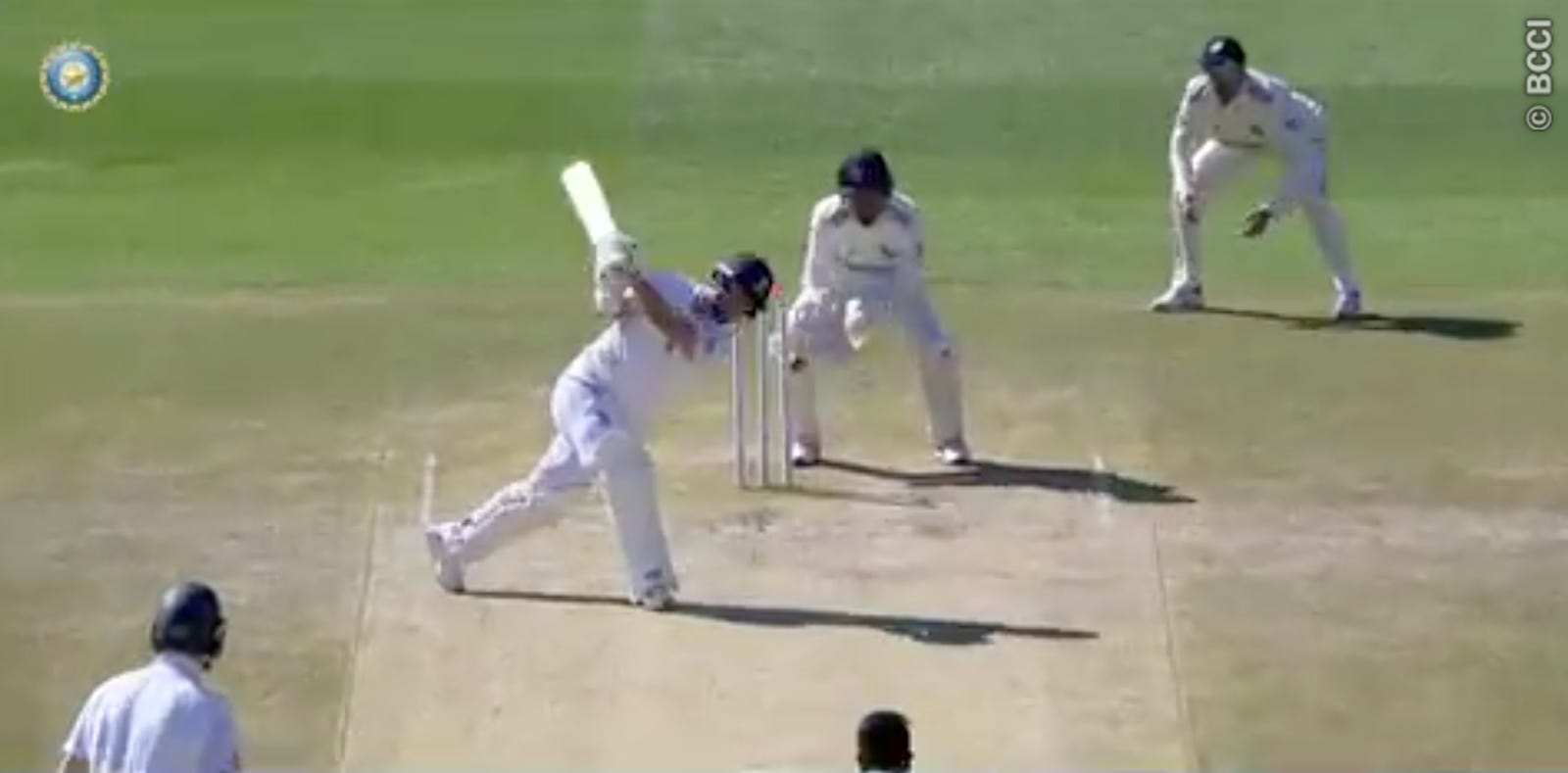
Maybe if some charitable donation is needed, we can say he saw a slower delivery and decided to use his feet. Except it is clear he made the move before the ball was bowled. He then got his feet wrong, his head fell over, and he really played over a ball he should have hit.
So he made a pre-meditated decision to come down, then executed the shot so terribly that he was bowled.
Why - outside of Bazballian champagne Kool-Aid - would Duckett do this? Well, Duckett averages 11.3 against Ashwin, and the great offie had been tormenting his inside and outside edges by sticking him to the crease. So, Duckett decided to change that.
But he made a poor decision, and executed it like he’d swallowed a hand grenade.
Former West Indian great Jeff Dujon has repeatedly said on commentary that almost all wickets are batters’ errors. And modern data shows us that batters often make many more mistakes than the one fatal one we obsess over. But when you compound one error with another, you’re upping your chances of dismissal.
That is what Duckett did, and it’s a horrible shot. But again, still probably not the worst of that series.
That would probably be Root’s, also against Ashwin at Visakhapatnam. England basically needed 400, and were 154 for 3 when Root decided to be aggressive.
So when Ashwin comes around the wicket, he decides to come down the wicket and smash him.
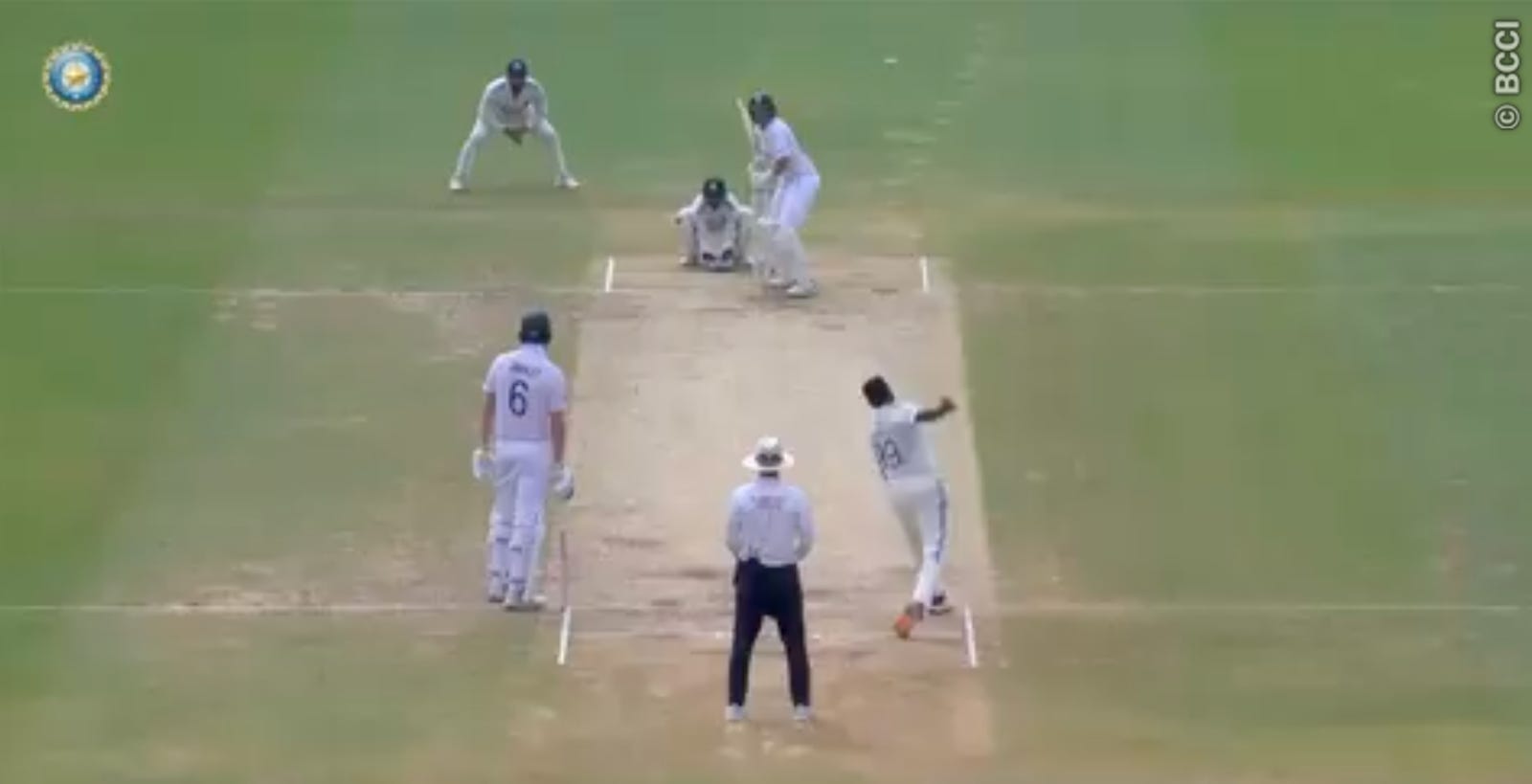
He doesn’t move as early as Duckett, and he also comes straight down the pitch. But there are issues. Again, he has decided to come down before the ball has really come out. And it’s angled right across him, yet he decides to go for it. But weirdly, he tries to heave it across the line. So it’s a running slog swipe.
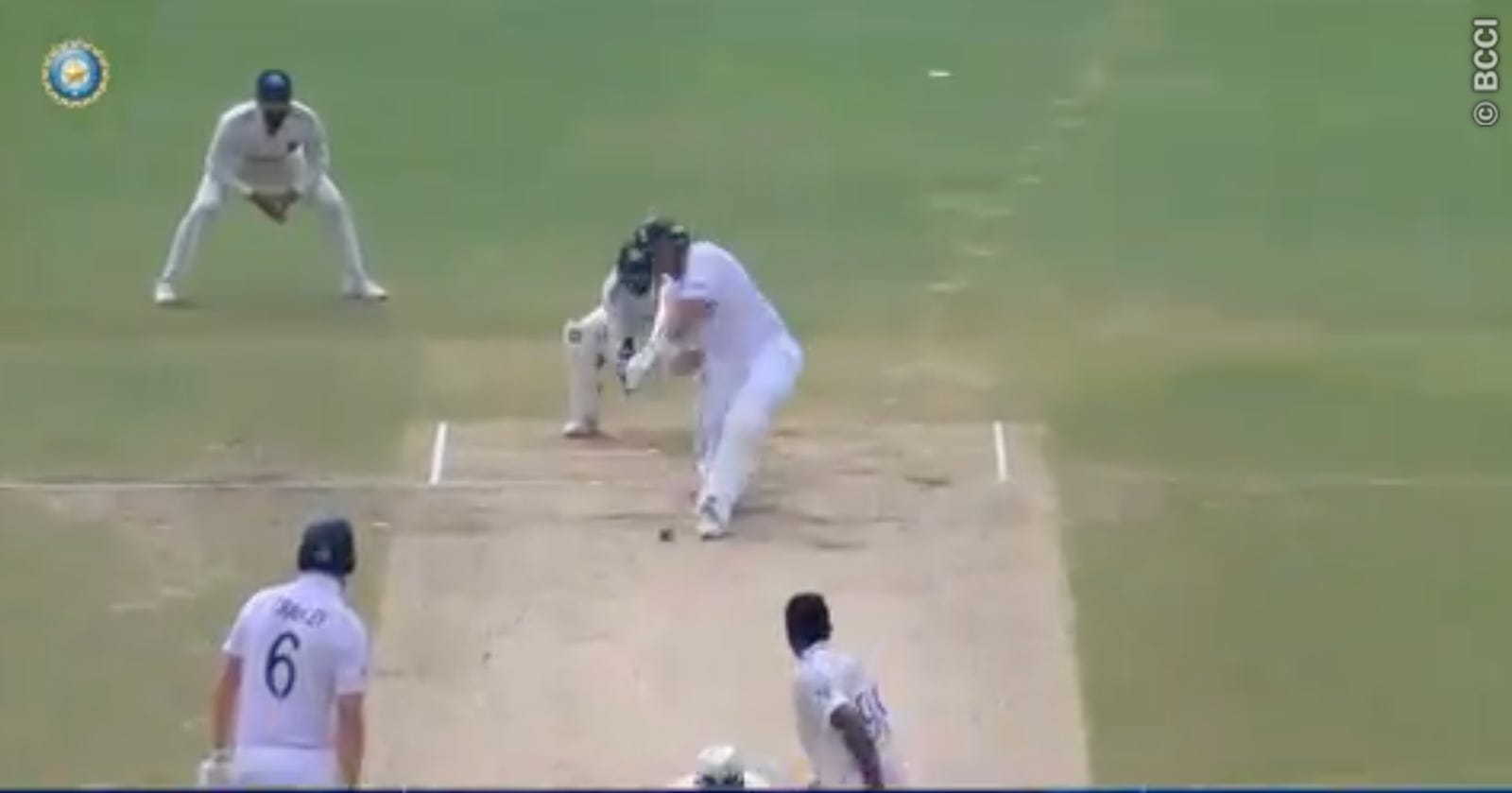
That is not an easy shot to play. His head falls over here, and he actually takes his eyes off the ball. So his charge and slog ends up nearly blind, he gets a top edge and is caught.
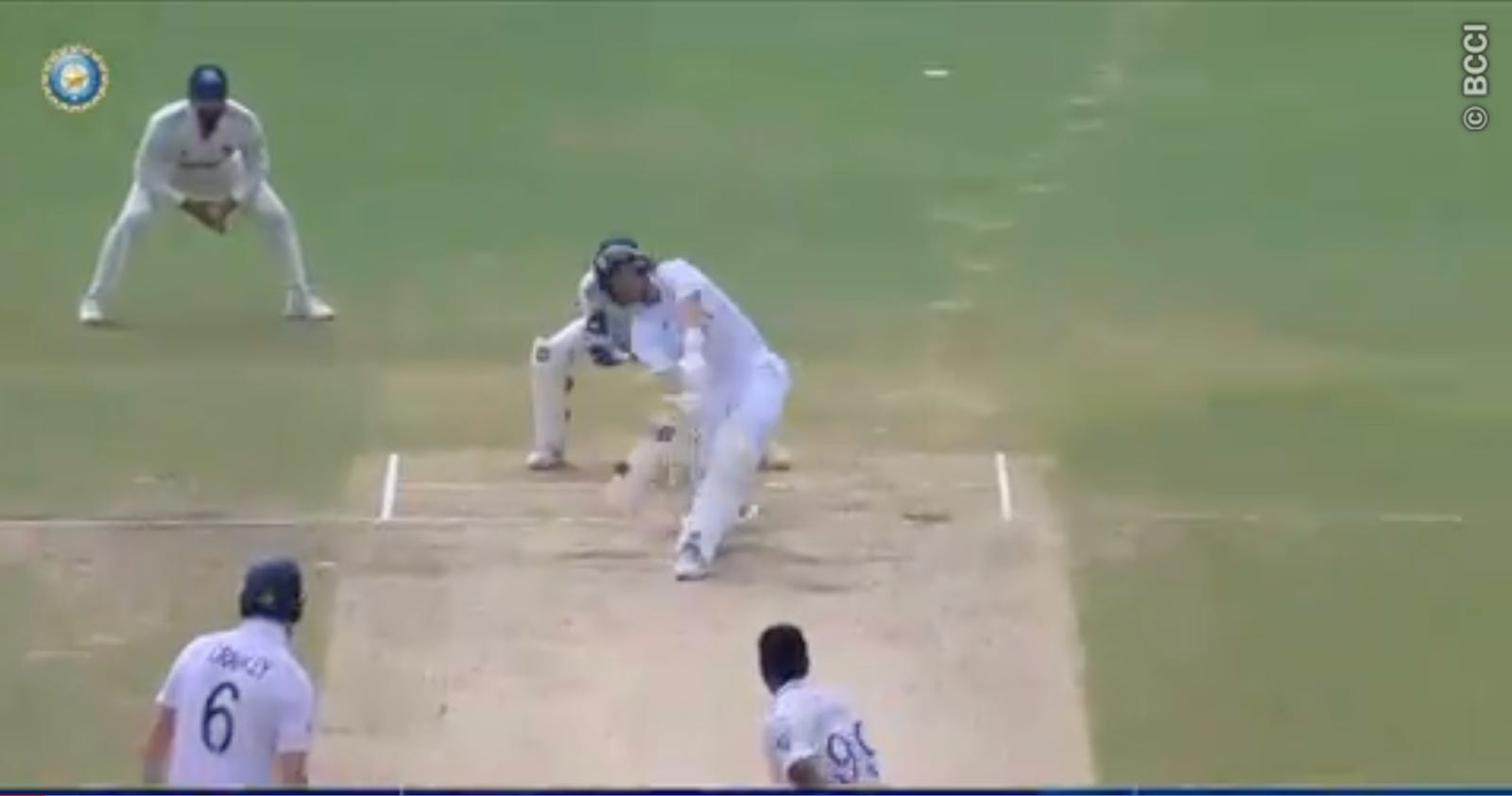
It was a bad choice, terribly executed. Far worse than what Duckett did against Ashwin, or Root vs Bumrah.
Because one of the reasons this was a worse shot was the field. Root was playing this big slog across the line with fielders out on the legside. The previous shots were about exploiting the field. The only way this one could have been successful was if it went for a six, or somehow, missed a fielder in the deep.
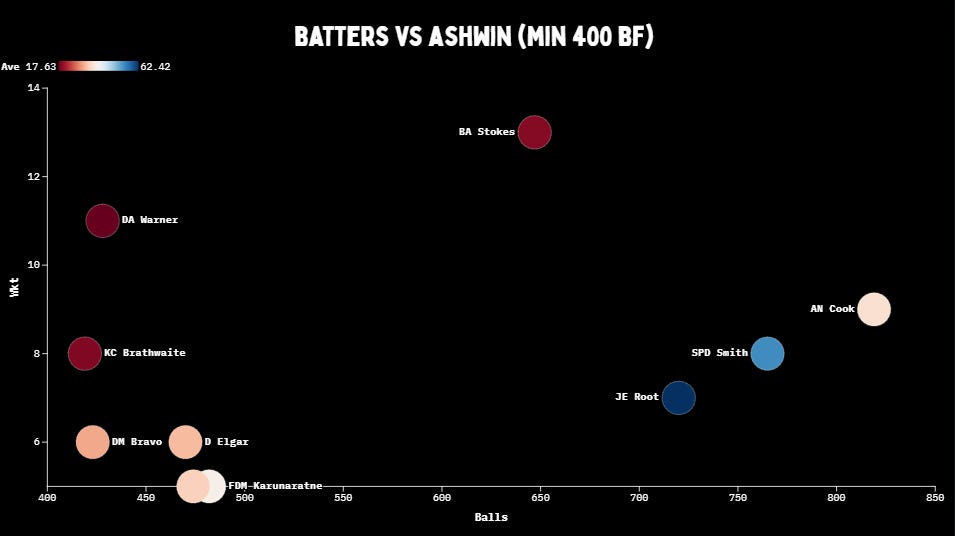
Root made about three mistakes in one ball. Even if he’d hit this beautifully, it would be hard to excuse. It’s a bad, bad, BAD shot.
But modern players love exploiting the field. At Lord’s on a tough wicket, Harry Brook looked like he would win the game for England. He treated Akash Deep like a piece of toilet paper stuck on his shoe. India did try to get in his head, by bringing the keeper up, and stopping him from coming down the wicket.
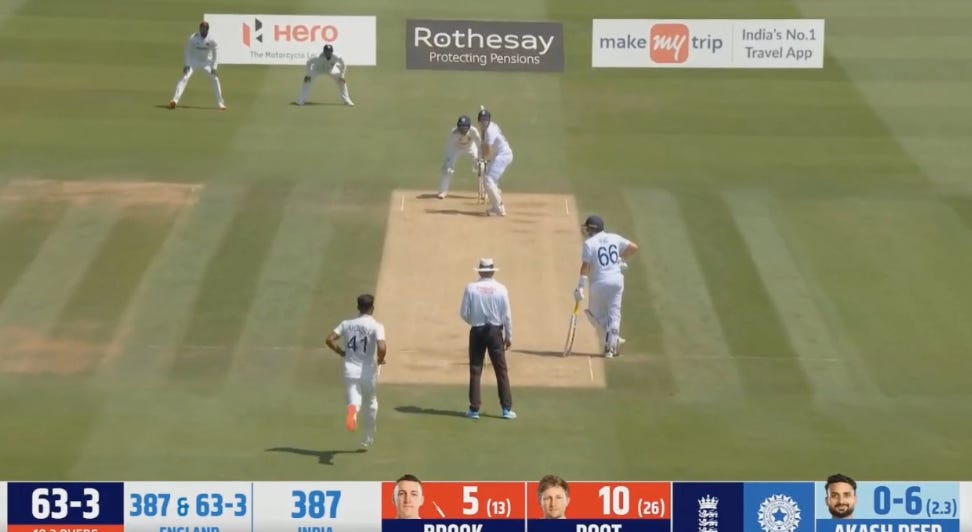
So Brook scooped him. There was a deep backward square leg in, and he realised that anything past the stumps was going to be a boundary. To play this shot, he had to expose all three stumps.
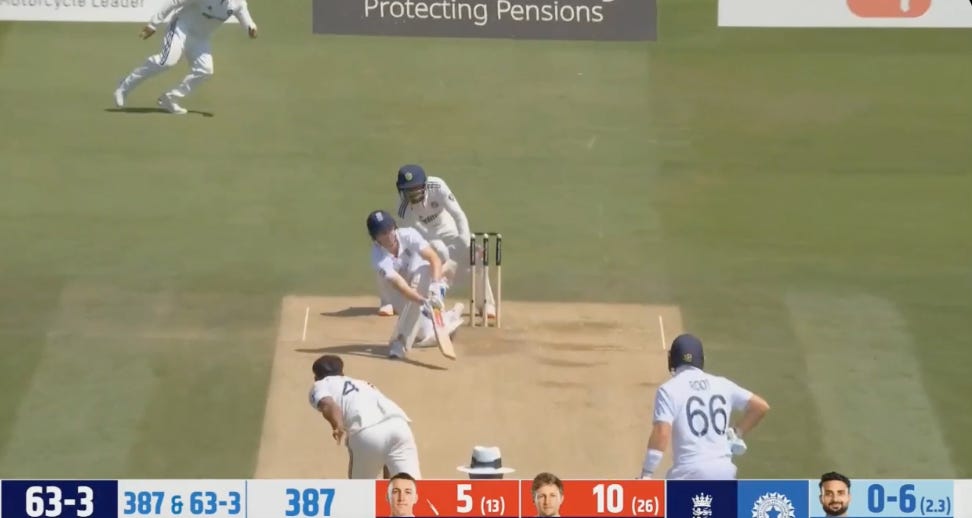
Then he played a similar shot to follow up, again exposing his wickets, although with a bit of his leg stuck out to try and stop the ball. That means for two deliveries in a row, he had exploited the line and length of Akash and the empty boundary.
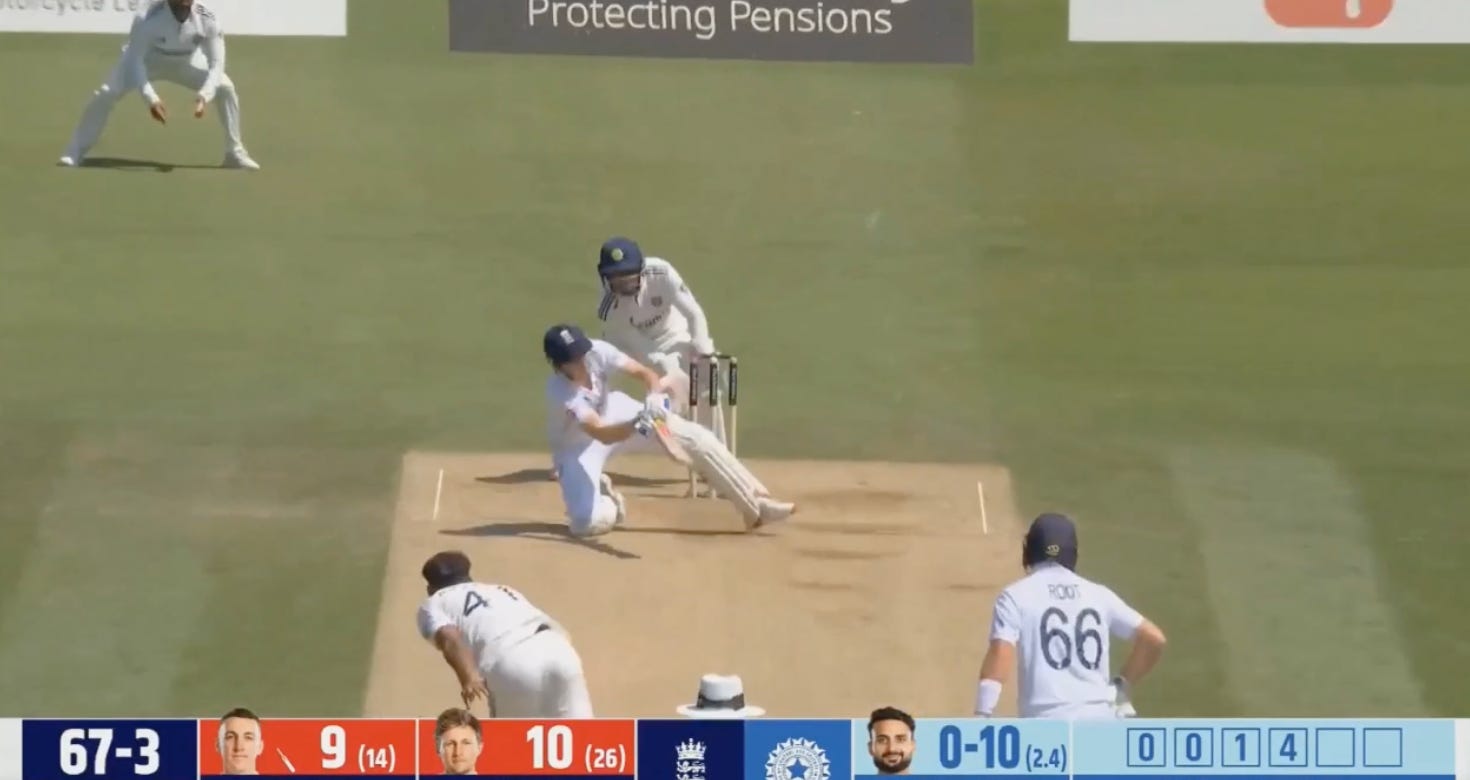
Shubman Gill moved deep backward square to an unusually fine leg - Lord’s quirky shape is partly to blame, but it’s a very fine leg because of where he was hitting the ball.
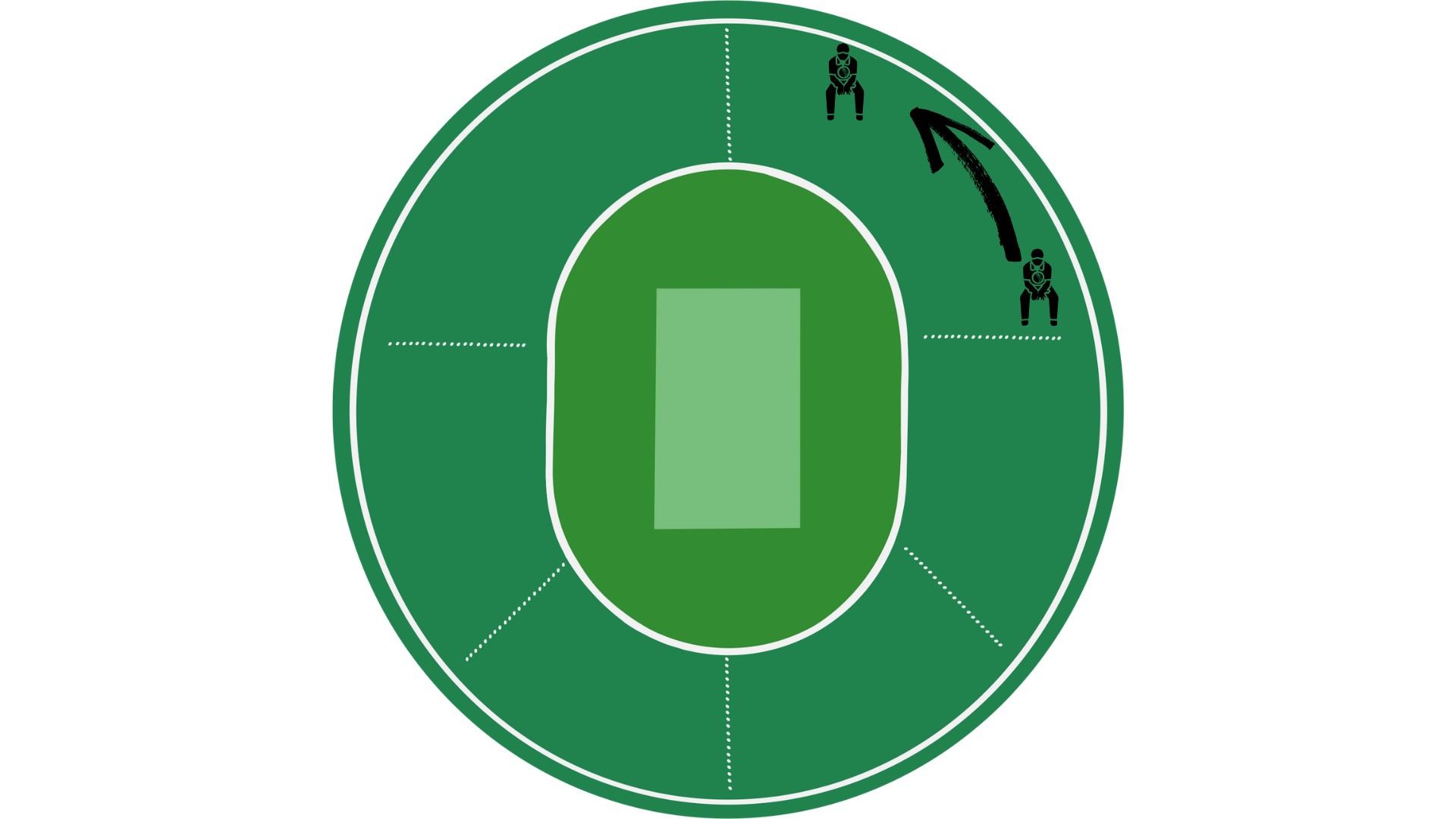
With those two boundaries, they moved 71 runs ahead on a pitch that was getting tougher. Bumrah had already finished his spell, and India were trying to rest him and Mohammed Siraj. They’d already got a bonus wicket out of Nitish Reddy, but they needed to at least hold firm. A big over here, and India’s rotation would be a mess. Brook would be away.
When the field changed, Brook hit the ball somewhere else - straight over mid-off and into the Lord’s Pavilion. The following over he scored another boundary off Nitish. The thing with Brook is how quickly he can change the match. In this mood, it might only take a few more overs.
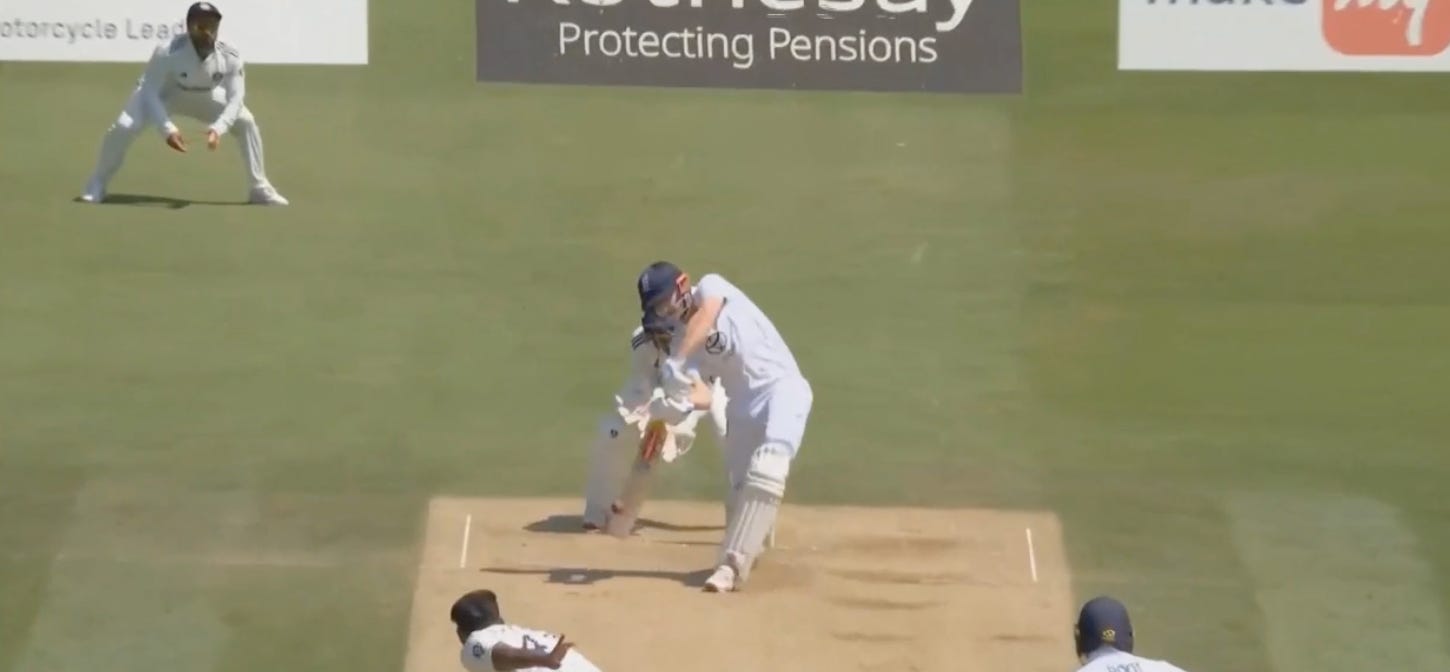
He was 23 from 18 at this point. Three more overs might be enough.
When Akash’s foot hits the crease, Brook hasn’t made a decision. He is completely still.
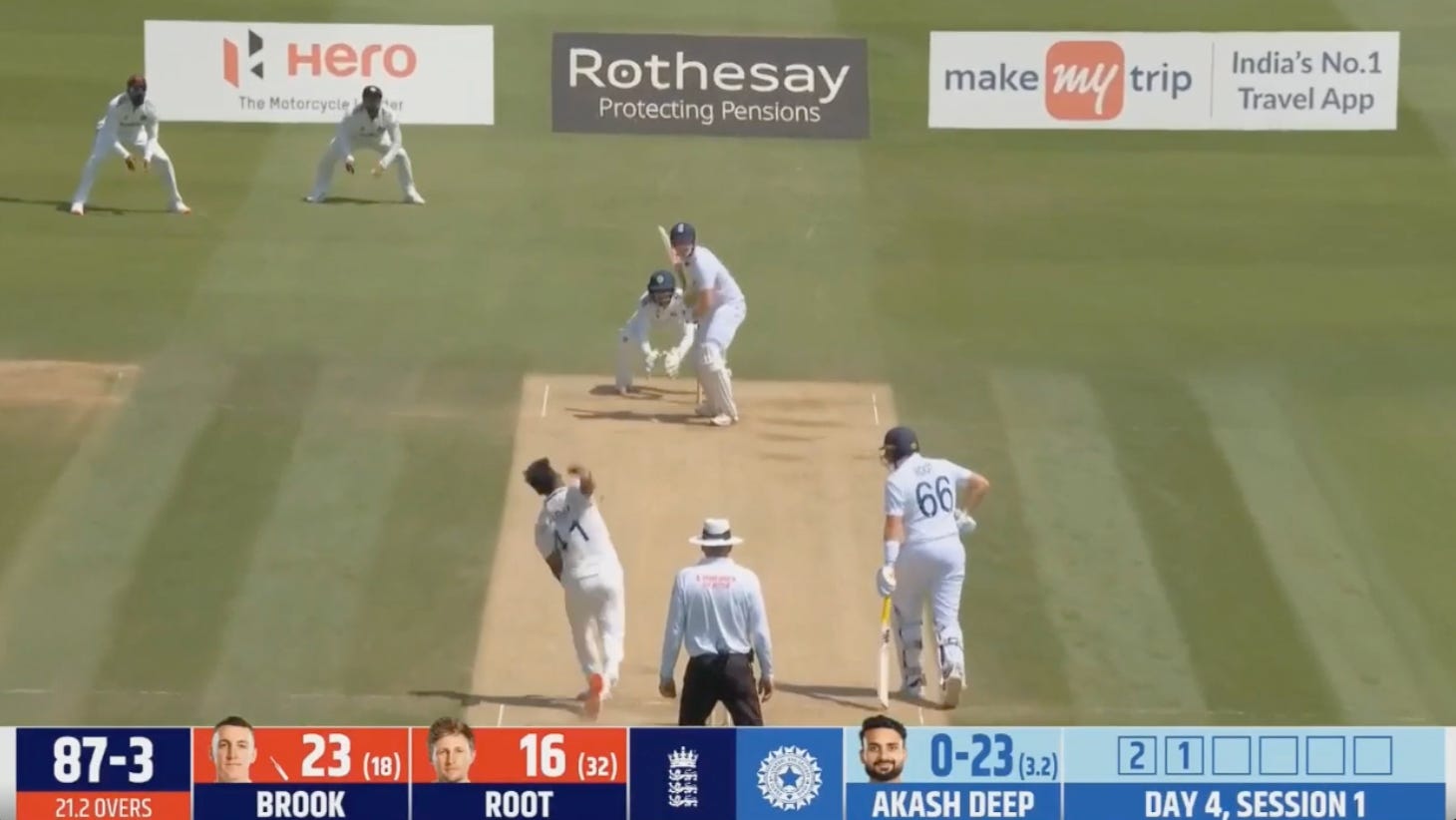
But when the ball comes out, he picks up how full and straight it is and decides to exploit the field change Gill made.
My numbers suggest that in his professional career, he has played fewer than 12 sweeps to fast bowlers. And some of them would be scoops. But he doesn’t sweep them much. Because no one since Mal Loye does.
But that is the shot he plays, because of how his previous boundaries have moved the field. The easy boundary to hit is to the backward square area. The fine leg is not going to stop anything. It is a free boundary, and all he needs to do is get the ball there.
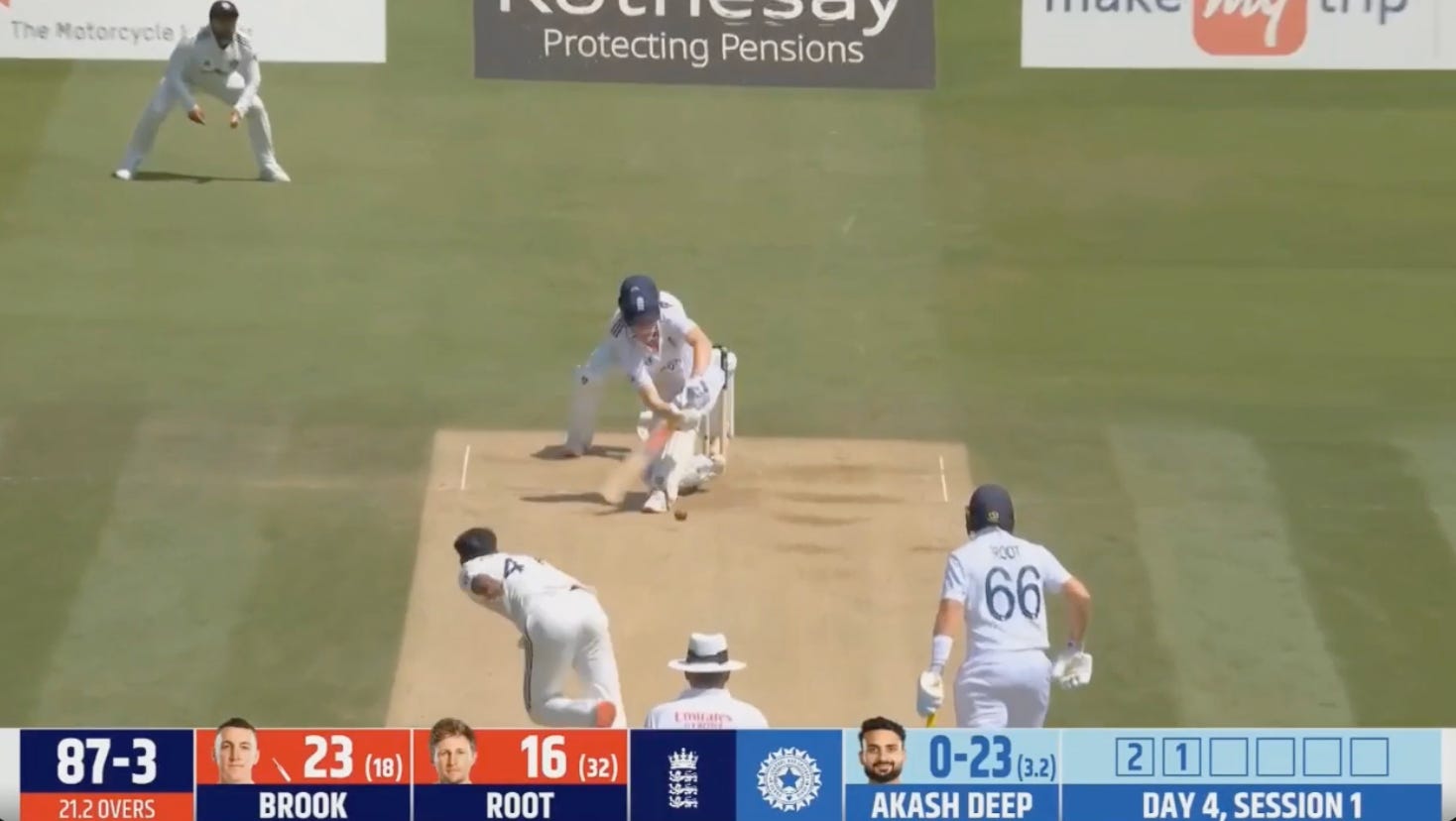
The old-fashioned risky way would have been to move to the offstump and flick the ball to leg. With this field, it’s still a couple of runs, and probably a boundary. Brook moves all the way over, exposing his wickets, and tries to sweep a fast medium bowler in a Test.
He loses his middle stump.
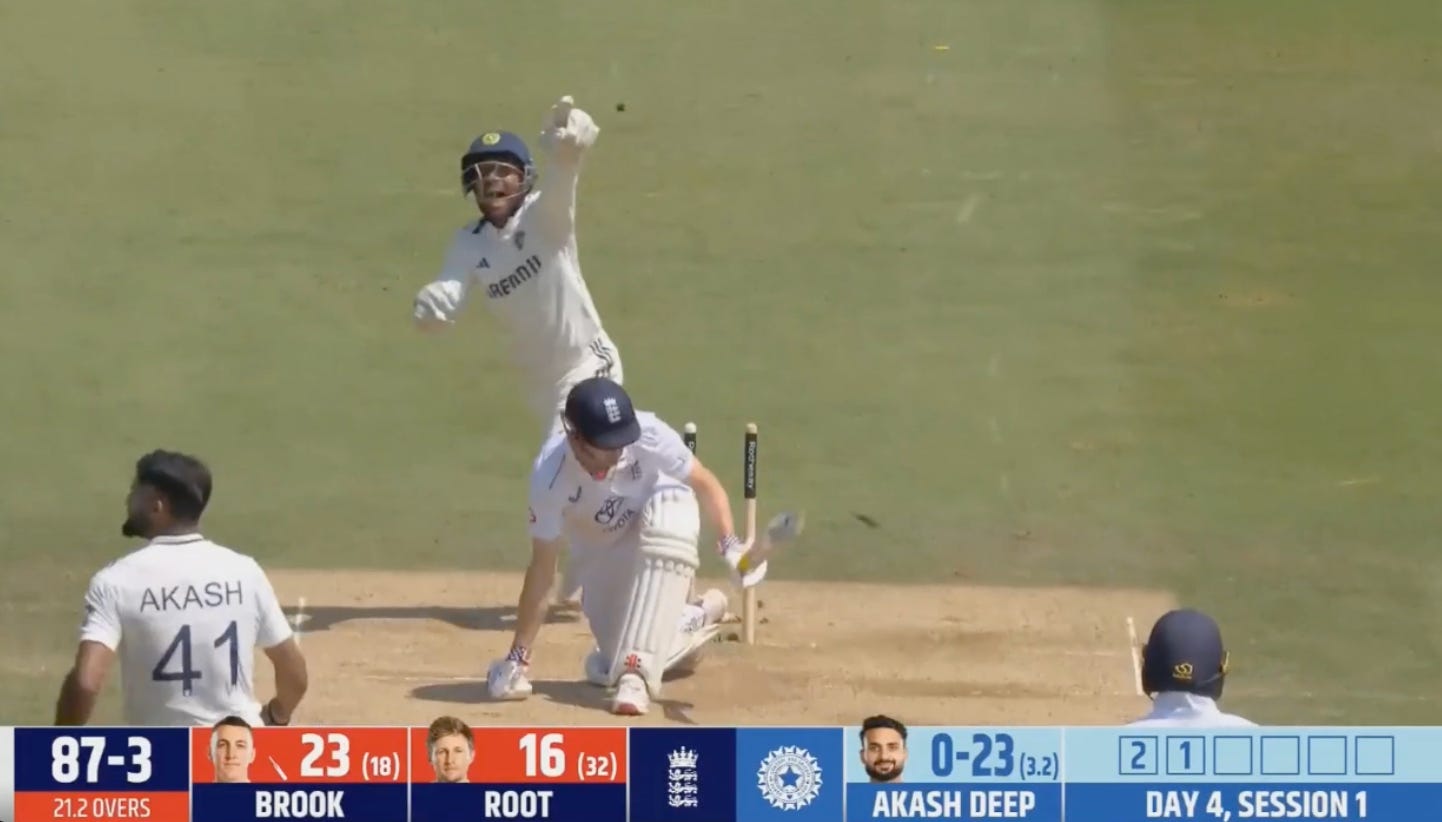
But is this shot any better or worse than the earlier ones mentioned? He just missed the ball. And had he hit this, it’s another boundary. India are not even sure if they can bowl one of their options then.
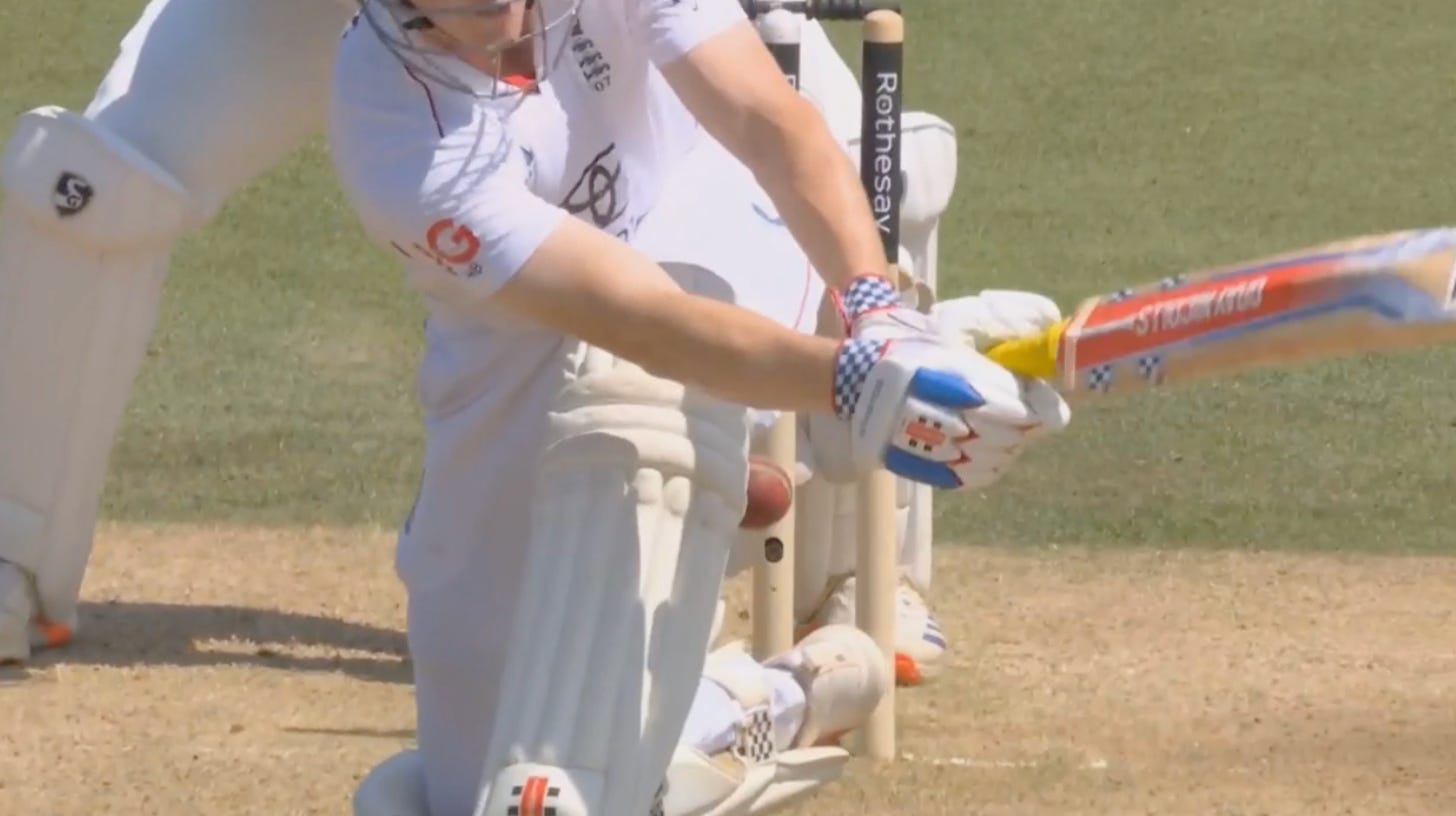
Modern Test batting really is kill or be killed.
***
Later on day two at the Oval, Duckett starts to get angsty again. He strikes a beautiful four with a pull, but then mistimes the next few deliveries and misses one as well. There is a moment where he can simply block or leave some, get through the over, and reload for later.
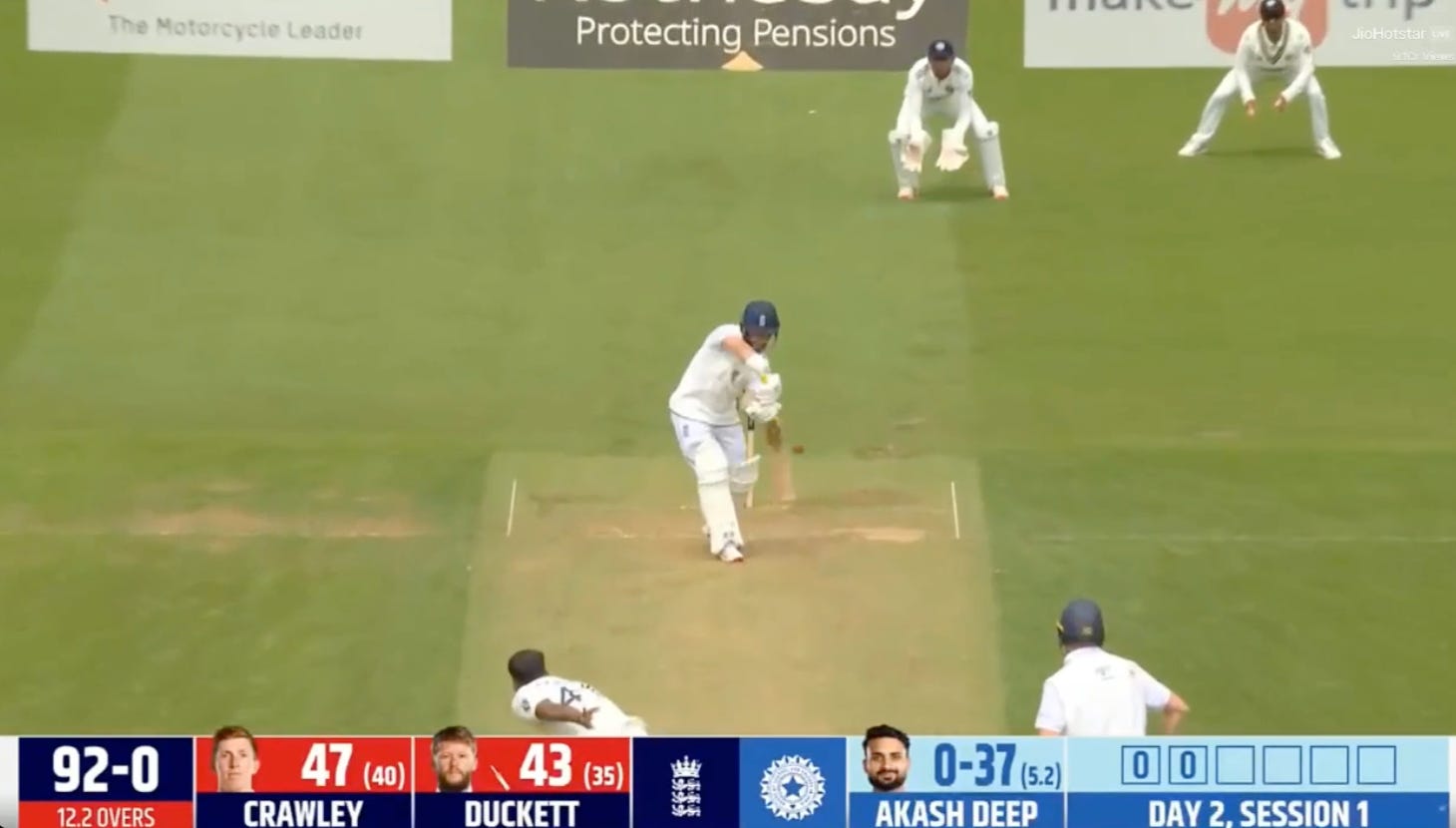
Ben Duckett absolutely does not do that.
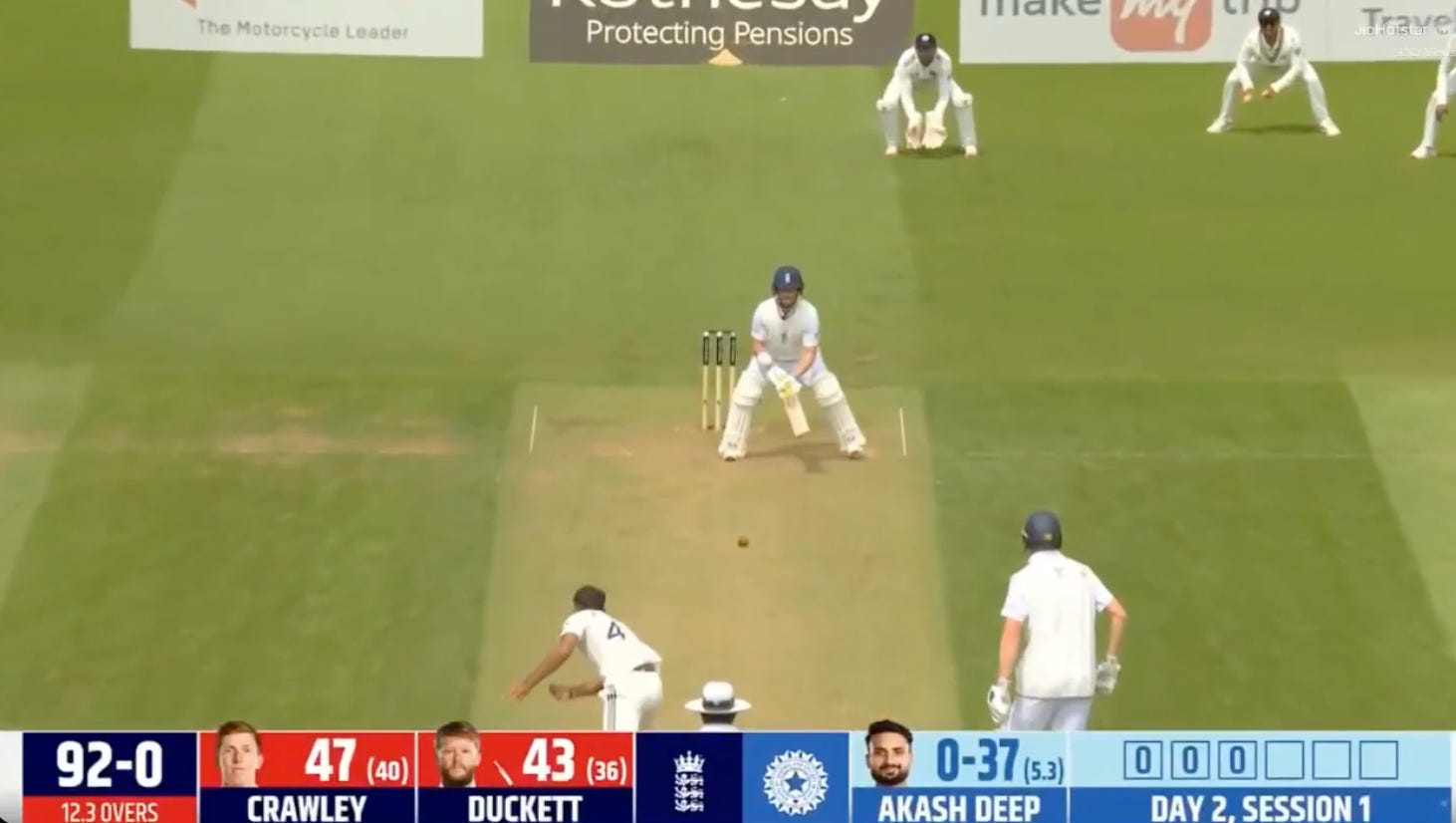
He decides to play a conventional ramp down to fine leg. The issue is he gets down too early, and Akash follows him. Instead of bailing out, or even flicking it reverse, Duckett ends up moving into a horrible position and getting hit on the hip.
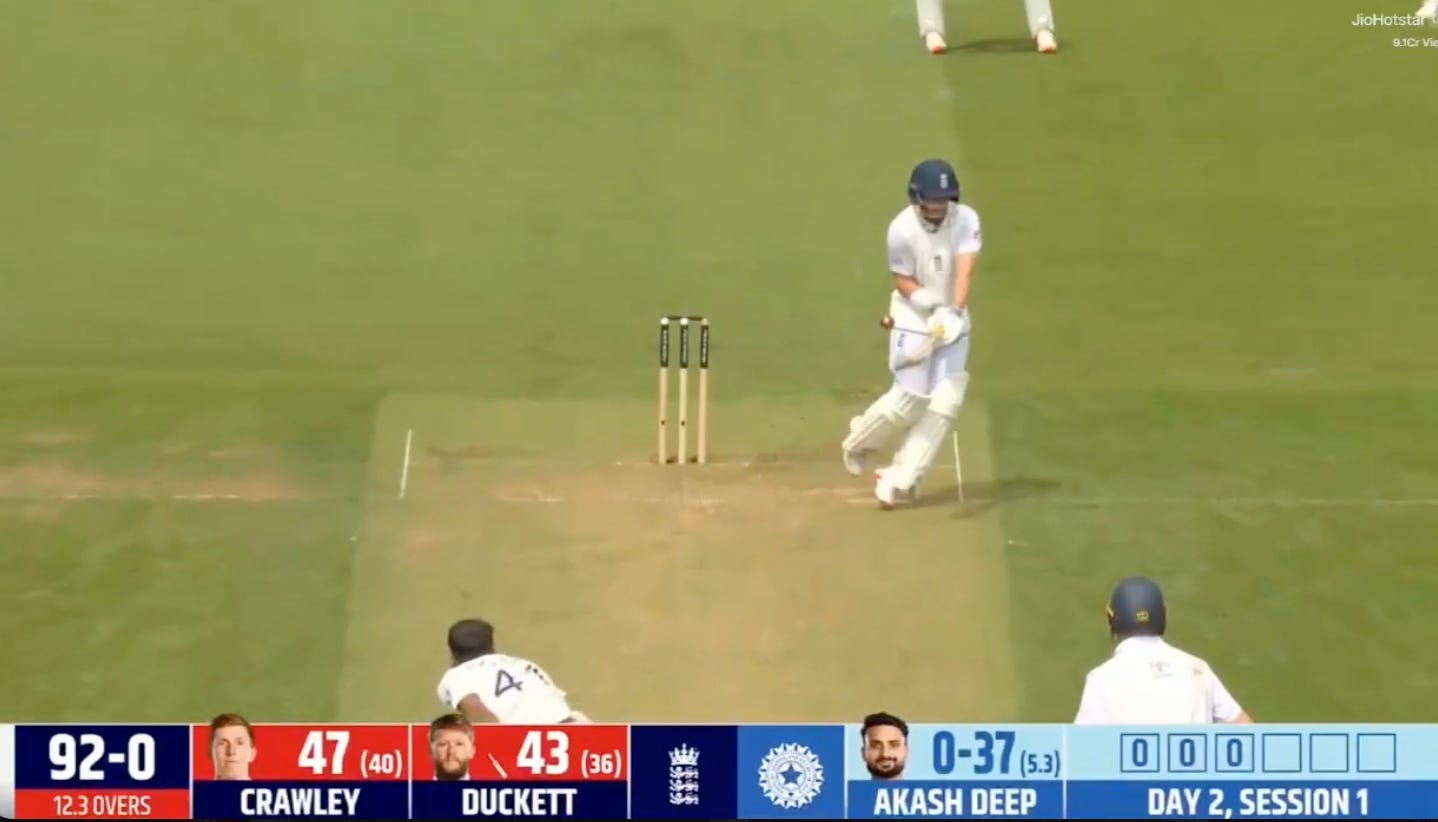
If you showed this image to a cricket fan with no knowledge of the modern game, they would be confused as to how this happened. He’s off the cut strip, facing point, his bat is looking at fine leg. This is a bad cricket shot.
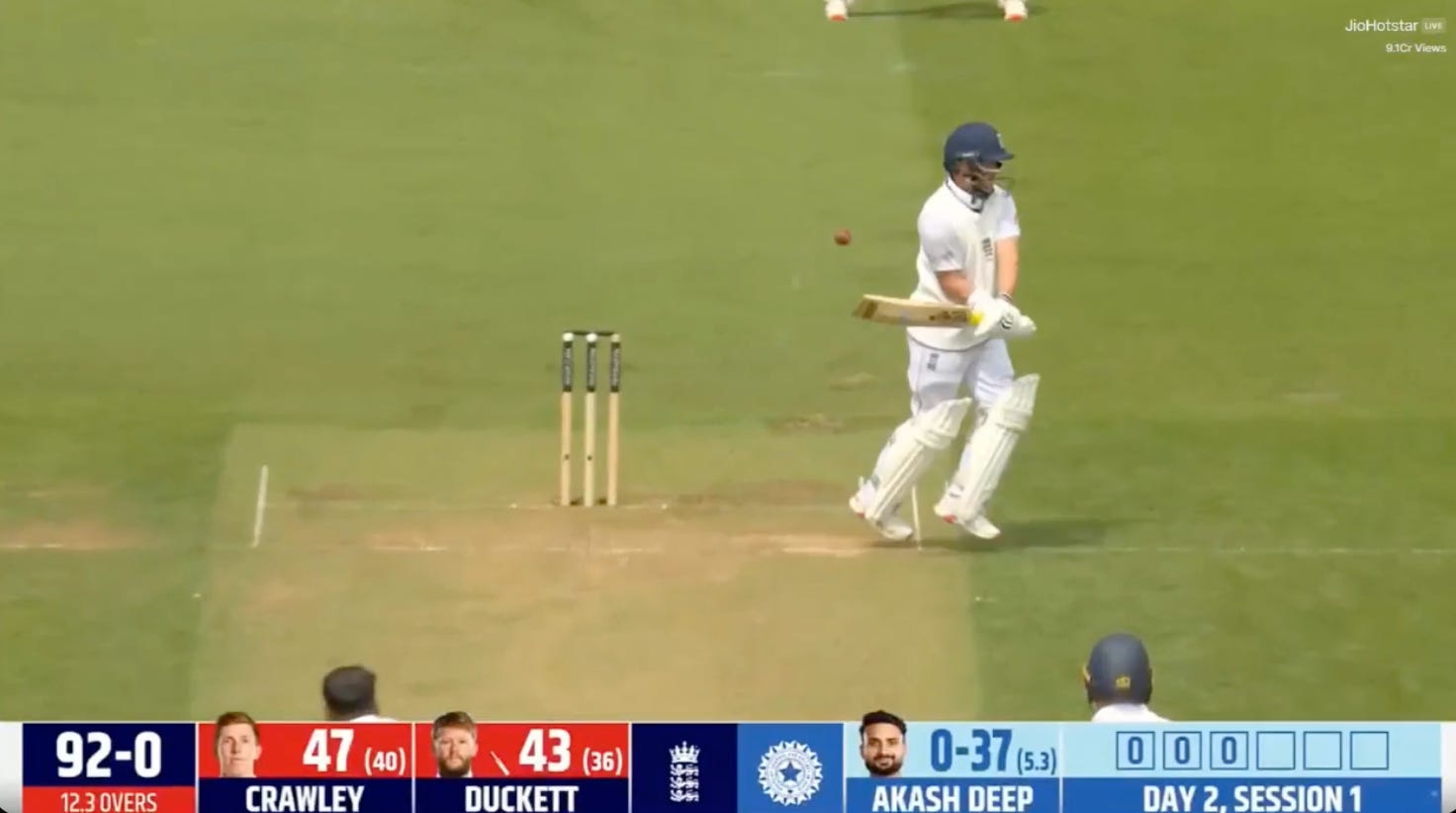
He went down so early the bowler adjusted. When the ball wasn’t where he needed it, he kept playing the wrong shot. It’s no different to a batter from 40 years ago premeditating a drive, only to be forced into one on the up - and edging out. Same mistake, new method.
The reason this is worse is because Duckett is already playing a very risky shot. Once the ball is not where he wants it, he has to abort. The only reason he’s not dismissed here is because he misses it.
But you can see why Duckett does this when the TV coverage shows a graphic. Akash has been good on line, but Duckett has made him change his length. This is the battle right here.
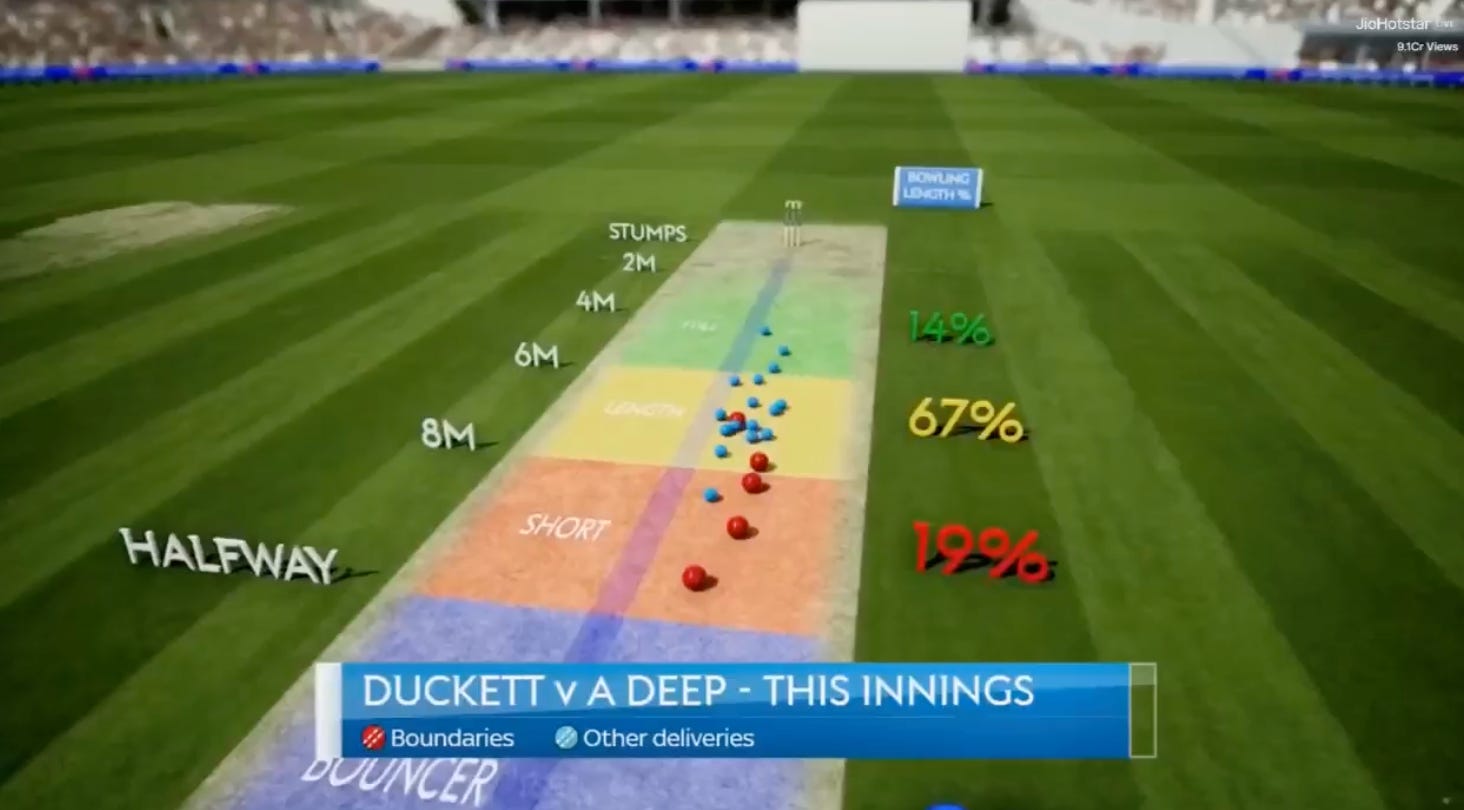
And despite some decent deliveries, Duckett is killing it, and the entire contest. England are 92 without loss in the 13th over. India’s lead is being blown away.
The next delivery, Duckett starts to move into scoop position again. This time not as early, and Akash keeps the ball on length.
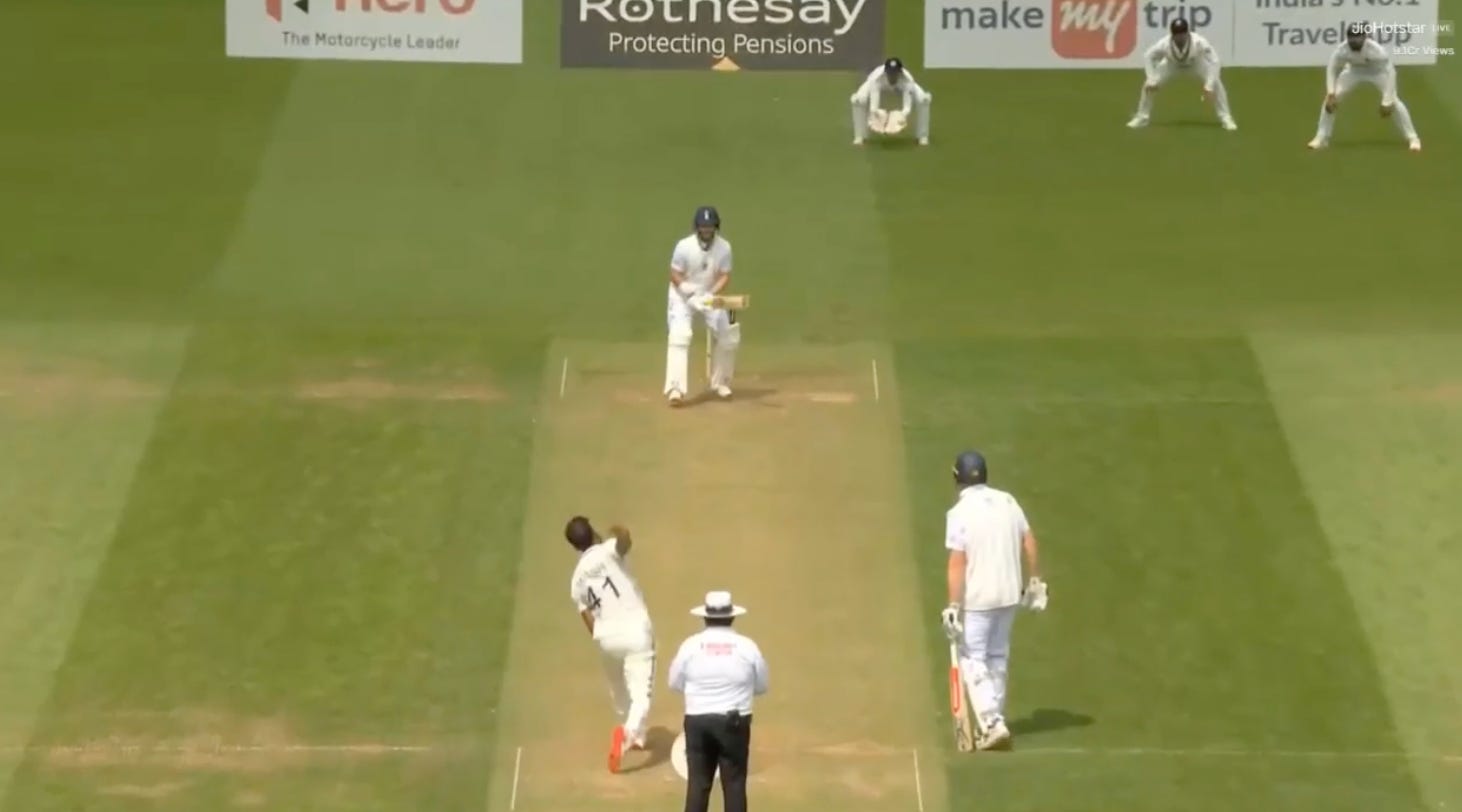
Duckett moves back into position to help the ball over the slips as he did earlier.
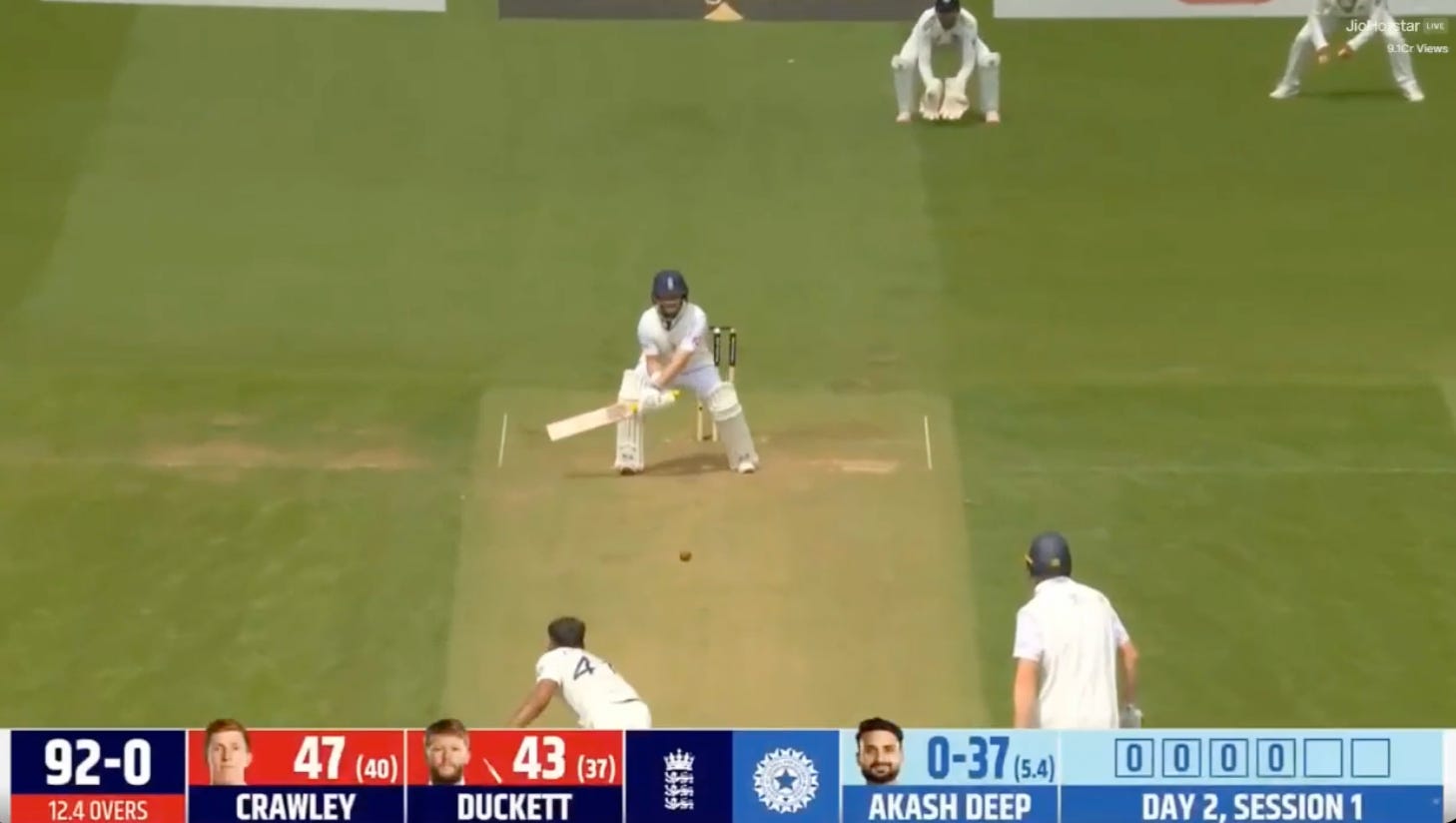
His head is still, the ball is angling across him, he gets a free swing on the arms. This is really a great area to scoop over the slips.
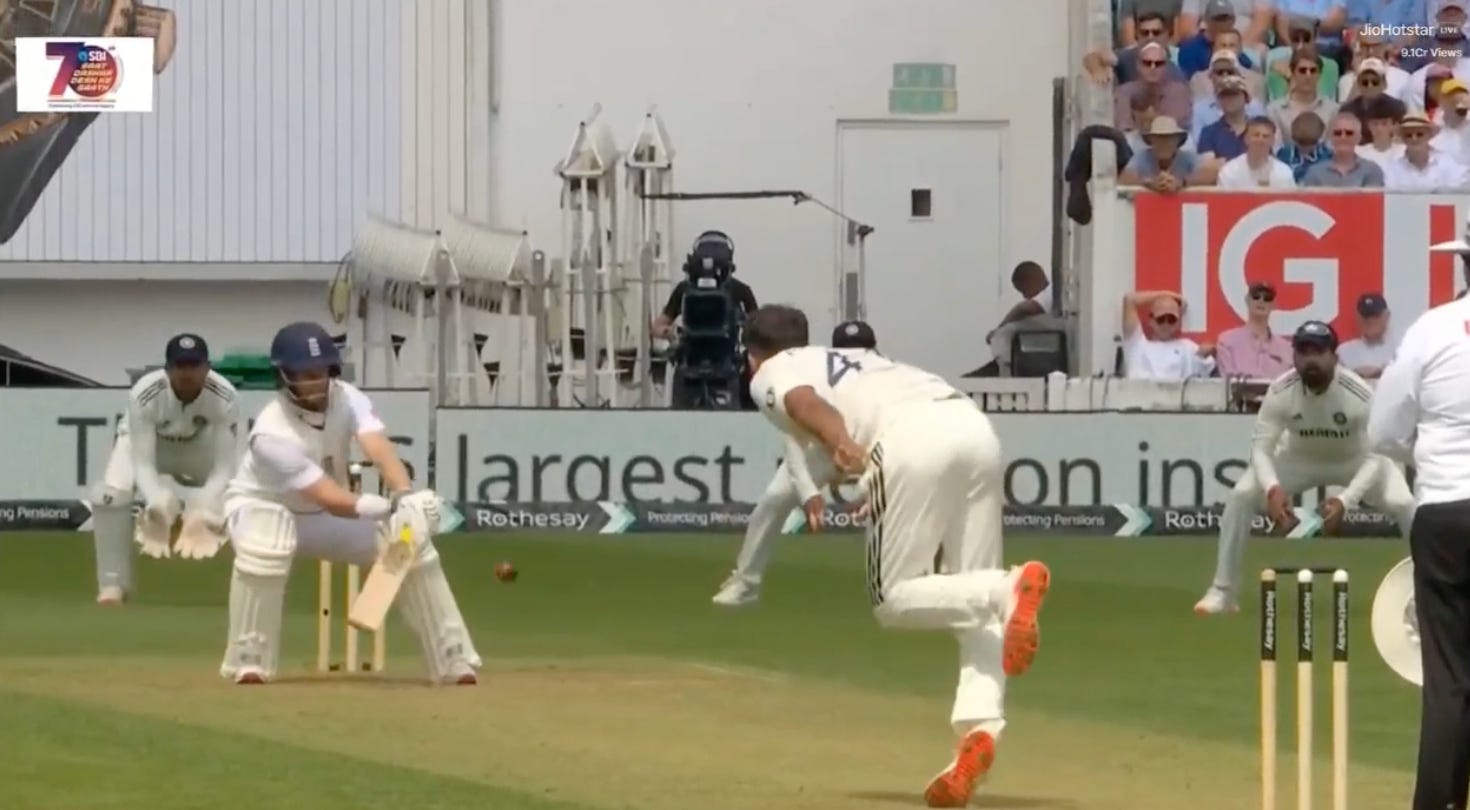
But Duckett doesn’t do it right. He only manages to feather it behind. So the shot he is playing to take the slips and keeper out of the game is now heading towards them.
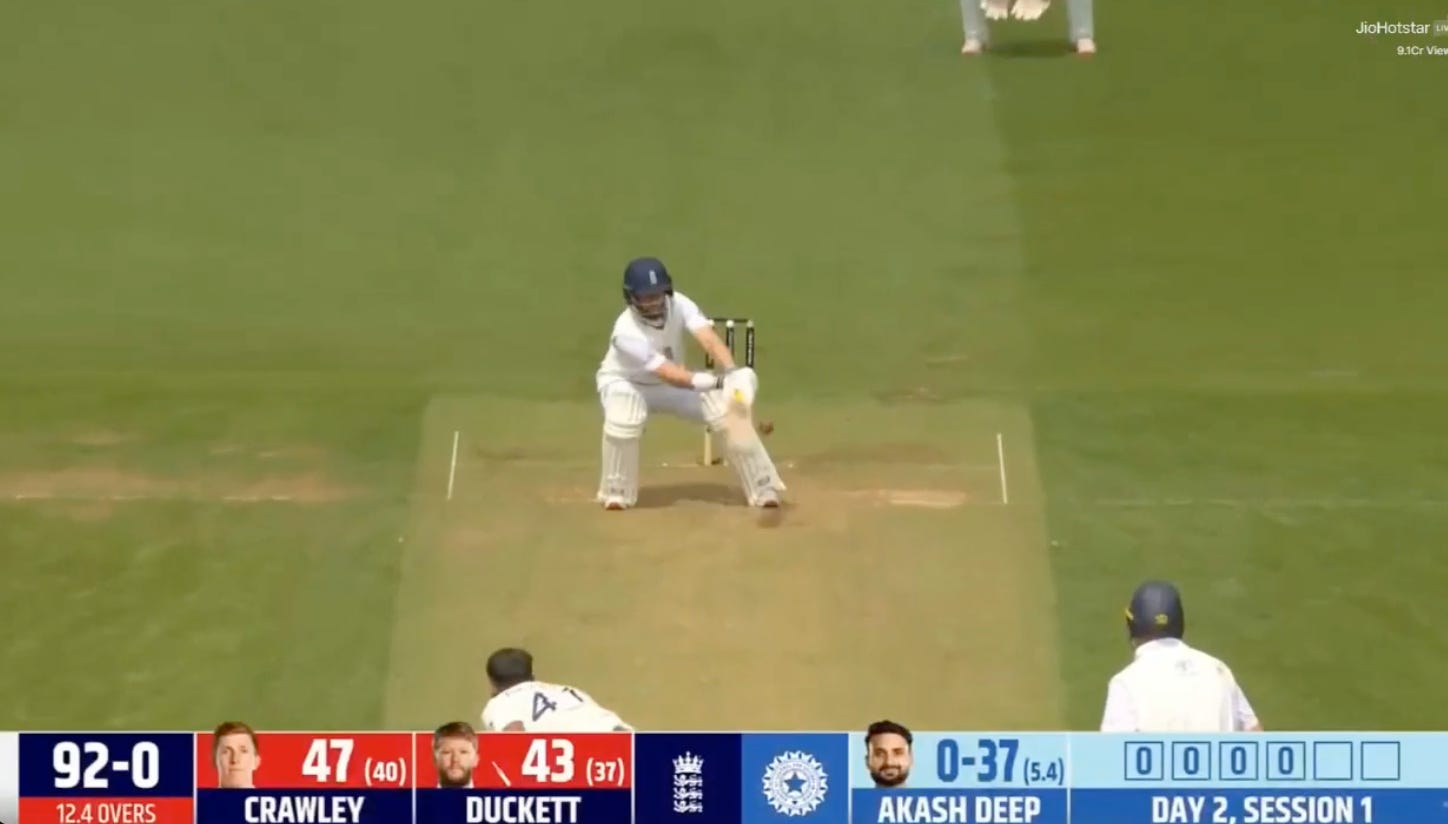
It’s a much better shot than the previous ball, and it’s not as risky as the reverse scoop pull from earlier. He played worse strokes running down the wicket and swinging as well. The issue here is, he nicks off.
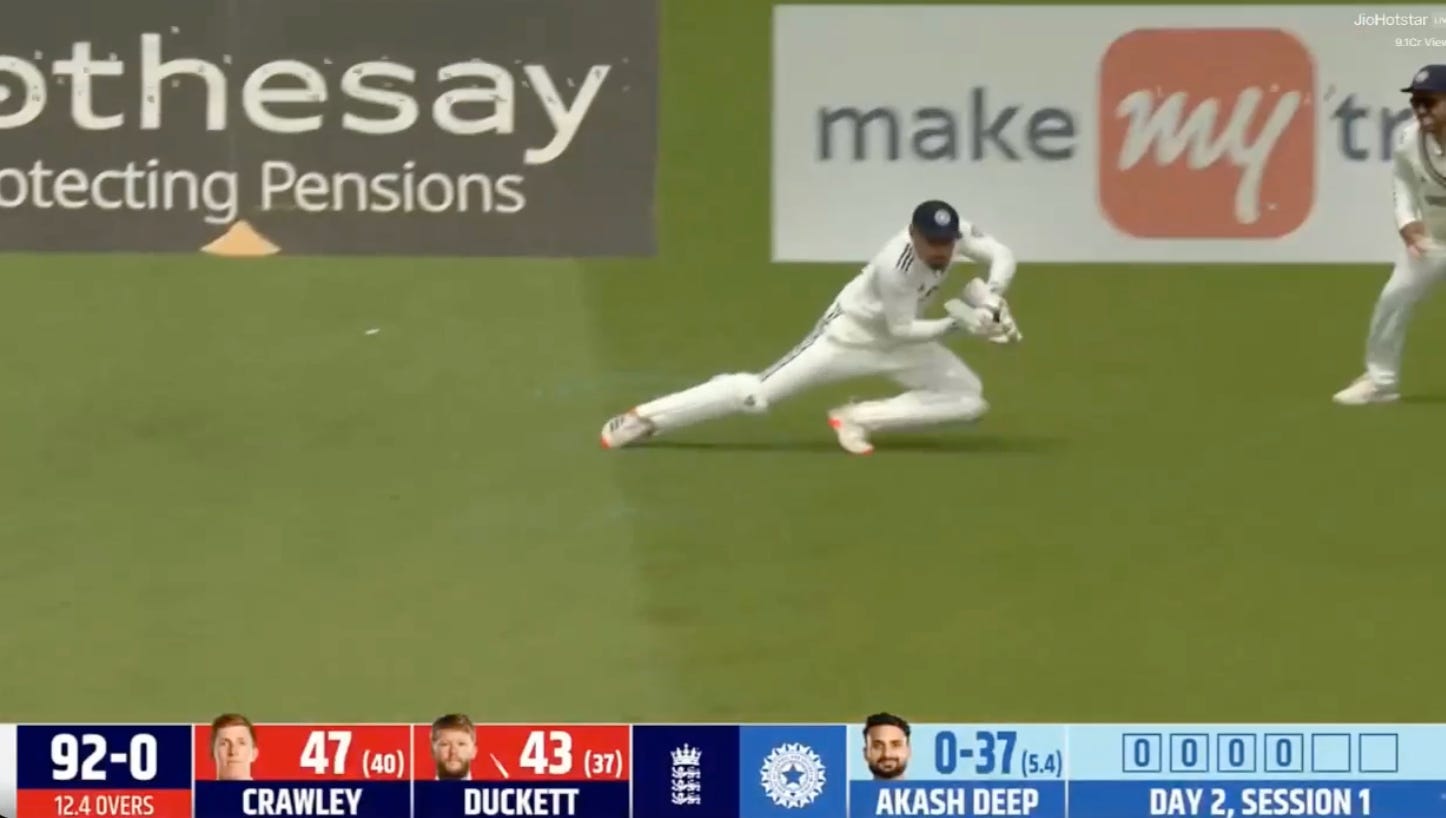
Where does that leave us all? Duckett has managed to almost break the game for England. We marvel when his risks come off, but point blame when they don’t. All attacking shots have danger, but batters now are willing to take a chance - for a big reward now, and even more for later.
You could argue that a good or bad shot cannot be judged without context of the match, field, bowler, and everything else. Or you can argue that Ben Duckett is great when his shot works, and horrible when it doesn’t.
And while the methods are new, it has always been the same. In Test cricket, the worst shot is just the one that didn’t work.