



Neil McKenzie motions for the 12th man to bring his hat. The game stops. The opposition is confused. This is a Test in the 2000s, and helmets are automatic for facing seam bowling. Maybe, if there was a medium pacer in the middle overs of an ODI, someone might keep it off.
The opposition can’t believe it. But his South African teammates shrug; they have seen him do this before. McKenzie is wearing his hat against pace bowling, like the cowboy he is.
The stories of McKenzie and the short ball go deep. They include more than one generation.
There is a picture in the McKenzie household of his father, Kevin, wearing a cap and standing on his right leg, while his left leg hangs in the air. Slightly bent. The angled bat is near his left shoulder, showing the fielder behind square the maker’s label.
A bowler had banged it short and Kevin had sent the ball to the boundary.
You should not fight the short ball. It wants to go to the boundary. Your job as a batter is to help it on its way. This was one of the lessons the senior McKenzie gave his son.
A Sunday Times feature on Neil calls Kevin a helmetless Clint Eastwood.

One of the best hookers and pullers of his generation. The highest Kevin played was during the Rebel Tours in the 80s, where he faced Ezra Moseley, Sylvester Clarke, and other West Indian quicks without a helmet. They told stories of his brilliance against bouncers in later years.
Kevin McKenzie wasn’t a great; he didn't average 40 in first-class cricket. But when helmets came to the sport, he shrugged, and continued to hook without one.
Those who play the short ball well are seen as courageous, but in truth, many of them just pick up length well, or have the shots to handle it.
Whatever the father had, his son Neil inherited.
Neil McKenzie has two reasons for requesting a cap while facing pacers. He feels that he is not watching the ball closely enough. By removing the helmet, he is forced to be hyper-focused because of the lack of protection. He is also goading the opposition into short-pitch bowling. It is his great strength and he knows can handle anything they might send his way.
The bowler doesn’t know it. So, he bangs it in anyway. McKenzie re-enacts his father’s famous pose and dispatches it.
Neil McKenzie belongs to a type of batter that is dying away from South African cricket.
The last cowboy who handled pace.
***
David Bedingham is graceful and composed at the crease; he has a pro’s pro kind of face, with an average of over 50 in first-class as he effortlessly pirouettes into a pull shot. But no South African watching feels comfortable with what he is doing, because of what’s come before.
An Australian quick bangs in a short delivery. A South African batter thinks he has the chops to go for it. The ball is skied, then caught. Rinse, repeat.
This time around, Hazlewood was the bowler. He banged it in on a short length. There was a catcher at square leg. Bedingham walked into the trap with eyes wide open. This was the second time he was out to a bouncer in consecutive innings. It was also one of nine South African wickets that fell to the bumper in the three-match series.
The hosts were so bad against the short ball that a quarter of the wickets they lost to pace were to bouncers. In comparison, only 5% of the wickets Australia lost to quick bowling were taken by the short ball.
They were so bad, people noticed.
Patterns were found. Like how the visitors scored three times as many runs off the short ball as South Africa.
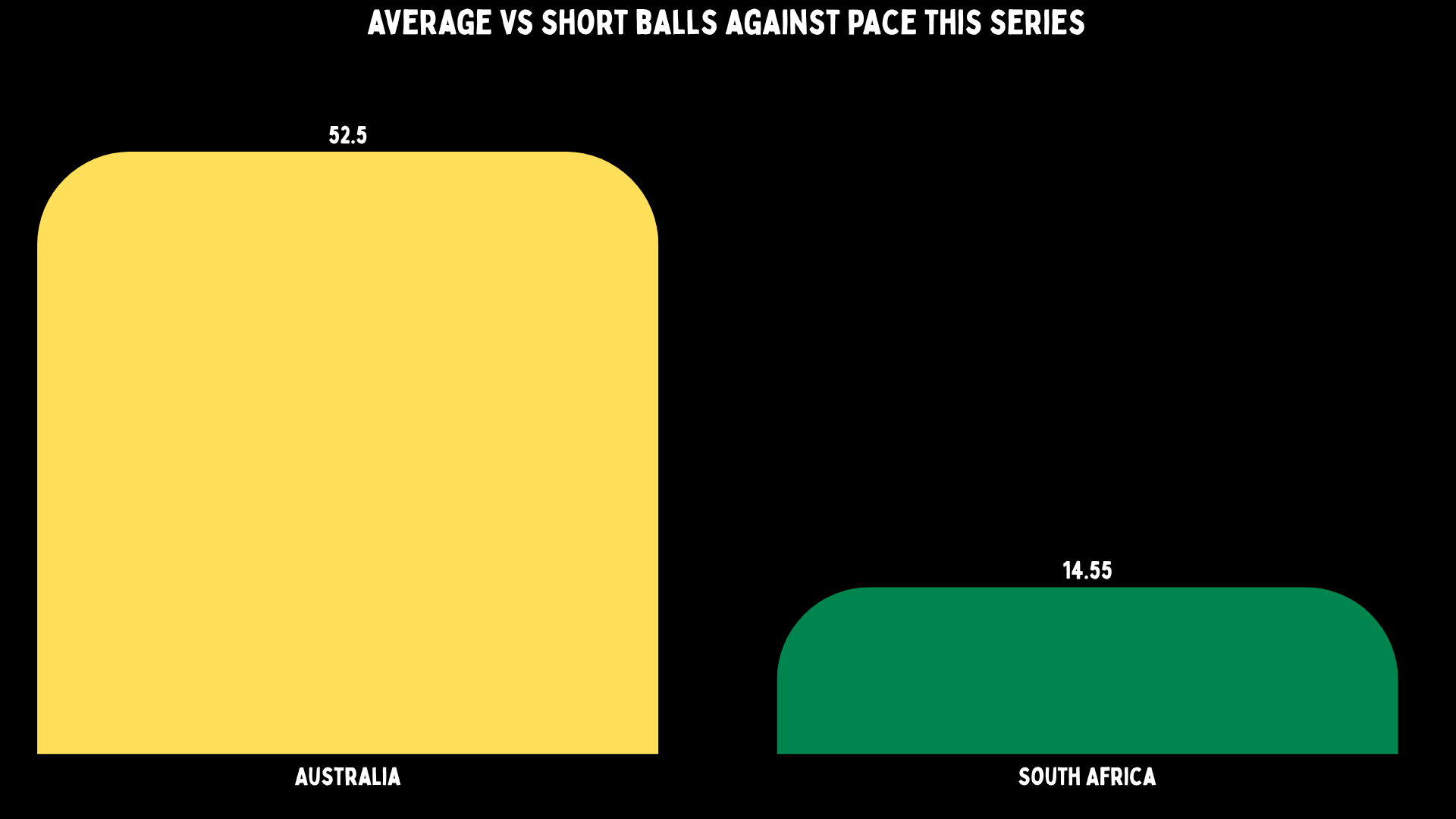
Now this is Australia: they are a unique team with the short ball, they have the bowlers to deliver it, and their batters are fed it from young. Either on astroturf wickets, or hard pitches. Australians know how to play short ball.
The same could be said for South Africa.
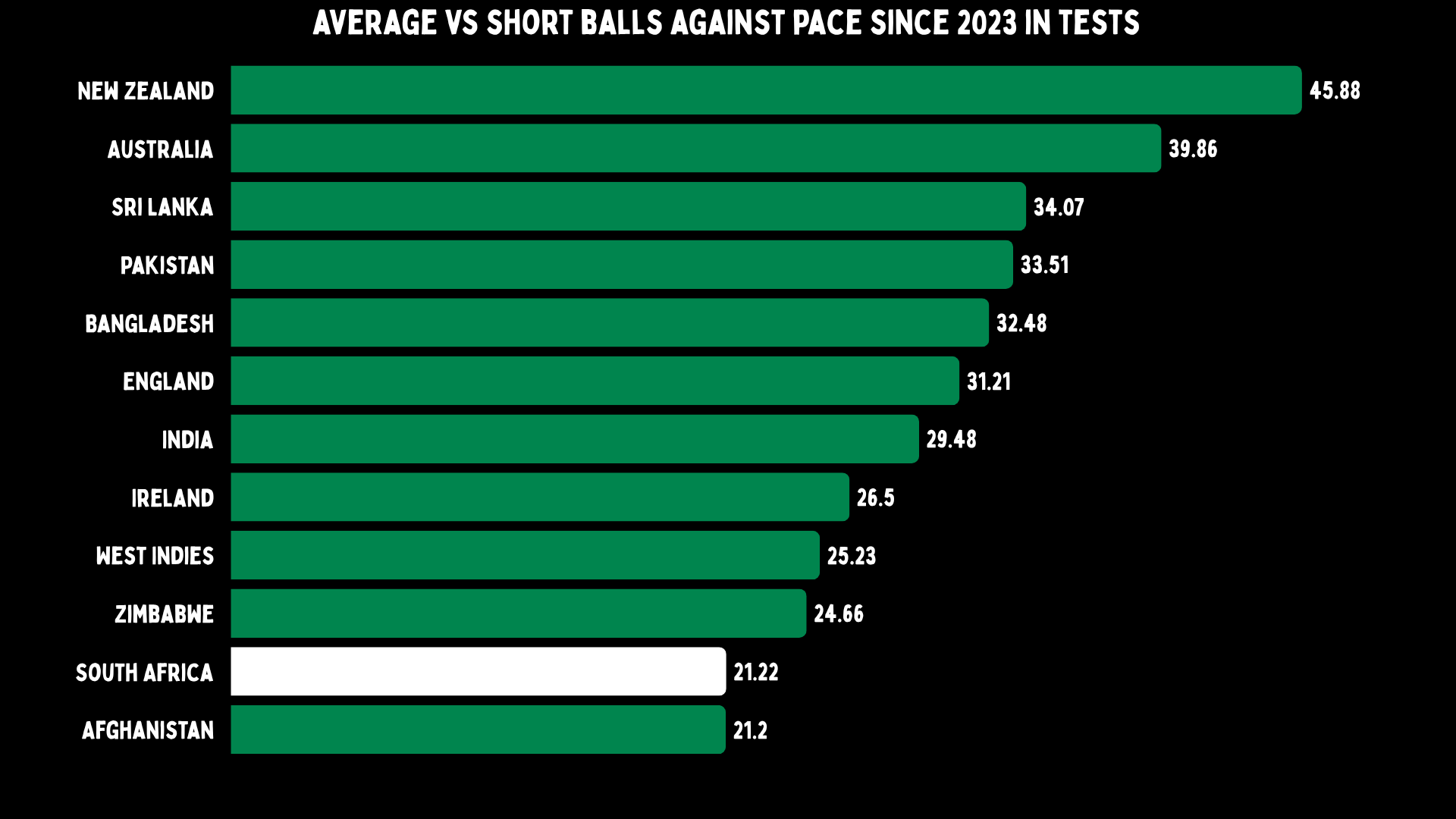
Except, it turned out, that was not true. South Africa’s performance against bouncers in the series was not an isolated incident. They are losing the bumper war to everyone.
The McKenzies were the gold standard in the 80s, 90s, and part of the 2000s. They passed the baton to the cohort of Graeme Smith, Hashim Amla, AB de Villiers, and others. There is no player in the current team that could join them, or even be close.
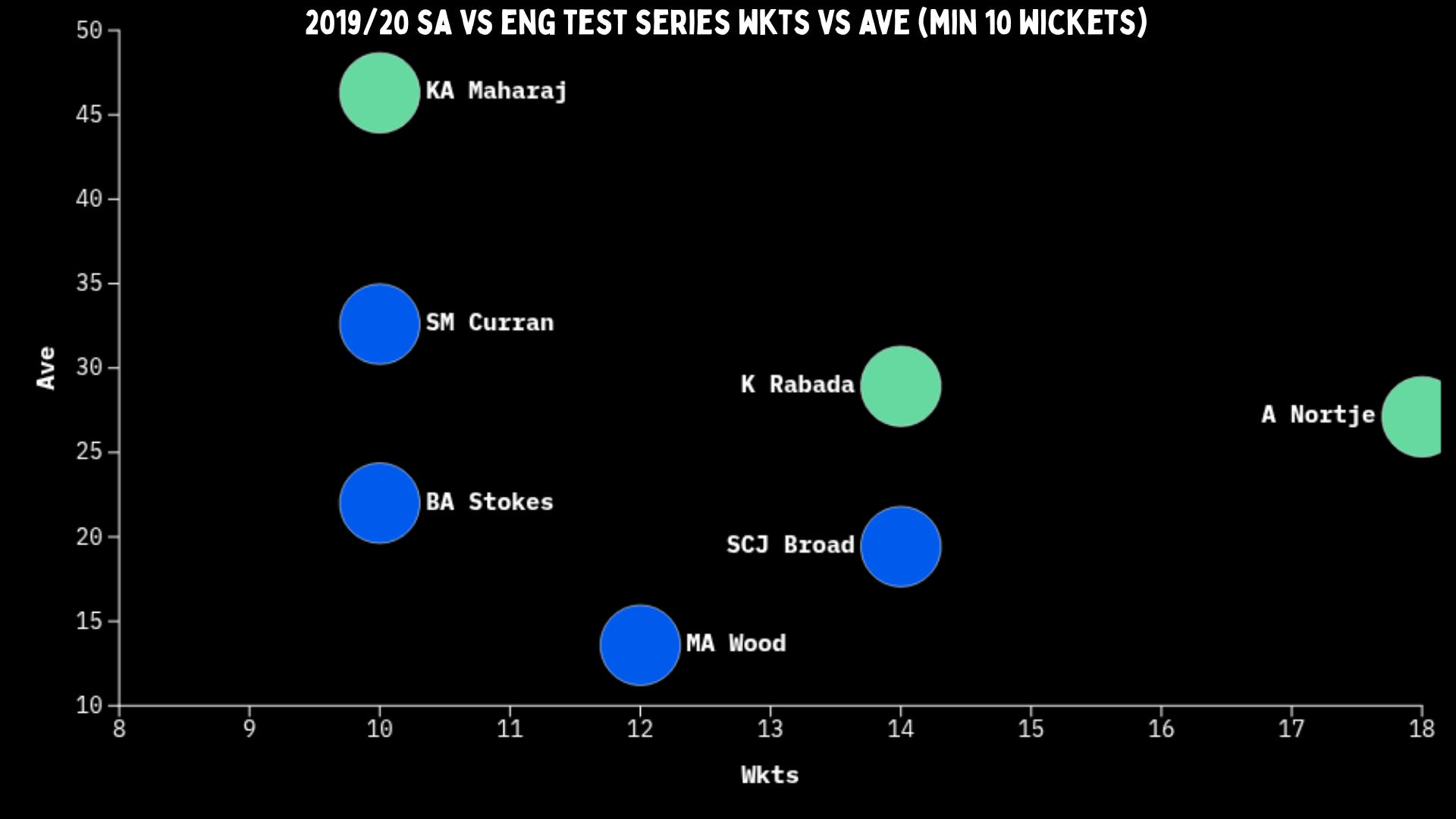
The first signs of South Africa’s inability against the short ball appeared during England’s tour of 2019/20. Mark Wood repeatedly bounced the hosts’ top-order out. Taking 12 wickets in two Tests. South Africa’s batters were so bad, that the best player of short-pitch bowling in that series had to be Anrich Nortje.
Six years earlier, South Africa went up against WARGOD mode Mitch Johnson. While he was breathing fire, AB de Villiers was becoming Neo from the Matrix. To get to that level, de Villiers prepared with a tennis ball being zapped at him.
Nortje copied that method, and somehow the pacer faced the second-most deliveries by a South African batter in the first innings at Gqeberha.
Before Wood, Faf du Plessis was so proud of his team’s ability against the short ball, he coerced groundsmen into uneven surfaces. He believed his players were tough enough to wear a few on the chest and bat through broken fingers.
But when that generation aged out, South Africa never replaced it. Only two batters, Kyle Verreynne and Tony de Zorzi, have shown proficiency against the delivery from the current group. Ryan Rickleton leaving the ball in the last Test certainly helped.
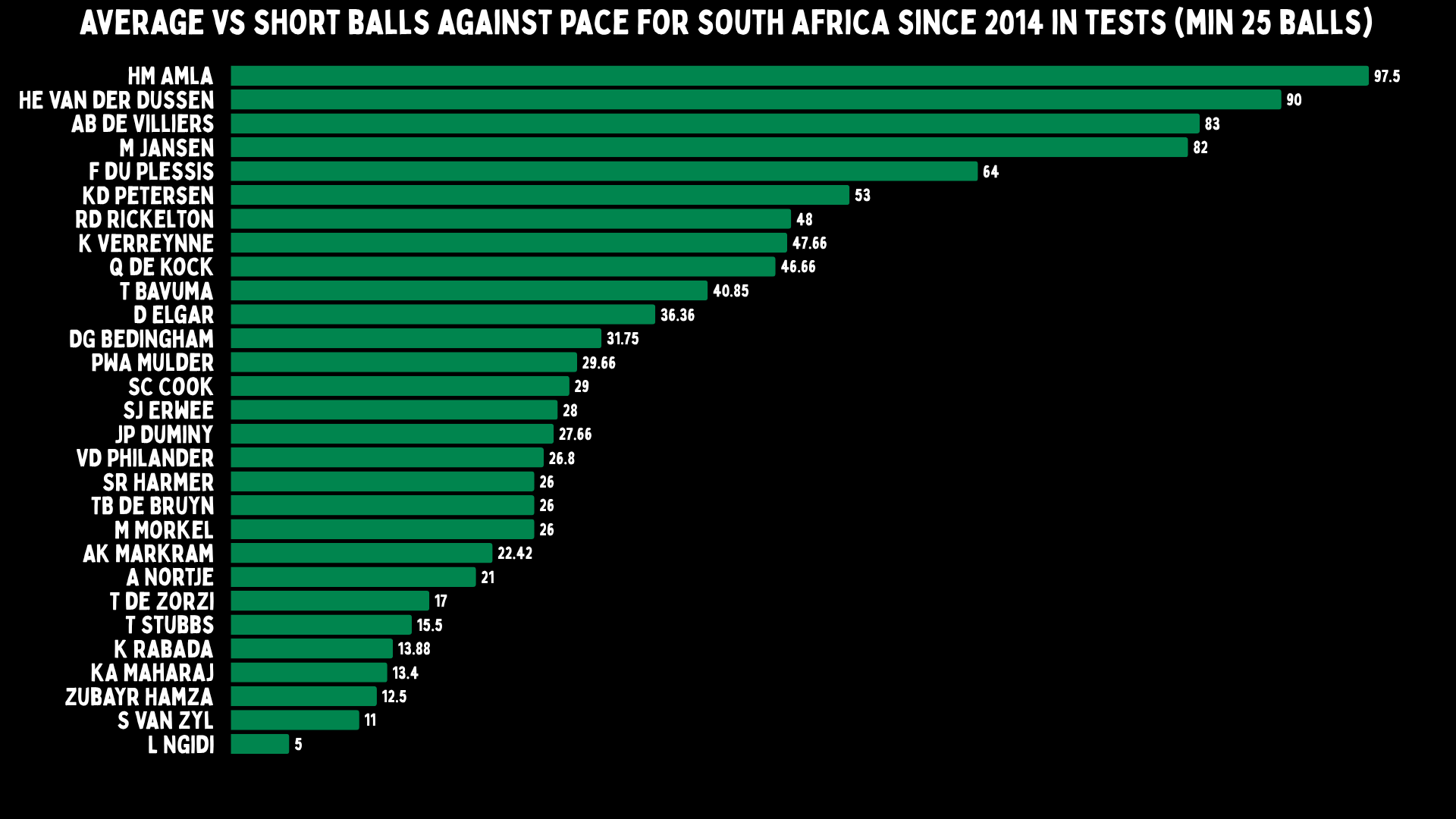
But these are handy players against the short balls, not kings of it.
Outside of Australia, there is no place with more bounce than South Africa. Because of that, their many large angry quicks have slammed the ball into the middle of the pitch. It takes wickets, especially with extra pace.
“Here, the short ball can kill you”, says McKenzie. It is so successful that Duanne Olivier made a name for himself in international cricket by banging the ball into the surface and harvesting wickets. He made his Test debut at home and outstripped the global average of short ball wickets by 15 points.
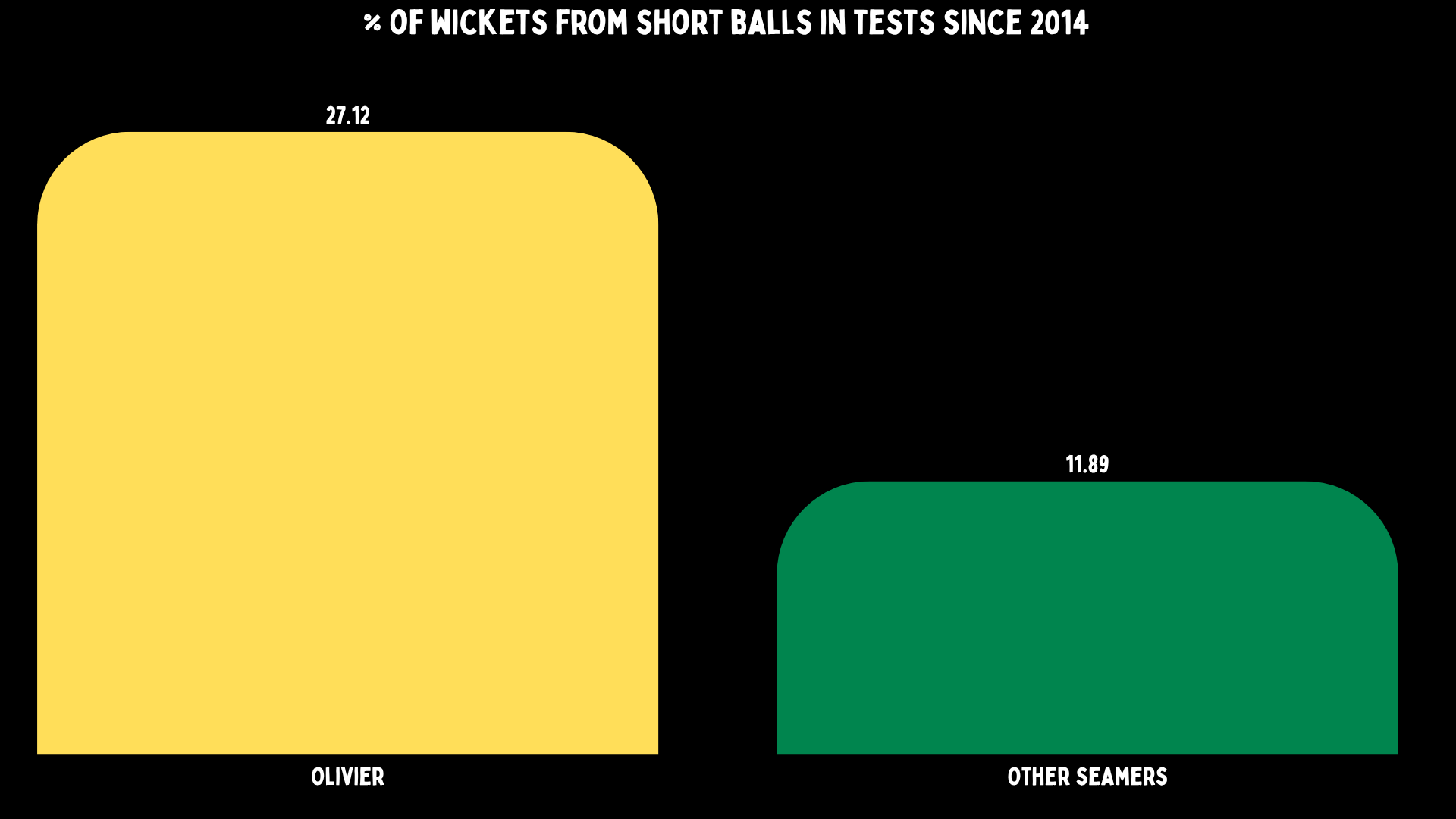
South Africa is a short ball place.
The Wanderers was a snake pit, Kingsmead haven for fast and seam bowling. West Indians Malcolm Marshall, Eldine Baptiste, and Nixon McLean loved it there. It is also the same ground that produced Shaun Pollock and Lance Klusener. Pretoria was where Mitch Johnson tormented the South Africans with bouncers. Morne Morkel broke Michael Clarke’s shoulder at Cape Town.
In 1953, South Africa hosted New Zealand at Ellis Park in Johannesburg. At one stage their opening bowler, Neil Adcock, had two Kiwis in the hospital at the same time.
Bounce and bouncers, ruled.
Then global warming happened. There are South African cricketers who don’t believe in anything that progressives might, yet they believe the world has gotten hotter, and because of that, their pitches have changed.
Kingsmead is no longer the ground that produced two of the country’s best seam bowling all-rounders. Jon-Jon Smuts turned into Ravindra Jadeja after moving there. The Wanderers is no longer a snake pit, though it is still fast and bouncy. As good as their current seamers still are, this is the greatest collection of spin South Africa has ever had. And that is because the pitches support that now.
For ages, tweakers in South Africa were treated like salad at the side of a plate at a braai. Now they’re important enough to pick two at home.
So this is not your auntie’s South African surfaces.
Yet, global warming hasn’t stopped it from being hard to face bumpers in this part of the world. Fast bowlers get quick wickets bowling short, sharp stuff in South Africa.
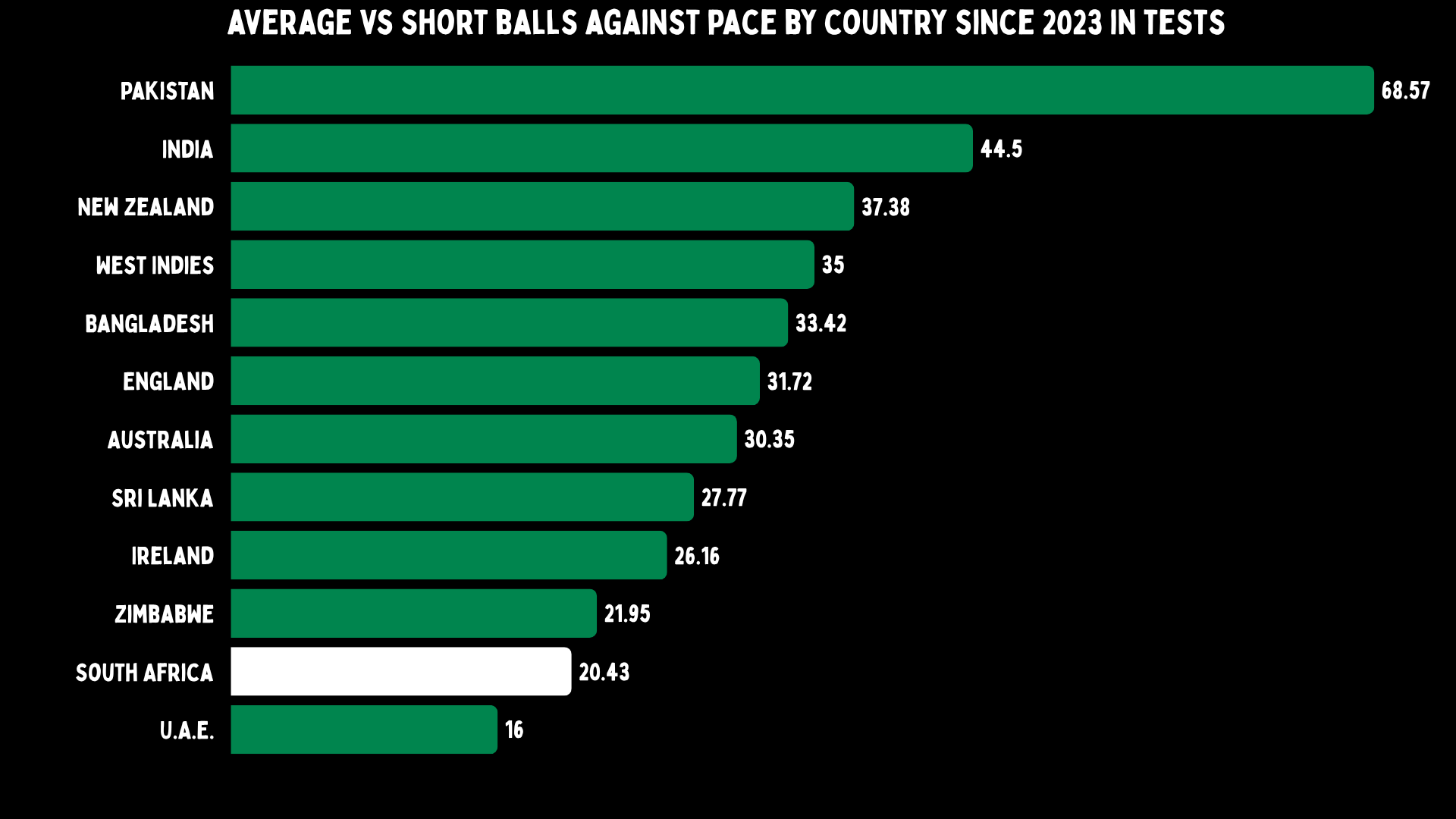
So if you want to learn to play against the short ball, it is still the second best place on earth. And yet other teams are facing it better than South Africa, in South Africa.
Sri Lankans have had the best record against the short ball when touring, Australia just dominated them, and India did well earlier. That is two Asian teams. Are we really to believe the changing pitches did this?
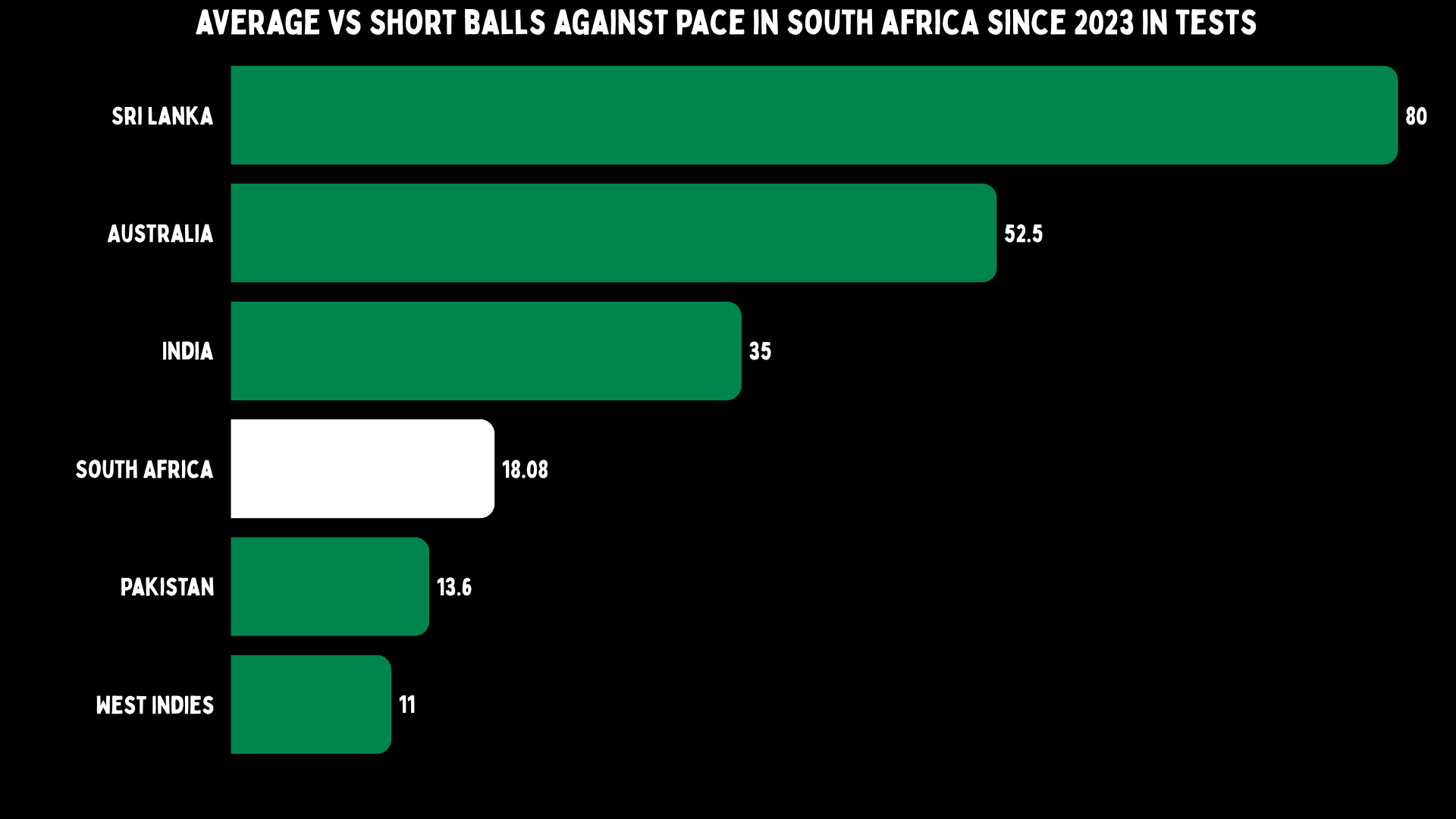
It also isn’t that other teams have worked it out. The big change is not the tourists getting better; it is the home team getting worse.
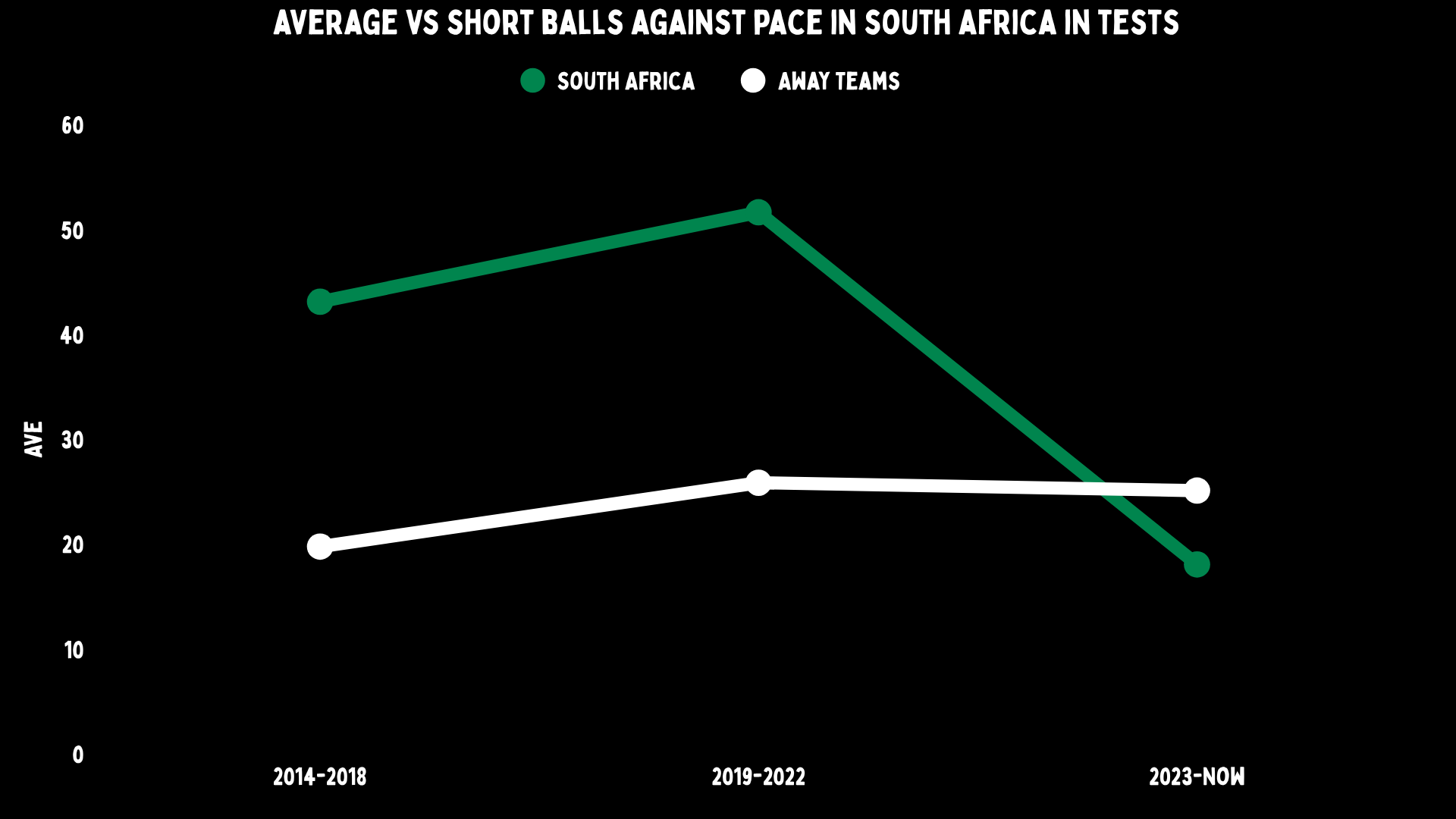
Tourists are now doing to South Africa what the Proteas did to them whenever they travelled to their shores. According to one coach, it is because modern players are not placing adequate emphasis on training the uncomfortable aspects of the game. Adding that they were also probably not facing enough quick bowling in competitive match situations outside the Test arena.
That could be the case, but the South African batters against Australia did not look like they were rushed or worried by the short balls. Just that they lacked patience.
McKenzie also said domestic teams lack bowlers with express pace who can dig the ball into the pitch. He faced quicks like Allan Donald and Tertius Bosch in domestic cricket in the 90s. The local scene is filled with medium pacers who barely touch the 140 kmh mark. This is the wobbleball era.
But Australia has a lot of 80MPH seam now, Sri Lanka is hardly a fast-bowling haven, and Indian bowlers are not superfast in domestic cricket.
One thing that is true, is none of the modern crop of batters wants to duck and dive. They are compulsive pullers and frequent hookers. And they are bad at these shots. South African batters also seem to choose the air a lot.
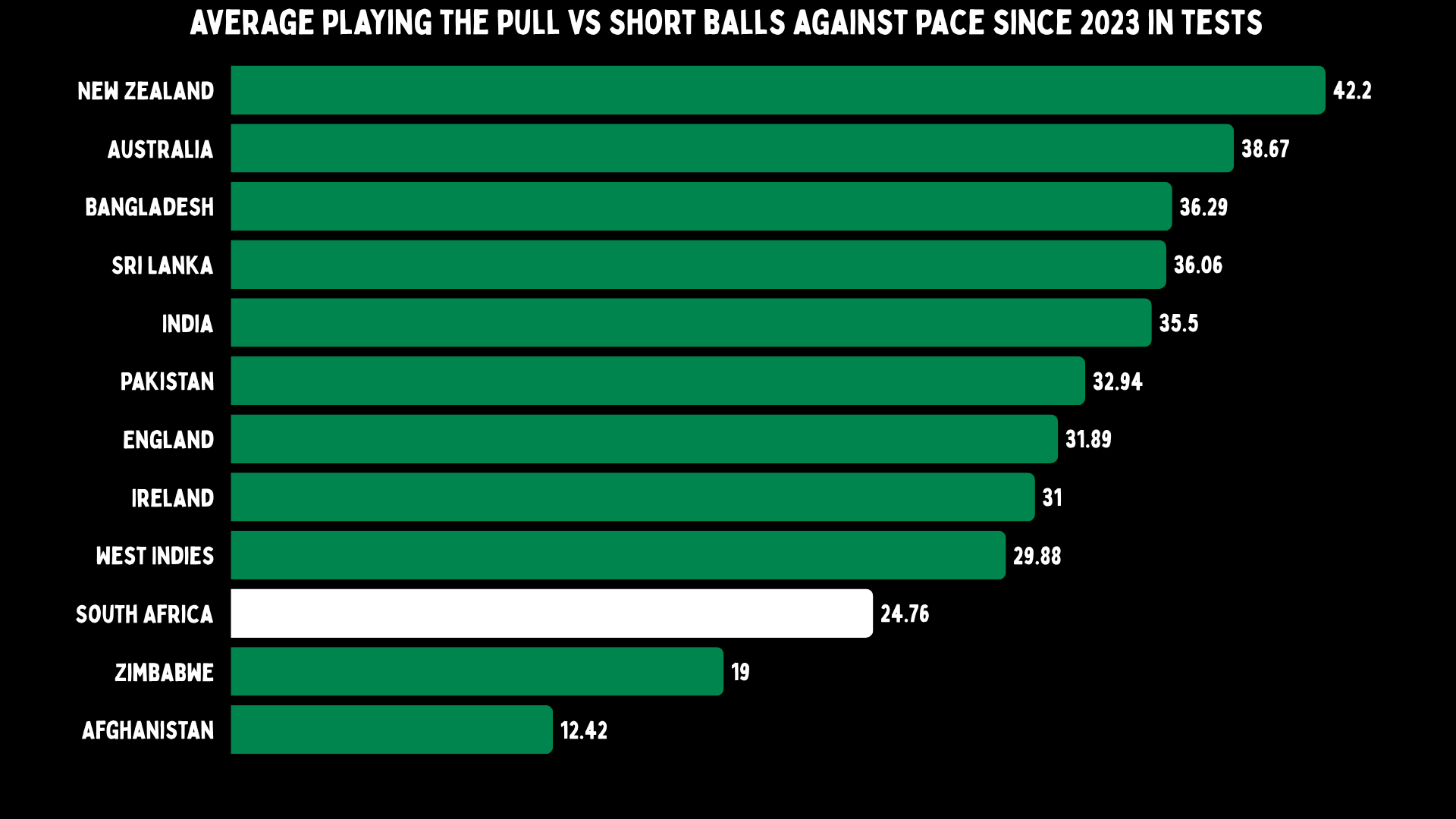
And this generation of cricketers are not good at it. So teams could be putting out players in better positions and letting the egos play a part. To play a pull shot along the ground you need to hit down or roll your wrists, modern South Africans want to live in the sky. There may be a reason for that.
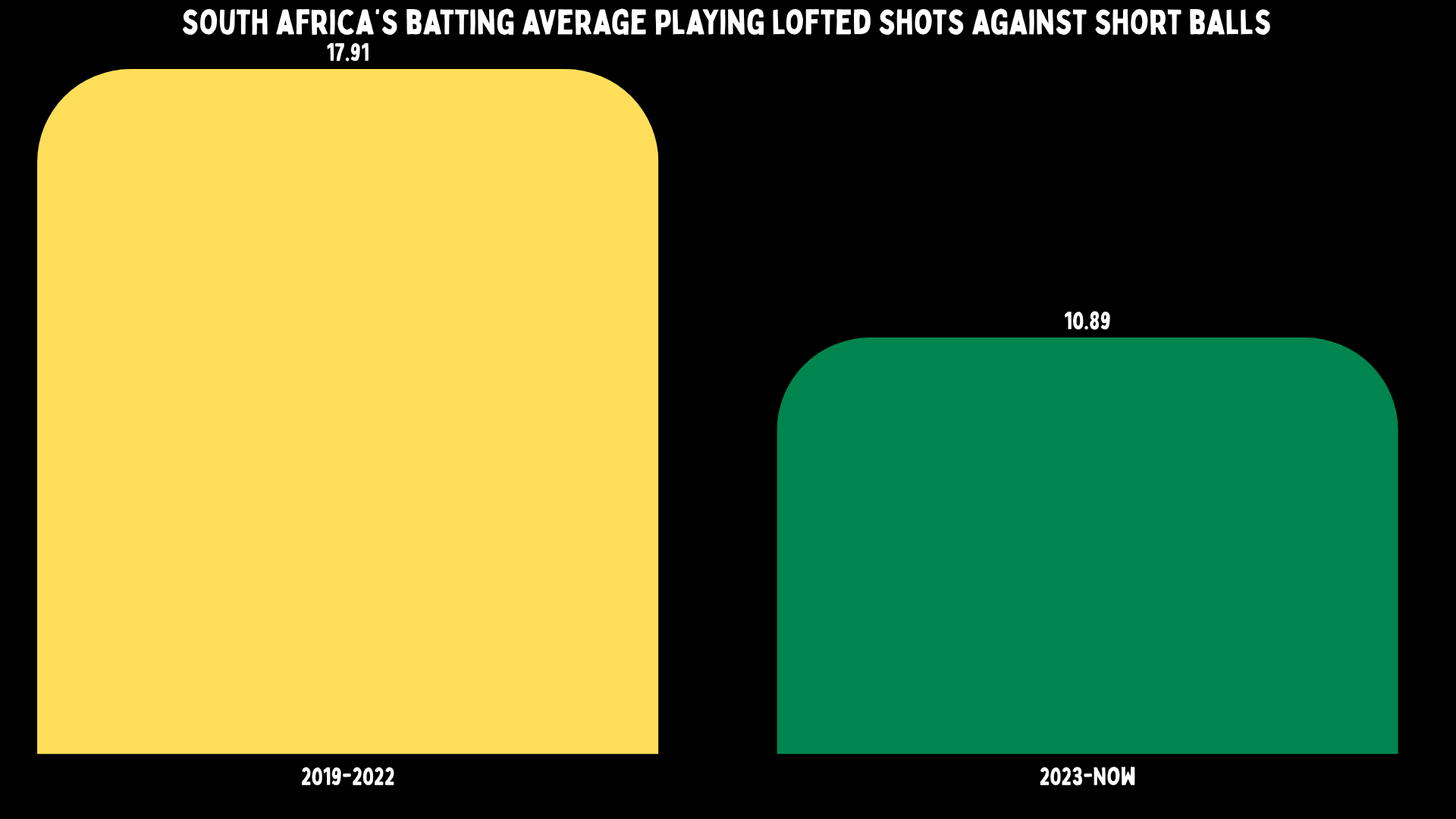
South African writer and broadcaster Daniel Gallan described the Proteas squad as T20 players who occasionally play Test cricket after their loss to Australia in Durban. His remark dovetails with Vincent Barnes’ diagnosis on the issue. The coach shared that his conversations with current players did not point to a technical flaw, but rather, a game-plan issue.
According to Barnes, modern batters are wired to attack the short ball and maximise it. The current crop carries that mindset into the Test arena.
“Batters address the short ball in attack mode in white ball cricket. They are not looking to defend or duck. They are looking to hit it for a six. Some of the best players of short pitch bowling in Test cricket are looking to either defend, get a single, or play it on the ground for a four,” Barnes said.
He is 100% correct. But isn’t that every team in the world? That is not a South African issue. Most players are coded to T20, and no one ducks. Yet other teams are so much better at the short ball than them.
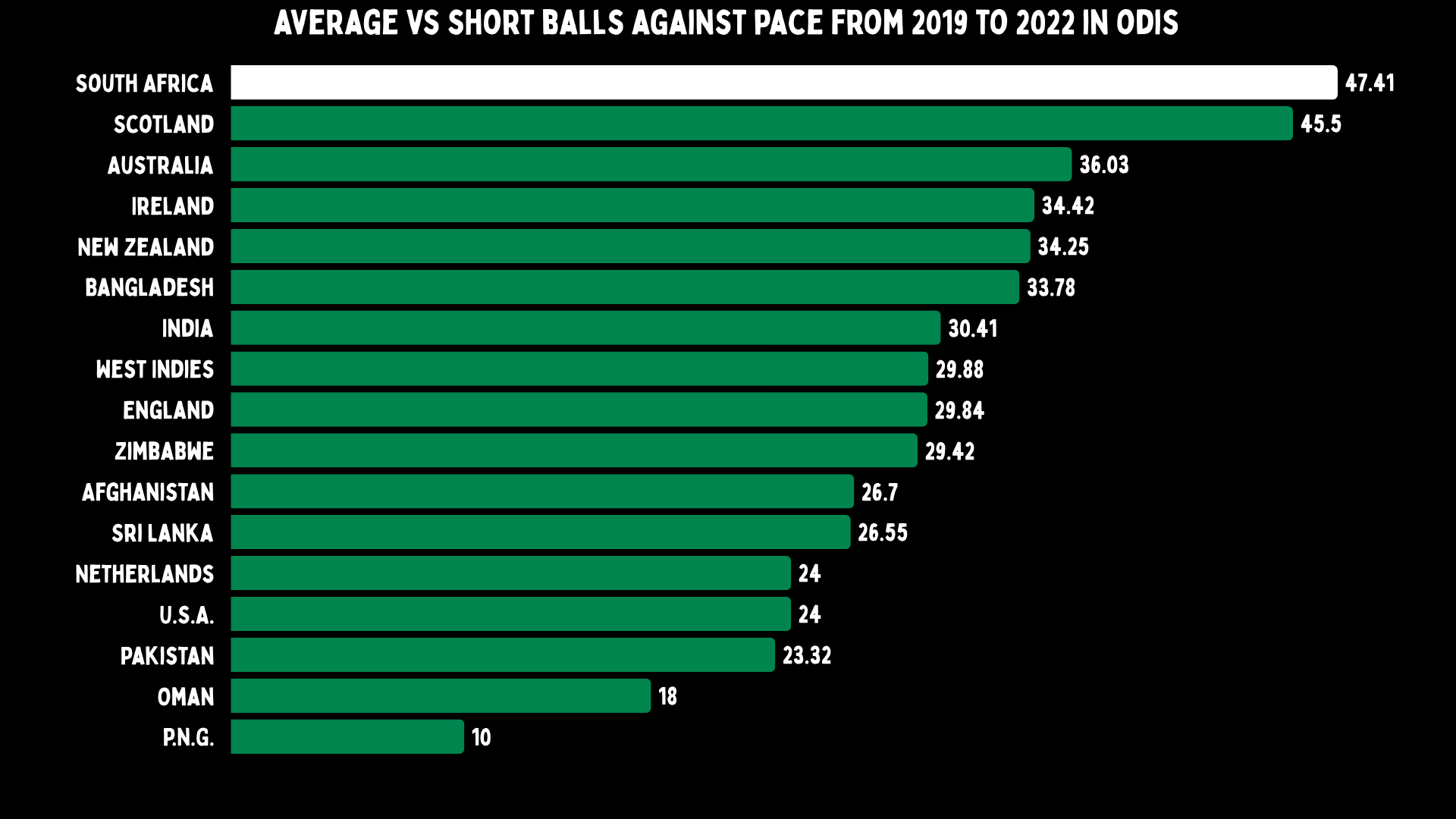
Also, South Africa is not that good against the short ball in ODIs either. So the white ball theory doesn’t stack up.
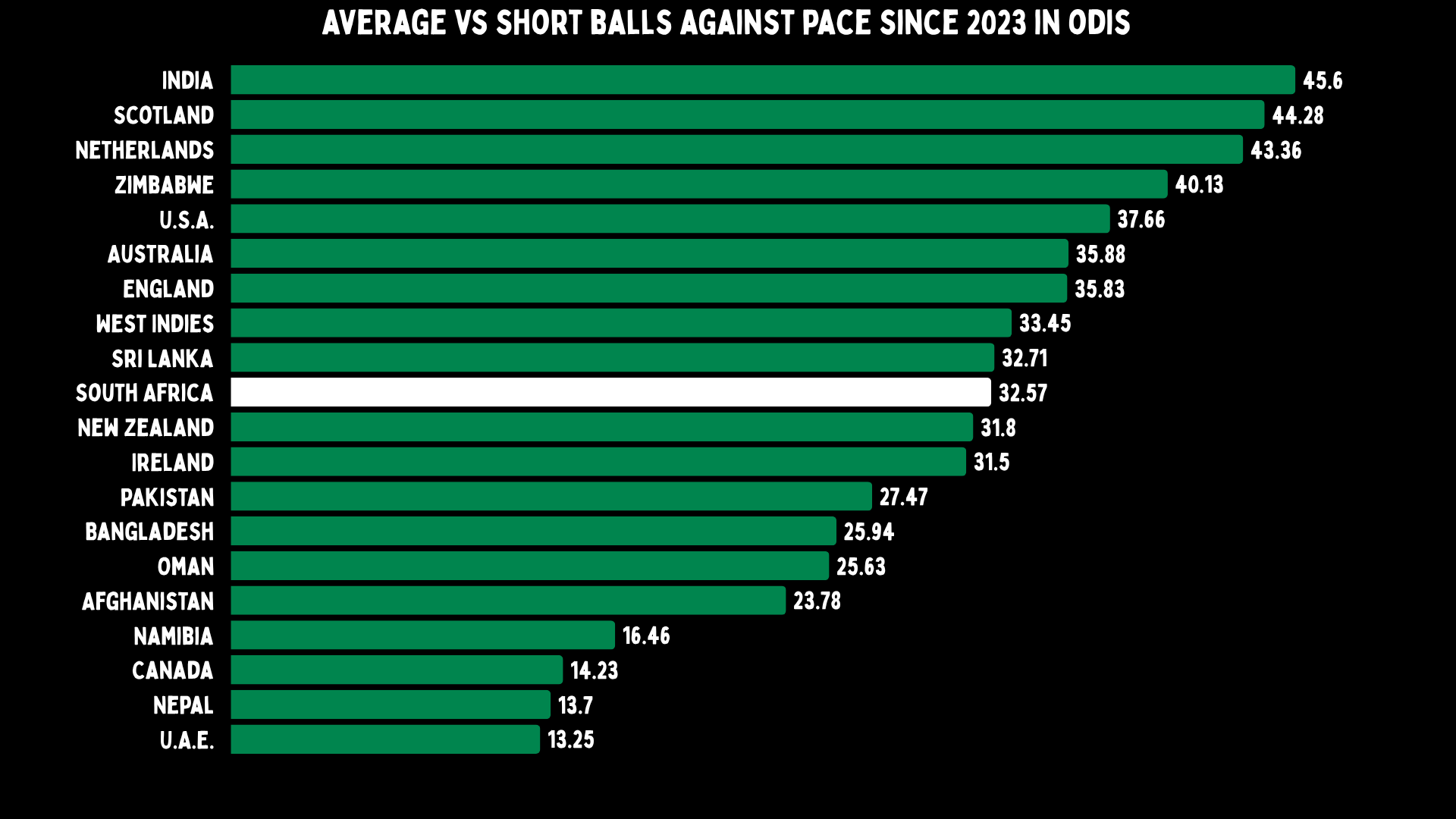
The recent generation were still great against it. So this is very modern and it is across formats.
Playing the short ball is all about attitude, according to McKenzie. His father encouraged him to be prepared to endure pain because he didn’t have to attack every bouncer sent his way. Some balls were destined to hit him on the body. McKenzie recalled watching in admiration as England peppered Hashim Amla with the short ball on a tour to England. Taking blows to the body and waiting for the bad balls.
That technique is pretty rare now. There are more bouncers than ever in cricket, and specialist fields set up to catch players. It is a battle of egos, and the batters only seem to think they have won with a six. That wasn’t the McKenzie way.
The modern players have more weapons with the short ball, but the old methods were more sound.
“Playing the short ball doesn’t have to be pretty all the time. If the short ball doesn’t get you out and the next ball also doesn’t get you out, then you’re playing it all right,” McKenzie said.
Kevin McKenzie died earlier this year, Neil played his last Test in 2009. They were both of their time, which has now passed. There isn’t a major international player in the world that would take their helmet off when facing pace today.
It is very possible that T20, wobbleball pace, a lack of ducking, and global warming are playing a part in South Africa’s suck against short stuff. But other teams should be showing the same signs. So it could be as simple as this generation just doesn’t have players who handle it well.
McKenzie was a different breed. Not only did he not always wear a helmet when facing pace, he also stood at silly point to Ricky Ponting once without it. The Australian saw this as an attack on his manhood, and smashed the next ball straight into McKenzie’s stomach.
The South African smiled, rubbed his chest, and went back into the covers.
South Africa used to produce a bunch of Clint Eastwoods, and when it comes to the short ball, their current side is more like Woody from Toy Story.