


You can buy my new book 'The Art of Batting' here:
Shaun Pollock is running around the media centre of Cape Town asking every English person the same thing: how can Zak Crawley be playing for England with a first-class average in the mid-30s?
But then he sees a shot, with that long front step, and he seems to start understanding it. What Pollock went through is what we all have - that confusion when what we see doesn’t always match what he does. He looks like he can make runs, but he doesn’t.
There is incredible potential there. When Crawley is on, he damages the ball. Really hammers it. On the up, disturbing lengths, and he’s unafraid to hit through the line even as it swings around.
Pollock saw Crawley at his worst via his average, and at his best when he plays a drive.
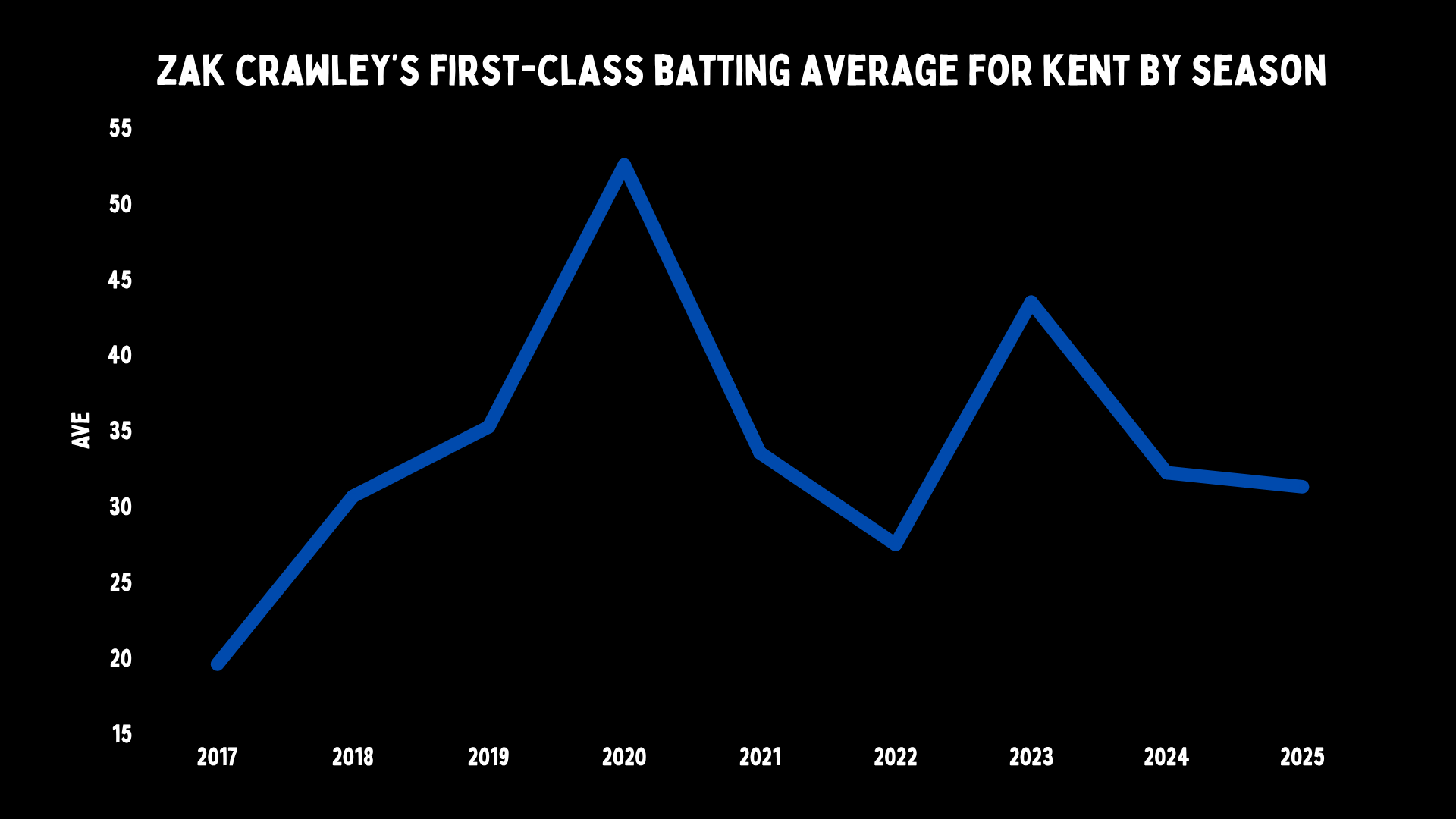
But Crawley doesn’t make runs. His batting is about impact, aesthetics and power. He is unafraid of fast bowling, can whack short balls, and disrupt length with ease.
He cannot make any runs though. He was picked for England without making a lot of runs, and he has not made any runs since.
For Kent, he averages less than 33. Ben Compton - grandson of Dennis, cousin of Nick - has gone at 46 in the same matches Crawley has played.
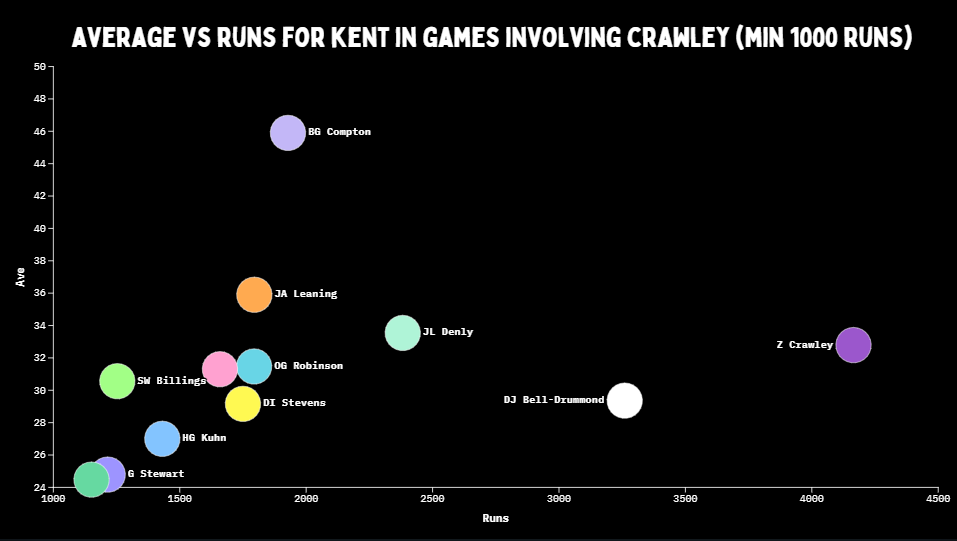
Ben Compton has played zero Tests. Crawley is in his 57th. There is no doubt Crawley can bat, but can he make runs?
Ken Rutherford played one fewer match for New Zealand in the 1980s and 1990s. And it’s incredible he got that many. In his first series, he was forced to open - even though that wasn’t his spot - against the great West Indian attack, featuring Joel Garner, Michael Holding and Malcolm Marshall. After four Tests, he’d made 12 runs at an average of 1.71.
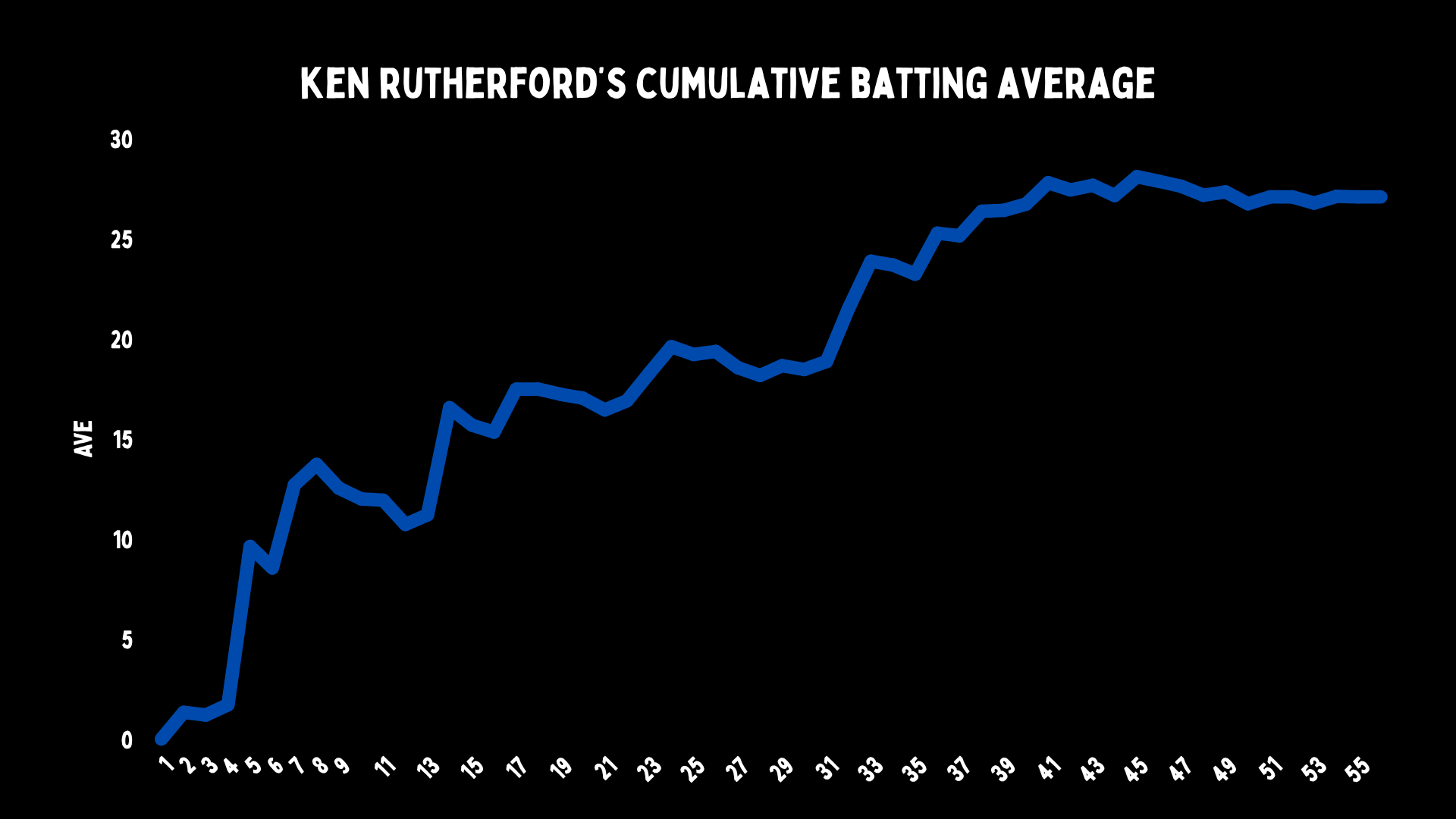
He would eventually make a career for himself as an attacking middle-order player who infrequently played important knocks. He was seen so highly by New Zealand cricket that he became captain. But his average never, not even for one moment, went above 30.
So this qualifies as one of the lowest averages in the history of specialist Test batters. Now, clearly Rutherford never quite cracked the Test game, but you’d be wrong to think he couldn’t bat.

He had several years where he made good first-class runs in a row. When he was past his best, he played professionally in South Africa for Gauteng, and scored a bunch of runs. Ken Rutherford could bat, and he could make runs - just not in Tests.
This is the list of the specialist batters with more than 2000 runs who also played in 55 matches. That is a very long career run - 55 or more different selection committees convened to pick these batters for their teams, despite their very modest records.
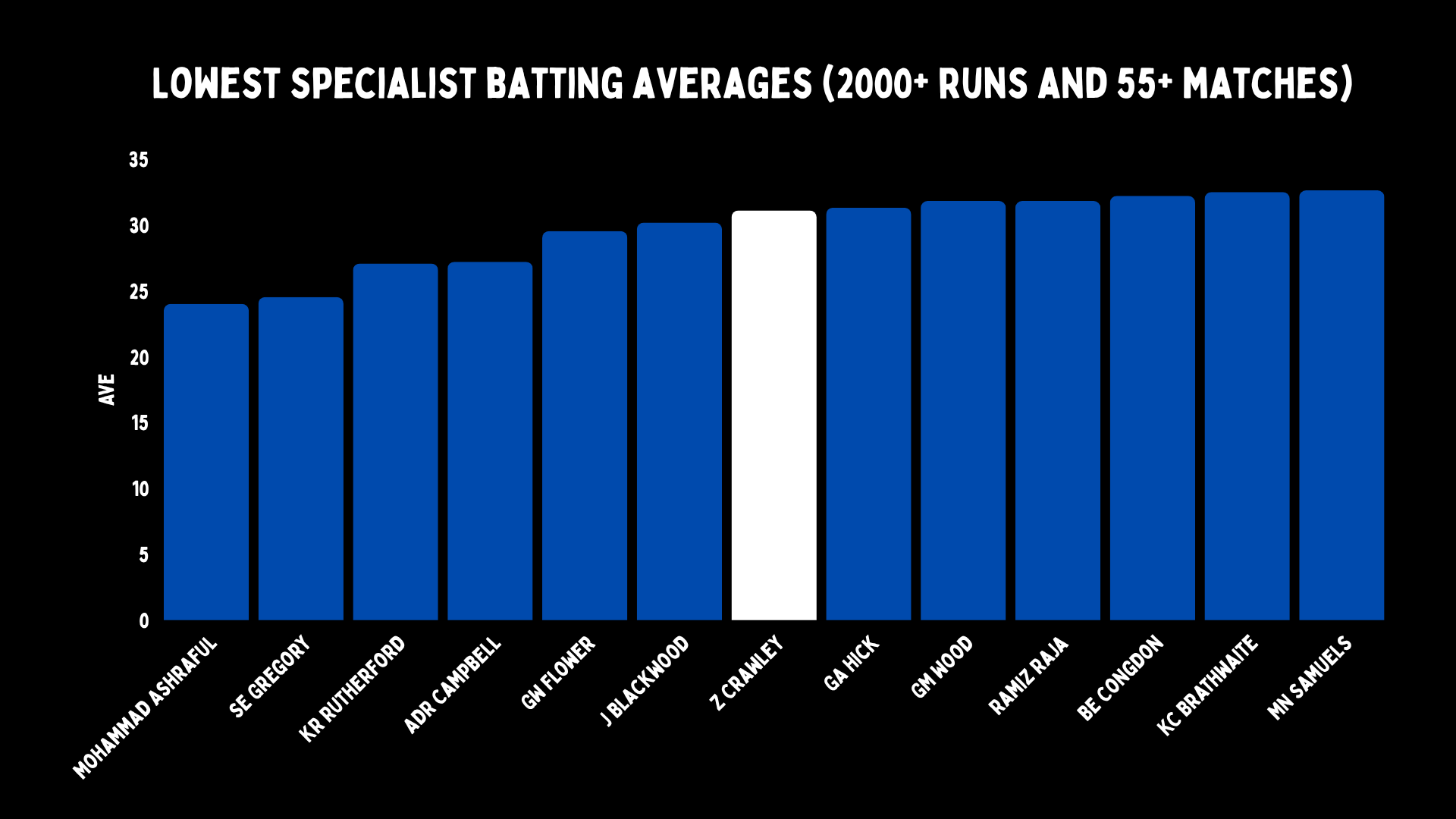
Poor Mohammad Ashraful has the lowest mark. He had talent, even if it was never as much as Bangladesh cricket hoped. But he was thrown into a team without senior players to mentor him, and he lost his way so badly his career ended with him being found guilty of fixing. Before that, he really struggled in Tests.
Syd Gregory was part of a very famous family in Australia, and his career was epic. He was there for over 22 years, when cricket changed from a bowling game to one for batters. For a few years around the turn of the previous century, he made a lot of runs. Sadly, he made none before or after. But he was a great fielder, and so he kept his spot.
Alistair Campbell and Grant Flower combated the new ball for Zimbabwe in a challenging time to be a batter in the 1990s. Their job was to make it easier for their talented middle order, and they did it, without really making many big scores themselves.
Jermaine Blackwood and Kraigg Brathwaite play for the same team, but are very different batters. Blackwood was a number six who whacked them, Brathwaite the top-order player who kept his team together. The latter did his role well, the former was a lot of fun.
These guys were good enough to play a lot of Tests, but struggled, and within them is Zak Crawley. He was played when he was young, but wasn’t thrown in like Ashraful. He had family connections, but nothing like Gregory. He was a top-order player with a clear role, but nothing like the Zimbabweans. And maybe he is a weird combination of the two West Indians, but nothing really like either.
One thing Crawley has in common with them is that he has one of the worst batting averages of any specialist batter ever.
Average is an unfair way to look at things, because it can be warped by eras and wickets. Poor Gregory started playing on pitches made with chunks of shit on them. So let’s look at the match ratio of each player compared to the other top six batters in their matches. Ashraful was 36% worse than other batters in his matches, whereas Brathwaite’s career is almost par - he’s just been on tricky wickets.
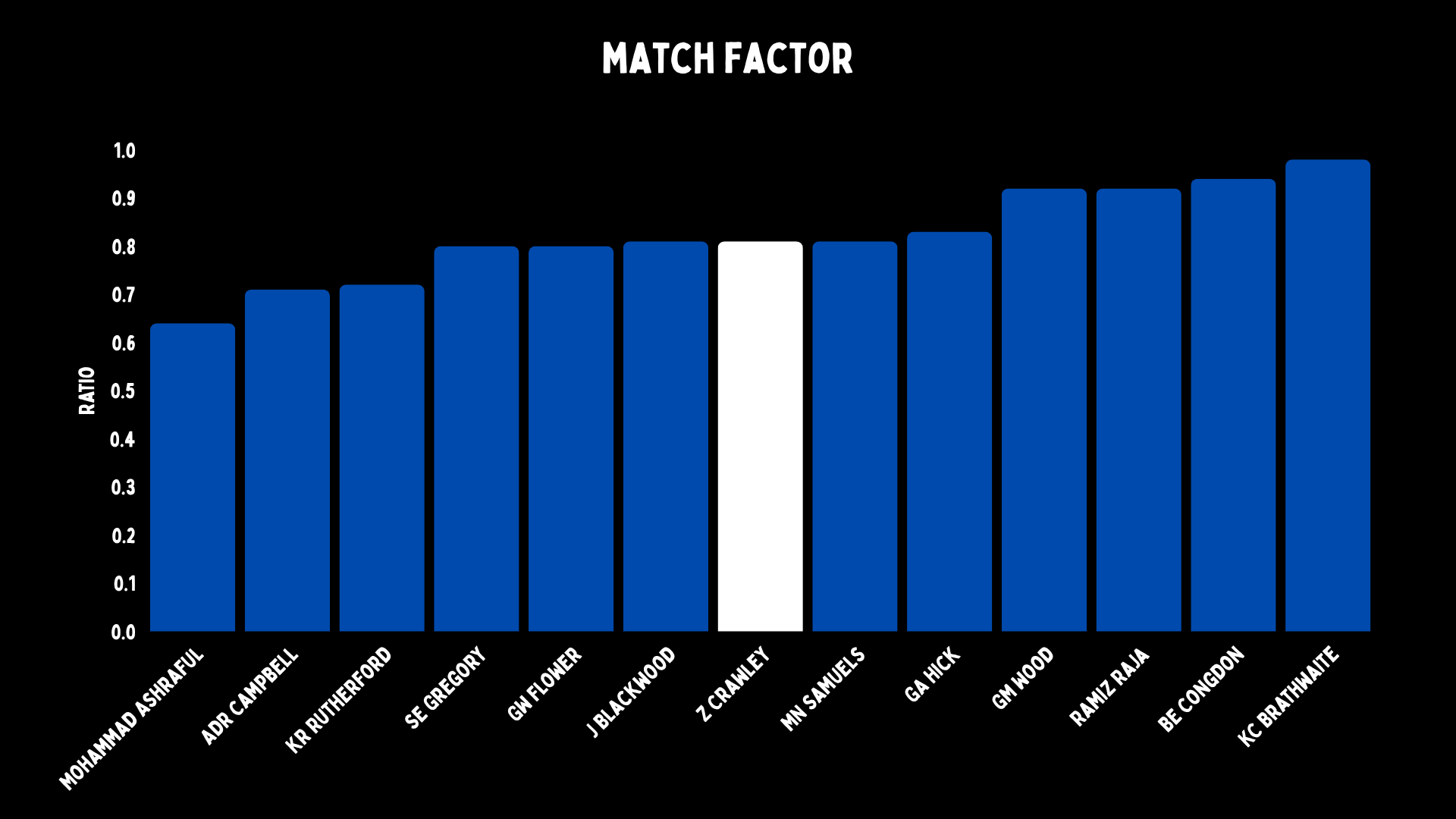
Crawley is 19% worse than other batters in the matches he plays. That is a long way from par.
If we look at it by era, and then factor in batting position, someone like Gregory struggles even more. But Crawley doesn’t. Compared to other opening batters in this pace-playing pandemic, he’s just slightly under par.
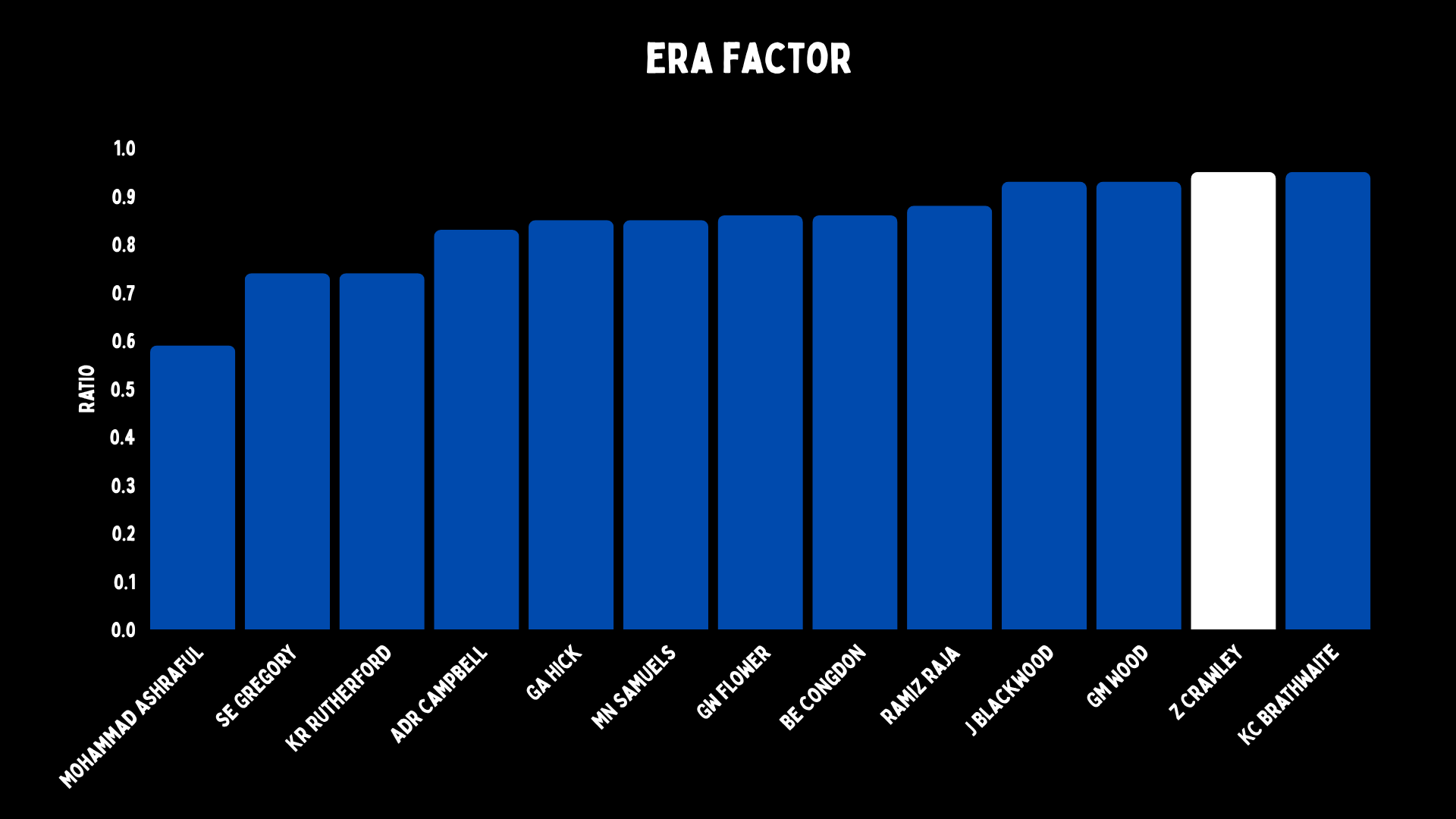
And this doesn’t factor in his strike rate, which gives him another boost. So on this metric, you’d say he’s around par as an opener.
