


Take a look at these seven names: Abdullah Fazal, T20 batting strike rate of 153. Saim Ayub, who has played a few Test matches and has a high score of 77. Arafat Minhas, an allrounder who bowls a little bit of spin, and whose bowling average in international cricket currently is 13.45. Saad Baig, a 19-year-old batter. Razaullah, a bowler who has played 24 games of professional cricket.
And then two men who are both called Mohammad Imran.
If you’ve followed cricket headlines, you know where this is going. These are the seven players the Pakistan Cricket Board (PCB) have decided to fly in to replace five others before their third Test against England.
The way I think about this is, Pakistan were desperate to get Mohammad Imran, but they couldn’t remember which one. So they figured, “Let’s just take both to England, and we’ll work it out when we get there.”
Pakistan are already 2-0 down against England, and they believe a wholesale change like this can alter their fortunes.
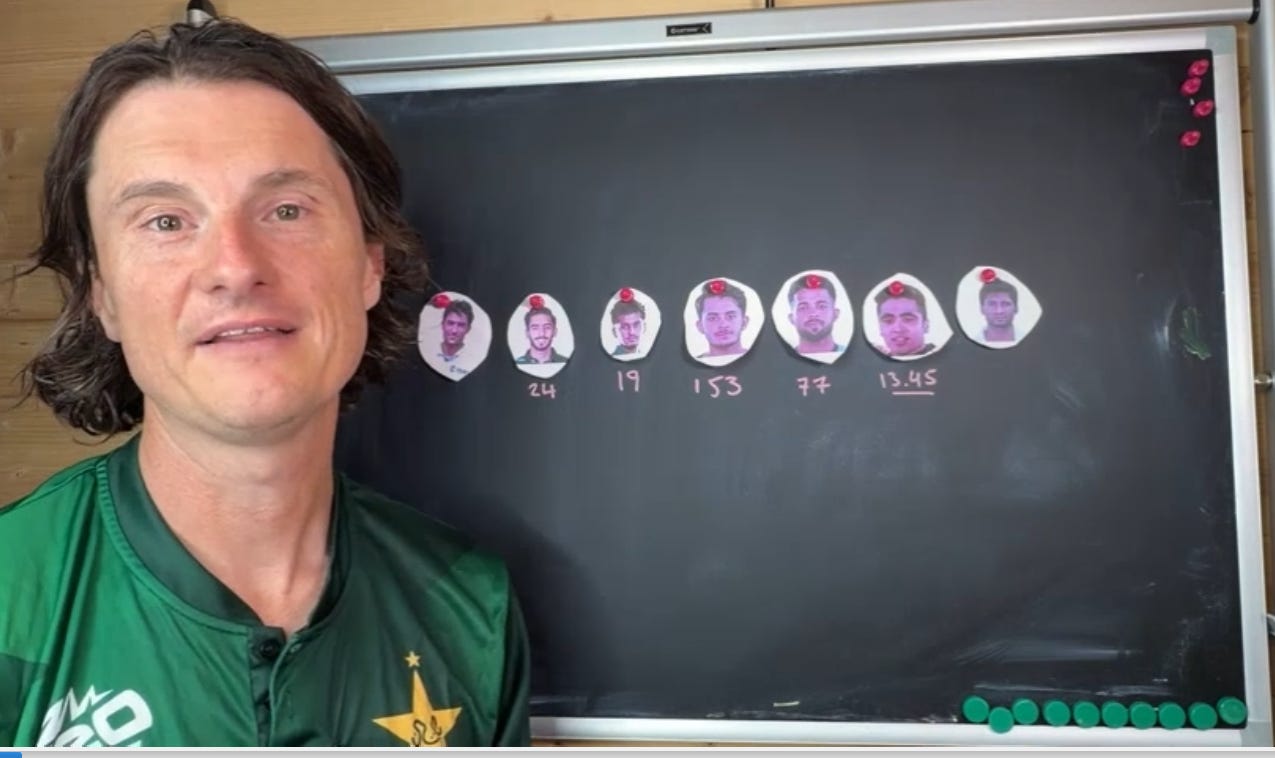
The only important thing to note here is that I have absolutely faked the photos above. I just picked random images because I assumed that you, like most cricket fans, have no idea who most of these potential new saviours are.
It’s because Pakistan are just clutching at straws. This mass sacking and picking is one of the least professional things we have ever seen a modern cricket team do. This is even unprofessional by Pakistan’s standards.
In fact, let’s take it a step further. If you’re bringing out your Unremarkable Seven, or whatever they’re calling this, you’re not only doing that. Because Pakistan are sending home five more players, including Mohammad Rizwan.
And it doesn’t stop there, because of course, they’re also sending home a bowling coach and a head coach. Which means you also need to bring in a new bowling coach and head coach.
So that means in the eight-nine days between the second and the third Test, we are going to see 16 people involved with Pakistan cricket – professionals doing their job – change places. Nine flying in (seven players and two coaches) and seven flying out (five players and two coaches). That is bigger than the average squad size.
When you factor in that it is 2026, this has to be one of the most staggering and unexplainable moments you will ever see in cricket.
****
We can give a pretty thorough retelling of Pakistan’s modern Test history through this. If you go back before then, they had some success at times in the 1950s and ‘60s and even ‘70s, but it’s really the 1980s when they become the fully fledged team that we know today.
In 1980 with an incredible allrounder and Javed Miandad’s moustache, they are ranked fifth in the world. In 1981, that goes up to No.4, and in 1982, that goes drops to No.6. At this stage, no one’s expecting that this is about to become a powerhouse of cricket.
But then to finish off the 1980s, they are ranked second in the world and then third. And remember, being ranked second in the world in the 1980s is a whole different kind of universe because you have the West Indies at their peak that point. And Pakistan were really good against West Indies. In fact, the two best sides of that era were the West Indies and New Zealand, and Pakistan played very good cricket against both of them.
They were a brilliant team who would’ve been the best in the world had not the greatest team of all time also played at the exact same period.
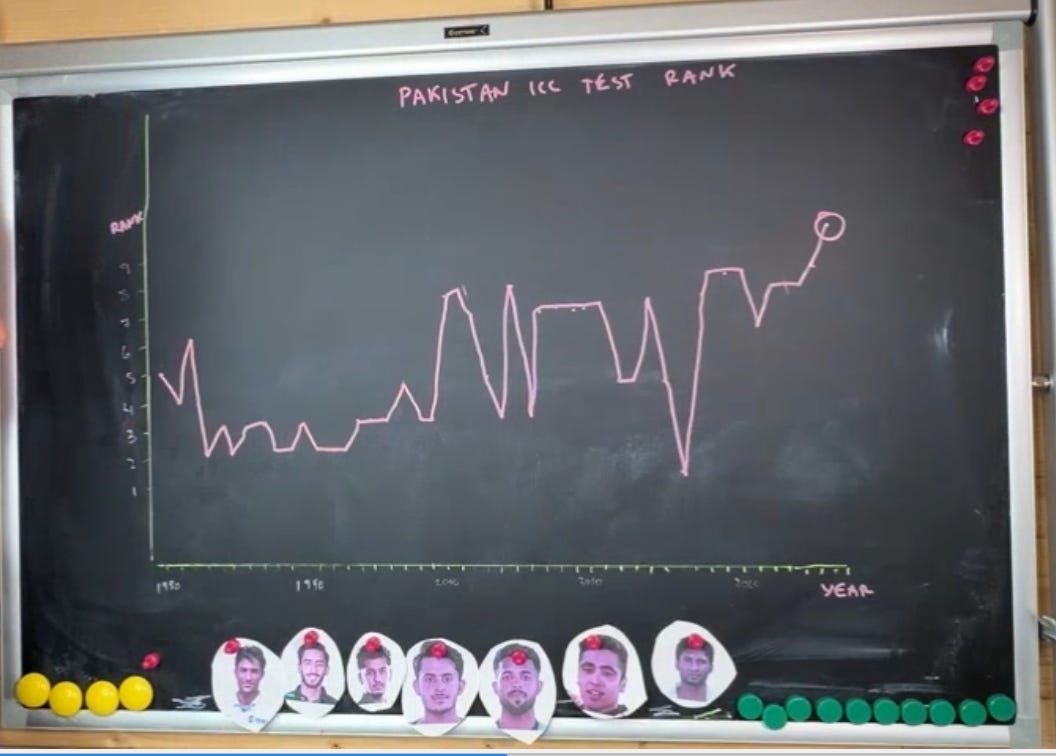
Then, the 1990s start, and even though Imran Khan will retire in this period, they remain the second-best team in the world. That moves on to the third-best, partly because South Africa come along and they are fantastic from the beginning.
They have one year where they slip back to No.4, but they are pretty consistent all the way from the early ‘80s to the late ‘90s. They are fantastic. Their bowling is ridiculous.
There’s lots of really talented players coming through, and an absolute ton of all-rounders. Javed Miandad’s moustache is taken over by Inzamam-ul-Haq’s surprisingly fast feet. There’s just a ton of talent in Pakistan cricket right up until the new millennium.
But as Wasim Akram and Waqar Younis start to age out and Shoaib Akhtar doesn’t play that many games – and their allrounders are good, but they need to supplement better bowlers that they can’t find anymore – it gets, well, a lot rougher
And then they have a huge period where they’re ranked sixth every year, like they’re almost stuck there and they can’t move. It is of course during this period that they lose a Test captain to fixing as well. They’re a very inconsistent team, except for the fact that they are consistent in being fairly ordinary.
But then they improve a little bit. Yes, they have one year where they’re sixth, but you can see now they regularly rank fourth. And remember, there’s more teams playing Test cricket. It’s a little bit more competitive than it was in some of the other eras.
Being the fourth-best team three times out of four is actually not that bad, all things considered. So there’s something to work with in that 2010s period. And we know that because they end up being the world’s number one ranked side too.
It was an excellent effort from a well-drilled team who couldn’t play at home because of what happened with the terrorism, who had lost a captain to a fixing ban, and yet somehow they ended up – for the first time in their history – as the No.1 ranked team in the world. This was a huge deal for Pakistan cricket.
But what happened straight after that? They went all the way back to No.6 again, as if the peak was a mistake, as if it never actually happened. They go back to their rightful place, back end of the middle of the pack.
And after that, they actually get worse. They’re ranked seventh in the world for a little while before coming back to that number six position. And they were NO.7 last year. At the moment, the Pakistan men’s Test cricket team is ranked eighth in the ICC rankings.
There’s something else that their history shows. When they were great in the 1980s through to the 1990s, it was a period before cricket was truly professional.
Most players around the world would’ve been amateurs who would have had second jobs, or wouldn’t have been paid enough to make cricket their main income source.
If they did get paid, it was usually fairly small amounts. So this is largely an amateur era. By the ‘90s, things do start to change. Australian cricket gets a lot more professional. You would probably put South Africa there as well.
From 2000 to 2010, I would say is probably the first international professional level of cricket we have ever had. From 2010 to 2020, it is very similar.
That No.1 ranking that they had, that was probably the most professional team that Pakistan has ever had. The preparation they had before the England tour in 2016, for example, was absolutely extraordinary.
And in the last couple of years, we have seen a boom in thinking, planning, money, and professionalism, around cricket. And during that time, Pakistan have got consistently worse.
They may not end up at eighth in Tests at the end of the year, but spiritually, they feel like they should be there. So, as money has come into cricket, Pakistan have got worse.
This is not an accident. This is a clear pattern of what happens when you don’t keep up with the sport. The Misbah-ul-Haq era was the one time they finally got their act together, and they ended up doing well. But again, that’s a one-off. I won’t call it a fluke because they definitely earned it.
But it is a moment that is all on its own. It doesn’t even have other years around it. They just went on a really good run. They thought about their cricket a lot. They got the trophy that they deserved. But outside of that, there’s nothing else.
Are we really saying that over this period of time, that Pakistan don’t create the same level of cricketers that they did in the 1980s, when they were mostly picking from the same schools over and over again, and people who spoke English a lot?
It’s impossible to believe that since the year 2000, they haven’t actually had more players available to them. And yet somehow, even with the talent that we see occasionally creep through their system, they’ve been so much worse than they used to be in Test cricket. And it’s not just Test cricket.
In 1992, they win the ODI World Cup.
And for the T20 World Cup, they were still good enough to win one of the early editions and being at the business end of the tournament in others. But, you’d have to say that T20 was played in a much more amateur way than it is now.
You also have the Champions Trophy in 2017, in which they started about as badly as you can as a team and ended very, very well in the final. So it isn’t as if this era is completely devoid of any success, but what it is lacking is professionalism, consistency, and getting the most out of your players.
Cricket has slowly been dragged into being a more well-run sport, and Pakistan seem to be getting, if anything, maybe even worse than where they used to be.
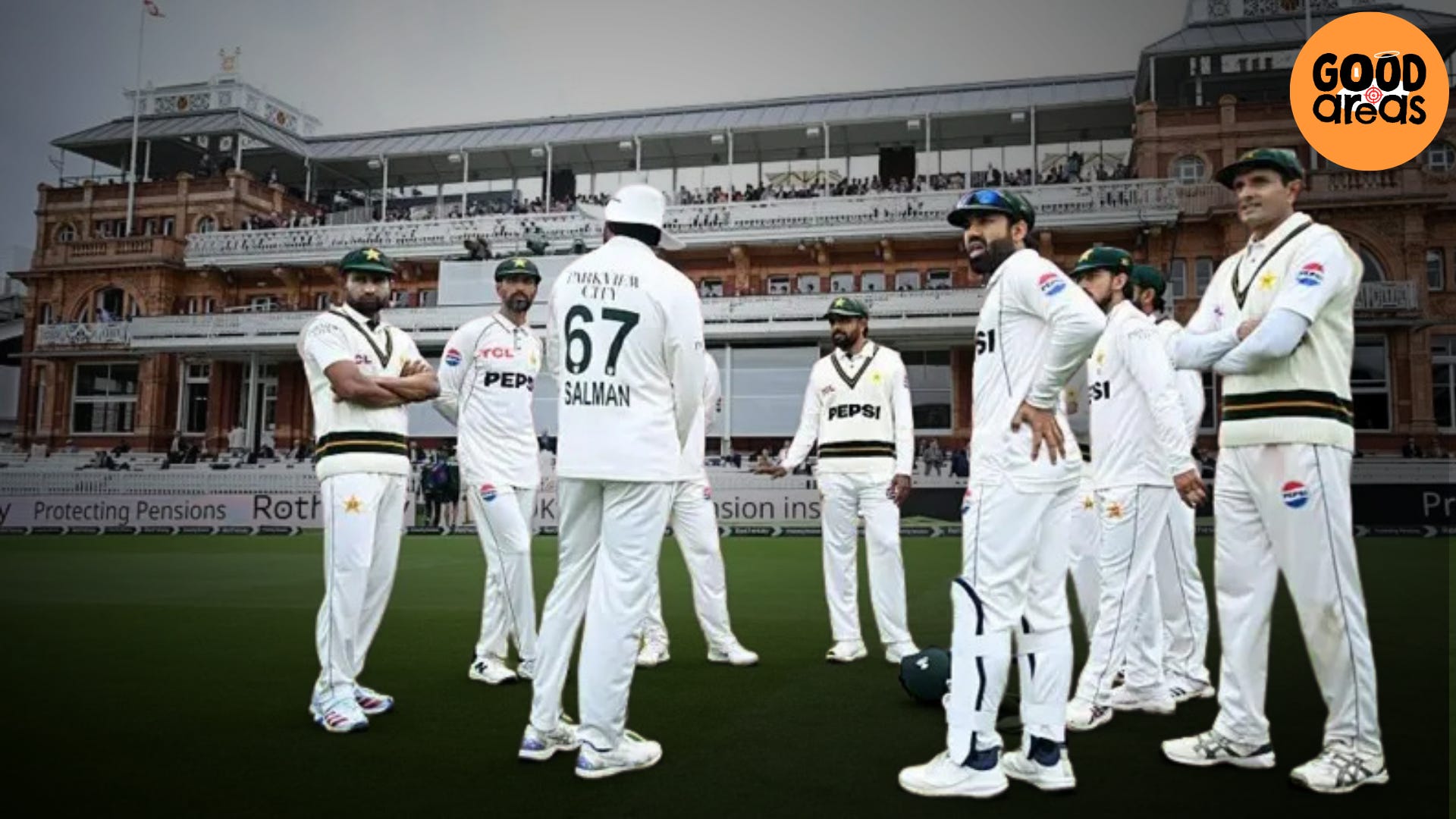
The PCB could not have less of an idea on how to run modern-day sports teams. They are completely bereft of ideas, and they make changes all the time. Nothing ever makes sense. No players ever feel safe. No coaches ever feel safe. And they’ve just made 16 changes in the middle of a Test series that they have already lost.
This is an organisation that has been running cricket for a long time, and they seemingly have learnt very little. After going 2-0 down against England, they have made 16 changes.
How is that professional? How is that smart? How is that helping Pakistan cricket in any way? It’s just more panic and chaos when there should be plans and systems and thoughts in place.
Cricket has a very long history of what we would call ‘tours of hell’, where teams go away for a huge amount of time to some far-flung place, and just everything falls apart. Pakistan are not the first team to go on tour to somewhere like England and for it just not to work out for them.
But how you deal with crises is just as important as how you got there in the first place. Yes, the selection was a bit poor and uninspired, and the team really hasn’t made much sense on paper and has played slightly worse on the field.
But when it comes down to this, how can you see this as a failure of the 12 men on the field, or the selectors, or the coaches who are involved with this when there is a very, very long history of Pakistan cricket being well behind the times?
Yes, this current Pakistan team is bad, but the PCB have had 25 years to fix this nonsense, and instead the best they could do after all of this chaos and losses is to move 16 people around in one of the stupidest moves we have ever seen in professional cricket.
Great article. I really miss West Indies and Pakistan having very strong sides.
Other teams play professional serious cricket, pakistan plays for laugh and giggles. Naqvi seems like a moderator for r/cricketshitpost